
For youngsters, Gig Harbor canoe and kayak camps a chance to learn the basics
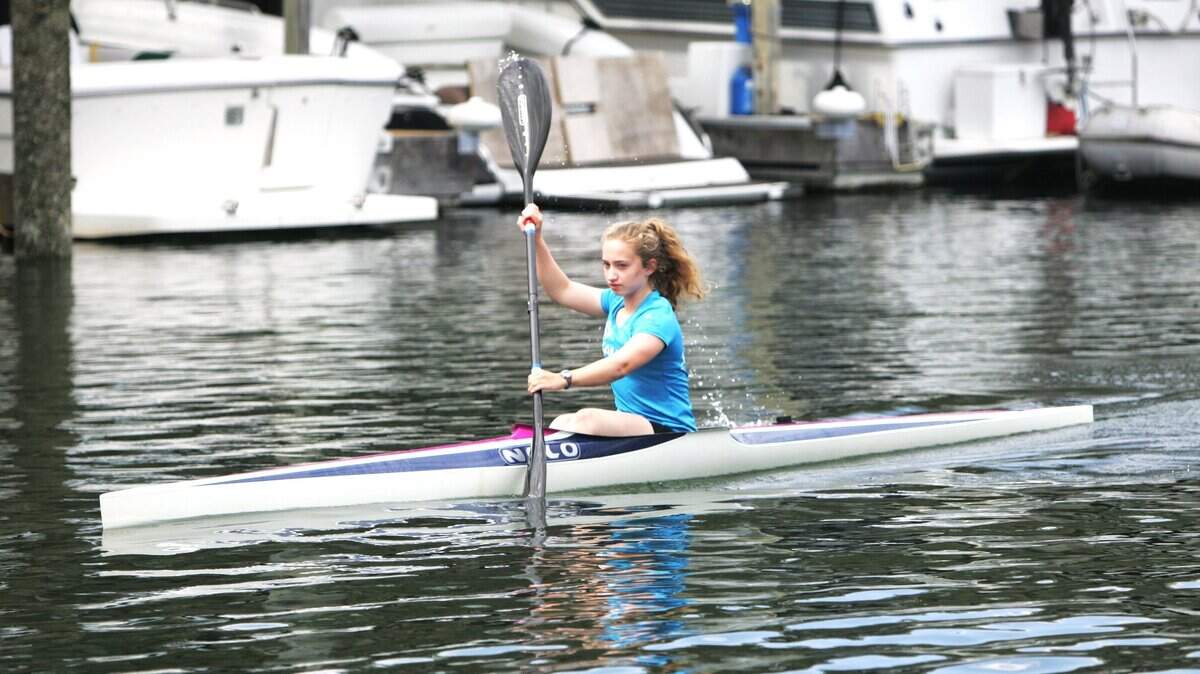
University of Washington sophomore Catherine Wilborn is running the Gig Harbor Canoe and Kayak Racing Team’s youth camps this summer. The second session is currently underway. I caught up with her on how things are going on the water with the young paddlers.
JM: How are the summer camps going?
CW: So far, they’re really good. I feel like this sport is just naturally awesome, so most of the kids really gravitate toward it. It’s a lot of them, having 20 kids on the water at one time but we really enjoy it. We have five coaches, so 4-to-1 is a good ratio. It’s going really well.
JM: You’re a UW student. What are you studying and how long have you been paddling?
CW: I’ve been paddling five and a half years. I’m studying aeronautical and astronautical engineering. I’d like to go law school and work in space law. We’ll see.
JM: I’ve heard that for beginning paddlers, even getting into the kayak and having it not capsize can be difficult. What’s the most challenging thing for a beginning paddler to tackle?
CW: There’s definitely a stability thing that just takes time. We have a 10-second challenge. We say that if you can stay up in racing kayak for 10 seconds, we’ll give you 10 dollars. So they’re all really excited.
JM: Do you actually give them the $10?
CW: Oh, no one has ever made it in the 10 years we’ve done it. It’s pretty hard. People usually stay up for about a second and then flip. The boat won’t hold you up — you have to hold the boat up. That’s a big challenge. But I think just learning the stroke. I took about a year to get into my racing kayak but I still haven’t perfect my technique at all. Just starting from the ground up and building up.
JM: In which area do you feel like you see the most growth from the beginning paddlers during the camps?
CW: Confidence-wise, it goes way up. They know how to get in the boats and just how to paddle around. They start to realize which direction to hold their paddle — that’s actually a big thing, just holding it in the right direction. I think it goes from having zero experiences with boats, to being able to carry their own boats and get themselves in it and have a level of independence by the end of the camp.
JM: Aside from paddling, what do you want the kids to take away from these camps?
CW: I think that just working hard is really rewarding. That’s what this team has taught me—if you work hard and train hard, you can travel the world, make great friends. It’s an amazing place to make friends. I think that it shows that hard work is rewarding and it’s also fun. You’re out on the water and in the heart of the town.