Store owners face imported goods shortage at Puyallup specialty shops amid pandemic
It is no secret that the pandemic caused a major disruption to people’s lives. Everyone is still experiencing its impact, including owners of small specialty stores in the Puyallup area that rely on imported goods.
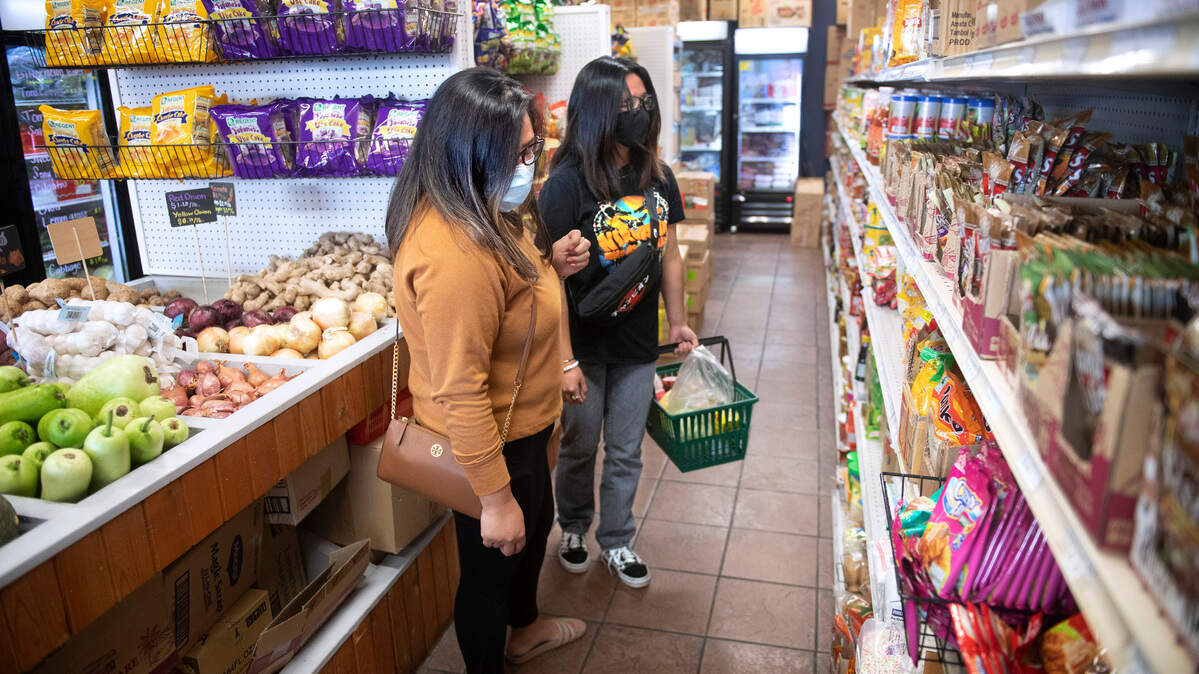
The Sari-Sari Store at 11910 Meridian Ave. E. is family-owned and specializes in Filipino and other Asian goods. Items they have in stock include instant Pancit Canton noodles, Skyflakes crackers, and a plethora of ube-flavored treats.
The store may be the only place in the Puyallup area that sells Filipino goods, said Marifel Osera, owner of the Sari-Sari Store. During the early days of the pandemic, she said it was a challenge for her to make sure they had enough in their inventory.
“It’s been on and off,” Osera said. “There’s a lot of things that are not coming in … people are also not able to produce as much.”
She said there have been manufacturing shutdowns and labor shortages that have impacted what’s available; There’s not enough supply and not enough reliable shipping.
There were times Osera’s store ran out of items, such as a specific brand of red hotdogs and certain flavors of Samyang spicy ramen. Bags of jasmine rice are also “pretty rare and getting scarce,” she said, as a result of panic buying.
In addition to other local business owners, restaurant owners are also facing the brunt of the supply shortages, Tara Doyle-Enneking wrote in an email. Doyle-Enneking is the president and CEO of the Puyallup/Sumner Chamber of Commerce.
“I’m amazed at the creativity and resilience of the businesses in our community that, on top of trying to keep their doors open and shifts staffed, they also have to constantly adjust their menus and purchasing strategies,” Doyle-Enneking wrote.
‘It’s been a struggle’
British Bites at 720 E. Main Ave. is seeing a similar trend to the Sari-Sari Store. The shop not only has a grocery area — it has a bakery and bistro, too. Owner Lori West said most of their goods, even some ingredients such as cheese, are imported from the United Kingdom.
“It’s been a struggle,” West said about shipping. “To get your goods on a container was very hard … a lot of them are sitting empty in China and then all the PPE (Personal Protective Equipment) was getting priority.”
Brexit — when the U.K. broke off from the European Union in January 2020 — also played a role in the lack of imported British goods, West said. The U.K. experienced a drought of truck drivers because a lot of their drivers came from other European countries, she said.
“The past three, four months (has) been a lot harder for us to get stuff,” West said.
Many truck drivers returned to their home countries, partly in response to the pandemic and to Brexit, the Guardian reported. The shortage of drivers eventually led to gaps on supermarket shelves.
British Bites is what West would describe as “a little piece of Britain.” It is a one-stop shop where patrons can get their lunch, groceries and baked goods. Their top-selling goods include Cadbury chocolate and biscuits, she said.
“Most of them just walk in and say, ‘Well, you’re really low on stock,’ and then I have to explain to them what’s going on,” West said about her customers. “For the most part, everybody’s pretty good and understanding about it … this isn’t stuff that you get at the local markets. It takes a little bit of elbow grease to get it here.”
West and her husband started operating their shop in 2018. When the pandemic hit the state in 2020, the shop only offered curbside service. They did not reopen the grocery area to the public until June 2021, she said.
Even though stock has been low, they’ve been able to get enough to keep going.
“It was our imports that really was the backbone of us being able to stay open,” West said. “This has been our saving grace.”
British Bites still has not returned to its pre-pandemic numbers, West said. Their revenue dropped by about 60 percent in 2020, and so far this year the revenue is 20-percent below what it was pre-pandemic, she said.
The Sari-Sari Store, on the other hand, experienced the opposite. The store generated more revenue during the pandemic compared to before because a lot of people were panic buying, Osera said.
Before the pandemic, the store would make about $1,000 per day. After the statewide stay-home order in March 2020, they made about $3,000 per day, she said.
“All of a sudden everybody wanted to hoard the rice, everyone wanted to buy up everything,” Osera said. “I could not stay here because I was always on the run getting stuff … I couldn’t keep anything on the shelves.”
Osera even bought herself a van last September so she can get more goods from food suppliers she works with. There also came a point where she had to limit people from buying more than two bags of rice, she said.
If there is one word of advice Osera can give to her customers, it would be to have patience and be understanding, at least until the pandemic is gone.
“We’re trying really hard to keep everything in stock,” Osera said.