Sumner police have new body cams. Here’s how they work, when they automatically record
People who interact with police officers from the Sumner Police Department will see another piece of equipment from this point on.
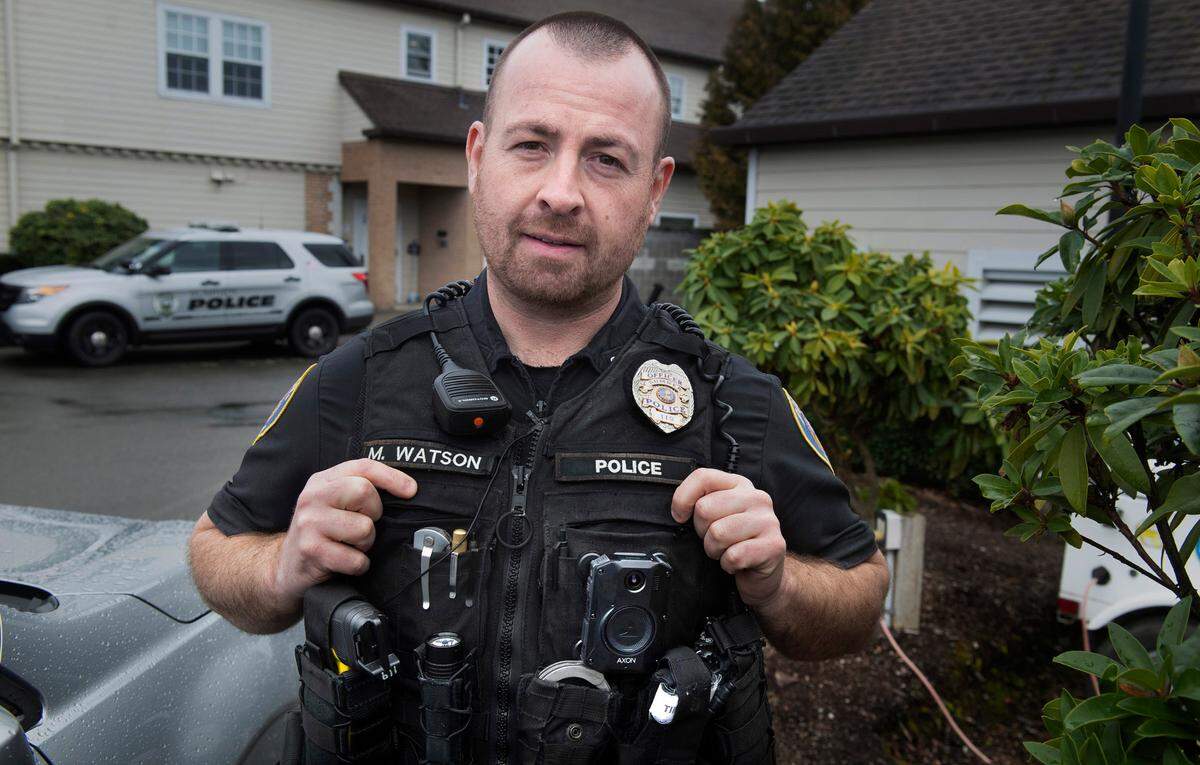
Officers at the department started wearing body-worn cameras on Jan. 24. Deputy Chief Andy McCurdy said officers will proactively record any time they interact with people.
“I think it fills a lot of holes that I think our profession has been missing in the past with being able to show our good work and also hold people accountable when they do something that’s not proper,” McCurdy said.
Chief Brad Moericke said the department first approached the City Council about the body-worn cameras in March 2021. The department got the council’s approval over the summer, he said.
The body-worn camera program will cost the city about $38,000 per year, Moericke said. This includes the cameras as well as other expenses such as professional licenses and personnel, he said. Funding comes from the city’s general fund.
In addition to the body-worn cameras, McCurdy said the city had to create a new position in its legal department so someone can respond to prosecutors, attorneys or others who may want a copy of an officers’ camera footage.
“There are certain things that we have to block out on those videos, which is a pretty labor-intensive process, so it’s not just the cost of buying the cameras, but it’s a lot of the manpower that goes into specifically releasing that footage,” McCurdy said.
Some of the things that need to be blocked out include minors and identifiable information such as names, birthdates and social security numbers, McCurdy said.
The body-worn cameras will be on for the most part but officers will not be recording when they are driving around in their car or on their lunch break, McCurdy said. They will press record when interacting with the public.
Officers will record in cases such as exiting their vehicle when they are dispatched to a scene or when they are involved in a police pursuit or following a vehicle, according to the department’s policy manual.
Officers will not record when they arrive at a location where people have a reasonable expectation of privacy. Natural death scenes, as well as interviews with sexual assault victims, also won’t be recorded, according to the department’s policy manual.
When officers draw their guns or tasers, the body-worn camera will start recording. The first 30 seconds before the camera starts recording will also be captured, but it will not have audio.
“Forgetting to turn on the camera is going to make it look like it is intentional,” McCurdy said. “The technology has come a long way recently where it … makes it automated. That piece of it was huge for us.”
After an officer finishes their 12-hour shift, they place their body-worn camera on a docking system at the office where all the footage will automatically be uploaded into cloud storage, McCurdy said.
Body-worn camera recordings must be retained for at least 60 days, according to state law.
If a public interaction does not involve the use of force or any action needed for “evidentiary purposes,” then those recordings are held for a short time. Recordings of actions such as arrests are held for a longer time, McCurdy said.
The department bought the body-worn cameras because they wanted to be “ahead of the curve,” Moericke said.
He said there has been a backlog and delay from camera suppliers in the wake of investigations into police killings, such as those of Manuel Ellis in Tacoma and George Floyd in Minneapolis.
The department got the body-worn cameras in November 2021. Before fully implementing the cameras, they needed time to train the officers that will use them and find staff to be in charge of the recordings, Moericke said.
McCurdy said having the body-worn cameras will help hold officers accountable to ensure they are being truthful, and so that they have evidence to back something up if needed when accounts differ.
“I changed my lens from ‘Do I need this to protect the public from the officers?’ to ‘I really need this to protect my officers from the public to tell our story from our perspective,’” Moericke said. “That’s … the impetus of getting them.”
This story was originally published February 7, 2022 at 5:00 AM.