‘Rotten egg smell’ in East Pierce County? Here’s the source, what’s being done about it
People usually get to inhale fresh air when their windows are cracked open. Neil Colombini wishes he could do the same.
Colombini usually starts his day early because he works in construction. Around 4 a.m. on March 23 he woke up to a familiar smell in his bedroom.
“It’s a pungent … stale, bitter smell. It almost smells kind of like propane but different,” Colombini said. “It’s stinky. It smells bad. You can tell it’s coming from something that’s not clean. It’s almost like a rotten egg smell.”
Colombini lives directly west of the LRI Landfill at 30919 Meridian Ave. E. He and his wife moved back to the area about six years ago. His in-laws have been living in the area since the 1990s.
Colombini said when he and his wife moved back, the smell from the landfill was not too noticeable. It turned “really bad” when the weather would start to cool down about two years ago.
The smell arrives at certain times of the day. Colombini said he usually notices it in the evenings or in the early mornings.
“It’s almost like a sulfury kind of smell,” Colombini said. “I didn’t really think too much about it back then. It only happened a couple of times. But I would say it became kind of a consistent nuisance.”
Colombini said the first time his neighborhood tried to contact the Tacoma-Pierce County Health Department was in December 2021.
As people in Graham and Eatonville continued to file complaints, they started receiving status updates from the health department, Colombini said. The updates explain the landfill’s efforts to mitigate the smell.
The TPCHD received a total of about 40 to 50 complaints during the winter in 2020 and 2021, Keith Johnston, environmental health specialist supervisor, said.
As health department officials communicated with residents, LRI also started connecting with them via email, Colombini said. LRI even offered to visit peoples’ houses if and when an odor was present.
“I’m sure they’re doing stuff on the landfill to try to mitigate it, but it doesn’t seem to be working. It’s still present,” Colombini said.
Other people in the neighborhood became vocal about their concerns, saying how it affects their “quality of life.” Some don’t go out in the morning to walk their dogs because they get a whiff of the landfill, Colombini said.
“It’s something that our neighborhood talks about probably at least once a week,” Colombini said.
LRI District Manager Kevin Green said when LRI received complaints, they responded with an explanation of how the landfill works. They also offer a tour, which he said is something they wish more people took.
“We have not been able to confirm that there’s landfill gas odors on folks’ property. What we have heard from folks is that they have detected an odor,” Green said. “Landfill gas and landfills can create odors.”
‘Odor control measures’
Green wrote in an email that landfills are dynamic because the material they collect as well as the amount can change year to year. But one thing remains the same — the landfill will have a “robust” gas collection system, he said.
“There is no direct correlation between the life of a landfill and odors. As the landfill continues to grow we will continue to install landfill gas wells and odor control measures as soon as possible so we do not have any offsite odor issues,” Green wrote.
Green said after a truck collects trash from peoples’ houses, it goes to a transfer station. The trash gets loaded onto a larger truck that can hold about 30 tons of garbage.
When that truck makes its way to the landfill, trash gets compacted on the ground and gets buried with about 6 inches of cover. The cover is comprised of soil as well as “auto shredder residue,” which is shredded automobiles.
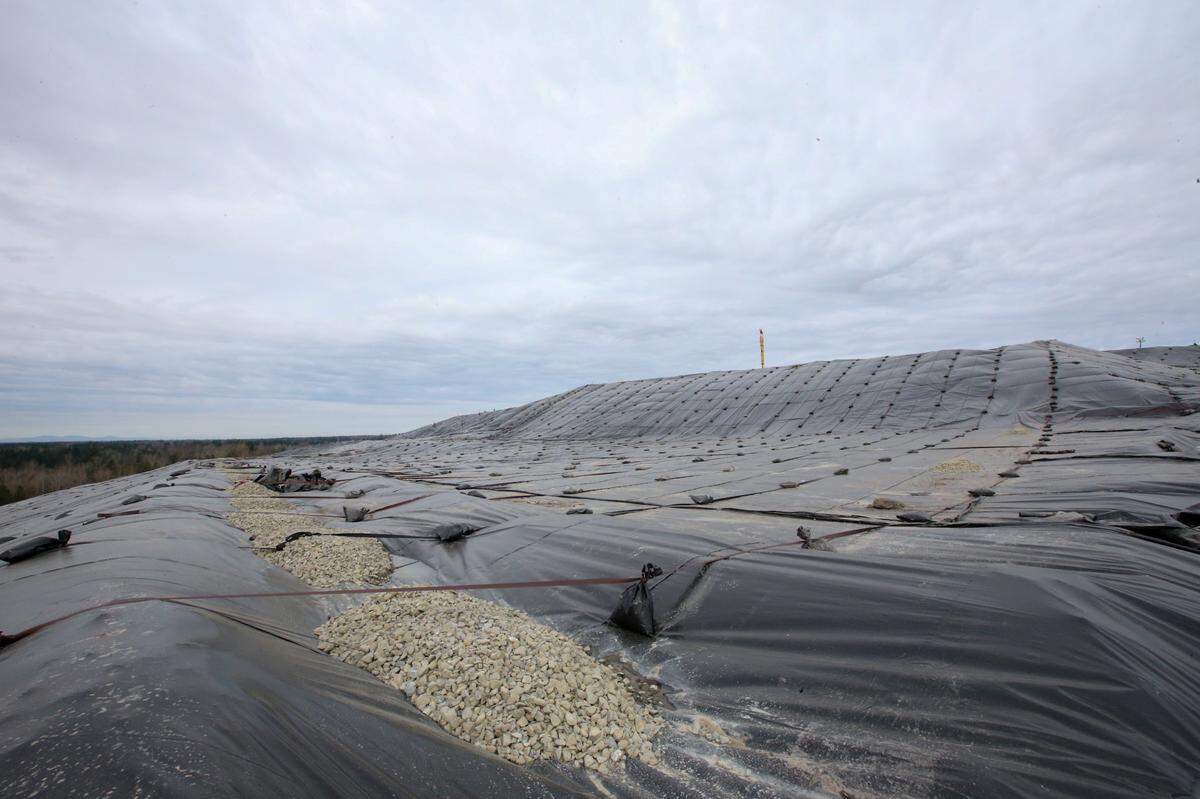
The cover reduces the chance of odor coming out as well as birds pecking away at trash, Green said.
This cycle repeats every day as LRI collects Pierce County’s waste, Green said. The site collects about 4,500 tons per day. At the site, there is an area where they collect liquid coming from the landfill as well as an energy facility where landfill gas gets converted to electricity.
For the past two years, odor issues occurred in the wintertime, Johnston said. The cold, dry air allowed landfill gas odors to spread off the property, he said. During warmer weather, the odor mixes with the fresh air, and the odors don’t leave the site as much.
“The gases can kind of build up,” Johnston said. “Anything that’s coming out of the landfill that’s not being captured can build up and start to move off from the property.”
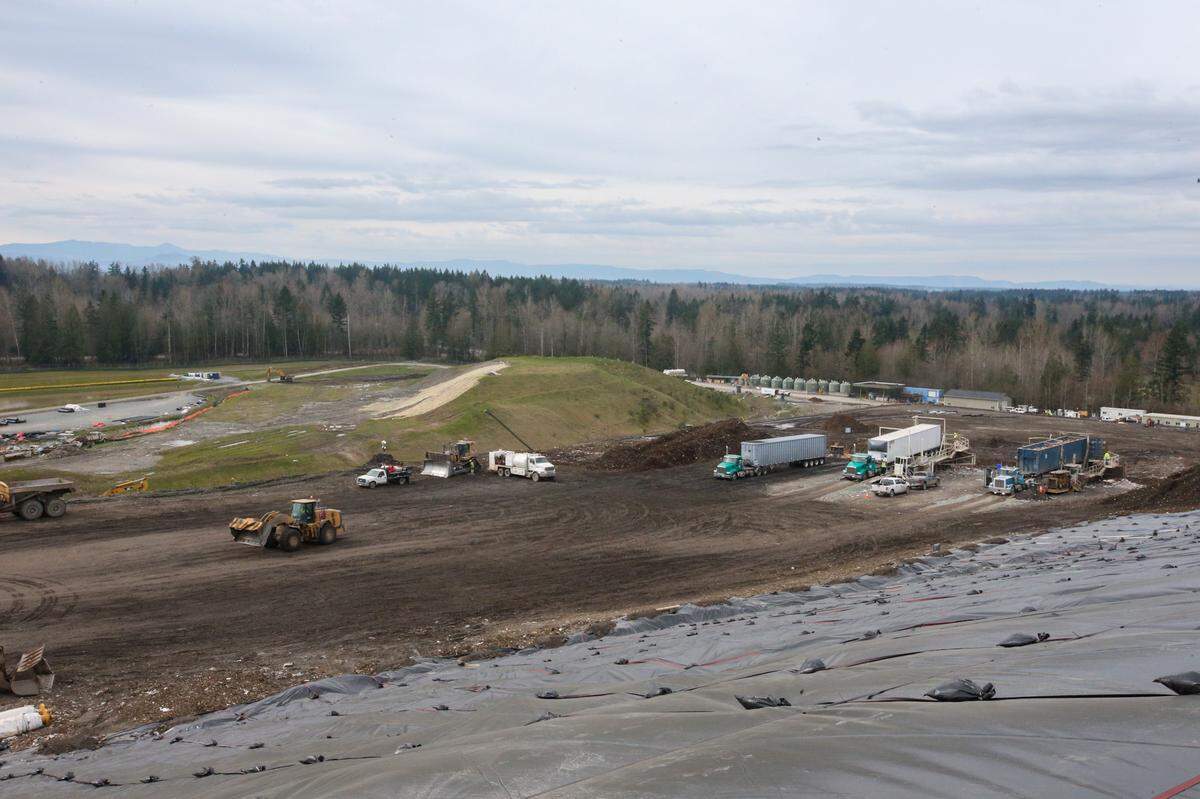
Having a lot of open areas at the landfill that do not have a plastic cover can play a role in the odor issue, Johnston said. At one point, the contractors that provide LRI with plastic tarps were unable to keep up with the demand due to COVID-19 supply chain and manufacturing trouble, he said.
“It’s really rainy in Washington,” Johnston said. “It’s the biological action that’s creating the gas and the more water you feed to it, the more it does that.”
Implementing more landfill gas collection wells has helped with the odor issues, Johnston said. There is no limit to how many gas collection wells the landfill can have. The health department would like the landfill to have as many as they need, he said.
Green said LRI recently drilled 18 new gas collection wells, bringing the total number of wells to 220. There are also several odor control wells onsite. The wells vacuum gas and help minimize odors.
LRI plans to drill about 15 to 20 more wells in the next couple of months, Green said.
“Their efforts have reduced on-site odors, and our inspections have shown that the off-site conditions are improving but that the off-site odors are still occurring,” Johnston said.
Johnston said odor inspections happen weekly. During these inspections, they drive around neighborhoods to check if odors are lingering offsite. They usually drive along a mile radius from the landfill.
On March 18, Johnston and his team conducted an odor inspection at 10 different stops. They picked up odors at one of the stops. Ultimately, he said it depends on which way the wind is blowing.
“If it’s a light breeze and it’s blowing in one direction for a long period of time, the odors can get out to that part of the neighborhood and folks can be impacted by it,” Johnston said.
The health department permit for the landfill was approved in the late 1990s, Green said. The landfill started operating in the early 2000s.
‘We understand this is an issue’
Lucy McKee, Colombini’s mother-in-law, said residents in the early 1990s were against having the landfill in Graham. McKee has been living in the same neighborhood as Colombini since before the landfill was built.
McKee likes to sleep with her window open, but now she just keeps it closed, she said.
“The smell has really gotten bad,” McKee said. “We can’t open our windows … it’s awful. It’s unbelievable.”
McKee said in addition to the smell, some residents in the area have heard explosions coming near the landfill. She first noticed the loud sounds in January and then a few other times in February and March. It would usually happen at night, she said.
“Our weekly inspections have not found any evidence of any kind of explosions,” Johnston said. “There’s nothing in the southwest corner of the landfill property that could even cause an explosion.”
Johnston said three LRI employees that live near the landfill verified that none of the landfill equipment had caused the explosions residents have been hearing. LRI plans to install cameras on the property if and when another explosion occurs, he said.
Although the landfill deals with landfill gas that is flammable and can cause an explosion, employees would be able to see evidence of that during their weekly inspections, Johnston said.
If an explosion at the landfill was to occur, they must report it to the health department. LRI has not reported anything related to an explosion so far, Johnston said.
“The explosions really don’t have anything to do with the landfill,” Johnston said. “It’s probably just somebody with illegal fireworks that’s having fun out in the neighborhood.”
Johnston said nothing can be done to the waste that is filling the landfill. It’s going to create landfill gas as fast or as slowly as it wants. It will be a continued and ongoing effort to ensure odors are kept on-site as much as possible, he said.
“We understand this is an issue,” Johnston said. “We are going to be monitoring the situation and we are going to be requiring the landfill to do more if they need to do more in the times where we get more complaints.”
Editor’s note: A previous version of this story misidentified LRI Landfill. LRI does not stand for Land Resources Inc.
This story was originally published March 27, 2022 at 5:00 AM.