This school district has 43 portables. It’s asking voters to pass a $150 million bond
School portables are a “duct tape” solution, at least for one Orting resident.
“Portables aren’t a suitable place for kids long term,” Jenny McKinney said. “It’s duct tape. It covers up a hole, but it doesn’t fix it.”
McKinney and her family moved to the city about six years ago. Her children attend school there — her daughter is in first grade and her son is a sophomore in high school. Her son has two classes in portables this year and he hates it, she said. He gets distracted because they’re near a road, McKinney said, and it takes extra time to get to a bathroom.
Last month, McKinney voted to approve Orting School District’s $150 million bond proposal, because the school buildings are overcrowded, she said. The school district “has done a great job with what they have,” but it needs upgrades, she said.
The measure failed. Pierce County’s final special election results show 2,149 or about 54.9 percent approved the bond proposal while 1,764 or about 45.1 percent rejected it. School bonds need a 60 percent approval rate to pass, and voter turnout must be 40 percent of voters in the 2022 general election.
The Orting School Board unanimously voted on Feb. 23 during a special meeting to place the same bond proposal on the special election ballot April 25. The only difference between the two is the cost to the taxpayers — the new proposal is $167 cheaper per year for the average homeowner.
The April voter’s pamphlet from the Pierce County Auditor’s Office shows McKinney is a member of the campaign that supports the bond proposal.
Jeneen Breshears is listed as a member of the committee against the proposal. The statement against the proposal includes a website listing reasons to vote “no.”
“Supporting schools is a good thing, but there are many ways to do that,” the statement against the proposal says in part. “At a time when individuals and families are having to tighten their financial belts, it is only right to expect the same of our government and its agencies.”
The committee against the proposal did not respond to The News Tribune’s request for comment.
The April bond proposal would collect $2.49 per $1,000 of assessed property value, which amounts to $1,182 per year for the owner of a $475,000 home.
The February bond proposal would’ve collected $2.84 per $1,000 of assessed property value. This would’ve amounted to $1,349 per year for the owner of a $475,000 home.
The projects and goals outlined in the February bond proposal won’t change in the April bond proposal, district spokesperson Brittany Piger said. The total cost for the bond will also remain the same.
The cost to taxpayers dropped because interest rates for school bonds lowered recently, the school district said. The housing market also slowed down, which delays the influx of families that may join the school district in future years.
In addition to the bond, the school district is expecting $11 million from the state.
The plan, still, is to build a new K-5 elementary school with a courtyard space, library and playground. Additional classrooms, a food service space and a new gym are also still planned for Ptarmigan Ridge Elementary.
“There’s no mechanism for building schools outside of asking a local community for help,” superintendent Ed Hatzenbeler said.
More parking spaces as well as a new gym and wrestling room at Orting High School are still on the school district’s to-do list. A new science, technology and maker space is also included on the list.
“The needs are still there,” Hatzenbeler said.
Piger said the school board considered slashing upgrades to Ptarmigan Ridge. However, if the school doesn’t undergo any upgrades, thousands of children ten years from now would be forced to fit in a building originally built for 460 children, Piger said.
The News Tribune reported in January that Orting Primary serves over 500 children, but it was initially built for 290. Orting High was initially built for 250 students in 1986 but the capacity increased to 600 in 2000 – about 900 students attend the high school now.
Hatzenbeler said traffic, spaces to eat and restrooms are some of the factors affected when the number of students exceeds a school’s intended capacity.
For example, Piger said Ptarmigan Ridge students have limited space for P.E., because there are times the school has to split the gym space to hold lunches and P.E. classes at the same time.
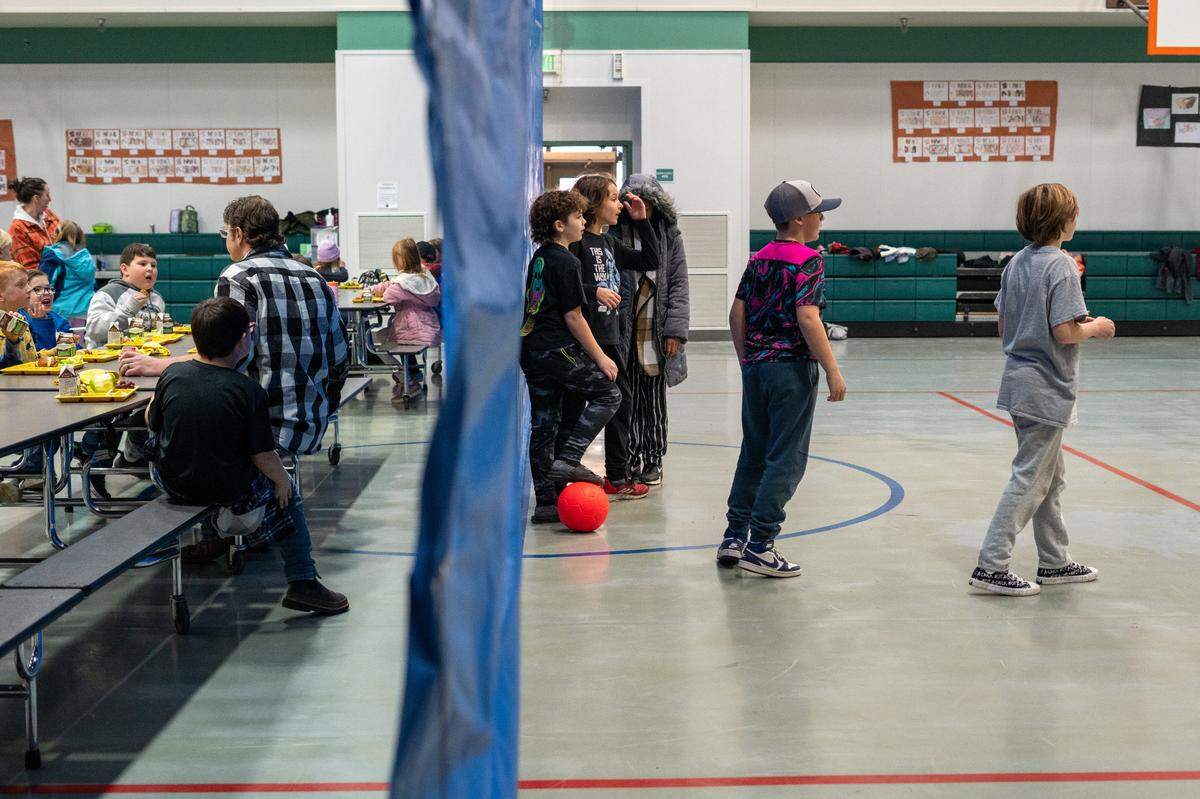
The district has 43 portable classrooms.
The school board considered placing the bond proposal on the November or February 2024 ballots, but doing so could add an additional $15 million, roughly, to the bond, Piger said, as construction costs increase over time.
“If we waited it would cost our taxpayers a lot more,” Piger said.
Hatzenbeler said if voters reject the bond proposal again in April, the school board would return to the drawing board and ask voters again in February 2024. The district would need to figure out temporary solutions in the meantime, he said.
Orting is a “special little community,” McKinney said. She likes being in a small school district because she finds it easier to make personal connections with staff. She doesn’t want to see the school district get absorbed by bigger school districts nearby, she said.
Hatzenbeler said that’s not something the district is facing now, but that “it could be a topic in 15-20 years if there is not enough capacity to sell bonds to cover the facility needs. As our Citizens Facility Advisory Committee reviewed the data, they began to see the cost to replace and repair current facilities grows much faster than our tax base if we do not embrace growth. Down the road, it could be that we have many more students than we effectively have the ability to house or more repair and replacement costs than we have the ability to manage.”
“Our kids are worth it,” McKinney said. “School bonds are the only way to keep tax dollars in your community.”
This story was originally published March 14, 2023 at 5:00 AM.