Puyallup’s $80 million public safety building failed twice. What’s the city’s plan now?
Update: The council expects to take a final vote at its June 6 meeting about whether to give voters the option to build the Municipal Court later and focus on the police station, substation and 58 jail beds first.
The council adopted that option 5-2 on first reading May 23, and expects it to come back for a second reading June 6. If it passes, it’ll be on the ballot in November.
A motion by council member Dennis King to adopt the option that’d build the court, police station and jail in one swing got support from council members Julie Door and John Palmer, but was rejected by Deputy Mayor Ned Witting, council members Robin Farris and Jim Kastama, and Mayor Dean Johnson.
Then a motion by Kastama to adopt the option that’d postpone the court passed 5-2. Johnson and Door voted against it.
Initial story: The Puyallup City Council is wrestling with the idea of how its public safety building should be built.
The public safety building — as it was presented on the February 2022 and November 2021 ballots — would put the police department, jail and Municipal Court under one roof. It would also create a police substation at City Hall.
Voters rejected the proposal twice.
The February 2022 proposal received 4,574 votes or about 56.6 percent of the vote. The average homeowner of a $500,000 home would’ve paid about $17.80 per month in property taxes for 25 years. The project would’ve cost $81 million.
The November 2021 proposal received 5,613 votes or about 59.3 percent. The average homeowner would’ve paid about $20 per month in property taxes for 25 years. The project would’ve cost $82.7 million.
The proposals needed 60 percent to pass.
Council members will consider the future of the public safety building 6:30 p.m. Tuesday, May 23, during the City Council meeting. It will be held on the fifth floor of City Hall and virtually at bit.ly/43bSENN (passcode: 926675).
The public safety building would be built at 600 39th Ave. SE.
One option council members are considering is to build the police station, substation, 58 jail beds and the Municipal Court in one swing. This has an $88.2 million price tag – $59 million would come from the voters, $25.3 million from councilmanic bonds and $3.9 million from city funds. City officials say inflation has increased the cost of the project.
City spokesperson Eric Johnson told The News Tribune councilmanic bonds are when a city issues a loan on itself. The city would take on debt internally, and it would have to pay it back over time.
Councilmanic bonds aren’t voter-approved, which means the city doesn’t need to ask the public to vote on it, Johnson said. This type of bond helps reduce the cost for voters and shows the city has “skin in the game,” he said.
The other option is to build the Municipal Court later and focus on the police station, substation and 58 jail beds first. This has a $76 million price tag — $56 million would come from homeowners and $20 million from councilmanic bonds.
A council workgroup outlined ways to reduce the total cost of the public safety building, which was initially over $90 million. Deputy Mayor Ned Witting said during the May 16 council study session that the group’s proposals include reducing the number of jail beds, downsizing the police station and downsizing the court, among other things.
If council members approve one of the proposals, the public safety building would return to the ballot in November. The deadline to get an issue on the ballot is Aug. 1.
Council member John Palmer said during the study session that he prefers the option with the $88.2 million price tag. He said it’s important not to delay the construction of the court and to build everything simultaneously. It’d cost the city more to do the building in phases, he said.
Council member Julie Door agreed with Palmer. She said during the study session that it’s also important for voters to know six jail beds will be medical beds dedicated to those with substance use disorders and other conditions. The jail currently lacks those types of beds, she said.
“We don’t have the ability to care for those individuals,” Door said during the meeting.
Council member Jim Kastama said during the study session that the court can be phased in. He said he doesn’t believe the city can handle the future without a new jail. The police department’s administrative office has lived a long life — phasing in the court to lower the bond for voters would be ideal, he said.
Council member Robin Farris agreed with Kastama.
“We need to get this over the finish line,” Farris said during the meeting.
‘We have got to do something’
Those who wrote the prior voters’ pamphlet statements against the measure argued homeowners would see their taxes increase to build a bigger jail than necessary. The 2021 statement also argued the location of the proposed building is a problem because it would be near shopping and senior living.
Some voters had concerns about the public safety building becoming a “regional jail,” Puyallup Police Chief Scott Engle told The News Tribune. Engle said that’s inaccurate. Cities such as Sumner, Bonney Lake and Orting have contracts with Puyallup, allowing them to book people into Puyallup’s jail if needed.
From 2018-2022, less than 8 percent of the inmates at the Puyallup jail were from other cities, Engle said. The city receives about $200,000 per year from the contracts with other cities, he said.
That $200,000 helps defray the cost of running the jail and isn’t a significant revenue generator, Witting said.
The Puyallup jail houses inmates charged with misdemeanors and court order violations, among other things. Under state law, city jails can’t accept inmates charged with felonies. Ergo, Puyallup’s jail doesn’t house murderers or those who commit “super serious” assaults, Engle said.
The Municipal Court is in a leased commercial office building, which costs the city over $200,000 per year.
The building that houses the police station and jail is over 50 years old. Almost every corner of the building at 311 W. Pioneer Ave. has been converted into office space or storage. Some rooms serve multiple purposes, such as holding cold case files and specialized camera equipment.
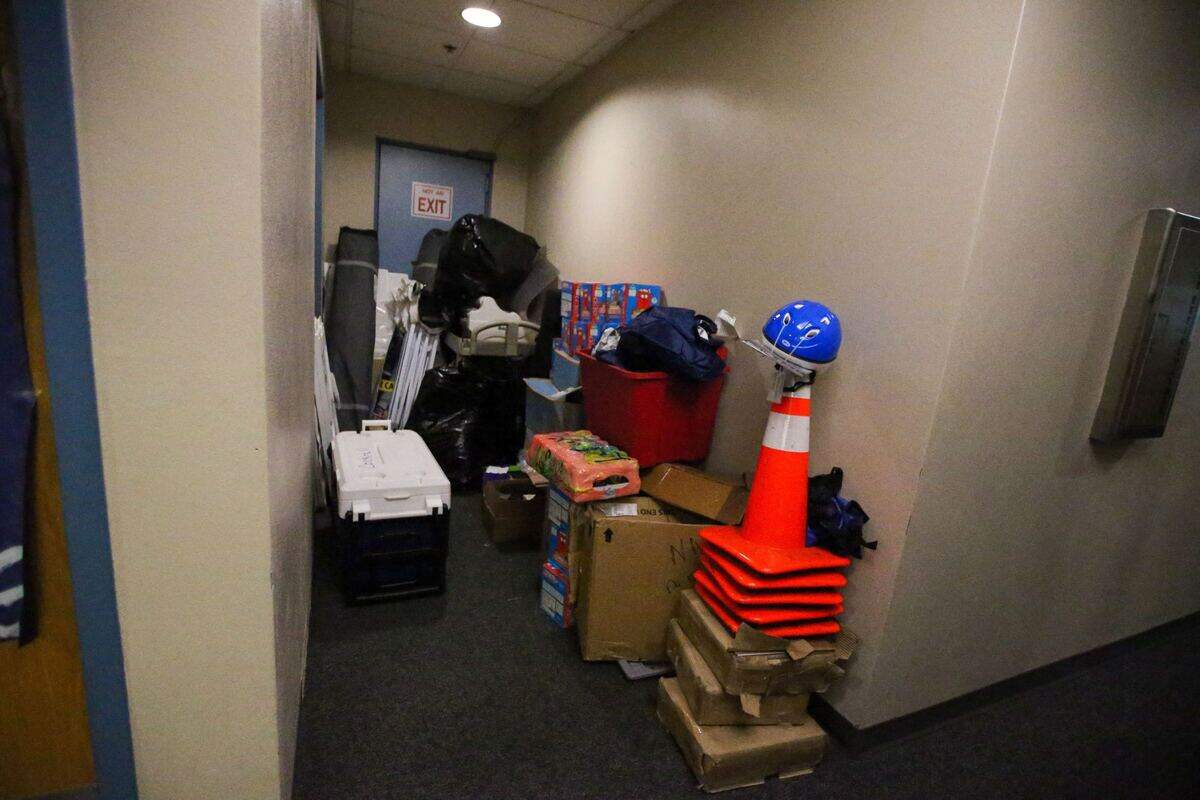
Some supplies and machines are stationed in the middle of a hallway. Leaky pipes have left dark and light brown stains on some ceilings. A room for three staffers turned into a room for six.
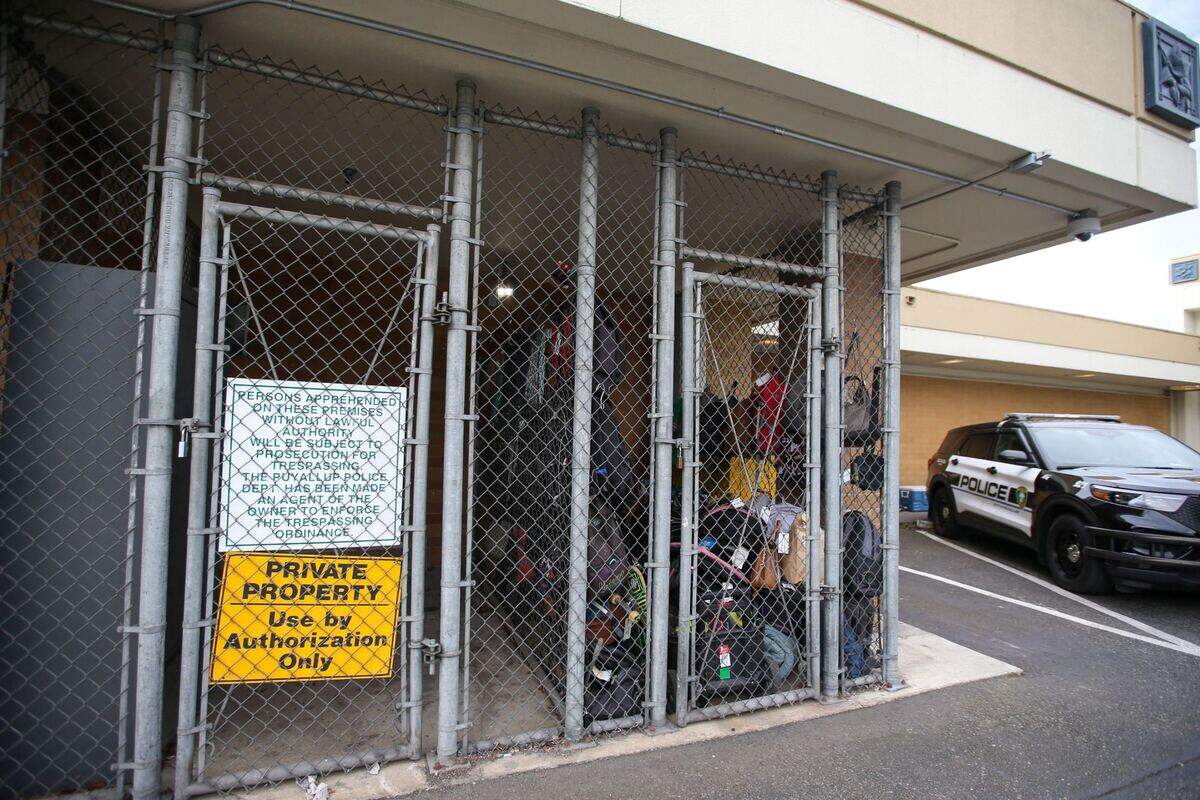
The women’s and men’s locker rooms don’t have enough space for all employees. What used to be K-9 cages turned into extra space for property and evidence items.
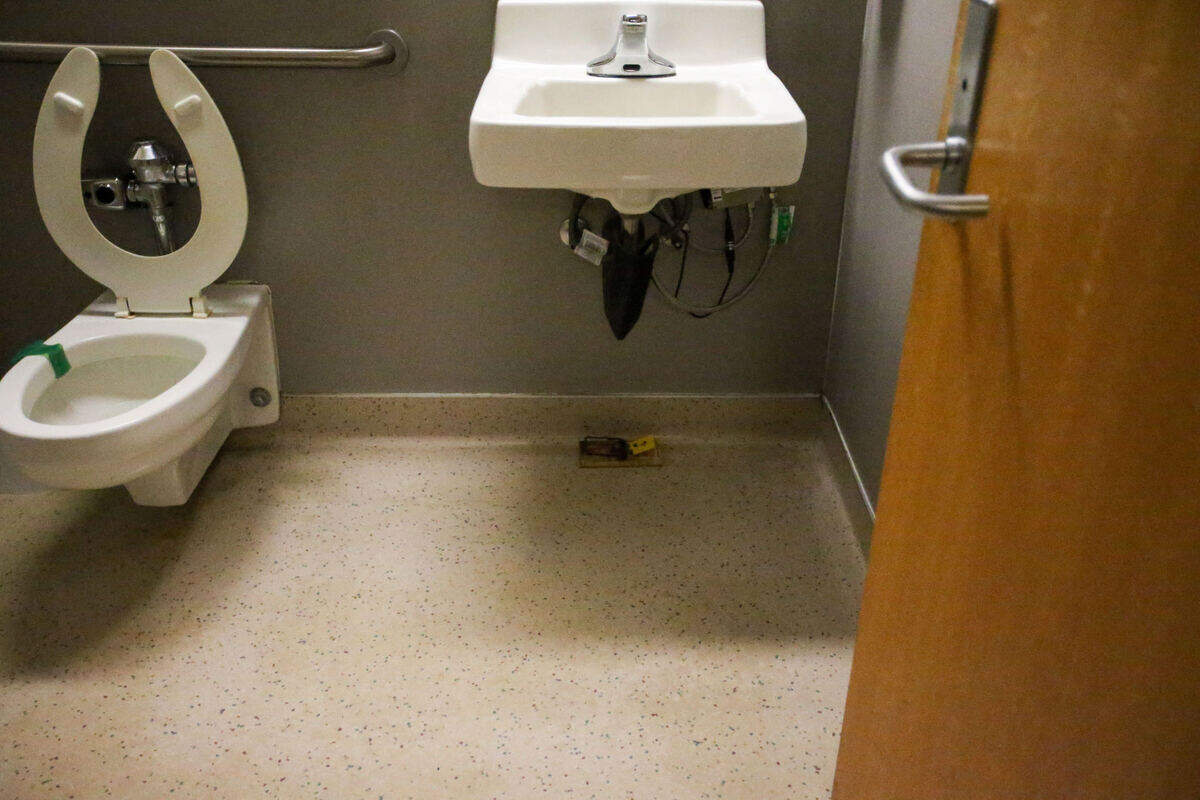
There’s a rodent trap under the sink of a bathroom near the break room. Ants can be found in the break room from time to time. It has a table that can fit about four people comfortably.
“We’re at the end of the rope,” Engle said. “We have got to do something.”
Cost of getting it on the ballot
Pierce County Elections Manager Kyle Haugh told The News Tribune the cost of placing a question on the ballot is low during an odd general election year. Puyallup already has to pay for this year’s election as four city council positions will be on the ballot, which means the city would just have to pay for another page in the voters’ pamphlet.
It paid $19,736 total in 2021 — about $1,800 was for the public safety building measure.
The city paid $46,236 to put the public safety building measure on the February 2022 special election ballot.
“It is cheaper to place a measure on the ballot when your jurisdiction is already on the ballot. Additionally, costs are shared by all other jurisdictions on the ballot. Going alone or with less jurisdictions during a special will most likely cost more,” Haugh said.
Editor’s note: This story has been updated with information about what it costs for a city to put a measure on the ballot.
This story was originally published May 23, 2023 at 1:26 PM.