Puyallup campaigns heat up ahead of third vote on public safety building ballot measure
Supporters and opponents of Puyallup’s public safety building measure are vying for residents’ attention in the weeks before the election.
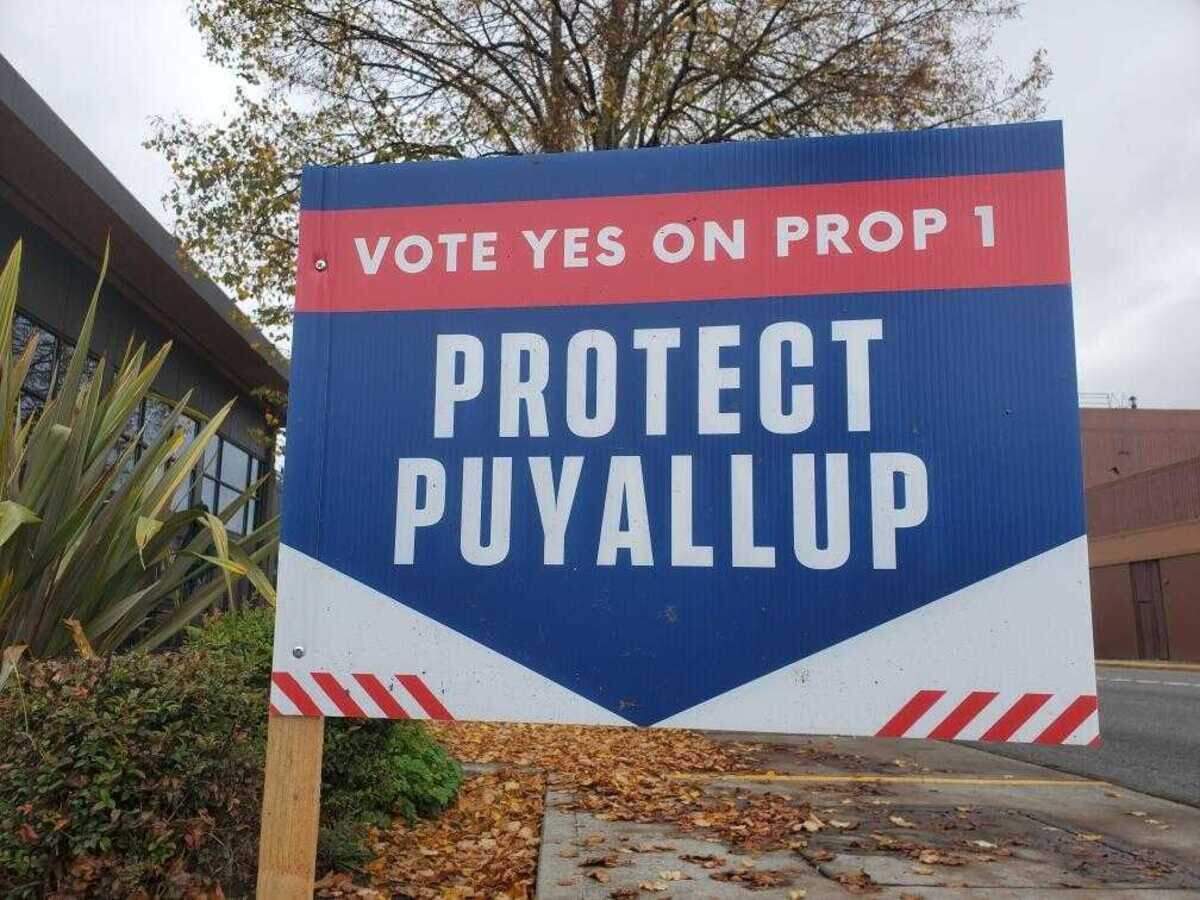
The “yes” campaign recently put up “Protect Puyallup” signs in the city in support of the measure. The “no” campaign put up signs against it that say “Protect Puyallup and our pocketbooks.”
A few opponents brought signs against the project to the police department’s recent community meetings.
The police department has been offering public tours of its aging facility.
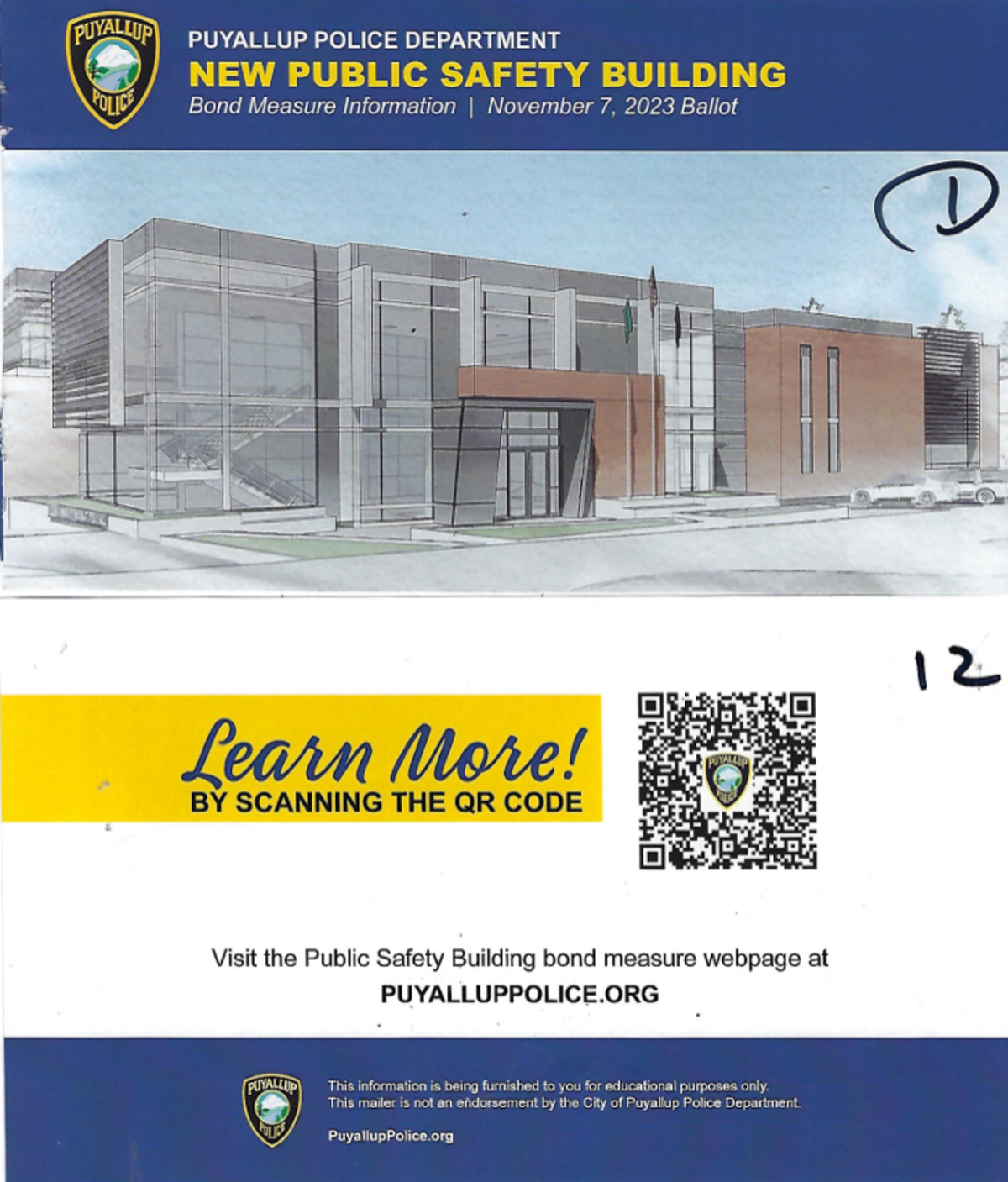
And a former mayor who is part of the “no” campaign filed a complaint with the state Public Disclosure Commission, taking issue with a 12-page booklet about the project that the city mailed to residents last month and a newsletter from the police department.
“No” campaign members argue in the Pierce County Voters’ Pamphlet that the project costs too much, and that the city should focus on building a new police station, but not the jail portion of the project.
.jpg "20231020_183033 (1).jpg")
The “yes” campaign’s statement in the voters’ pamphlet says a new public safety building is needed because the city is outgrowing the old building, built in 1968, which has a leaky roof and a sewer that backs up. The statement also says that the city made cuts to the project, and that the bond voters are being asked to approve is 30-percent less than the previous proposals.
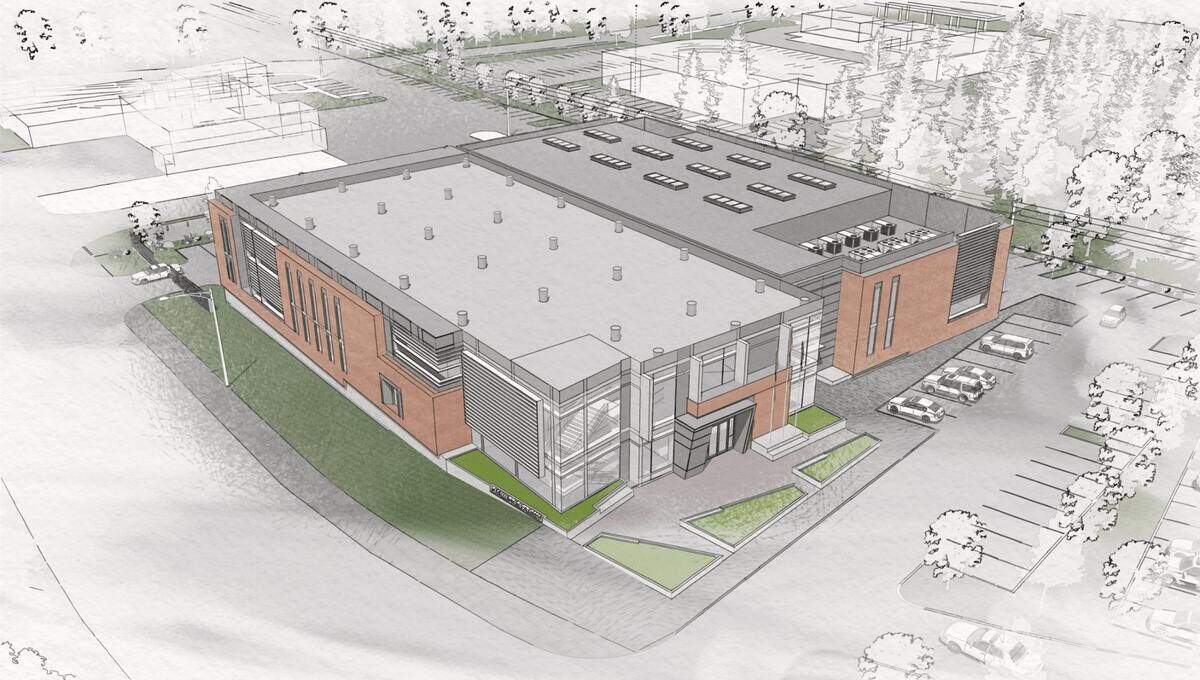
The News Tribune reported in June that if voters approve the measure, the average owner of a $500,000 home would pay $15 per month for 30 years.
It’s the third time voters will be asked to fund the new building at 600 39th Ave. SE. They failed to pass the bond in November 2021 and February 2022. The measure needs 60 percent to pass. It got 59.3 percent the first time, and 56.6 percent the second.
The city has changed the proposal this time. The new version has less square footage, fewer jail beds (58 instead of 82), and doesn’t include a new municipal court. Instead, it would only house the police department and jail.
Council members would decide in the future if and when to build the court onto the building. Until then, the court will continue leasing space elsewhere.
And this time, the council decided to use $20 million from the city, in councilmanic bonds, to help fund the project. That means $56 million of the $76 million project would be funded by voters through property taxes.
Those changes decreased the monthly cost for property owners by several dollars; The last time the project went before voters, the owner of a $500,000 home would have paid $17.80 per month over 25 years, which would have included a new court.
City mailer and police newsletter
Former Puyallup Mayor John Hopkins, who is part of the “no” campaign against the public safety building measure, filed the complaint with the Public Disclosure Commission Sept. 26.
The complaint alleges the city violated a state law that prohibits the use of public resources or facilities, such as money or buildings, to support a ballot measure.
“The mailer was not objective,” and “misleading content with no alternatives suggested,” he wrote.
Hopkins submitted the city’s mailer and a police department newsletter that references the project with his complaint.
PDC spokesperson Natalie Johnson wrote in an email the complaint is in the “assessment of facts” stage. This means staff are working to determine if there needs to be a formal investigation. This can take up to 90 days.
“Only the Public Disclosure Commission itself can determine if there’s been a violation, and that would have to come after staff investigate a complaint,” Johnson said. “I can’t confirm that anything is a violation at this point.”
The law allows city governments to present objective and fair information regarding a ballot measure if it’s a part of their regular conduct.
Puyallup City Manager Steve Kirkelie responded to the PDC on Oct. 13, stating that the mailer was “a fair and objective presentation of the facts.”
Kirkelie wrote that: “City staff spent many hours reviewing this mailer’s text, visuals, and content to ensure compliance and to ensure that voters were educated about the project.”
City spokesperson Eric Johnson told The News Tribune that, in addition to the mailer last month, the city posted information about the public safety building on social media, and the city produced videos about the project.
The city also included information about the public safety building in its newsletter and has a webpage about the building, including a frequently asked questions section, which can be found at cityofpuyallup.org/1980/Public-Safety-Building-Project.
“The PDC says in their guidelines that we have a responsibility to educate people about the challenges of the project and that’s exactly what we’re doing,” Eric Johnson said.
When asked how much it cost the city to produce their educational materials, he said he doesn’t have a dollar amount readily available. He did say the 12-page mailer cost the city about $18,258.80. That included printing, mailing, postage and tax.
Asked for specifics about his PDC complaint, Hopkins told The News Tribune Thursday: “I don’t expect much of a result.”
He said the mailer was “incredibly factual,” and he also argued that those facts weren’t presented objectively. Asked for examples of what wasn’t presented objectively, Hopkins argued the city’s mailer should have included alternatives, such as that the city could contract with the Nisqually Jail in Thurston County and have Puyallup officers drive the nearly 30 miles south to book inmates there, instead.
He alleged the mailer is somewhat similar to the “yes” campaign’s statement in the Pierce County Voters’ Pamphlet.
Both the city’s mailer and the “yes” campaign’s statement list facts about the project and the current facility, such as that the city had 14,000 residents when the police station was built and now has 43,000.
However, the city’s mailer says the information it contains is “for educational purposes only,” and states that it’s “not an endorsement by the City of Puyallup Police Department.” The “for” statement by the “yes” campaign in the voters’ pamphlet asks residents to “please vote yes,” and says that “doing nothing is not an option.”
The police department newsletter Hopkins attached to his complaint included a section with facts about the project and a letter from Puyallup Police Chief Scott Engle. Engle writes that he wants to “set the record straight” on “rumors and misinformation” about the project. He goes on to say that the city’s jail is not a regional jail, because the agency’s records show “92 percent of the offenders we book in our jail were Puyallup offenders.”
He explains that the city’s jail is a misdemeanor jail, and that “Pierce County handles all felonies.”
Then he writes that the police department is not “abandoning downtown” by moving to the new location up the hill. There will be a new police substation downtown at City Hall, he writes. He also explains that the current police department building “sits in a lahar zone, making it vulnerable to a seismic event.”
He ends by directing residents to the agency’s website for facts about the project.
Puyallup neighborhood meetings
The Puyallup Police Department hosted a neighborhood meeting Wednesday, Oct. 18, at Puyallup Nazarene Church, 1026 7th Ave. SW. It was the second community meeting the agency held at different locations across the city this month. Police department officials introduced themselves, the programs they offer, and spoke about some of the projects they have underway.
Eric Johnson said the department used to host neighborhood meetings frequently before COVID-19. The department is trying to bring back those meetings now that it has a new community engagement employee at the department, he said.
About 50 people were in attendance Oct. 18 to listen and ask questions. Eric Johnson said attendees were cordial. Some brought signs in opposition of the public safety building measure.
Chris Chisholm, treasurer of the group running the “no” campaign against the public safety building measure, said police department officials spent the last several minutes of the meeting talking about the public safety building.
The police department’s next neighborhood meeting was Thursday, Oct. 19, at Pierce College, 1601 39th Ave. SE. Video Chisholm posted on social media afterward shows him disagreeing with the city manager about whether Chisholm could legally campaign against the ballot measure outside on Pierce College property.
The police department’s next neighborhood meeting is scheduled for 6-8 p.m. Wednesday, Oct. 25, at the Elks Lodge at 314 27th St. NE.
The general election is Nov. 7.