‘A safe space for all:’ After-school club discusses antiracism, history and politics
Elliot Scaife’s classroom at Orting Middle School looks just like any other science classroom.
Diagrams of the human nervous system, digestive system and other systems are taped on cabinets. Lab equipment such as gloves and plastic cups can be found on a cart at the center of the classroom.
There are even some action figures of characters from “The Big Bang Theory” – a sitcom about two physicists and their friends – standing on top of a whiteboard at the front of the classroom.
If you look closely enough, there are also signs around the room that read: “This is a safe space for all,” “Racist language and actions are not allowed,” and “Everyone has the right to be who they are.”
Scaife is a science teacher at Orting Middle. He has been with the Orting School District since 2019. He is also the adviser for BIPOC Club, a space for students of color and allies to connect, and to discuss books and current events.
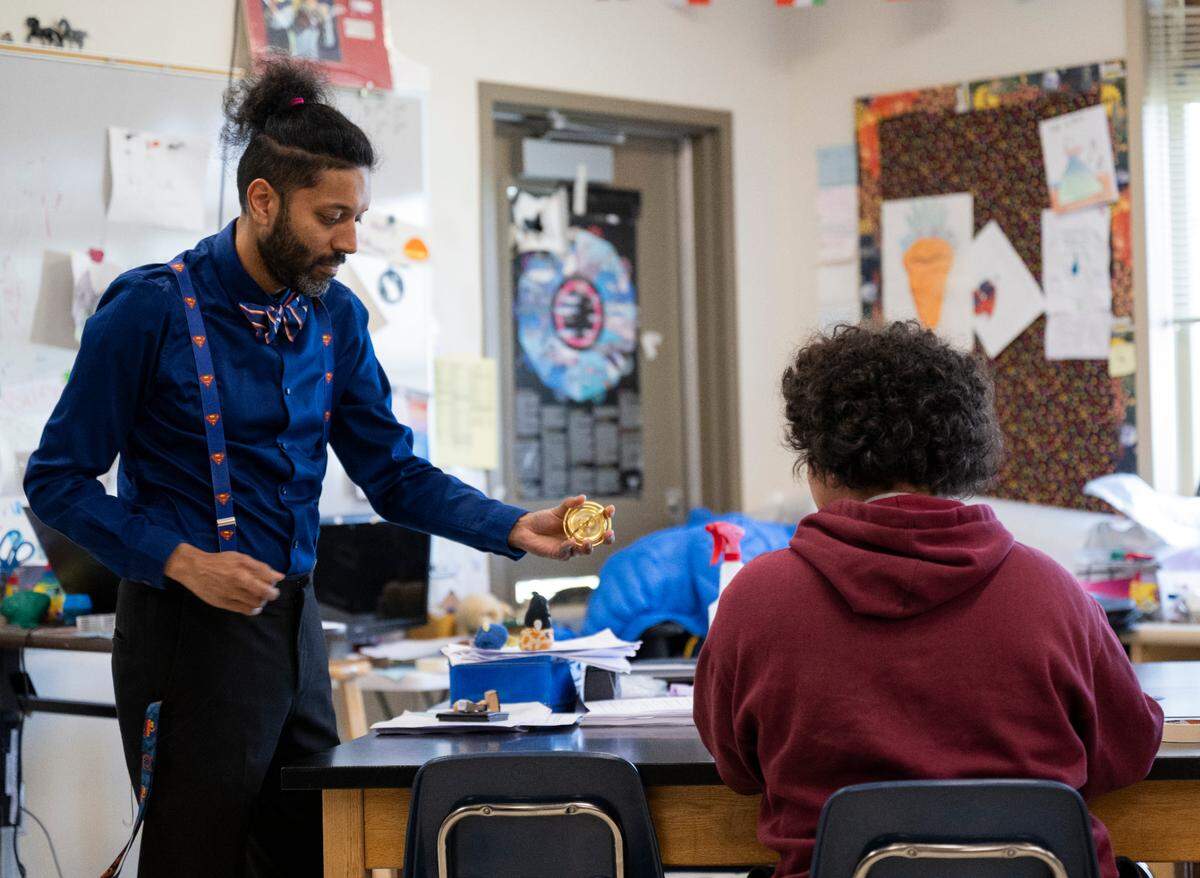
The club started in fall 2021. It has about 10 members. It meets after school once a week in Scaife’s classroom.
‘I love coming here’
A News Tribune reporter attended the March 6 and Feb. 28 meetings, during which the club read excerpts from “Lies My Teacher Told Me” by James W. Loewen and “How to Be a (Young) Antiracist” by Ibram X. Kendi and Nic Stone.
Scaife started the meetings by asking how the students’ week was going. Then they moved on to the book of the week and read a portion of it. Afterward, they discussed their thoughts on what they read and did a short post-reading activity.
After reading part of “Lies My Teacher Told Me,” the students agreed that not everything that happened in the past is discussed in history classes. They also interpreted part of a chapter in their own words.
After reading part of “How to Be a (Young) Antiracist,” students learned what the words racism and racial inequity mean. They searched for definitions of words such as racist and antiracism.
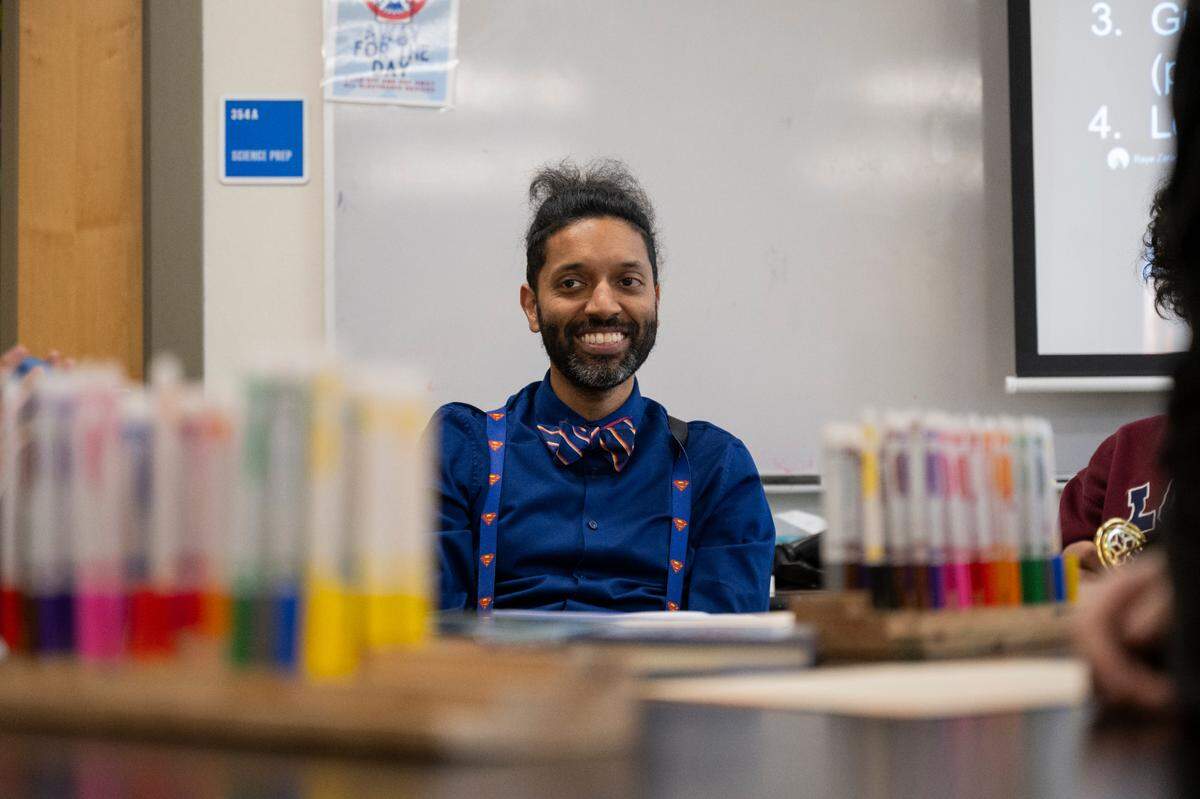
Scaife also asked students if they saw anything in the news that they wanted to talk about. Some topics they have talked about include representation in Hollywood, bias in policing and police brutality.
BIPOC Club member Mary Joy Carbillon, who is in seventh grade, told The News Tribune that Scaife teaches them important things in a fun way. She also said it is nice to be in a space where people are respectful of others.
“I love coming here,” BIPOC Club member Anthony Olivas told The News Tribune. Olivas is also in seventh grade.
Scaife said the club offers students of color a safe space – something he wishes he had growing up. Throughout his K-12 education he was oftentimes the only student of color in class, he said, and he never had any teachers of color.
“I would have loved to have a teacher that brought me modern social issues and talked about the politics behind it and the history,” he said. “Since I didn’t have that hopefully I can be that for some students.”
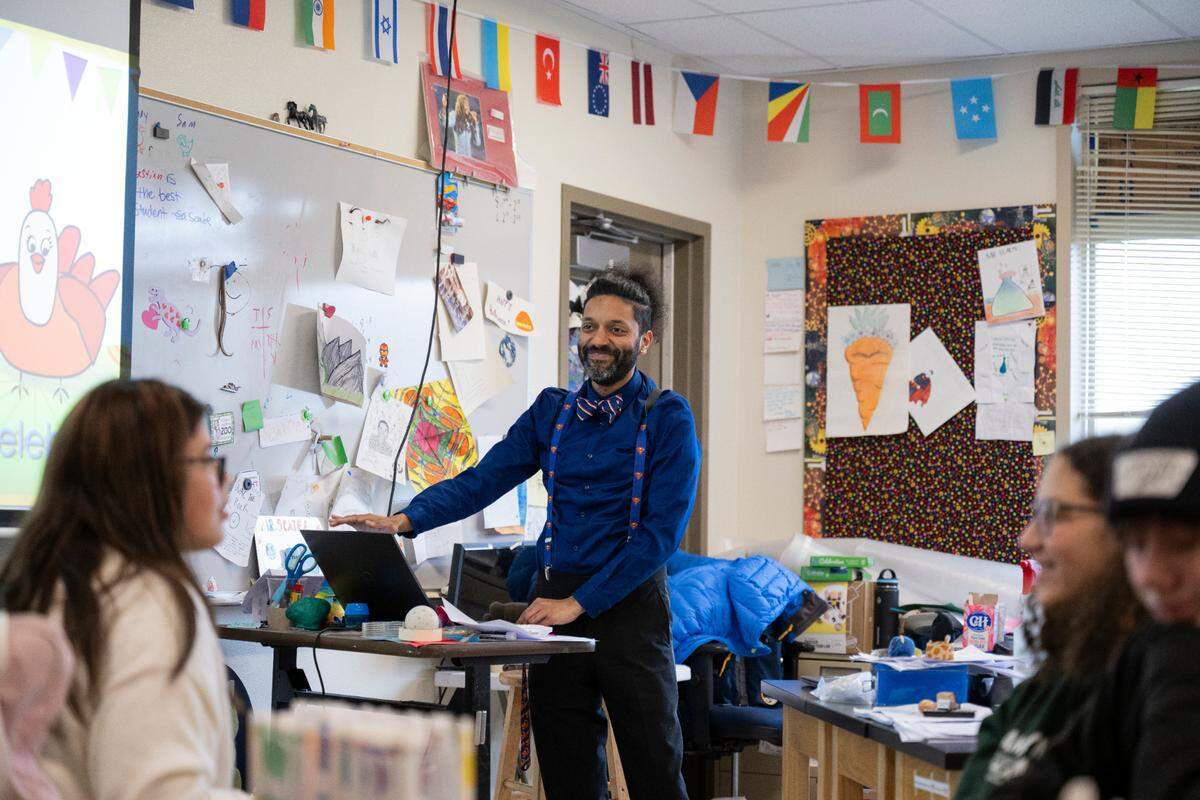
Scaife said when the club first started, some parents were concerned that it would teach students about critical race theory. He told the parents who had concerns that the club is a safe space for students of color and that allies are welcome.
A safe space, to him, is a place where students can feel heard, valued and appreciated because of who they are. It is a place where they feel a sense of camaraderie, connection and belonging.
He defines critical race theory as an academic study of the role and influence of race and ethnicity in society, politics and the formation of socioeconomic classes, as well as disparities among races and ethnicities. It involves sociology, history, political science, ethics studies, anthropology, economics and other subjects.
That is not what he talks about during club meetings. Instead, they discuss social issues and the history behind them.
Hiring more teachers of color in Orting
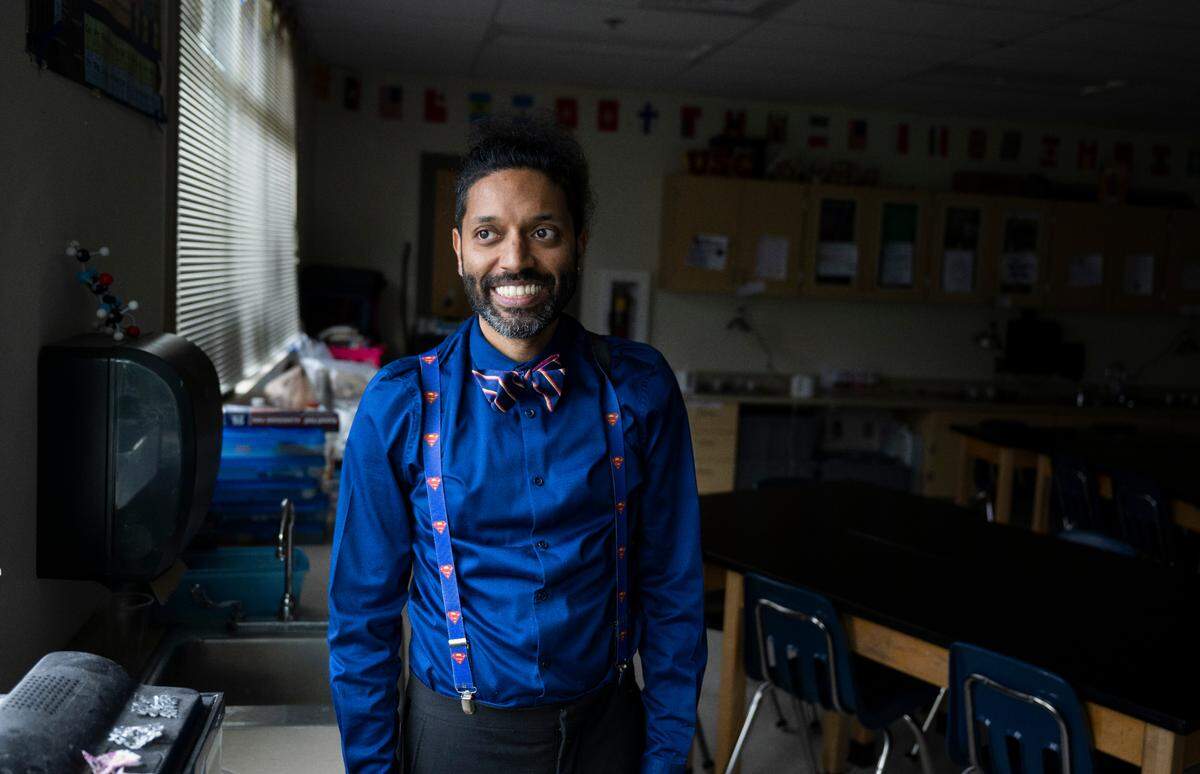
Scaife, 40, lives in Tacoma with his mother and six cats. He was born in India and spent the rest of his childhood in Vancouver, Washington. At the University of Southern California, he got his bachelor’s degree in international relations, and he minored in anthropology.
He used to work at a charter school in Los Angeles, and a charter school in Kent. He said he applied for a job in the Orting School District when he spoke with a former school principal at a job fair.
Scaife said the former principal told him at the time that more students were coming to Orting, and that it would be good to have more teachers of color who are passionate about working with students of color.
A total of 2,820 students were enrolled in the Orting School District for the 2022-23 school year, according to a report from the school district. About 68 percent of those students are white, and about 32 percent are Latino or Black, among other ethnicities.
For the 2021-22 school year, 2,670 students were enrolled in the Orting School District. About 70 percent were white, according to a report from the school district.
When asked if the school district’s teaching staff represents the student body, school district spokesperson Brittany Piger said it is a goal to hire more BIPOC staff members.
Michael Czerwinski, who teaches science and social studies at Orting Middle, said Scaife has a magnetic personality. Scaife can make students feel at ease and comfortable, which is sometimes difficult for teachers to do, Czerwinski said.
Scaife has been a champion for students of color, Czerwinski said. At staff meetings Scaife is vocal about their needs, Czerwinski said, which has made others better teachers for their students, including himself.
“He is one of my favorite people in the whole wide world,” Czerwinski said about Scaife.
April Reynolds, a counselor for the Kent School District, said there is no one like Scaife. Reynolds used to be a counselor for the Orting School District, and she worked with Scaife and the BIPOC Club students.
“He’s just – from the inside out – a wonderful human,” Reynolds said.