Dog owners worry about safety, bacteria at Puyallup park. ‘It’s such a bog in here now’
Cooper the 11-year-old Australian miniature shepherd has chased balls at the Clarks Creek dog park in Puyallup for most of his life.
“We’ve been going there since he was 16 weeks,” owner Dawn Woods told The News Tribune recently.
It’s about a five-minute drive from her home.
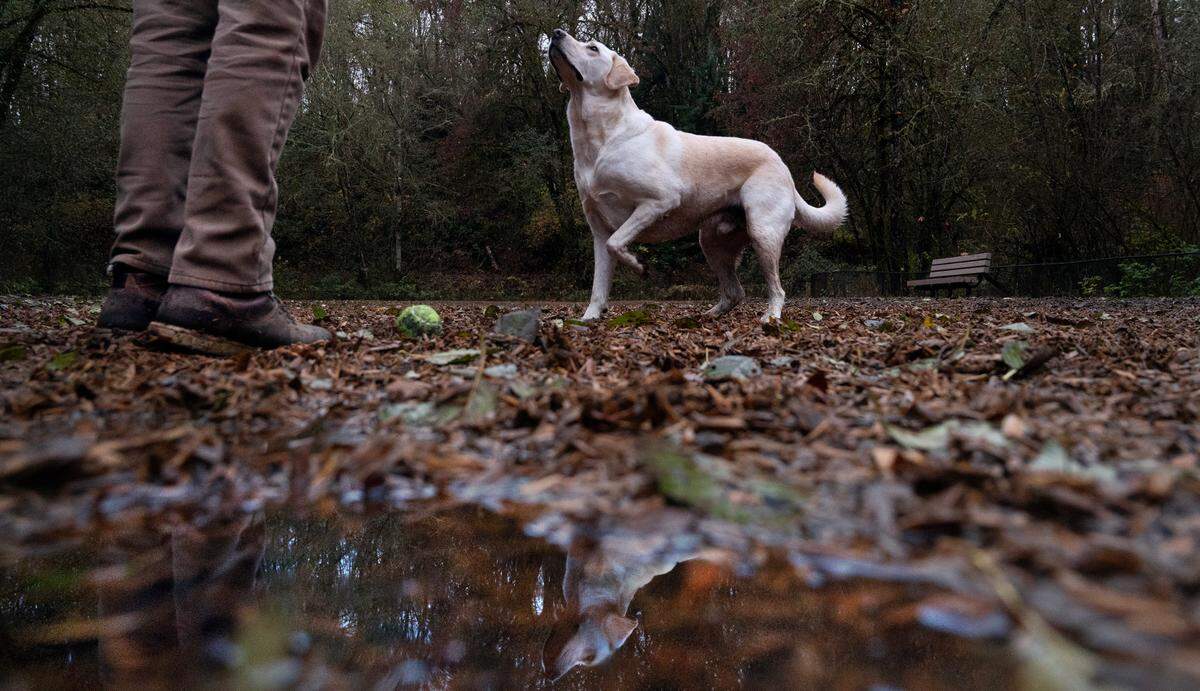
The dog park at 1710 12th Ave. SW had grass when it opened in 2007, according to News Tribune archives. It’s had wood chips for about the last 10 years, and as the city has layered more and more wood chips in the park over that decade, Woods and other residents say drainage has gotten worse and worse.
They’ve gotten increasingly frustrated with the swampy mess and recently started speaking out and pushing the city for help, saying that the wood chips cause problems for humans and their pups.
Woods said she doesn’t go to the park as often or stay as long as she used to because of the wood chips. The past four years or so, she said, she’s noticed Cooper’s paws have become more sensitive to the surface. She also worries about bacteria from feces and urine in the stagnant pools of water, and that the older Cooper gets, the harder it will be for him to fight off possible infections.
“Cooper doesn’t do really well with bark,” Woods said.
Among other problems, he gets little pieces stuck between the pads of his feet, she said, and holds his paw up and acts like he’s hurt.
City officials say they’re listening, and that they’re working on it.
“If there are issues, we definitely want to hear about them and try to address those,” Parks & Recreation Director Cody Geddes told The News Tribune on Nov. 20. “What we’ve done to try to help so far might not be hitting the mark for everyone, but we’re certainly trying to improve things as we move forward.”
Residents who use the park went to the Parks & Recreation Board meeting Sept. 9 after Geddes asked them to come and share their concerns.
“They just want that dog park to be the best dog park ever,” city spokesperson Eric Johnson told The News Tribune. “We see that and we hear that. We take those concerns very seriously.”
Gene Sorensen, 67, spoke on behalf of the group at the meeting Sept. 9. He’s lived in Puyallup for 35 years and said he advocated for the creation of the park.
He takes his 3-year-old Romanian raven shepherd, Eddie, and his 6-year-old Himalayan sheepdog, Max, to the park.
Before that, he’d bring his shepherd/lab mix, Chip, who has since passed away.
“He was a big ball player,” Sorensen told The News Tribune on a trip to the park this month. “He just loved this place.”
Sorensen pointed out the swampiness of the park to the News Tribune reporter who visited.
“It’s such a bog in here now,” he said. “... It’s just layer on top of layer.”
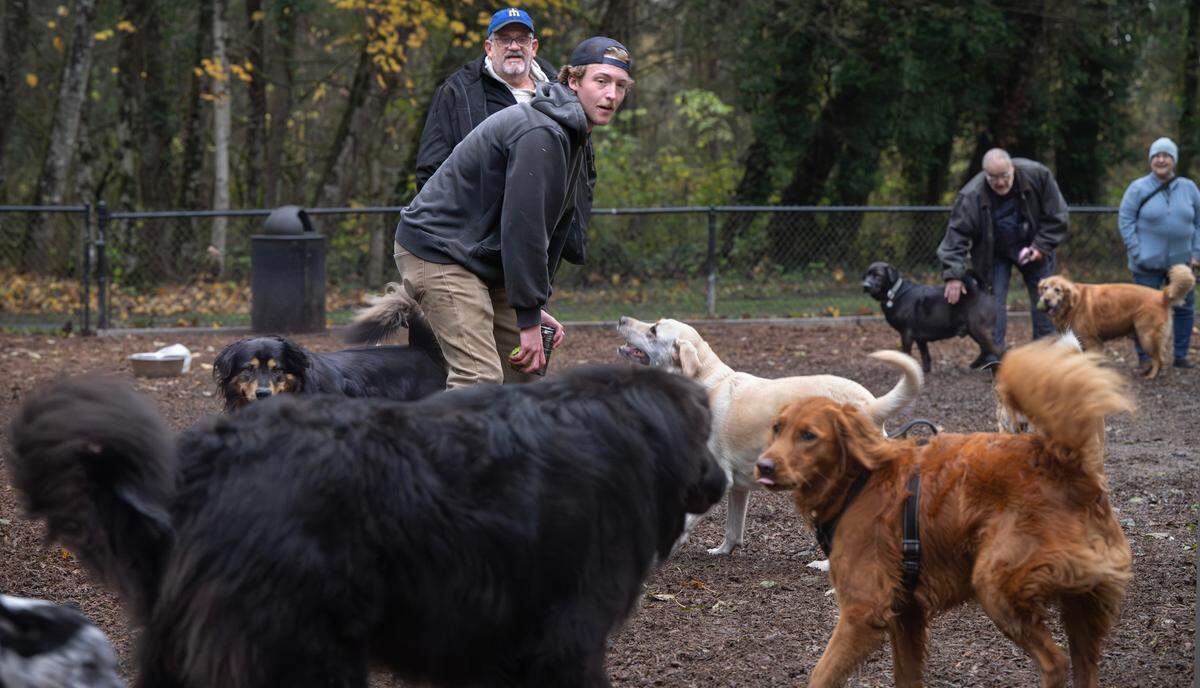
Sorensen explained to the board Sept. 9 that the wood chips that have accumulated over the years to create a mess in the park, and that they’re thick enough that it makes it hard to walk.
He told the board that feces and urine soaked into the chips create microbial problems, and that the chips give dogs splinters, too.
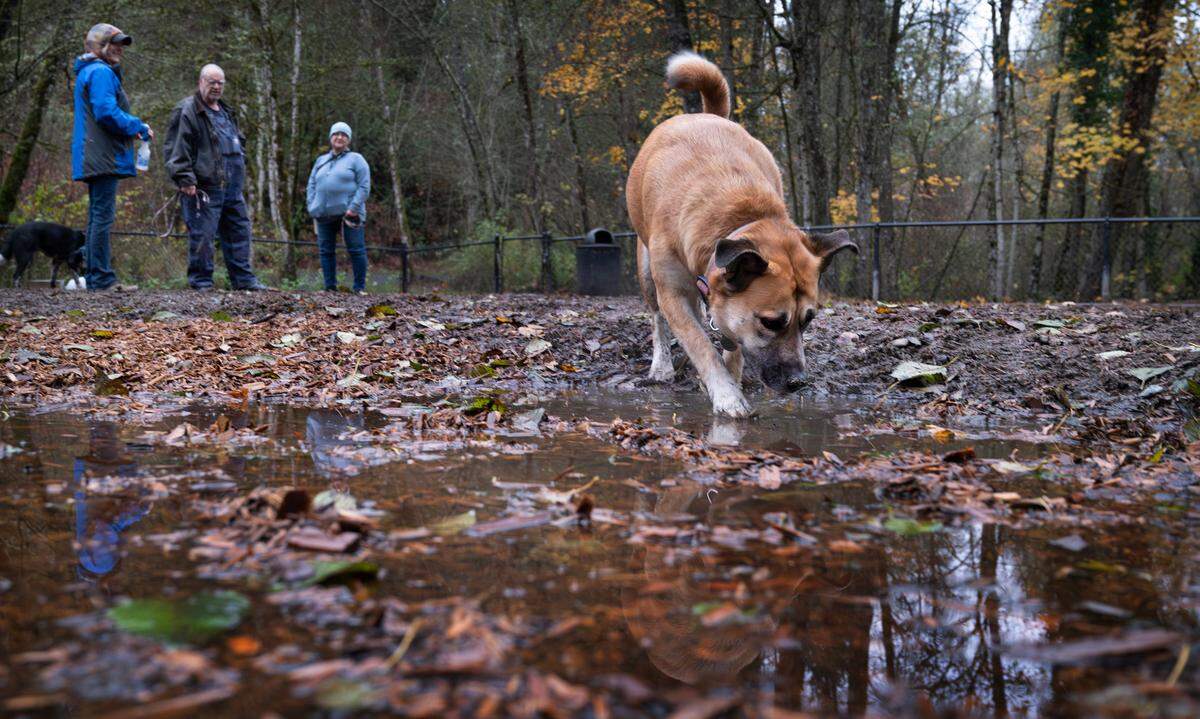
Drainage problems have been getting worse, he told the board, which creates stagnant puddles at the park, and mosquitoes are a problem.
Owners used to dig little trenches with their “Chuckit!” ball launchers, he said, to help drain the puddles.
One member of the board said at the meeting that his family doesn’t take their dog to the park because of the drainage issue.
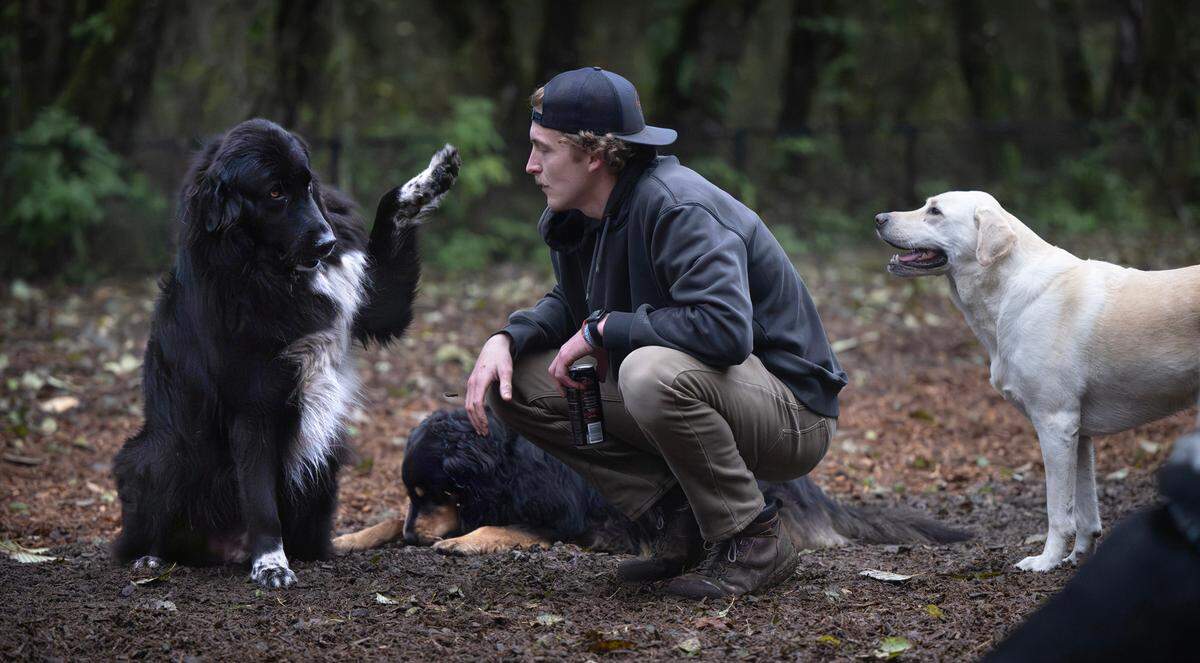
Sorensen told the board that it’s a close-knit group of neighbors that uses the park daily, and that they volunteer their time to help maintain it, such as cleaning along the fence.
His hope, he told the board, is that the city could move the bark to the back of the dog park before the rainy season, as an interim measure. Ultimately, he said, his hope is that the city can dispose of the bark and install washed stone dust (crushed granite or basalt), that he said has worked well for other dog parks.
The board asked if Sorensen’s group would be willing to help move the wood chips, and he said he had about 20 dog owners ready to do the work.
“We love our park,” he told the board. “We’re willing to take care of it and help you.”
He also made a pitch to the board to get a water source at the park, which he said he was promised 20 years ago and quipped that he asks for every five years or so.
Sorensen raised his concerns again at a City Council meeting this month.
What’s next for the Clarks Creek dog park?
Geddes, who has led the Parks & Recreation Department for 18 months, said the city’s stormwater engineer visited the park recently and determined that state Department of Ecology regulations would require the city to do mitigation projects if they used washed stone dust. For instance, the city might be required to install a retention pond or some sort of drainage system, which he said could be costly.
It’s a 20,000-square-foot park, and the state would consider washed stone dust to be an impervious surface, which triggers extra requirements, Geddes said.
“The plan is to stop and kind of take into account what the other options might be at this point,” he said.
Asked if washed stone dust is off the list completely, Geddes said it’s just lower on the list now. Sand is one of the surfaces the city is looking at.
Chambers Creek Regional Park has a dog park with a sand surface, he said, and the city plans to research what that involves and how it is maintained, in addition to what’s working and not working for other cities, and what the different options cost.
As for removing all the wood chips in the meantime, he worries that doing that would turn the park into a big mud pit. The city is trying to help with the drainage where it can during the rainy months, he said.
Geddes said his understanding is that the city installed the wood chips about 10 years ago after users asked them to address concerns about the park being too muddy.
“We are hearing from a vocal group, but also probably need to talk to other dog park users,” he said, to find out what others want.
Johnson, the city spokesperson, said the city probably would survey residents in the spring about different surface options for the park after it has researched viable surfaces for Clarks Creek and learned more about what other cities do. He also pointed out that there are geographic challenges, given the proximity to the creek.
It’s possible the city would look at summer or fall 2025 to install new surfacing, Geddes said.
Clarks Creek is the only dog park they’re looking at for now. Dog park users at the Rainier Woods park near Shaw Road and Cherokee Boulevard haven’t raised the same concerns, he said, and some donate to help get new wood chips.
‘It just gets really disgusting.’
Fairfax County in Virginia is one of the places Sorensen’s group identified that uses washed stone dust for most of its parks.
“Review of other jurisdictions’ dog park design guidelines has proved that there is no universal consensus on the best type of surfacing,” the county’s 2020 dog park study report said. “All surfacing types, such as natural turf, washed stone dust, wood mulch, and synthetic turf have pros and cons related to use, maintenance, and cost to be considered.”
The washed stone dust drains well, has a moderate cost, requires “minimal maintenance” and has a “high durability,” the report said, though parks with it can get dusty at times.
Maintenance of wood mulch is more difficult, the county found, though it’s cheaper to replace.
“The composition and color of wood mulch makes dog waste difficult to detect and remove,” the report said. “Additionally, wood mulch does not drain as well as the other surface types and holds odors.”
Dog owner Sarah Robinson, 27, said even if Puyallup doesn’t get washed stone dust, getting rid of the wood chips would be preferable.
She’s been using the dog park since she moved to Puyallup a couple years ago. It’s about a 10-minute drive from her home.
She takes her 8-year-old Pomeranian, Kira, and her 6-year-old husky mix, Maya.
“My husky likes to play,” she said. “My Pomeranian just kind of follows me around.”
Things aren’t so bad over the summer, she said, but it gets worse during the rainy season.
Dog owners have to keep a close eye to prevent their pups from drinking from the puddles in the bark, she said.
“It just gets really disgusting,” Robinson said.
Tia Sosa, 47, lives along the creek. She walks to the dog park with Daisy, her 18-month-old Australian shepherd, and Duke, her 11-month-old German shepherd.
“They’re both very young, so I need the dog park,” she said. “They’re both very high energy.”
Having a park they can walk to is important, she said. Duke gets car sick.
The trails at Clarks Creek are nice in the summer, she said, but they get slippery in the winter, and it gets dark too early in the winter months to use them safely, she said.
She slipped in January and hurt her ankle pretty badly, she said.
“I do feel safe enough to take them to the dog park and let them run for 20 minutes,” she said.
That comes at a muddy price, though.
“It’s a pain, because I get home and I basically have to give them a bath, and it’s awful,” she said. “... Daisy is very dramatic.”
The bark got high enough in the spring, she said, that dogs could jump over the fence. Daisy was one of the escape artists.
She also said she gets bug bites and that her daughter got one that became infected. Fleas are pretty bad at the park, she said.
“That’s going to be any place you go, but the wood chips don’t help,” she said.
Getting rid of the wood chips, she said, “would help a whole bunch of things.”
Woods, who owns the miniature Aussie, told The News Tribune the park had sand and grass when she started going there.
“There was puddles and stuff, but not as bad as it is now,” she said.
She worries about how bacteria in the puddles at the park could affect her senior dog. Cooper defiantly tries to play in the water and drops his ball in it sometimes when she tells him not to.
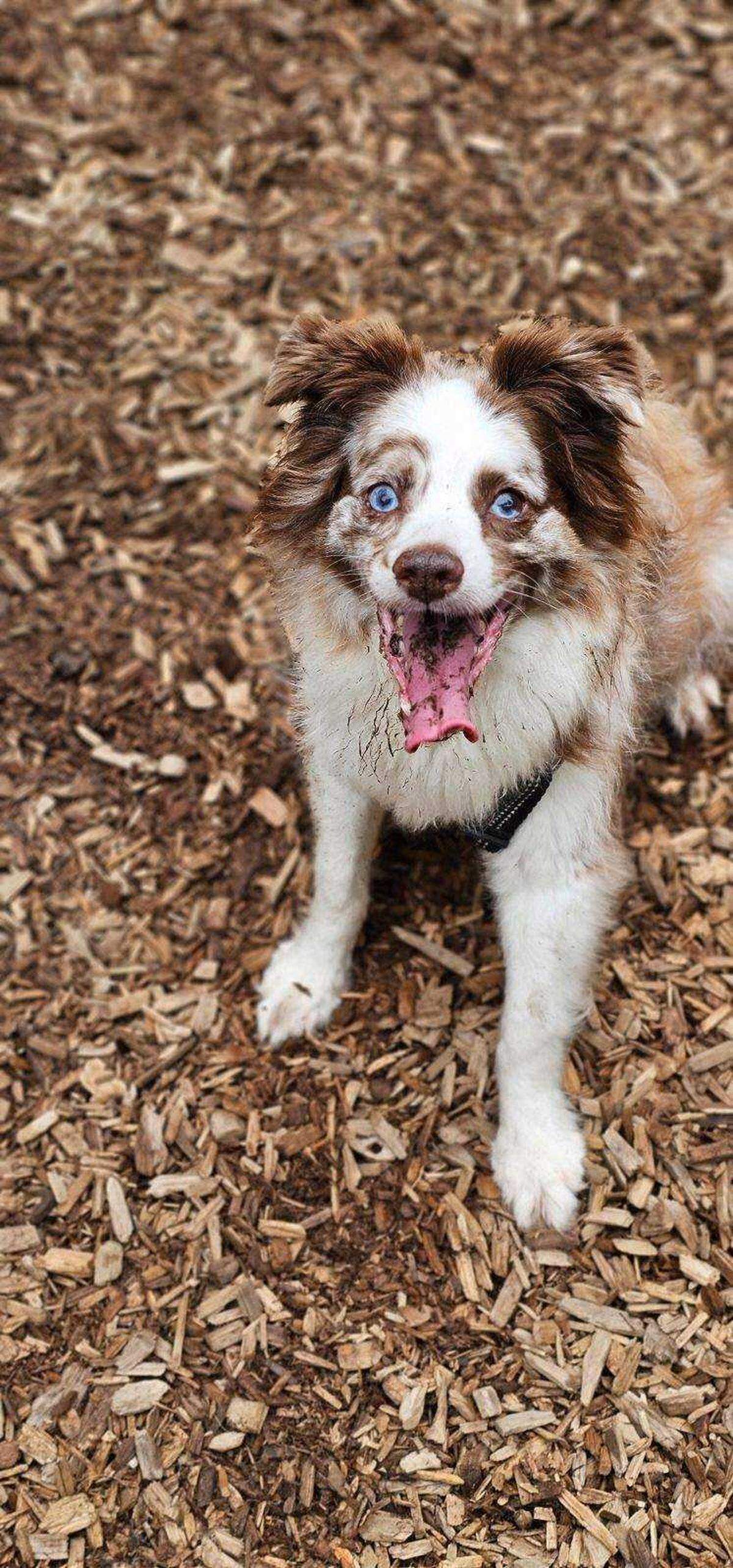
She’s had trouble with infection at the park herself, she said. She has immune system trouble and a mosquito bite in September turned into sepsis, she said.
She also worries that Cooper ingests pieces of the bark that stick to the ball she throws for him. She finds bits of bark in his poop sometimes. One of his buddies, Chico, tries to eat the bark on purpose, she said.
Cooper only plays for about 30 minutes at Clarks Creek before his paws start hurting and she takes him home.
“We would go for hikes and all that and he was fine,” she said. “It just seemed to be that bark.”
Sorensen’s close-knit group of dog owners does weekend trips together, including to the Fort Steilacoom Dog Park in Lakewood.
Woods said watching the dogs play on the grass there, versus at Clarks Creek, is like night and day.
“The dogs are so happy,” she said about the weekend visits.
Eddie, one of Sorensen’s dogs, bounces around like a big teddy bear, she said.
“They’re just happy,” Woods said. “Even with it raining, they’re just hopping around.”
Cooper plays for hours there, she said, bounding after his ball on the grass and sand.
.jpg "image000001(1).jpg")
This story was originally published November 26, 2024 at 5:00 AM.