Puyallup’s school bond is on the ballot. Why did property taxes already go up?
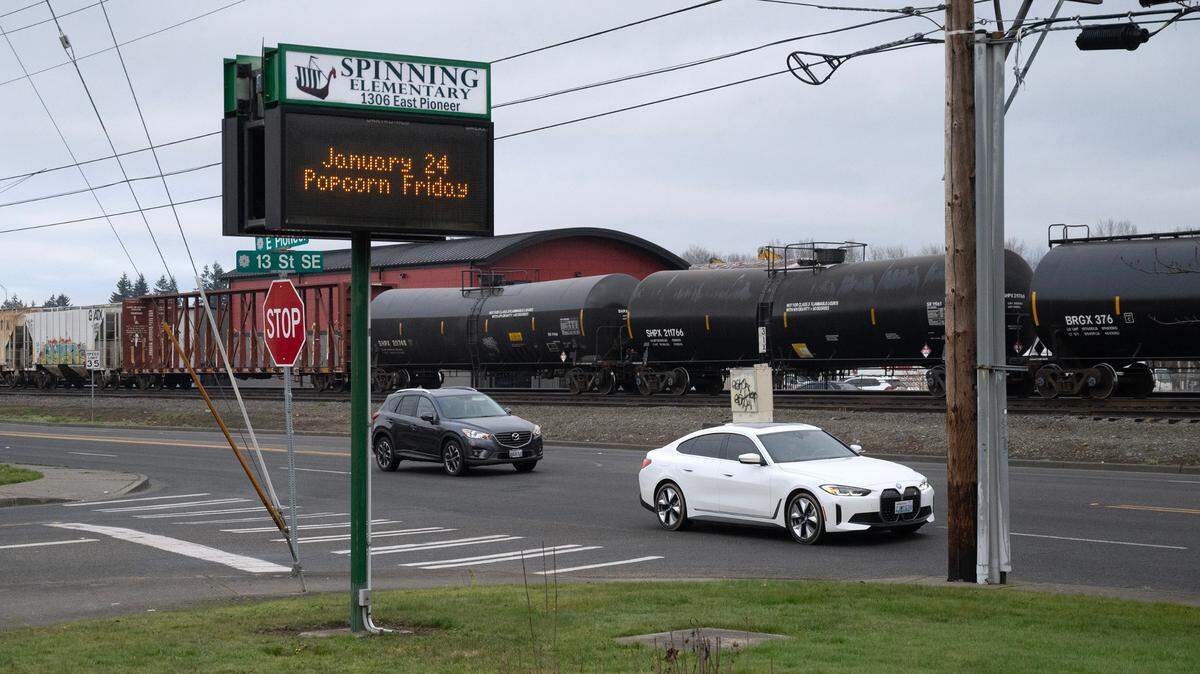
Two months after its $800 million bond failed, the Puyallup School District is putting it before voters again on April 22.
“We understand that, historically, April elections have a lower voter turnout,” Sarah Gillispie, spokesperson for the school district, told The News Tribune. “But we are hopeful that our community will recognize the urgency and importance of this measure.”
The bond would allow the district to expand three high schools; replace Mt. View, Spinning and Waller Road elementary schools; and build a new elementary school near Emerald Ridge High School and Glacier View Junior High.
In February, voters approved the measure with a 63% approval rate — but the bond still failed because it didn’t get the amount of total votes it needed to pass.
In Washington state, a bond has to pass by getting 60% approval and getting a total turnout rate that matches 40% of the previous election. For elections in 2025, officials base this on the turnout rate for the November 2024 election – which means 28,216 ballots need to be cast in order for the election to be approved. The February election saw 25,408 votes – less than 3,000 away from the total amount of votes needed.
Gillispie said she estimates there are around 90,000 registered voters in the Puyallup School District.
How much does this cost taxpayers?
In 2024, voters approved a six-year property tax rate increase that brought rates up by 87 cents, starting in 2025. Voters went from paying $3.27 per $1,000 of assessed property value to $4.14. If the new bond goes through, voters would pay that same amount for 21 years instead of six.
“That rate of $4.14 is already locked in, based on the capital levy from 2024,” Ellen Aronson, head of the “Yes” campaign for the bond, told The News Tribune. “It’s already locked in for six more years, so voting ‘no’ is not going to reduce your taxes in the short term.”
Gillispie said the county adds an additional 7 cents, leading to it being $4.21 per $1,000 of assessed property value.
The owner of a $600,000 home in Puyallup is paying $2,526 in property taxes to the district each year under this rate.
Gillispie said the bond, if passed, would lock this rate for 21 years — with no increases until 2045. She said she expects this rate to be stable unless “affected by legislative action.”
“The tax rate is expected to remain stable, but we don’t know at this point what the results will be of the legislative session,” Gillispie said.
Gillispie said later in an email to The News Tribune that the district is watching two bills in the legislature. SB 5263 has to do with special education funding, and HB 1338 concerns school operating costs. On April 7, the Puyallup School District published a letter on its website urging the state to keep sending funds to the school district. In the letter, they emphasized that the district has faced a $78 million funding gap since 2020 due to “inadequate state funding and rising costs.”
The legislative session is scheduled to end on April 27.
Supporters of the bond say that, if it fails a second time, they expect the school district will put it on the ballot again in the future, but with a higher property tax rate.
“Costs for everything are going up, so we, as a community, can decide we are going to make this investment in our kids and our educators now — or we are going to have to address these needs in the future at a higher cost,” Aronson said.
Steve Beck, the leader of the “No” campaign against the bond, said he is worried about the high cost of property taxes.
“[I’ve met a lot of people] that have expressed a lot of angst because of how much the property tax went up last year,” Beck said. “My personal property tax on my house went up 21% last year.”
Beck went on to say that people are struggling to afford necessities right now, and he worries about residents moving out of Puyallup because of it.
“When I look at the enrollment for kids, they’ve got less people in kindergarten and first grade than they do in high school. There’s not a huge population coming, people are not having as many kids because of the expense,” Beck said. “People are going to leave Puyallup or Edgewood because of high cost of housing and property tax is a big part of that.”
When The News Tribune asked Gillispie about their student demographics and expected growth, Gillispie said the district is expecting their student population to grow by 1,000 over the next 10 years. The district currently serves 22,905 students.
Why does the school district think this bond is needed?
Gillispie said the bond is needed because several schools are in poor condition, and hundreds of students are taking classes in portables every day. She also said the new elementary school near Emerald Ridge High School and Glacier View Junior High would play a critical role in addressing the growth in that area.
Two schools — Spinning Elementary and Waller Road Elementary — are at risk of closing if the bond fails.
“They have the lowest building condition scores against all other schools in the district,” Gillispie said. “They have critically outdated infrastructure that is beyond repair.”
When The News Tribune asked what that closure process would look like if the bond fails, Gillispie said it would be “a process” and that students at those schools would be transferred to nearby schools.
“My kids went to Fruitland Elementary and that school is already crowded — it’s one of the schools closest to Waller Road,” Aronson told The News Tribune. “The school board will probably be thinking of sending some of those kids to Fruitland just because of how close it is, and Fruitland is already full. I don’t think we can fit kids from a closed-down school.”
Aronson said the district does not have a specific timeline for when these schools would close, but those conversations would start after the election if the bond fails.
Aronson also mentioned that the library science building at Puyallup High School has been condemned because it was no longer safe to be in. She also said there is only one working science lab for the school’s roughly 1,700 students.
The News Tribune saw concerns on social media that, if the bond is approved, the school district would continue to ask residents for more funding in coming years. When The News Tribune asked Aronson about these concerns, she said residents will see more school district measures on the ballot in the future — but for different causes.
“Yes, the levy that pays for teachers’ salaries is going to come up either next year or the year after that, but it’s a completely different thing than the bond,” Aronson said. “These projects are really important and they’re separate from teachers’ salaries and operating costs. People are always like, ‘Oh, the school district is coming back again to ask for more money,’ [but] it’s different money. It’s just like a renewal.”
Aronson said the bond focuses on the buildings and having healthy schools for children to go to. She also mentioned that Puyallup hasn’t passed a bond since 2015, and before that, 2004.
When The News Tribune asked Aronson if future measures that go towards funding operational costs or teachers’ salaries will affect the $4.14 rate, she said the district is aiming to keep property taxes at the level they are already at now.
“The goal is to maintain the tax rate and not increase it and have it be a straight across renewal of what is currently there right now,” Aronson said.
Looking ahead to April 22
Gillispie told The News Tribune that it costs the school district $350,000 to put this measure on the ballot again.
“The cost for us to be on the April ballot is approximately $350,000, which is a significant expense for the district,” Gillispie said. “However, it’s important to know the importance of this bond — the potential consequences for our schools made it essential for us to take action.”
Gillispie and Aronson both said that the school board felt encouraged by the 63% approval rate from voters in February, and the district wanted to build on that momentum two months later.
“We were only short by 2,800 votes and there were over 60,000 residents in Puyallup who didn’t turn in their ballots,” Aronson said. “So, I imagine that some of them support the schools and care about the schools.”
Gillispie said the district is feeling “cautiously optimistic.”
Residents have until April 14 to register to vote, either online or in person. You can register in person until 8 p.m.
Voters must postmark their ballots by April 22 or get them to a drop box by 8 p.m. that night. More information, including drop box locations for this election, is available on the Pierce County Elections website.
The News Tribune archives contributed to this report.