Puyallup: News

Puyallup hospital’s new robotic technology revolutionizes lung cancer diagnosis

New robotic technology has arrived at Puyallup’s MultiCare Good Samaritan Hospital – and it creates a world of difference for lung cancer patients in Pierce County.

The DaVinci ION robotic surgery system is used during lung biopsies, where doctors find lung growths and gather the information they need for treatment.
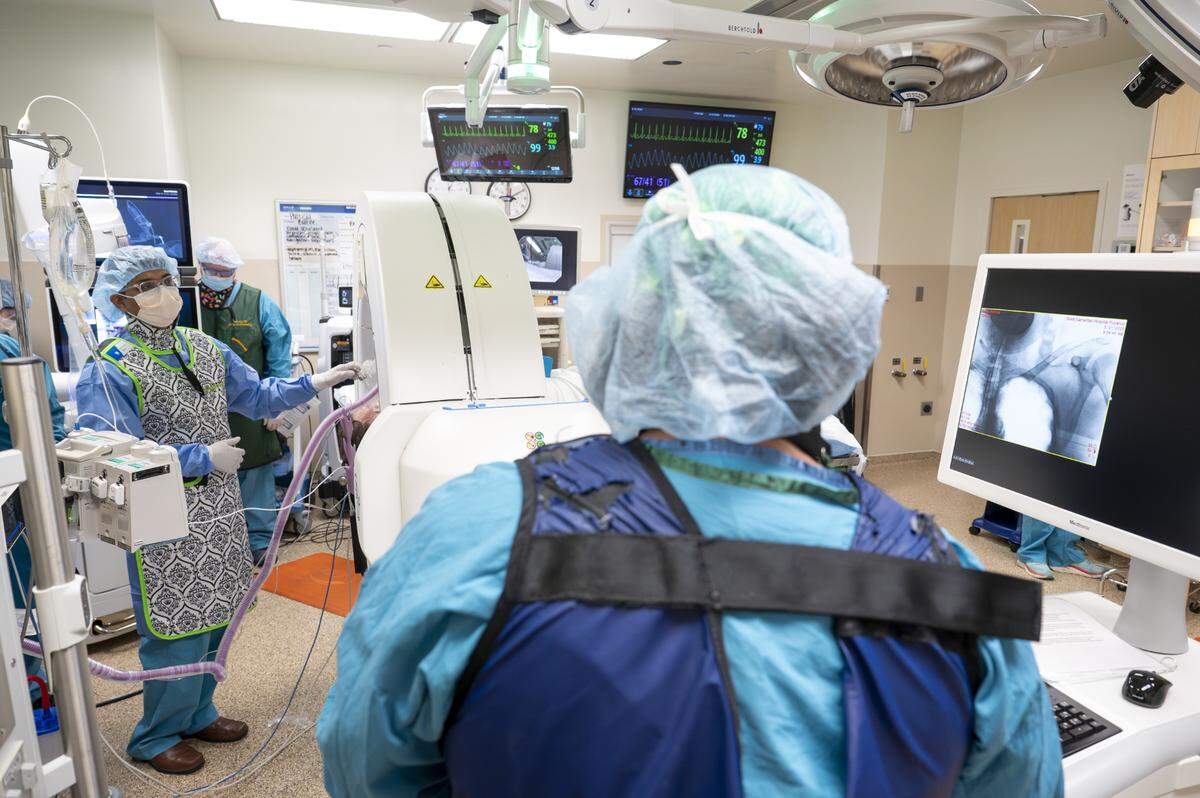
Abhishek Biswas, left, a pulmonologist with Multicare Health, utilizes X-ray imaging, center and right, to prepare for a lung biopsy using the DaVinci ION robotic surgery system on Wednesday, May 21, 2025, at Good Samaritan Hospital in Puyallup, Wash.
Abhishek Biswas, left, a pulmonologist with Multicare Health, utilizes X-ray imaging, center and right, to prepare for a lung biopsy using the DaVinci ION robotic surgery system on Wednesday, May 21, 2025, at Good Samaritan Hospital in Puyallup, Wash. Liesbeth Powers Liesbeth Powers / lpowers@thenewstribune.com

“This is a worldwide phenomenon,” said Abhishek Biswas, a pulmonologist at MultiCare. “It was much harder to get a stage 1 diagnosis before the advent of this ION.”

Biswas told The News Tribune the technology came out around 2019 or 2020, and MultiCare first acquired it in 2022. Good Samaritan Hospital acquired the new system in April.

“We wanted to expand [to Good Samaritan] — not as a big business venture, but to make sure patients have care close to home,” Biswas said. “Get treated and, subsequently, get care.”
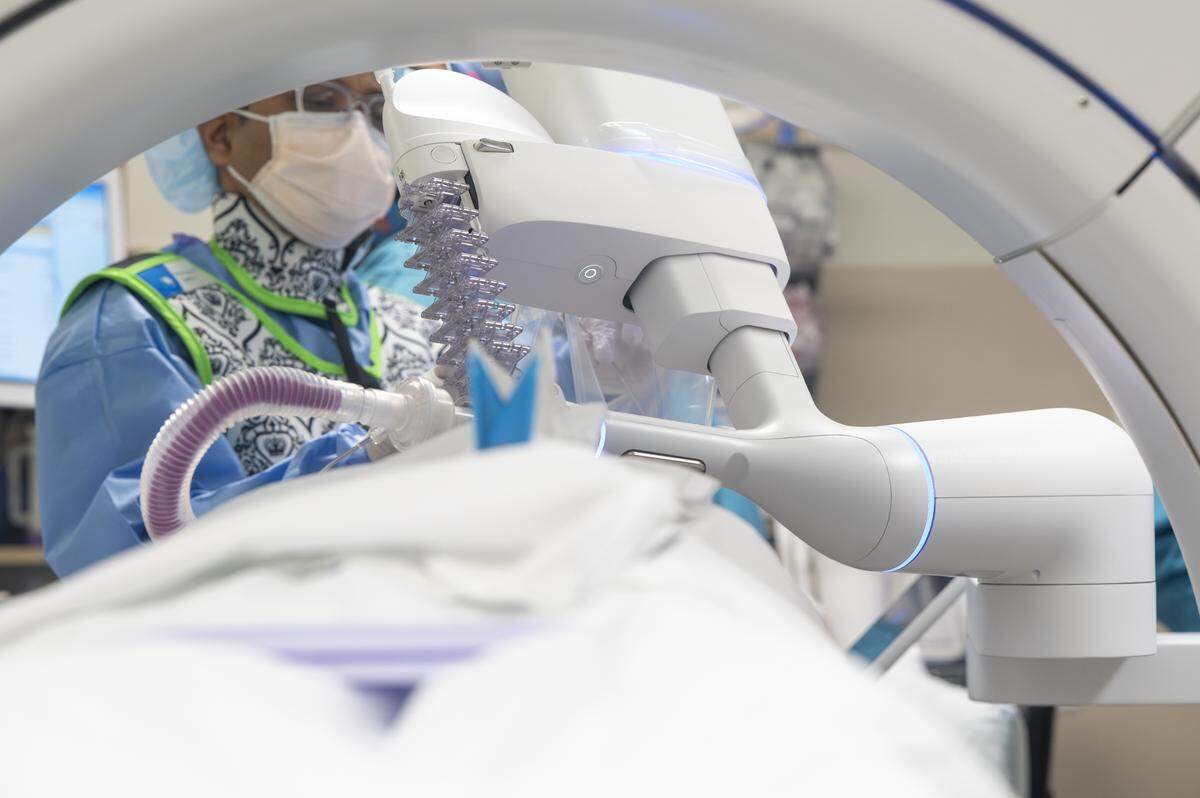
The arm of the DaVinci ION robotic surgery system is visible between the ring of an X-ray machine and Abhishek Biswas, left, a pulmonologist with Multicare Health, as he uses the ION for a lung biopsy procedure on Wednesday, May 21, 2025, at Good Samaritan Hospital in Puyallup, Wash.
The arm of the DaVinci ION robotic surgery system is visible between the ring of an X-ray machine and Abhishek Biswas, left, a pulmonologist with Multicare Health, as he uses the ION for a lung biopsy procedure on Wednesday, May 21, 2025, at Good Samaritan Hospital in Puyallup, Wash. Liesbeth Powers Liesbeth Powers / lpowers@thenewstribune.com

The News Tribune asked MultiCare how much it cost them to acquire the technology, but they declined to say.

What happens during the procedure?

The procedure happens after a doctor has run a CT scan on someone and detected nodules in their lungs.

“We need to know if the nodule is malignant or benign — if it is cancer, what type of cancer? What is the stage?” Biswas said. “This procedure gives us answers to all three of these questions at the very outset.”

It is not a surgery, Biswas said, it is a minimally-invasive procedure. The doctor gives the patient general anesthesia and conducts X-rays — then puts a needle and probe down the patient’s mouth. The tools go down the throat, through the trachea and down to the lungs.
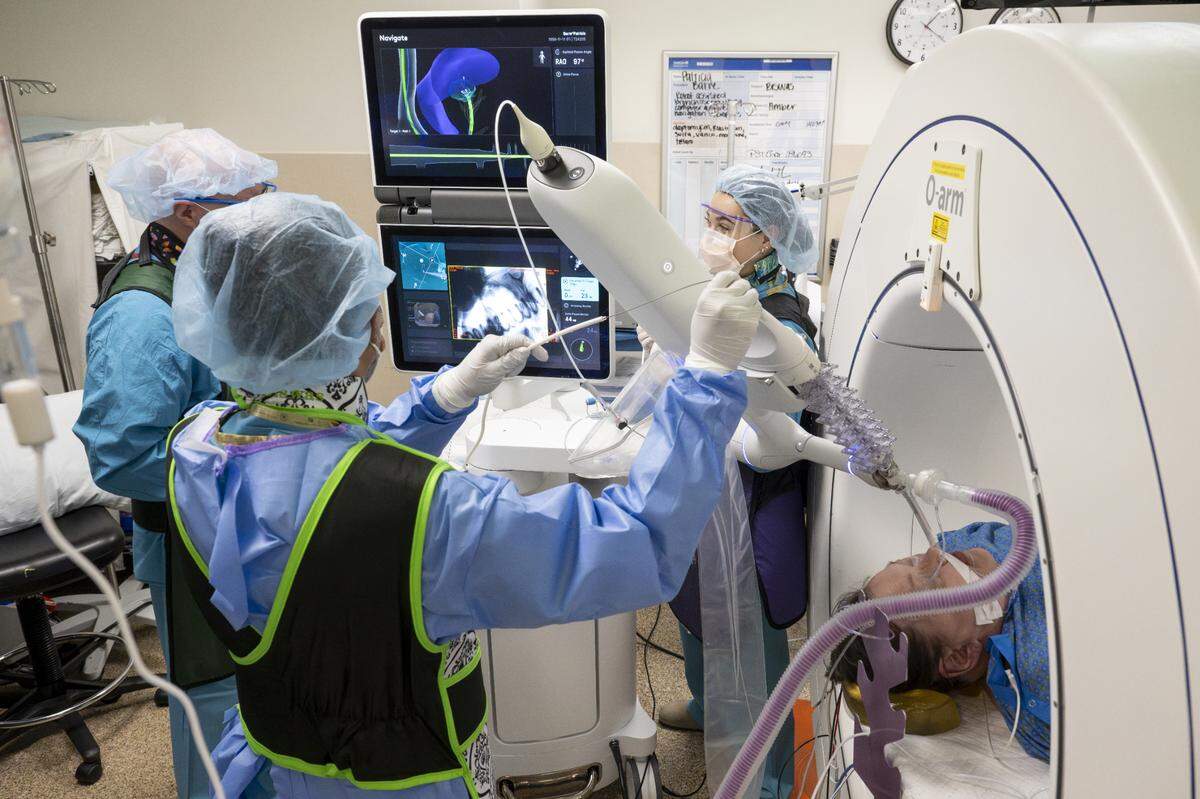
Abhishek Biswas, front center, a pulmonologist with Multicare Health, looks to the digital display on the DaVinci ION robotic surgery system to guide a catheter during a lung biopsy procedure on Wednesday, May 21, 2025, at Good Samaritan Hospital in Puyallup, Wash.
Abhishek Biswas, front center, a pulmonologist with Multicare Health, looks to the digital display on the DaVinci ION robotic surgery system to guide a catheter during a lung biopsy procedure on Wednesday, May 21, 2025, at Good Samaritan Hospital in Puyallup, Wash. Liesbeth Powers Liesbeth Powers / lpowers@thenewstribune.com

On another screen, doctors use the patient’s previous CT scan to map a path to the nodule.

“It generates a map to reach into the nodule, into the lung, and once we actually have that map ready, we go down the mouth with a tiny catheter on my way into the nodule,” Biswas said.

This helps with accuracy, Biswas said, as the nodule is constantly changing positions as the patient breathes.
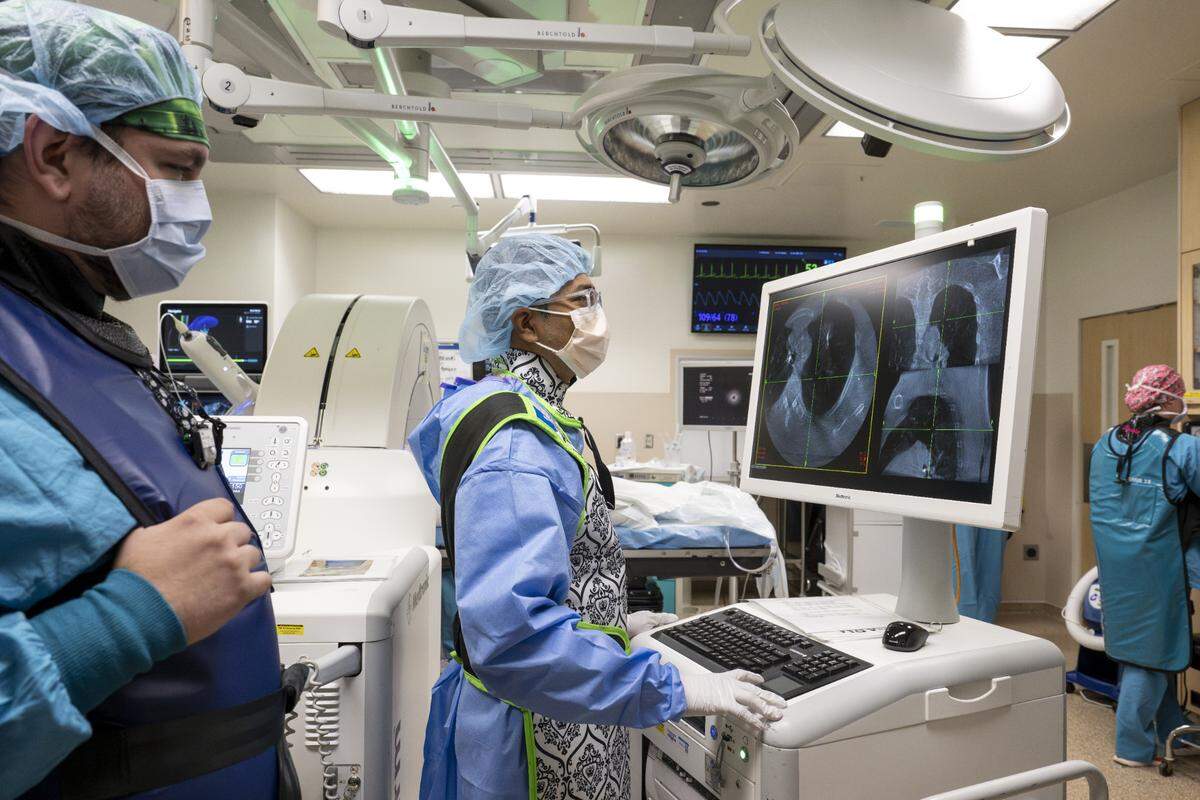
Further imaging is reviewed by Abhishek Biswas, center, a pulmonologist with Multicare Health, to confirm the needle on the DaVinci ION robotic surgery system is in the proper place to take a lung biopsy on Wednesday, May 21, 2025, at Good Samaritan Hospital in Puyallup, Wash.
Further imaging is reviewed by Abhishek Biswas, center, a pulmonologist with Multicare Health, to confirm the needle on the DaVinci ION robotic surgery system is in the proper place to take a lung biopsy on Wednesday, May 21, 2025, at Good Samaritan Hospital in Puyallup, Wash. Liesbeth Powers Liesbeth Powers / lpowers@thenewstribune.com

After the procedure, patients can get a diagnosis as early as 45 minutes after doctors wrap up, Biswas said.

Biswas told The News Tribune the procedure is covered under Medicaid, Medicare and private insurance. He has not seen any denials.

How does this advance treatment for lung cancer?

Before the ION system came out, doctors couldn’t do anything if the lung nodules were less than a centimeter. Instead, they were forced to wait until the nodules grew to a size where they could perform the procedure and get information they needed about the growth.
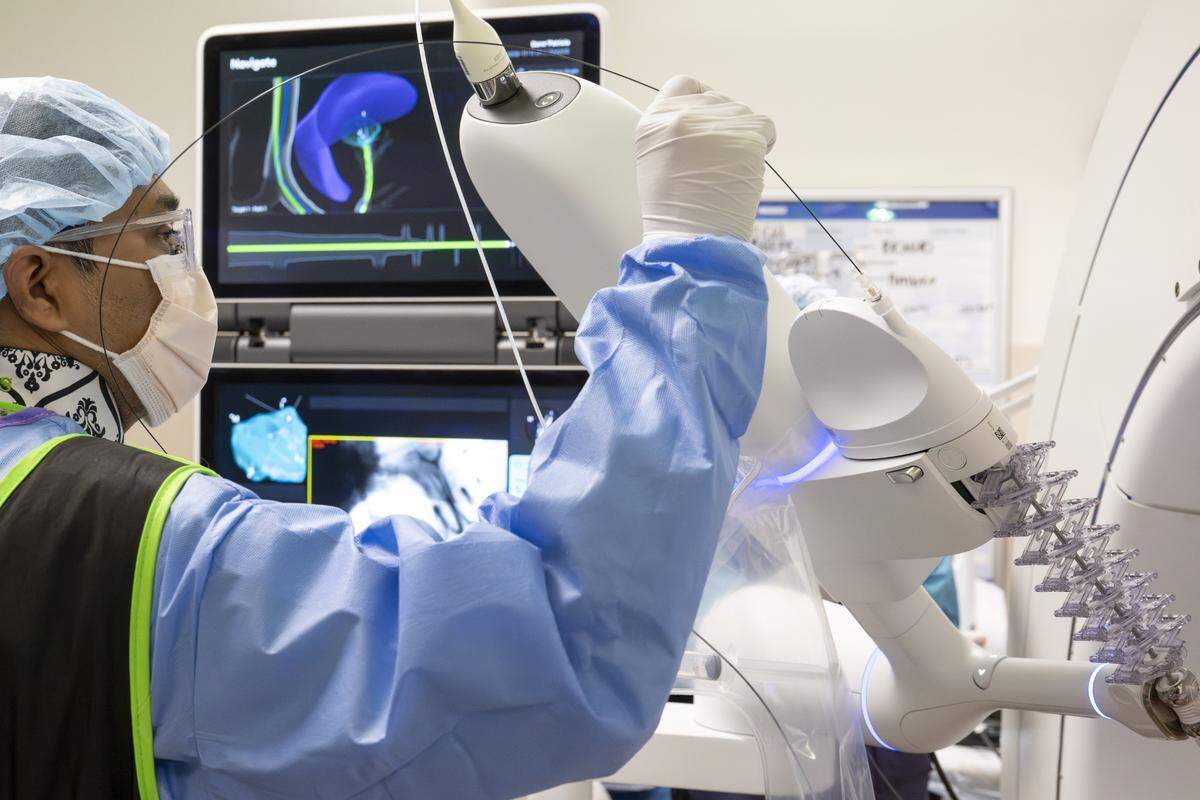
Abhishek Biswas, a pulmonologist with Multicare Health, maneuvers a catheter into the arm of a DaVinci ION robotic surgery system during a lung biopsy procedure on Wednesday, May 21, 2025, at Good Samaritan Hospital in Puyallup, Wash.
Abhishek Biswas, a pulmonologist with Multicare Health, maneuvers a catheter into the arm of a DaVinci ION robotic surgery system during a lung biopsy procedure on Wednesday, May 21, 2025, at Good Samaritan Hospital in Puyallup, Wash. Liesbeth Powers Liesbeth Powers / lpowers@thenewstribune.com

“Historically, the strategy has been we used to have a scan for this photo and [then] watch them grow and do another scan – and only when it reached a substantial size would someone be able to get tissue from that,” Biswas said. “[Patients] have the knowledge there to make a decision on what they want to do next … no normal human being likes to be in a situation with so much uncertainty.”

Biswas said that while only 4% of nodules are malignant, it is important to catch potential cancer as early as possible. The five-year survival rate for lung cancer patients was more than 80% when detected during stage 1 — significantly more than the 60% five-year survival rate at stage 2.
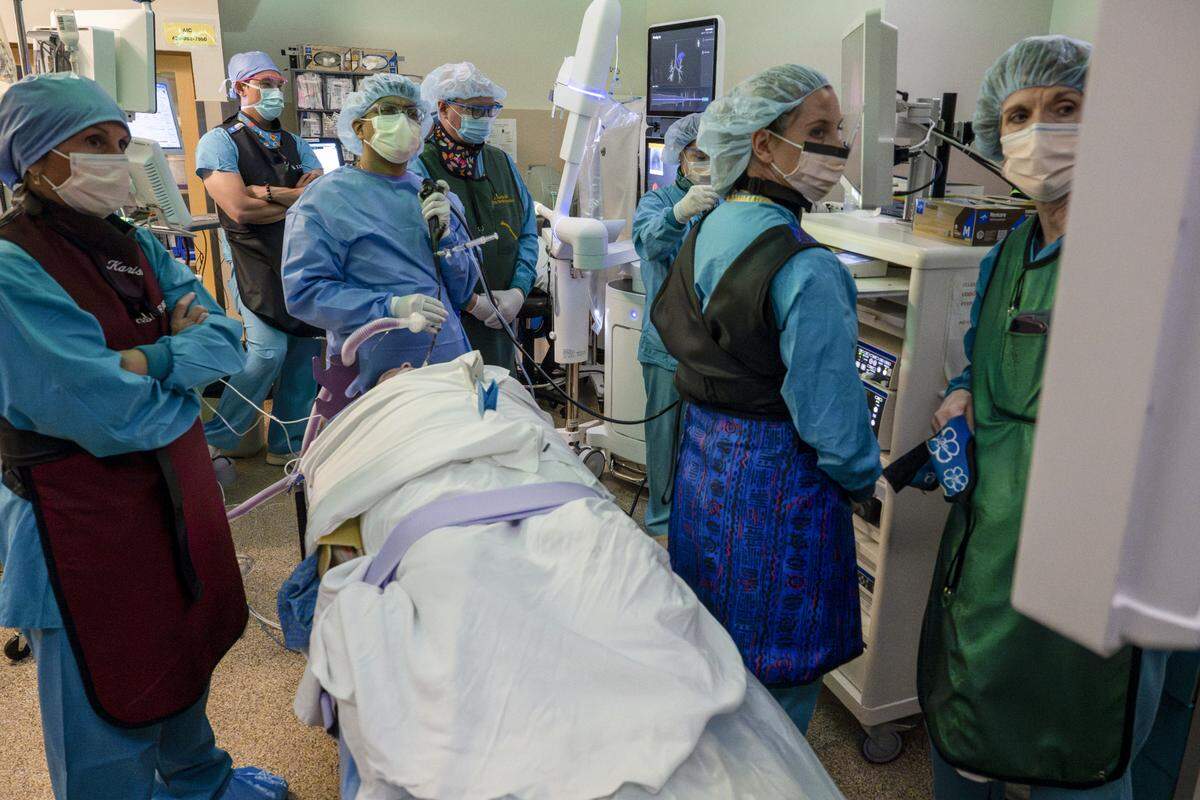
Abhishek Biswas, center, a pulmonologist with Multicare Health, and his surgery team do additional imaging following a lung biopsy procedure on Wednesday, May 21, 2025, at Good Samaritan Hospital in Puyallup, Wash.
Abhishek Biswas, center, a pulmonologist with Multicare Health, and his surgery team do additional imaging following a lung biopsy procedure on Wednesday, May 21, 2025, at Good Samaritan Hospital in Puyallup, Wash. Liesbeth Powers Liesbeth Powers / lpowers@thenewstribune.com

“The whole idea is, we are trying to identify lung cancer in the early stages so we don’t have loss of lung functions or quality of life,” Biswas said.

This procedure used to be two different procedures, Biswas said, until the ION system allowed doctors to combine them into one. It also used to be a lot more invasive, with doctors making a puncture in the chest and reaching into the tissue until they found the nodule.

“[It’s] 1/20th of the risk that we did before — so, so much better for the patients,” Biswas said.

This story was originally published May 27, 2025 at 5:15 AM.

Follow More of Our Reporting on Inside Look

Isabela Lund
The News Tribune
Isabela Lund is the Lead Breaking News Reporter at The News Tribune. She previously covered the greater Puyallup area as the East Pierce County reporter. Before joining The News Tribune in February 2025, she served as the digital content manager at KDRV NewsWatch 12 in Medford, Oregon, and as a reporter for the Stanwood Camano News. She grew up in Kitsap County and graduated from Western Washington University in 2022 with a degree in journalism.
Get unlimited digital access
#ReadLocal

Try 1 month for $1

CLAIM OFFER