Pierce County twins survive rare condition. ‘I have not seen this in 20 years.’
AI-generated summary reviewed by our newsroom.
- Parents faced stage-3 TTTS, pursued fetal surgery and delivered at 30 weeks.
- Twins required prolonged NICU care; Crew had heart surgery, Lake had lung surgery.
- Family used IVF; parents advocate resilience, support and hope for other families.
Visitors to the Pederson family’s home are instantly greeted with joy, babbling and laughter.
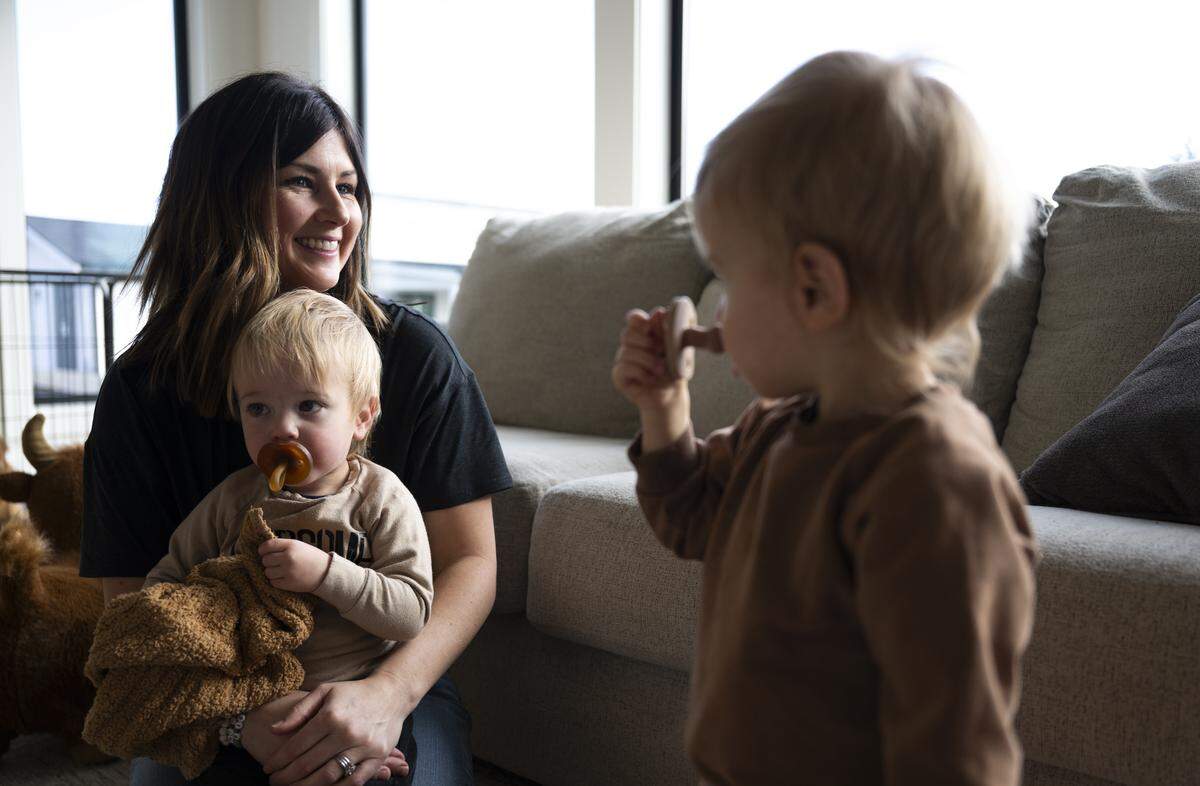
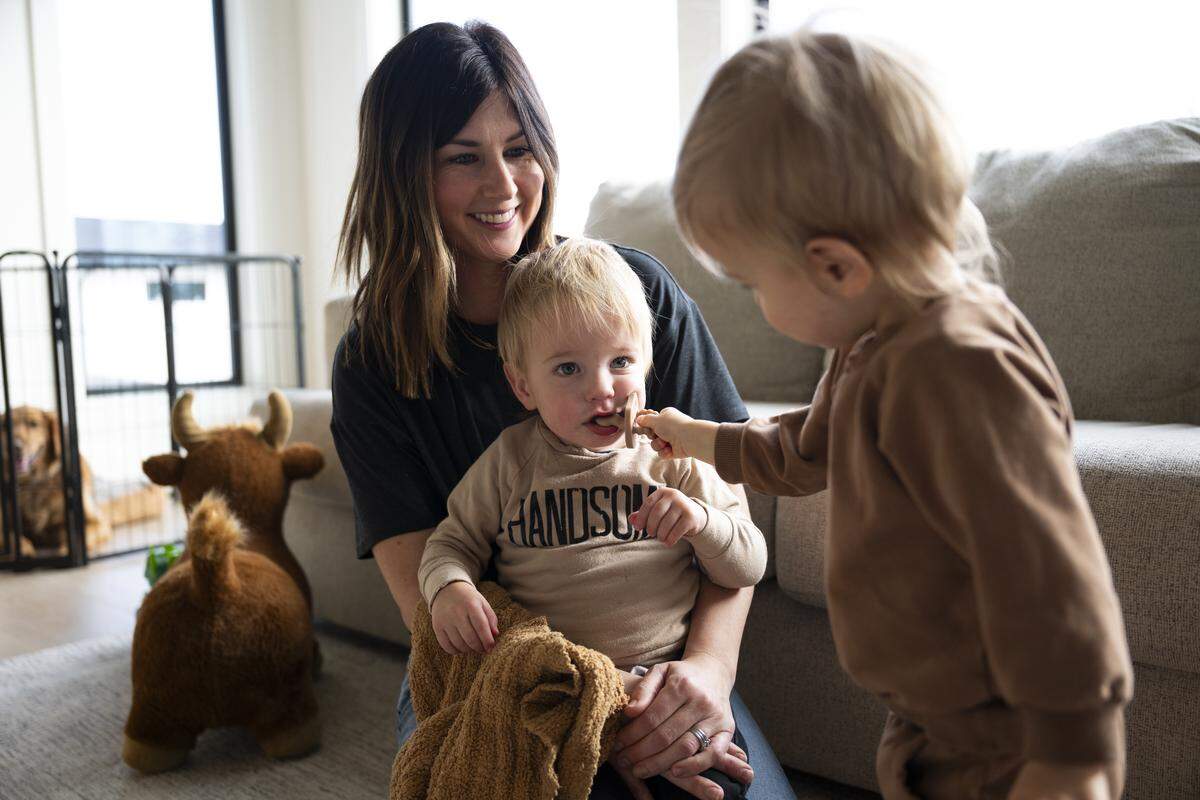
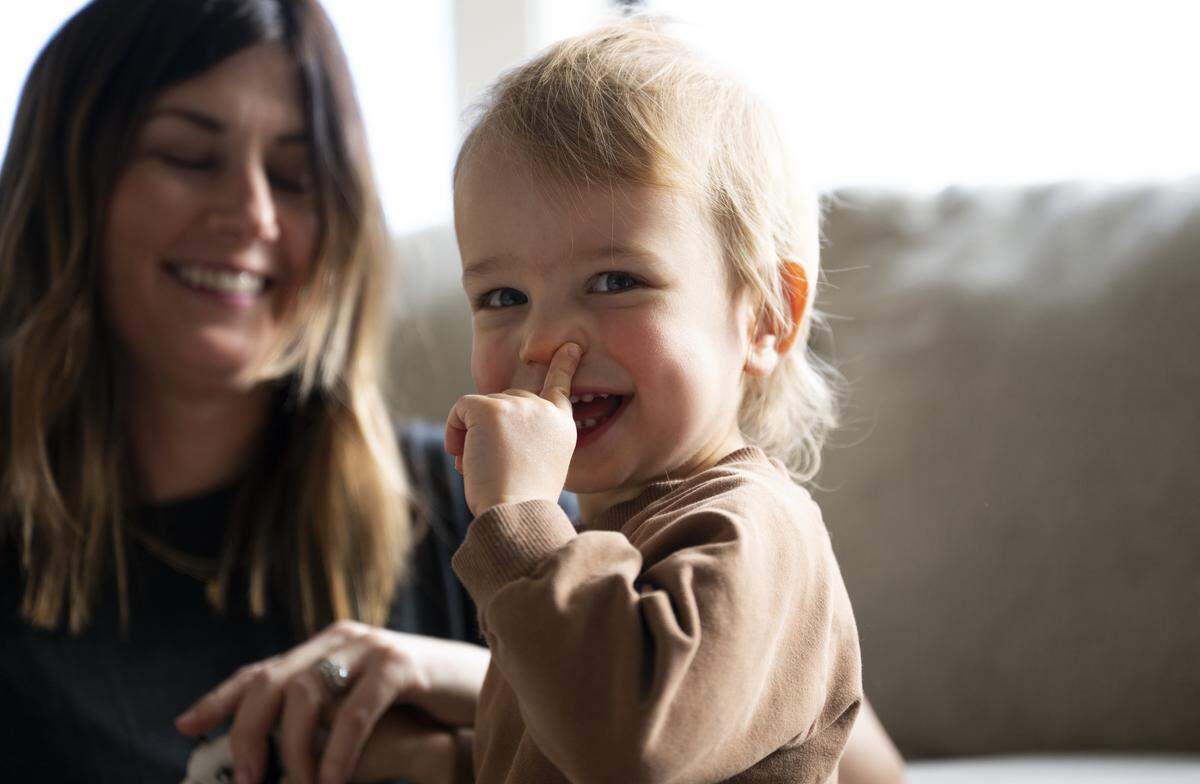
The Buckley family’s 19-month old twins, Lake and Crew, act like toddlers their age do – they explore, squabble over toys and greet anyone who walks into the room with wide smiles.
When their mother, Kailee Pederson, was 15 weeks pregnant, the identical twins were diagnosed with a rare condition called Twin-to-Twin Transfusion Syndrome (TTTS). TTTS happens when the twins share a placenta, and one twin receives too much blood and one twin receives too little.
What followed was a harrowing journey.
Pederson had to undergo surgery at 14 weeks and gave birth on May 7, 2024 at 30 weeks in order to give the boys the best chance of survival. Both twins had to stay in the hospital for months before being allowed to go home, and Lake underwent lung surgery in December 2025.
“I’ve definitely been changed throughout this journey,” Pederson said. “I am not the same person that I was at the beginning.”
‘I kind of felt like everything was over’
Pederson and her husband, Nick, have created their family using in vitro fertilization (IVF). They have five children: a 9-year-old boy, Beckham; a 6-year-old boy, Lawson; a 3-year-old girl, Leighton; and the 19-month-old twin boys, Lake and Crew.
IVF works by artificially inseminating an egg in a lab, creating embryos and implanting the embryos into the uterus.
“We had three healthy kids that had come from nine other embryos, and we thought we could never leave the last one behind after the journey we had been through,” Pederson said. “So, we decided to plant it and on our first ultrasound, we found that it was twins. The embryo had split and there [were] two heartbeats, which was quite a shock, going from three to knowing that we were going to five.”
Doctors first started noticing early signs of TTTS at 14 weeks, Pederson said, and referred her to Seattle Children’s Hospital. At 15 weeks, they were diagnosed with stage three TTTS, which put the twins’ lives at risk.
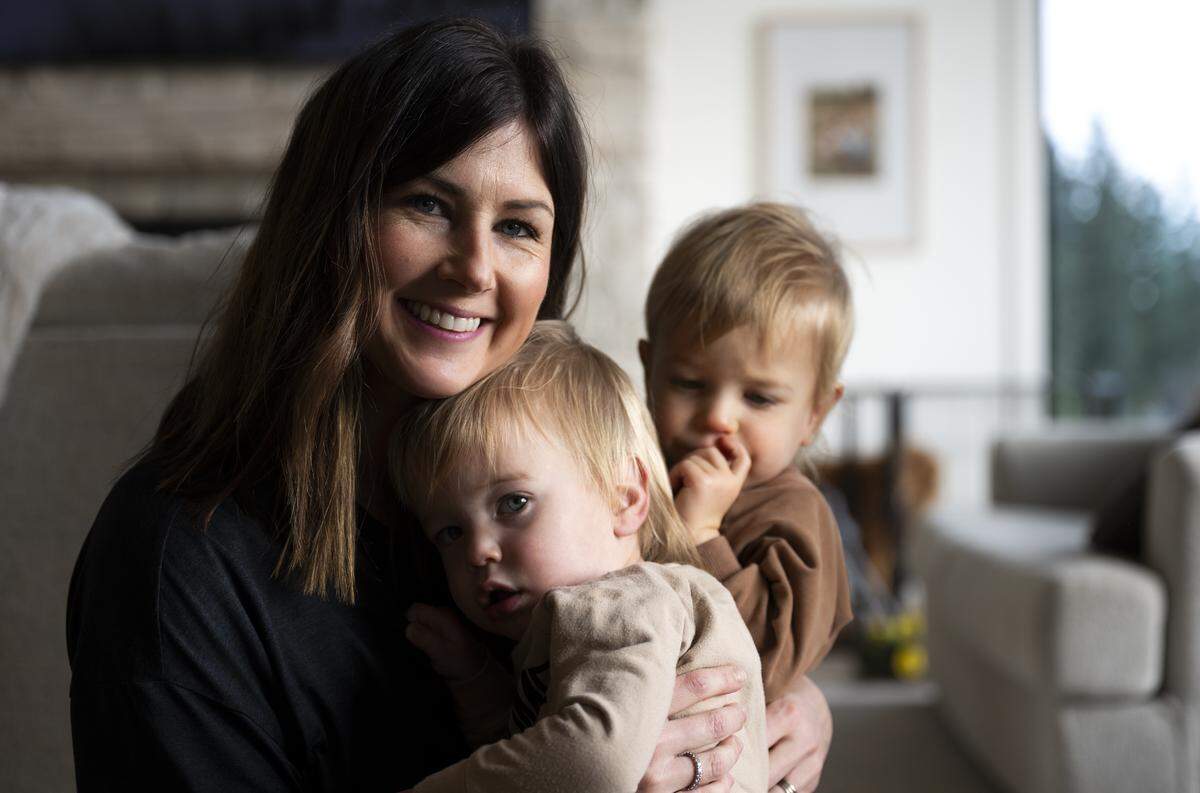
“They had their own separate water sacs, but the blood flow sharing was unequal,” Pederson said. “So, at the time, Lake was getting the most, too much, it was overwhelming him – and then Crew was kind of shoved in a corner, getting very little, very less.”
Pederson had to undergo surgery to separate the blood flow and equalize it among the twins, but the risk was high.
“They really recommend the surgery after 16 weeks because of how the amniotic lining is fused to the uterine wall and mine was not,” Pederson said. “We were only 15 weeks, but they told us that if we did not choose to go ahead with the surgery, Lake’s heart might not be able to make it over the weekend.”
When they first found out they had to undergo the surgery, the couple gave the twins their names, Lake and Crew, in hopes of defying the odds.
“I told Nick I really wanted them to be named and known in case things did not turn out the way we wanted them,” Pederson said. “It gave them an identity, it gave them a name we could pray for, a name we could hope for.”
The surgery was a success – until six hours after the fact, when Lake’s water sac broke from the puncture site.
Pederson, who is a labor and delivery nurse, thought the twins were gone.
“[It] was pretty devastating at the time – I kind of felt like everything was over. In my line of work, when your water breaks, it’s time to have a baby,” Pederson said.
‘I have not seen this in 20 years’
Despite the water break, Pederson didn’t lose Lake.
“He continued week by week to show that he was still making amniotic fluid, even though I was continuing to leak a lot of that out,” Pederson said. “And so they just said, ‘OK, let’s keep going, let’s do what we can and watch and see what happens.’”
Pederson went on bed rest to protect the twins as best she could, and her mother – who lives in Coeur d’Alene, Idaho – moved in to help the couple with their three older children.
Weekly ultrasounds revealed that Crew was relatively healthy, except for a minor heart condition. Lake’s lungs, on the other hand, were full of cysts because he did not have an intact water sac to help his lungs develop properly.
“No one could tell us what the outcome would be. With Lake, we were told that we, really, had to be prepared for both scenarios – he would fight and breathe, or he might not even be able to take his first breath,” Pederson said. “I hoped and prayed that he would breathe when he was born.”
At 24 weeks, doctors admitted her to the University of Washington Medical Center, where she rested until they performed a C-section at 30 weeks. Lake did cry at birth, and hospital staff connected him to a breathing tube right away – but he took a turn for the worse.
“At the time, they said: ‘We have done a lot and almost everything that we can do, and you need to prepare yourself to say goodbye to Lake,’” Pederson said. “I just didn’t want to give up. That’s so hard to hear, after you fought for this life for so long. So we chose to hold Lake and we sang over him and we prayed over him.”
The couple’s closest friends and family came to the hospital to support them and pray for Lake’s health, Pederson said. Pederson held Lake close to her chest.
And then, against all odds, Lake’s oxygen levels rose. His lab levels improved, and the color of his skin started changing for the better.
“His doctor said: ‘I have not seen this in 20 years,’” Pederson said.
‘I had to leave them every day’
Neither of the twins were able to come home for months after their birth. Doctors transferred Lake to Seattle Children’s Hospital, while Crew stayed under medical supervision at the University of Washington Medical Center.
“I felt very torn as a mom of where you spend your time,” Pederson said. “I have three kids at home who miss me, but I have a baby in the NICU at UW and I have a baby in the NICU at Seattle Children’s and there’s only one of me and one of my husband.”
The couple typically had breakfast with their three older children at their Buckley home, dropped them off at school and then went to Seattle for the day. They would spend a few hours with one twin, then a few hours with the other, and then drive back to Buckley.
Sometimes, they would come home in time for dinner. But there were days where they would only arrive in time to put their older children to bed.
Every hospital visit had the same painful ending: leaving their newborn babies behind.
“I had to leave them every day,” Pederson said. “The days that I walked out of Lake’s hospital room, I was like: ‘You’re my baby, I want to be with you, to sleep next to you.’”
Crew was able to come home in July, two months after his birth. Lake didn’t join him until September, when they were four months old.
“He got to come home and that was an amazing miracle for us,” Pederson said. “To be able to see him surrounded by his siblings, to see him get to take a bath at home with his twin was more than I could have ever hoped for him.”
‘For now, he has the opportunity to just live’
Both boys have some health conditions as a result of TTTS, but will live relatively healthy lives.
Before the surgery at 15 weeks, Crew’s heart was working in overdrive while he was being deprived of blood. Shortly after his birth, he underwent heart surgery and has been thriving ever since.
“He has not been given any limitations at this point in time,” Pederson said. “He will have to have his heart valve replaced, but that is a very common procedure. I’ve been told now by cardiologists that it should not hinder his ability to play sports or play music or do things he ends up loving.”
Lake underwent lung surgery just a month ago, when he was 18 months old. Doctors removed his right lower lobe, which was filled with cysts, and he has been recovering well ever since.
“They will do some scans in the future to see if there are any other cysts that are big enough to do something about – but for now, he has the opportunity to just live.”
Pederson said this entire journey taught her a lot about courage, hope and the importance of having a solid support system.
“This is a story of resilience, for sure, and not giving up, and allowing that hardship to be known so that you can feel loved and supported and encouraged,” Pederson said. “I just hope that Lake’s story encourages somebody else, another mom who is struggling ... . There is hope.”
This story was originally published January 18, 2026 at 5:00 AM.