Soda shop closes after 50% revenue loss from Pierce Co. bridge closure
AI-generated summary reviewed by our newsroom.
- The state Route 165 Carbon River Fairfax Bridge permanently shut down on April 22, 2025.
- Simple Goodness Soda Shop saw revenue fall 50% and ceased cafe operations in 2025.
- Pierce County awarded $115,000 and legislators allocated $2.5 million.
Editor’s note: Simple Goodness Sisters will hold Old Fashioned Fest as planned on May 16.
It hits Belinda Kelly in the gut every time.
The buzz of her phone. A message notification flashing across her screen.
“We didn’t know you closed.”
“We understand why, but it’s so tough on the community.”
“It’s such a loss.”
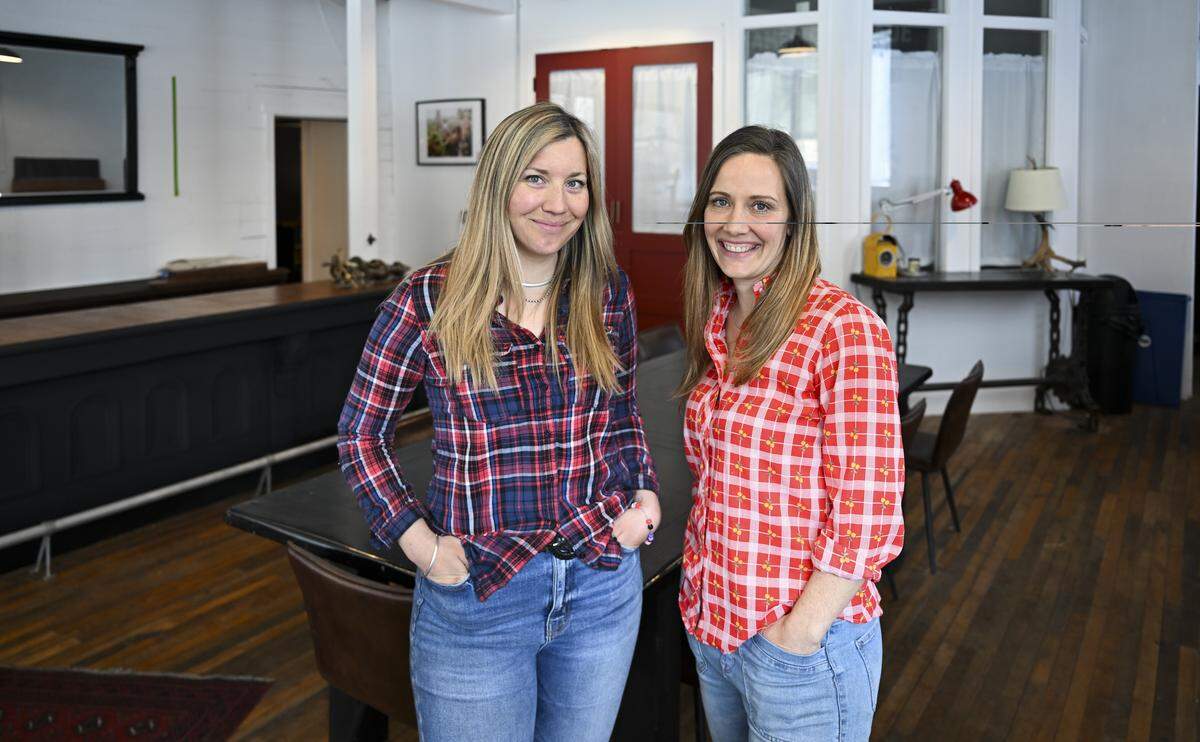
Kelly, along with her sister and business partner, Venise Cunningham, still receives these messages regularly – four months after they were forced to close their cocktail cafe in Wilkeson, the Simple Goodness Soda Shop.
“It tears you a bit, as a business owner. Especially me, I’m such a people pleaser,” Kelly told The News Tribune on April 28. “Not to be dramatic, but you’re grieving your business at the same time. [It’s like], ‘I’m just as sad as you are, if not more sad.’ There’s a lot of frustration there too, because we didn’t choose this.”
The closure of the beloved farm-to-table eatery stems from the demise of the 104-year-old state Route 165 Carbon River Fairfax Bridge, which permanently shut down on April 22, 2025. It was the only way for people to access key areas of Mount Rainier National Park by car, such as Mowich Lake, Tolmie Peak and Spray Park.
In a gateway town of 500 people, the loss of that summer tourist traffic has posed an existential threat.
Kelly and Cunningham lost 50% of their revenue, forcing them to pivot to a different model: a wedding venue. Meanwhile, Trevor Benz, the owner of the Pick and Shovel, said his restaurant might have to cut their hours and Dustin Nye, owner of Total Auto Repair, said he has had to make connections with other auto shops in Pierce County to stay afloat.
“It’s very sad. The town has very little to offer, but what it does have to offer is whole-hearted,” Nye told The News Tribune on April 29. “To have something like the bridge affect it so negatively, it reminds me of the movie ‘Cars.’ They bypass the town to put in the highway. The town is being bypassed.”
‘The family-friendliest bar you’ve ever been to’
The sisters first opened the Simple Goodness Soda Shop in October 2020, at the height of the COVID-19 pandemic. They purchased the historical building at 533 Church St. in 2017, and spent three years getting it up to code before opening to the public.
“It has been an iconic spot in Wilkeson,” Cunningham said, noting that they aren’t sure how old the building is. All they know is that it appears in every photo of Wilkeson they’ve seen – the earliest from the 1870s.
It served many purposes over the years: a pharmacy, a jewelry shop, a place to get cigars, before becoming a soda shop around the Prohibition Era. It later became a cafe, before the sisters sought to bring it back to its soda shop roots.
“We called it the family-friendliest bar you’ve ever been to,” Cunningham said. “So, it was really meant to be a place where families can gather and parents and adults can get a craft cocktail and kids could get an ice cream. Tourists through town could get sandwiches or snacks on their way up to the mountain.”
Cunningham owns a farm in Buckley, and the sisters use ingredients from the farm to craft their signature Simple Goodness drink syrups. The Wilkeson store acts as their commercial kitchen.
Kelly and Cunningham incorporated Mount Rainier National Park traffic into the shop’s operations from the beginning. The shop operated from May to December, due to the park closing Mowich Lake Road around mid-October each year.
“The consensus in any food restaurant industry is, like, your winters are always slow, no matter where you’re at,” Cunningham said. “We did try one year… to stay open in the winter and it didn’t work, there weren’t enough people passing through town when we were open.”
In 2025, Kelly said business was picking up and the sisters were feeling optimistic about the future. They even wrote a cocktail book.
And then it all came crashing down.
‘This is definitely not going to be good’
The sisters were one week away from starting their 2025 season when the Washington State Department of Transportation (WSDOT) announced it was permanently closing the bridge.
“At the end of the day, you’re thinking short-term and long-term as a business owner. We’d already bought all the food and staff, we need to be open at least a month to break even,” Kelly said. “And long-term, we’re like, ‘This is definitely not going to be good.’”
Kelly said they gathered their staff after the announcement of the bridge closure, with one message: “We’re opening and we can make no promises beyond that.”
July and August usually bring double or triple the profits, Kelly said. Instead, those summer months spelled out a bleak future for the store. Without the wave of 200,000 tourists passing through Wilkeson, they said their revenue and earnings plummeted by 50%.
“I think you know that your business relies on tourists, but you don’t know how much. There’s no way of tracking, ‘That was a tourist, that was a local,’” Cunningham said.
Kelly said they knew in July that the store wouldn’t return at the end of the season. Cunningham said the saddest part has been the death of some beloved town traditions.
“We don’t have a general store, we were that place where the kids would ride their bikes into town in the summer and get ice cream,” Cunningham said.
They received a lot of local support, Kelly said, but the town of 500 couldn’t fill the gap.
“It’s not that the locals didn’t show up for us, it’s just that it’s not enough to make up for the volume of the loss,” Kelly said. “It’s stress born of a lack of economic vitality, but also, it’s emotionally very draining.”
‘It’s like a ghost town’
Trevor Benz grew up in Wilkeson and always admired the Pick and Shovel: an American eatery in an old brick building with one storefront that acts as a restaurant and one that acts as a saloon.
“There’s a lot of history in the town and in the restaurant itself,” Benz said. “It’s the oldest operating business in town.”
Benz said the restaurant went into foreclosure around 2012, and he purchased it in 2014. He renovated it, then reopened the Wilkeson icon in 2015.
“When the weather gets nice and the people travel up the mountain to hike, that would be our busy season,” Benz said. “That is the time of year that we relied on to make money and get us through the slow time in the winter time.”
After the bridge closure, Benz said he saw his summer revenue drop by about 20%. If they have a repeat of that this year, Benz said he will have to look at changes.
“We’re going to have to change our hours, we’re going to have to cut our shifts back, we’re going to have to do something because at some point, we can’t keep doing what we’re doing,” Benz said. “We’re trying to keep our staff, we’re trying to keep doors open for lunch and dinner, but at some point, it’s going to have to change, unfortunately.”
Benz said this could look like closing for lunch and only being open for dinner, or completely closing on slow days like Mondays and Wednesdays.
“I was just out there, it’s like a ghost town. It’s quiet, there’s nobody around, and we’re open,” Benz said. “There’s a good chance for today, there’s not going to be enough revenue just to cover the wages of the employees.”
‘That’s gone, completely’
Just down the street, Nye operates Total Auto Repair. He has been the owner since July 2022.
Before the bridge closure, he saw an influx of customers from people who would drive to the mountain, which would cause problems like flat tires and broken brake lines.
“My customer growth has lowered and I’ve also had an impact in just my overall sales just because of that, because a lot of people would go up and go see stuff and they would end up hurting their car and they would bring it to me,” Nye said. “It happened almost every week … that’s gone, completely.”
Nye said he’s taken a 25% hit in revenue. His tourist client base has been replaced by a much smaller one: Fairfax residents.
Shortly after the closure, WSDOT established an emergency route: a 9-mile, winding dirt road that is open only to law enforcement and property owners on the other side of the bridge closure. The drive can take as long as 45 minutes, and contains many twists and turns, which isolates people in the Carbon Canyon.
“In the middle of December and January, when it’s snowing and raining, your car is getting beat so bad,” Nye said. “[One customer had] their entire exhaust fall off. Brand-new exhaust, it literally just rattled and fell off – completely destroyed, not even salvageable.”
Nye said the road is not well-maintained, and was not designed for people to be driving on it every day.
“The components on their cars are failing. We have customers come in with new tires and they’ve got holes in them, and I have to repair them or put a spare tire on. We have suspension components that are failing very prematurely on cars,” Nye said. “And they don’t want to go out and buy new cars, because it’s just going to beat them up and depreciate the value so fast.”
How are businesses adapting?
Nye said his key to staying afloat is establishing a partnership with 410 Auto Wrecking in Buckley. During busy times, the owner will send customers Nye’s way.
“Even though I have a good reputation, most of my work is word of mouth. There’s only so many people in Wilkeson and Carbonado and Fairfax, and not all of their cars are going to break down all the time,” Nye said. “I don’t know what, long-term, will happen from it. I haven’t gotten to a point where I need to close the doors yet.”
For the Simple Goodness Sisters, survival means pivoting to a brand new business model: a wedding venue.
“[We want to] hold onto a building for a future in which maybe the bridge is rebuilt and we can reopen,” Kelly said. “What do we do when we hold onto a building? Because our commercial kitchen is here, we don’t want to lose our syrup brand.”
Since the December closure, the sisters have spent their time crunching the numbers on how to cover bare-minimum expenses, such as property taxes, utility bills and crucial repairs, such as a $25,000 roof fix. They have also been making renovations to turn the space from a cafe to a wedding venue: removing the furniture from the dining room, touching up the walls, changing table heights.
On top of that, they have been touching up their resumes, because the business was their full-time job – and as business owners, they don’t qualify for unemployment.
“We wouldn’t have poured money into this building knowing that there was an expiration date on any potential return on it, whether that was running a business on it or, in the future, selling it,” Kelly said. “Because you don’t buy a building and invest in its rehabilitation without the idea that you at least have the potential to one day sell it, and now that potential is way lower.”
The sisters say they are unable to qualify for a Small Business Administration (SBA) loan, because Gov. Bob Ferguson did not declare the bridge closure an emergency. The News Tribune previously reported that the governor hasn’t declared a state of emergency because the closure did not stem from an unforeseen event like a natural disaster or car crash. Instead, the closure stemmed from decades of postponed maintenance from WSDOT, with issues being spotted as far back as 2008.
The sisters also said they thought about opening a new location somewhere else, but it didn’t make financial sense to pay the mortgage on two buildings with only the income from one.
“Most people are not forced into the closure of their business because of government inaction, so it’s been like, just frustrating that it’s happening at all,” Kelly said. “I’m not mad about being a venue – we’re going to be great at it, frankly, it’s going to be really cool, people are going to love it. But I wouldn’t have chosen it, and that’s what’s frustrating.”
Is there any help coming for businesses?
Jayme Peloli, mayor of Wilkeson, told The News Tribune she is planning to make aid for local businesses a priority.
“It’s the last piece for me, I’m trying to put the pieces of the puzzle together of how we can support them,” Peloli said. “There’s a lot of hesitation in Wilkeson in general. We’ve got open leases, we’ve got open businesses for sale, we’ve got people pivoting, we have people doing nothing because they don’t know what to do.”
Peloli said that Pierce County has awarded the town $115,000 to revitalize downtown Wilkeson, but none of that money is going directly into business owners’ pockets.
“I think what will come next is quantifying what the loss actually looks like,” Peloli said. “You can go to each business [and see] how much on paper they lost and, emotionally, the damage it’s done, and how heavy this is, and I think that we’re missing those real, hard numbers. A report exactly from a professional – what hit that this and the surrounding communities took from the inaction from the state on the bridge.”
During the 2026 legislative session, Peloli asked the transportation committee for a $12 million package, with some of that going to the businesses. Instead, she received $2.5 million over two fiscal years, which she said will go toward Fairfax residents. Funds have helped with secondary egress, which establishes emergency procedures for evacuating during emergency events like mudslides, and upgraded the gates on the dirt road between Fairfax and Wilkeson.
She said legislators have given her an estimate of five to seven years before a new bridge could be built.
“We were in survival mode and we had, like, safety issues back in the Carbon Canyon, so I didn’t have the capacity to dig into [the business aspect] and break that down before session,” Peloli said.
Peloli did note some wins when it comes to the bridge. In a January blog post, WSDOT said they are using $7 million in preservation funding from the 2025-2027 transportation budget to fund the design and environmental phase — the first step towards a new bridge. Peloli also said legislators also directed WSDOT to provide them with a timeline and budget for rebuilding the bridge before the start of the next legislative session, which will commence on Jan. 11, 2027.
‘Hours and hours and weeks worth of work to get to this point’
One of the most daunting parts of the bridge closure, Peloli said, is that Wilkeson is a pioneer in a situation it didn’t ask for.
“This situation has never happened, and so every day, determining what the path actually looks like. Never has state-neglected infrastructure cut off a national park and left a gateway town fending for itself,” Peloli said. “It was not anyone coming to us and saying, ‘Here you go, here’s a handout,’ it was hours and hours and weeks worth of work to get to this point, and it’s astonishing to me that no one has said, ‘Here is what you need for the businesses.’”
Kelly said that in a town as small as Wilkeson, even competing businesses feed off of one another – which means the economic impacts have a ripple effect.
“Whenever we had an event day, had our doors open, and had waffle cone smells wafting around, it made people stop,” Kelly said. “... And maybe they went next door to The Carlson Block pizzeria, or a drink at Pick and Shovel. There is an economic web that exists and when you lose a piece of that, it does have an impact on the others.”
One of her biggest concerns is that in the midst of this bridge closure, people from outside the town will forget that Wilkeson is still here.
“They’re not hiking out here anymore, they’re not stopping to get ice cream,” Kelly said. “People are very habit-driven. If they lose a habit, what happens to Wilkeson?”
This story was originally published May 3, 2026 at 5:00 AM.