
Expert explains actions by Tacoma police, not meth intoxication, killed Manuel Ellis
The trial of three Tacoma police officers charged in the 2020 death of Manuel Ellis entered its third week on Monday, with further testimony from a prosecution expert who last week said with confidence that the officers caused Ellis’ death.
Dr. Roger Mitchell, formerly the chief medical examiner for Washington, D.C., affirmed former Pierce County Medical Examiner Dr. Thomas Clark’s ruling that Ellis died by homicide from oxygen deprivation caused by physical restraint.
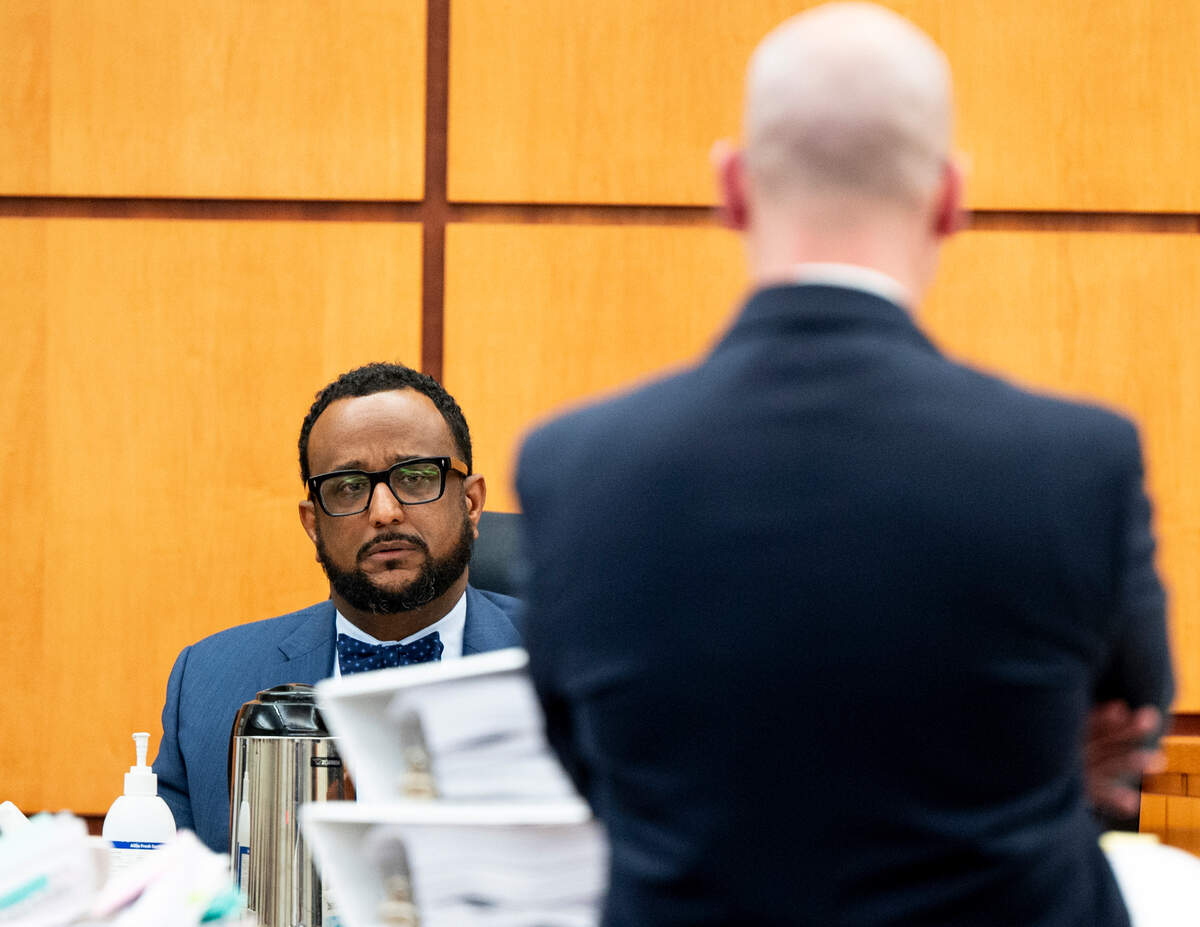
“I call his cause of death mechanical asphyxia due to violent subdual and restraint by law enforcement officers,” Mitchell testified Thursday.
Officers Matthew Collins, 40, Christopher “Shane” Burbank, 38, and Timothy Rankine, 34, are all charged with first-degree manslaughter. Collins and Burbank, the first officers to engage with Ellis when they say he was hassling a car as it passed through an intersection, also are charged with second-degree murder. All three have pleaded not guilty and are free on bail. They remain employed by the Tacoma Police Department, on paid leave. They are accused of applying continual force as Ellis repeatedly pleaded that he couldn’t breathe.
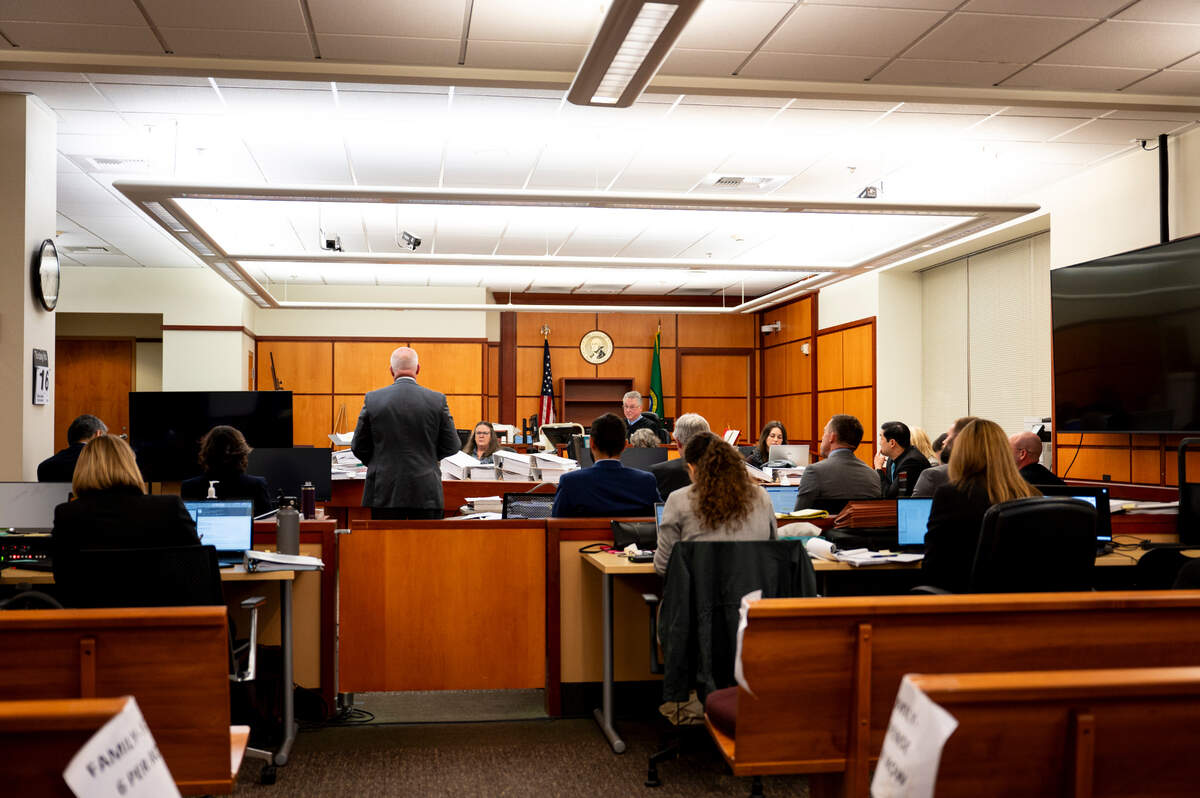
The court had been in recess since Thursday, when Mitchell, a prosecution expert in forensic pathology, affirmed the Pierce County Medical examiner’s finding that Ellis had died from oxygen deprivation caused by physical restraint. The medical examiner also noted a potentially lethal level of methamphetamine in Ellis’ system. Lawyers defending the officers offered jurors an alternative explanation during opening statements: that Ellis died of an overdose.
Special prosecutor Patty Eakes asked Mitchell how he determined that Ellis, who went by Manny, didn’t die of an overdose.
“He’s walking home. He has this level of methamphetamine, he has the [enlarged] heart, and the intervening cause is the violent altercation and subdual,” Mitchell said. “It’s him being beat up that caused his death.”
Mitchell said Ellis’ drug intoxication and enlarged heart made it more difficult for him to recover, but that absent the officers’ actions, those factors wouldn’t have killed Ellis.
Mitchell described the physiological process that he determined ended Ellis’ life. Internal levels of acid indicated that Ellis endured respiratory arrest.
“There is clear evidence that he was placed in a prone position with individuals on his back and a hobbled restraint,” Mitchell said. “That circumstance, after which someone has been in a violent altercation, is going to impede his ability to then be able to get enough oxygen to breathe as fully as is needed to sustain his life.”
Mitchell said a spit hood placed on Ellis’ head further restricted his breathing.
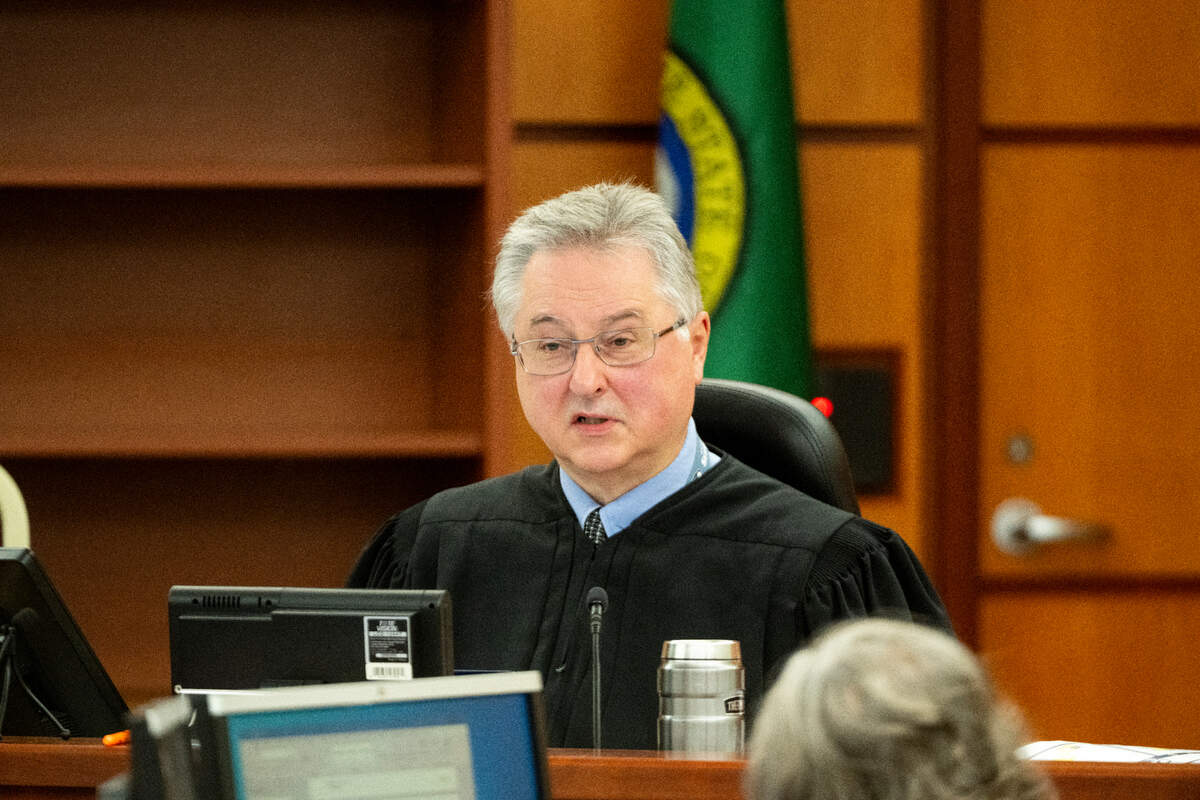
Jury drama briefly delayed proceedings in the morning. Before Mitchell returned to the witness stand on Monday, Pierce County Superior Court Judge Bryan Chushcoff alerted lawyers for the prosecution and defense that an alternate juror notified the court on Friday that one of the jurors had watched a livestream video of court action last Thursday.
Chushcoff has warned jurors from the outset not to discuss the case they’re considering with anyone else. The court has provided an online viewing option to accommodate the high public interest in the case. The judge questioned the juror in question, a white man roughly in his 40s, about what had been reported.
The juror admitted to accidentally turning on the livestream of the trial happening outside the jury’s presence. He said he was trying to send a link of the livestream feed to someone, but accidentally clicked on it, and the video began to play.
“It was just a little quick moment,” the juror told Chushcoff. “I heard your voice and said, ‘Oh!’ and turned it off.”
Neither the defense nor the prosecution asked the judge to remove the juror, so he returned to the panel.
Mitchell remained on the witness stand under cross-examination by the officers’ defense teams after the noon recess.
“The fight is what killed him,” Mitchell testified under cross-examination from Burbank’s lawyer Brett Purtzer.
“He killed himself by resisting,” Purtzer snapped back. Audible gasps filled the courtroom gallery. Judge Bryan Chushcoff instructed the jury to disregard Purtzer’s remark.
But that was just the beginning of defense attorneys taking aim at Mitchell’s testimony and motives. Collins’ lawyer, Jared Ausserer, called out Mitchell for describing himself on social media as “an advocate.” Mitchell, who is Black, said he is indeed an advocate for finding public health solutions to problems that have disproportionately affected Black Americans. He acknowledged having said it’s important to teach the new generation of Black physicians to “stand up against white supremacy.”
Mitchell, who produces a podcast about deaths in police custody, said he wasn’t aware of a racial element to the charges against the officers and testified that his podcast doesn’t exclusively focus on the deaths of Black men.
Ausserer questioned Mitchell about his compensation from the Washington Attorney General for his work and testimony in the case. Mitchell said he expects to total between $35,000 and $40,000.
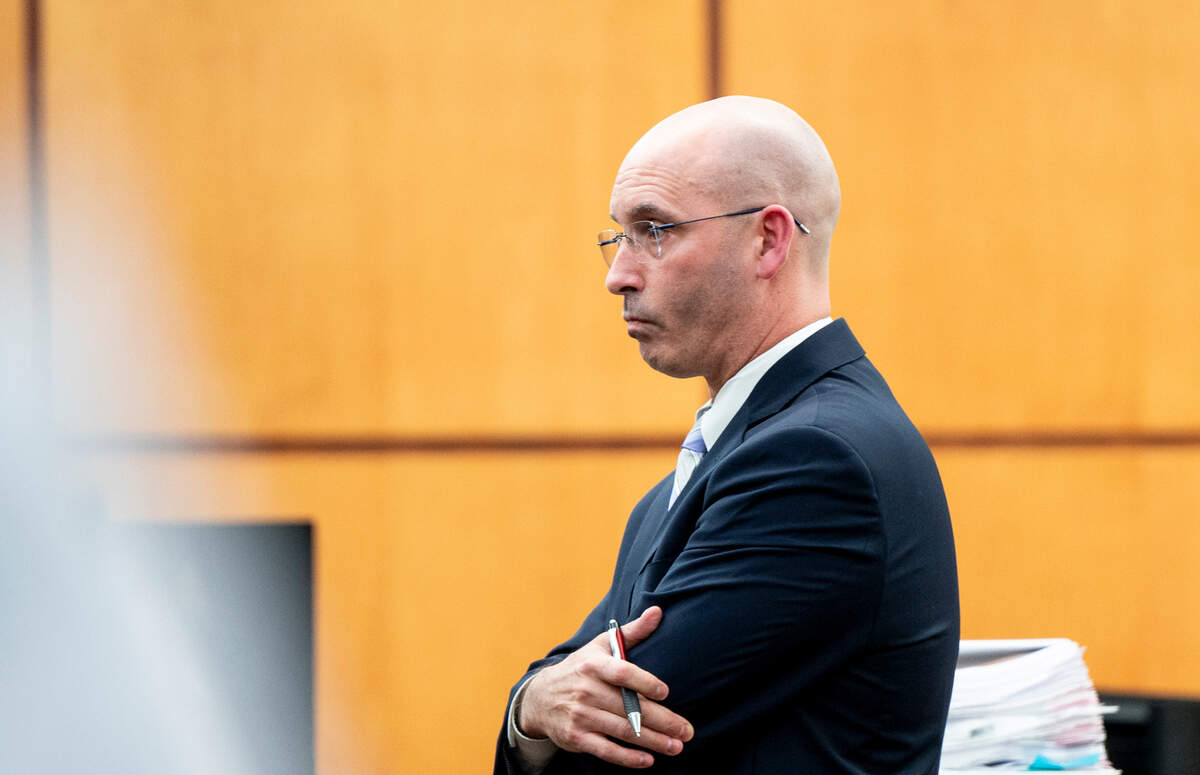
Ausserer questioned Mitchell about “excited delirium,” a controversial term that law enforcement – and some medical examiners – sometimes use to describe people in mental health crisis or suspected of being on drugs who inexplicably die, usually in the presence of police. Major medical and psychiatric organizations have rejected excited delirium as a myth, Mitchell testified.
“The cases that have been attributed to excited delirium are cases that often have other restraint-related issues that have not been diagnosed as restraint-related issues,” Mitchell testified.
He answered directly when he was asked what caused Ellis’s death.
“It’s him being beat up that caused his death,” Mitchell testified.
Rankine’s lawyer, Mark Conrad, asked Mitchell whether he drew his conclusions from “circumstantial evidence.”
Mitchell his conclusion - that restraint caused Ellis to be denied sufficient oxygen - was based on a number of factors: Ellis being being placed in a prone position, his handcuff hands hogtied to his feet, with a spit hood on his head; the presence of food and blood in his airways; and documentation at the scene that Ellis’s heart rate and breathing gradually deteriorated.
Last week two eyewitnesses characterized the officers as the aggressors in the struggle with Ellis. Defense lawyers for the officers have said it was Ellis who acted aggressively toward the officers, prompting them to respond.
Testimony is scheduled to resume Tuesday, when the prosecution is expected to call a forensic audio expert to testify.
This story was originally published October 16, 2023 at 12:33 PM.