Witness to Manuel Ellis’ fatal interaction with police cross-examined by defense lawyers
A third eyewitness who has testified he saw police initiate the fatal encounter that led to the death of Manuel Ellis was cross-examined Wednesday morning by attorneys for the officers on trial.
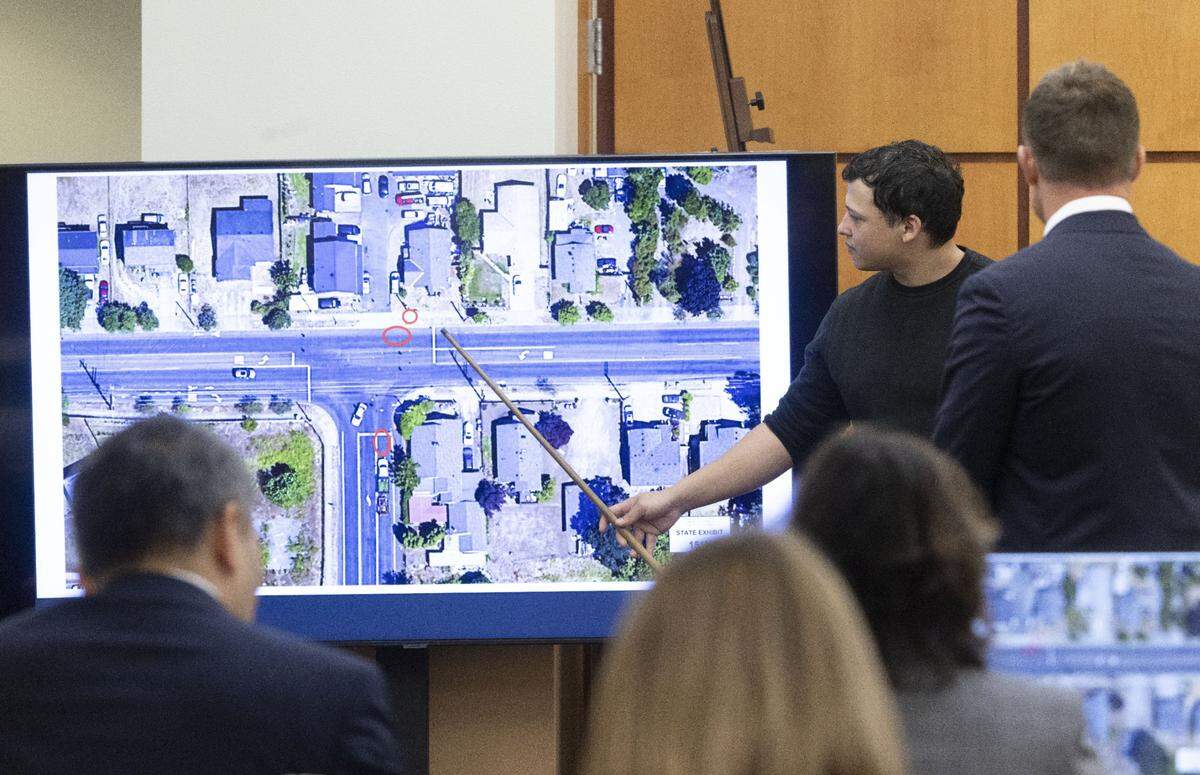
Seth Cowden was working as a delivery driver the night of March 3, 2020, when he came upon 96th Street and Ainsworth Avenue. He stopped after seeing a police cruiser at the intersection and started recording video on his phone. Cowden, 22, said he saw Ellis walking on the sidewalk, and shortly after the cruiser’s passenger door opened and Ellis dropped below his field of vision.
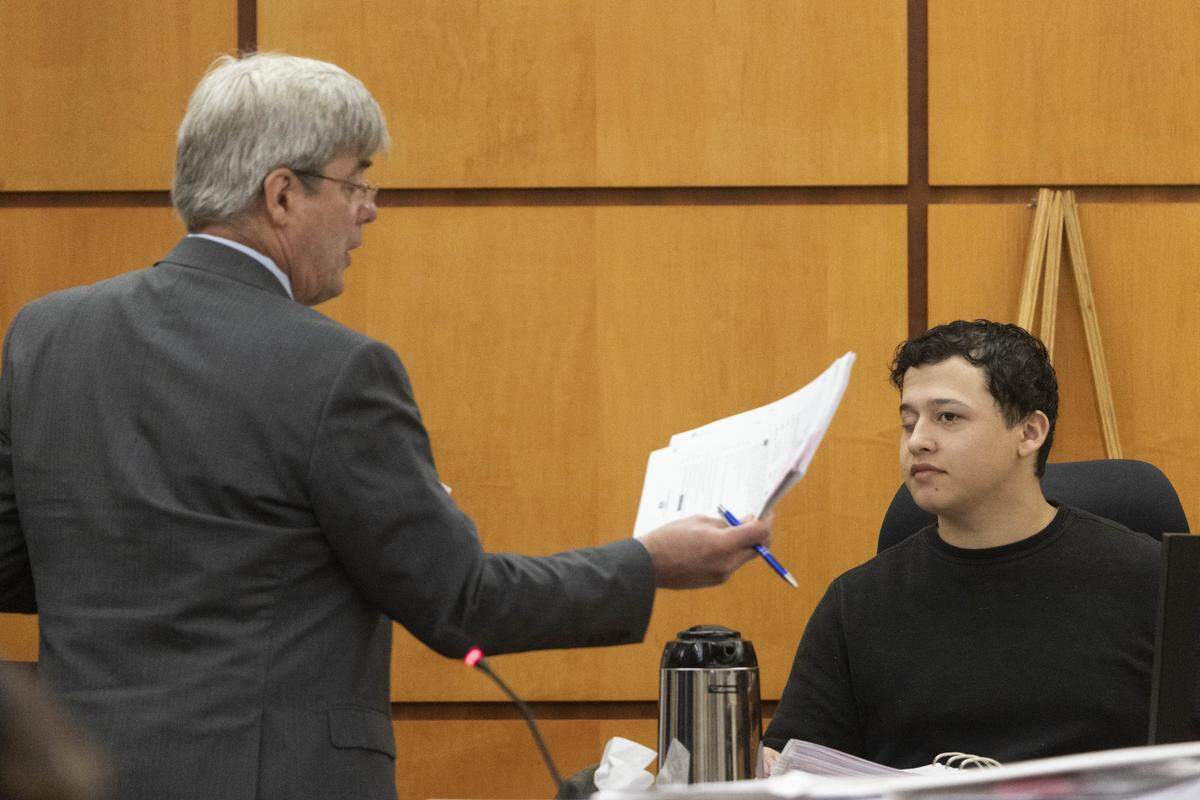
Wayne Fricke, an attorney for officer Christopher Burbank, questioned Cowden about his communications with James Bible, an attorney for Ellis’ family, and what he initially thought was happening when he saw police struggling with Ellis.
Cowden said he first contacted Bible after seeing him mentioned in a newspaper article in June 2020 about Ellis’ death, and he did an interview with the attorney soon after. Bible also accompanied him to some interviews with investigators. Cowden agreed that after one interview, he told Bible he wanted to apologize if anything he said was disappointing.
Cowden testified that during his first interview with investigators from the Washington State Patrol he told them his first thought at the scene was that police were responding to a call in the area to make an arrest.
Ellis, 33, died of a form of oxygen deprivation from physical restraint after he encountered police, the Pierce County medical examiner ruled. Three eyewitnesses have testified that officers attacked Ellis first, kicking off the fatal interaction, and other testimony has shown that Ellis told police at least five times that he could not breathe while he was restrained on his stomach with officers taking turns sitting on his back.
Lawyers for the officers have argued that Ellis, who went by Manny, died of a combination of a methamphetamine overdose and heart disease. He had 2400 ng/mL of meth in his system, according to his autopsy report, which the medical examiner described as an “extremely high” concentration. Meth and heart disease were listed as contributing factors in his death.
Ellis was walking home when he first encountered officers Matthew Collins, 40, and Burbank, 38. They told investigators they contacted Ellis after seeing him try the door of a car passing through the intersection. Collins and Burbank said Ellis became aggressive, and they had to subdue him.
Officer Timothy Rankine arrived after a call for backup helped hold Ellis down by sitting on him. Rankine, 34, told detectives he stayed on the man even after Ellis said he couldn’t breathe.
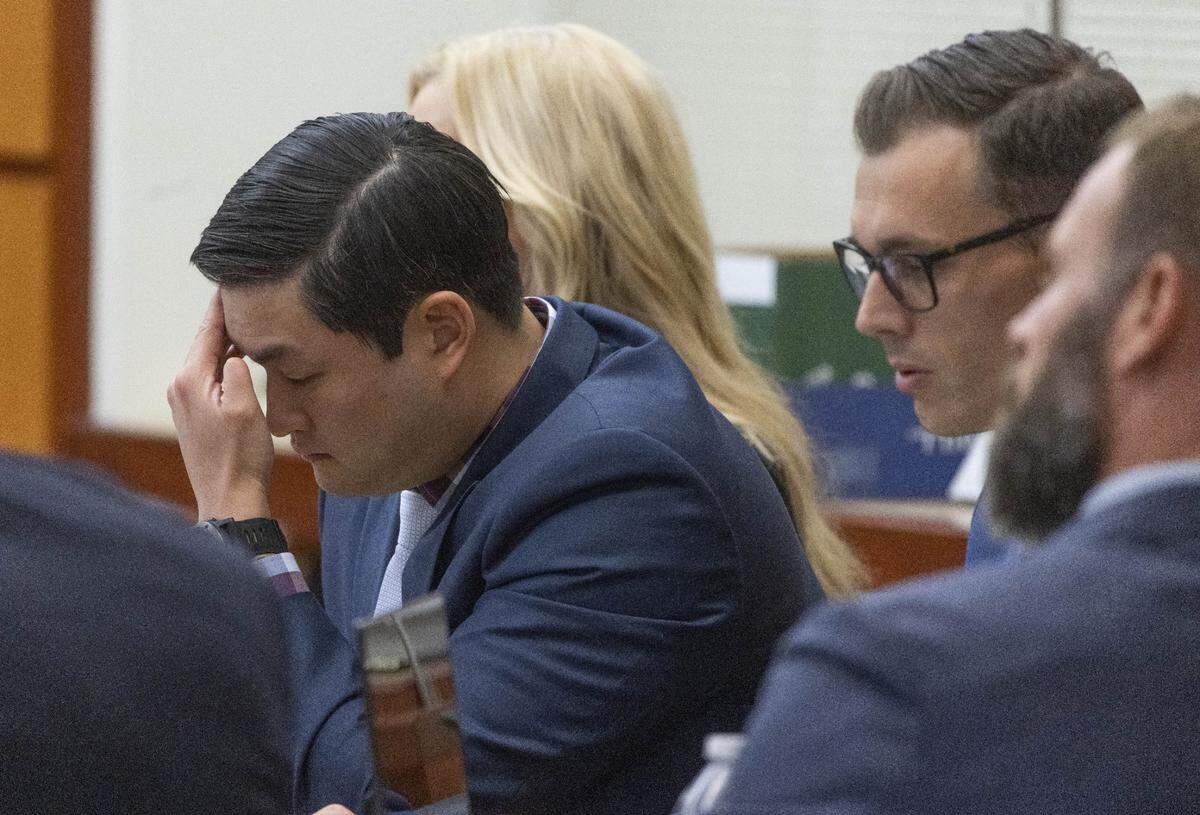
The three officers face charges of first-degree manslaughter for Ellis’ death. Collins and Burbank are also charged with second-degree murder. The defendants have pleaded not guilty, are free on bail and remain on paid leave from the Tacoma Police Department.
On Tuesday, Cowden testified that a sort of “melee” broke out after the officers got out of their car. He saw Ellis return to his feet, and one officer got behind him to put him in a headlock and bring the man to his knees. The second officer — Burbank — shot a Taser at Ellis, and Cowden said Ellis went to the ground.
Ellis’ first reaction seemed to be panic, Cowden said, but he didn’t act aggressively. His video, which played for jurors Wednesday morning, showed Ellis being shocked with a Taser and pulled to the ground. Burbank and Collins were on top of him, and Ellis’ legs flailed while he’s held down on his stomach.
Cowden said he took the video because it seemed to him that something was happening and he wanted to see how it turned out.
“I don’t think anyone would have believed me,” Cowden said Tuesday.
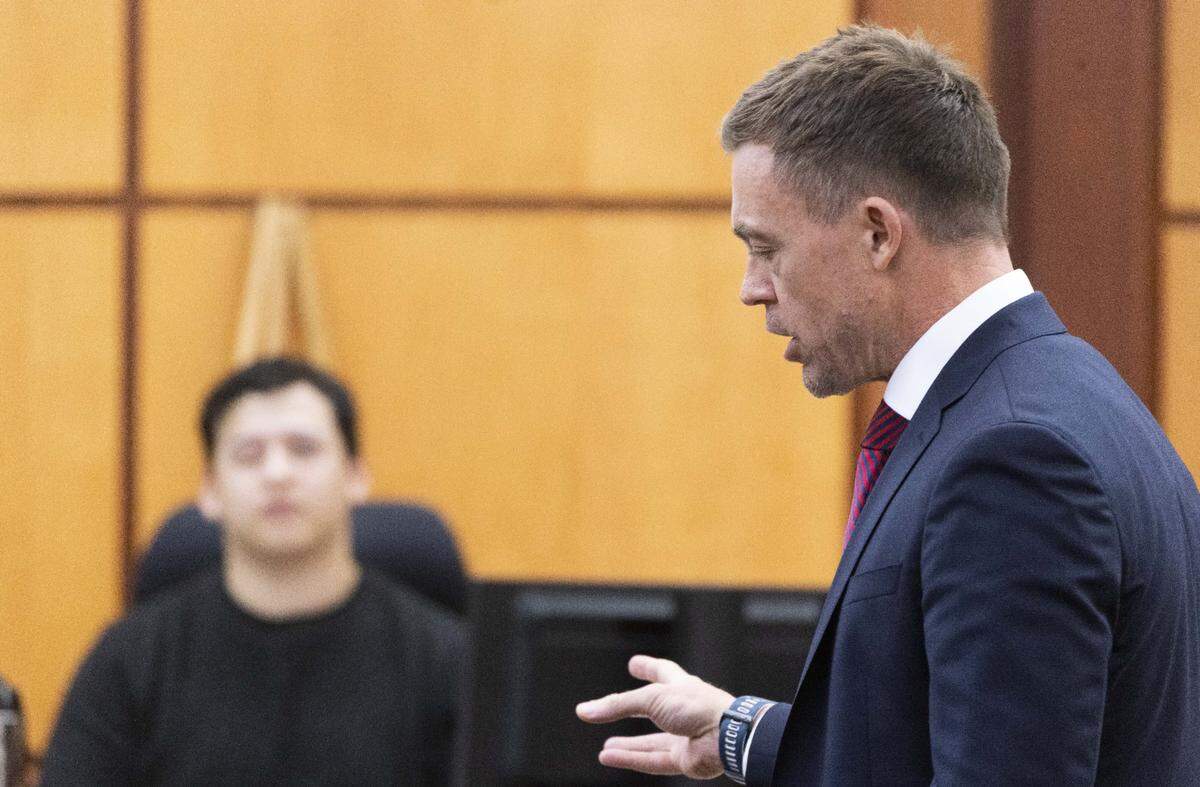
Later in the morning, Casey Arbenz, an attorney for Collins, questioned Cowden further. Arbenz asked Cowden about discrepancies between his statements in pre-trial interviews and his testimony. Arbenz said Cowden previously said he saw Ellis be struck by the police cruiser’s door, but now he was unsure whether he actually saw it hit the man.
During the afternoon, jurors heard from a fourth eyewitness who testified that she heard Ellis plead with officers that he could not breathe four or five times.
The testimony of Aiyana Mallang, who formerly used the last name White, supported sworn statements from three other eyewitnesses who have described the police as the aggressors in the deadly encounter. She said she saw an officer lunge at Ellis and punch him while she watched from inside her home at the corner of 96th Street and Ainsworth Avenue. She saw Ellis trying to twist away from an officer’s grasp, she said, and she heard his panicked tone as he asked the police to stop, followed by the buzz of a Taser.
“He was saying please, sir, stop,” Mallang said. “Then he repeated, ‘I can’t breathe, I can’t breathe.’”
Two of the officers, Collins and Burbank, told detectives they never heard Ellis say he couldn’t breathe. The third officer, Rankine, who arrived at the scene after a call for backup, reported that he heard Ellis say he couldn’t breathe but stayed on top of him.
Mallang, 28, told jurors and assistant attorney general Kent Liu she has lived at her house near the scene of Ellis’ death for several years and grew up there as a child. That night, she said, her fiance, her three children, her brother and his wife were with her. She was getting ready for bed when the continued sound of raised voices outside drew her to a window, and she saw an officer trying to grab and restrain Ellis in front of a police cruiser.
Looking out her bedroom window, Mallang testified, she saw Ellis fall in front of the police car after an officer grabbed him, and she heard a woman in a car behind the police vehicle yell at police to stop. After the sound of a Taser, she said, an officer gestured for the traffic to move along.
Mallang said she then saw an officer’s body on top of Ellis, and she heard the man say he could not breathe, followed shortly after by the sound of another Taser shock. About a minute later, she said two more officers arrived and helped restrain Ellis.
A larger law enforcement response soon followed with at least 15 vehicles on the scene, Mallang said. The woman said her view of Ellis was mostly obstructed by a wall of six to eight police officers who surrounded the man’s body while he was restrained on the ground.
A short video of that police response Mallang recorded from inside her home was shown in the courtroom. Her house was also equipped with a doorbell security camera which captured some of Ellis’ pleas for air.
Mallang’s testimony came after defense attorneys spent part of the morning cross examining Cowden. Attorneys questioned his descriptions of the start of Ellis’ encounter with police, at one point pressuring him to change his description of how Ellis was walking. Cowden testified Tuesday that Ellis was strolling casually on the sidewalk, as if enjoying nature or listening to music.
Arbenz, an attorney for Collins, brought up social media posts from Cowden where he described the neighborhood as the “ghetto” and a bad part of town, asking him if anyone walked through that area to enjoy nature. Cowden said his testimony was just trying to describe the pace of Ellis’ walk.
Cowden was also sometimes questioned about his vision. He said only one of his eyes has worked well since birth, and while his vision is perfect, his doctors have told him his depth perception is not good. The issue came up after a defense attorney asked him where he saw police initially positioned.
Wednesday ended with attorneys for the defendants beginning to cross examine White. Their questioning will continue Thursday morning.
This story was originally published October 18, 2023 at 12:29 PM.