Photos taken night of Manuel Ellis’ death show minor injuries on officers who subdued him
Jurors in the trial of three Tacoma police officers accused of the in-custody death of Manuel Ellis heard Thursday morning from a crime-scene investigator who went to the scene and later took photos of the officers.
Steven Wilkins, a retired Pierce County Sheriff’s Department forensics manager who was on call the night Ellis died, testified for prosecutors that he arrived at 96th Street and Ainsworth Avenue at about 1:13 a.m. and saw Ellis lying in the road covered by a blanket. He told jurors he’d been advised an in-custody death occurred but not how it happened.
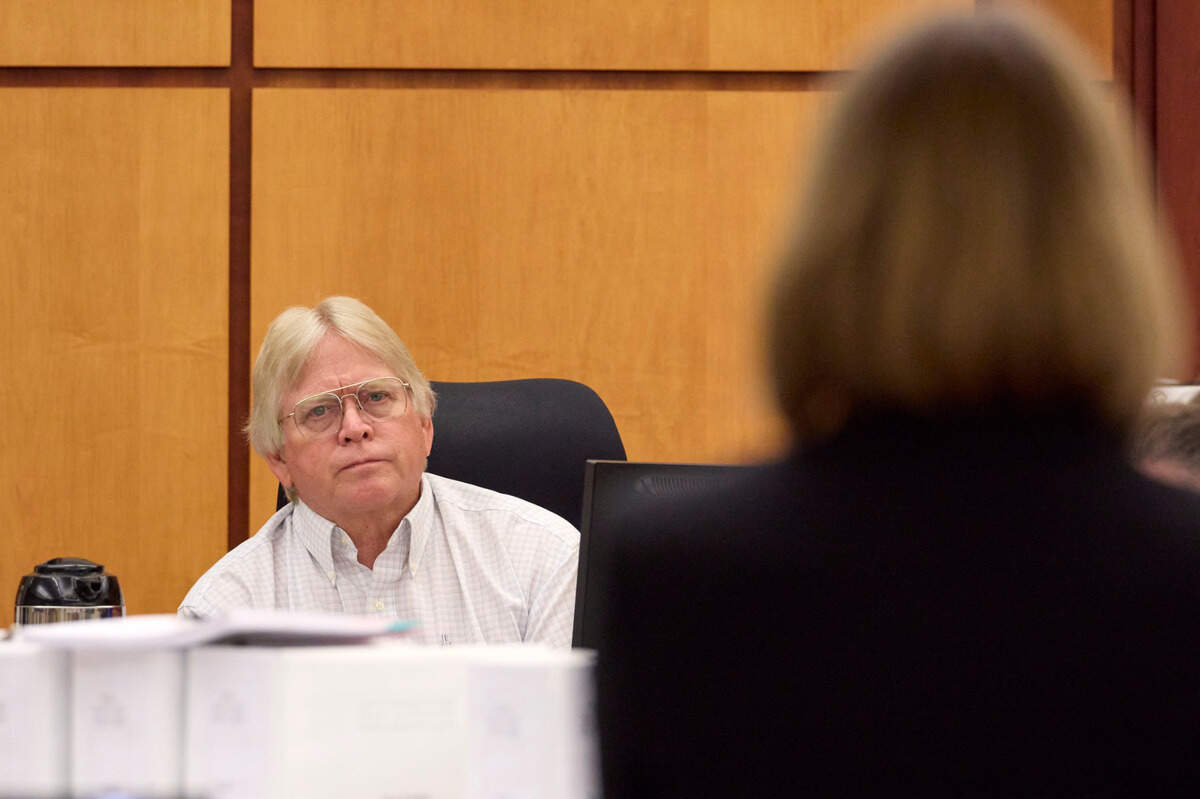
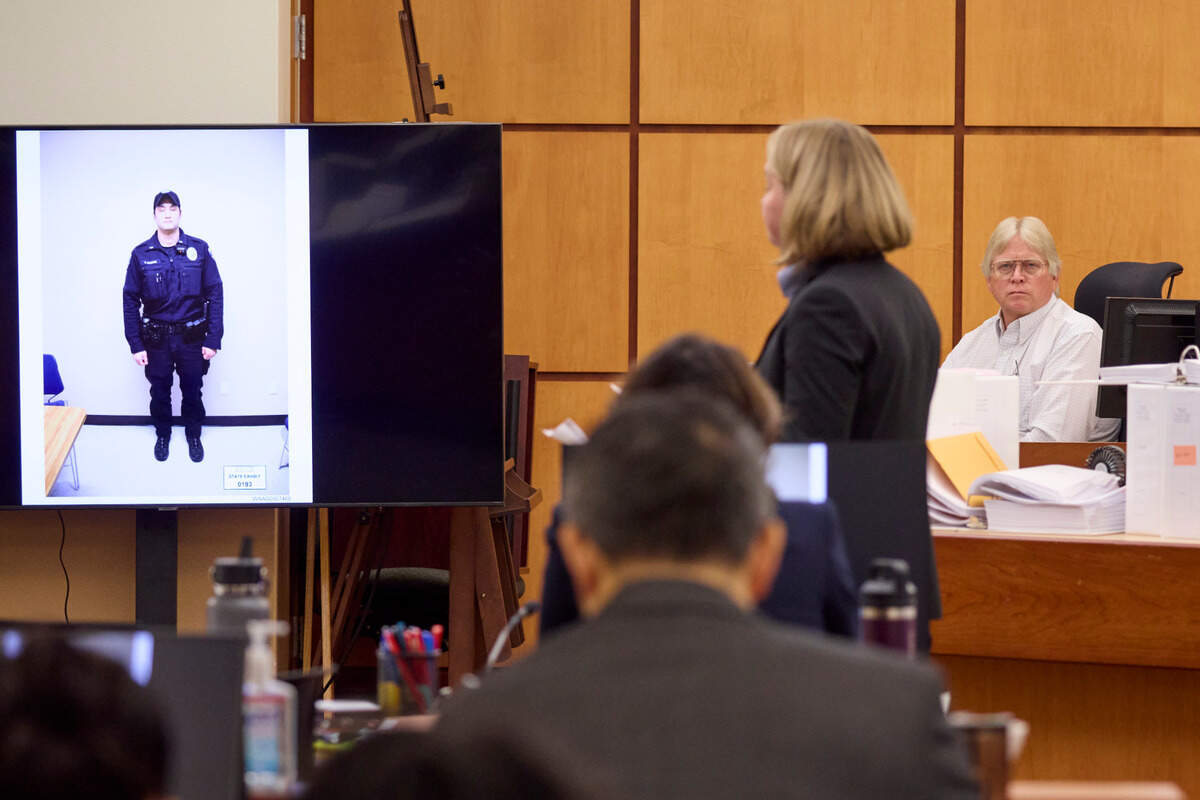
Wilkins said he took photos and videos to document the scene, and he was initially the lead investigator there. Then he was called to the Sheriff’s Department’s Parkland-Spanaway precinct to photograph the officers involved. Assistant attorney general Lori Nicolavo asked whether he saw any blood on the men.
“The answer would be no,” Wilkins said.
The photographs, which were displayed on courtroom televisions, showed every side of the defendants in uniform, officers Matthew Collins, Christopher Burbank and Timothy Rankine. They also showed close-ups of injuries. Collins had a small cut on his thumb and red marks on two other fingers, a small cut on the back of one arm and his knees were slightly scuffed. The face of the officer’s watch was broken. Burbank appeared to have a scuffed knee, and Rankine didn’t have any injuries.
Ellis, 33, died of a form of oxygen deprivation from physical restraint after he encountered police the night of March 3, 2020, the Pierce County medical examiner ruled. Four eyewitnesses have testified that the officers were the aggressors in the fatal interaction, and other testimony has shown that Ellis told police at least five times that he could not breathe while he was restrained on his stomach with officers taking turns sitting on his back.
Lawyers for the officers have suggested that Ellis, who went by Manny, died of a combination of a methamphetamine overdose and heart disease. He had 2400 ng/mL of meth in his system, according to his autopsy report, which the medical examiner described as an “extremely high” concentration. Meth and heart disease were listed as contributing factors in his death.
Ellis was walking home when he first encountered Collins, 40, and Burbank, 38. They told investigators they contacted Ellis after seeing him try the door of a car passing through the intersection. Collins and Burbank said Ellis became aggressive, and they had to subdue him.
Rankine, 34, arrived after a call for backup helped hold Ellis down by sitting on him.
The three officers face charges of first-degree manslaughter for Ellis’ death. Collins and Burbank are also charged with second-degree murder. The defendants have pleaded not guilty, are free on bail and remain on paid leave from the Tacoma Police Department.
During prosecutors’ direct examination of the crime-scene investigator, Nicolavo asked him what he knew about some of the items booked into evidence, including a cell phone and Ellis’ EBT card. Wilkins said the items were given to him when he arrived at the scene, but no one pointed out where they’d been found.
Nicolavo also asked Wilkins what he saw on the police cruiser at the scene, and the witness said he looked for possible damage or fingerprints, but he didn’t see any. Nicolavo asked why the vehicle wasn’t processed for evidence, and Wilkins said that decision would have been made by someone after he left the scene.
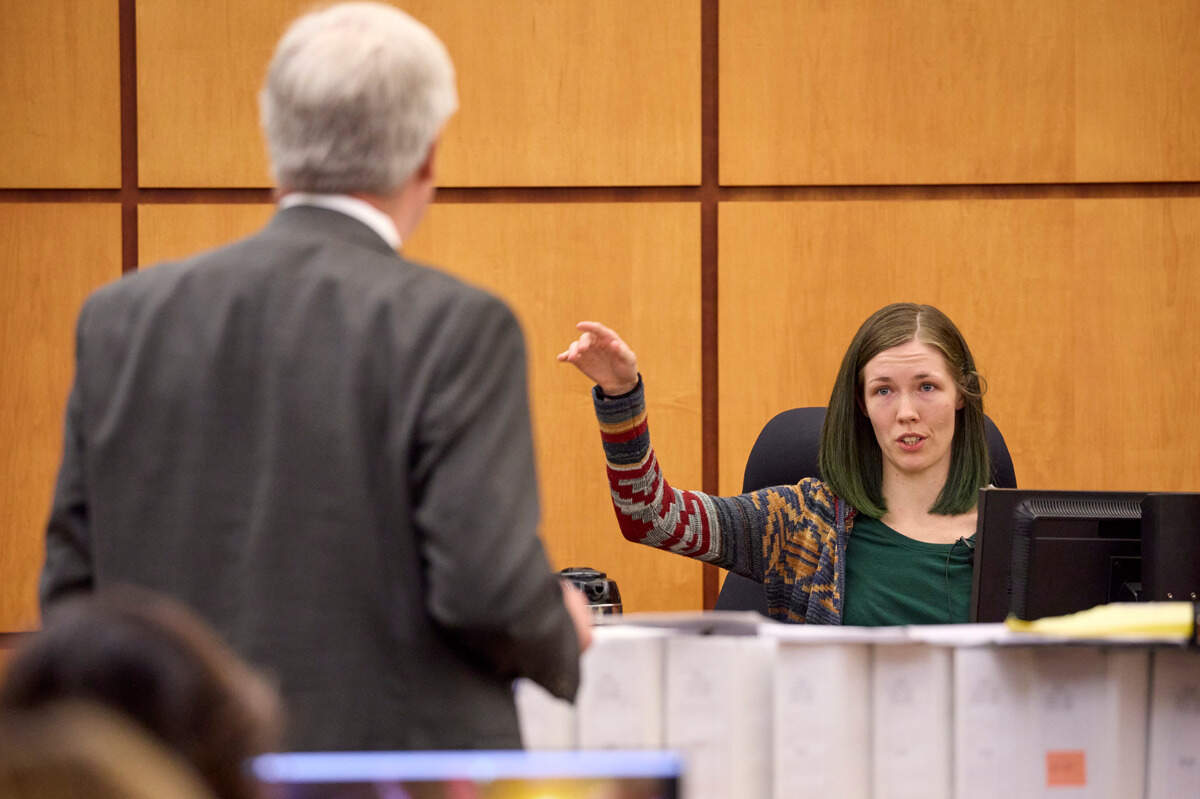
Earlier in the morning, attorneys completed their questioning of Aiyana Mallang, who was inside her home at the corner of 96th Street and Ainsworth Avenue when the incident began. On cross-examination, she told lawyers for the defendants that Ellis was trying to twist away from an officer’s grasp when she first heard him say he could not breathe.
On Wednesday, Mallang testified that she saw a police officer punch and kick Ellis in front of a Tacoma Police Department cruiser before he was shocked by a Taser, and as she watched from inside, she heard Ellis’ panicked tone as he told police he couldn’t breathe four to five times.
Thursday morning’s cross examination tempered some of that testimony. Mallang told attorneys for Collins and Burbank she thought police officers were trying to arrest Ellis, and she never saw the man sit still as officers tried to restrain him.
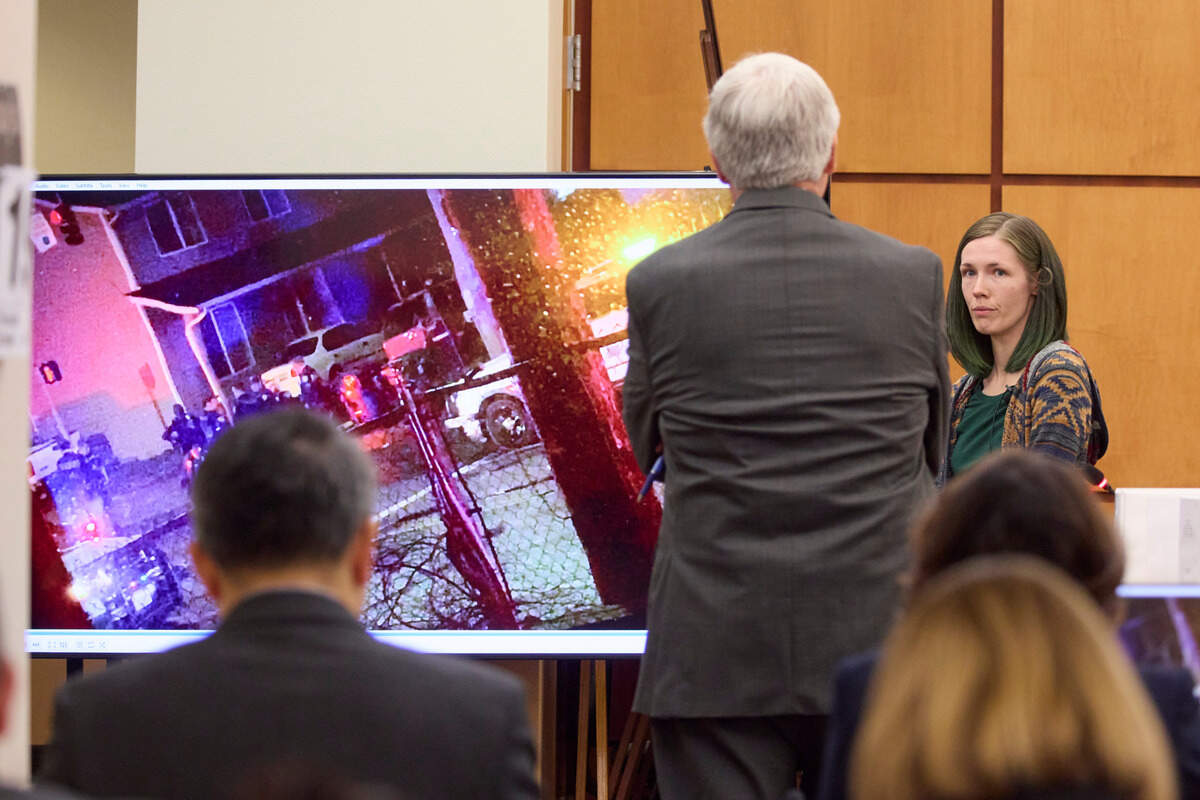
“I saw him struggling to get away the whole time he was on the ground,” Mallang testified.
From her viewpoint inside, Mallang said, she only saw one police officer at a time and couldn’t distinguish between Collins and Burbank. Jared Ausserer, an attorney for Collins, focused on exactly when Mallang went to her bedroom window to watch and how long she stayed there. Mallang said she didn’t see how the incident began. When she first looked out a side window, she said she saw an officer grabbing Ellis, and she stayed there for 45 to 60 seconds.
Then, Mallang said, she moved to a street-facing window for a short period of time and stopped watching after two more officers – Rankine and his partner – arrived on the scene. When a larger contingency of law enforcement arrived she looked out her windows a few more times and saw officers making a wall around Ellis’ body. Mallang said she couldn’t see anyone on top of Ellis, and to her, it looked like the man was on his side and officers were holding him down with their arms.
On redirect, Mallang agreed with assistant attorney general Kent Liu that she couldn’t see where officers’ knees were positioned when Ellis was surrounded by police.
During the afternoon, prosecutors recalled their forensic video expert to testify to an image-by-image reproduction of eyewitness video from the fatal encounter.
Grant Fredericks, a certified forensic video analyst for a company in Spokane, testified about the beginning of Sara McDowell’s video, which was taken from her car behind the officers’ police cruiser at the beginning of the incident.
The video played briefly, and it showed an officer repeatedly punching Ellis. As Fredericks went through the first few video stills before the punches, he pointed out that Officer Christopher Burbank’s arm was underneath Ellis’ thigh before Ellis went to the ground.
The brief testimony followed heated discussion between attorneys and the court over what video should be shown to jurors. Prosecutors wanted to play video that synched up all of the eyewitness video and various audio sources of the incident, but which removed dispatch recordings that prosecutors said drowned out audio captured on a doorbell security camera.
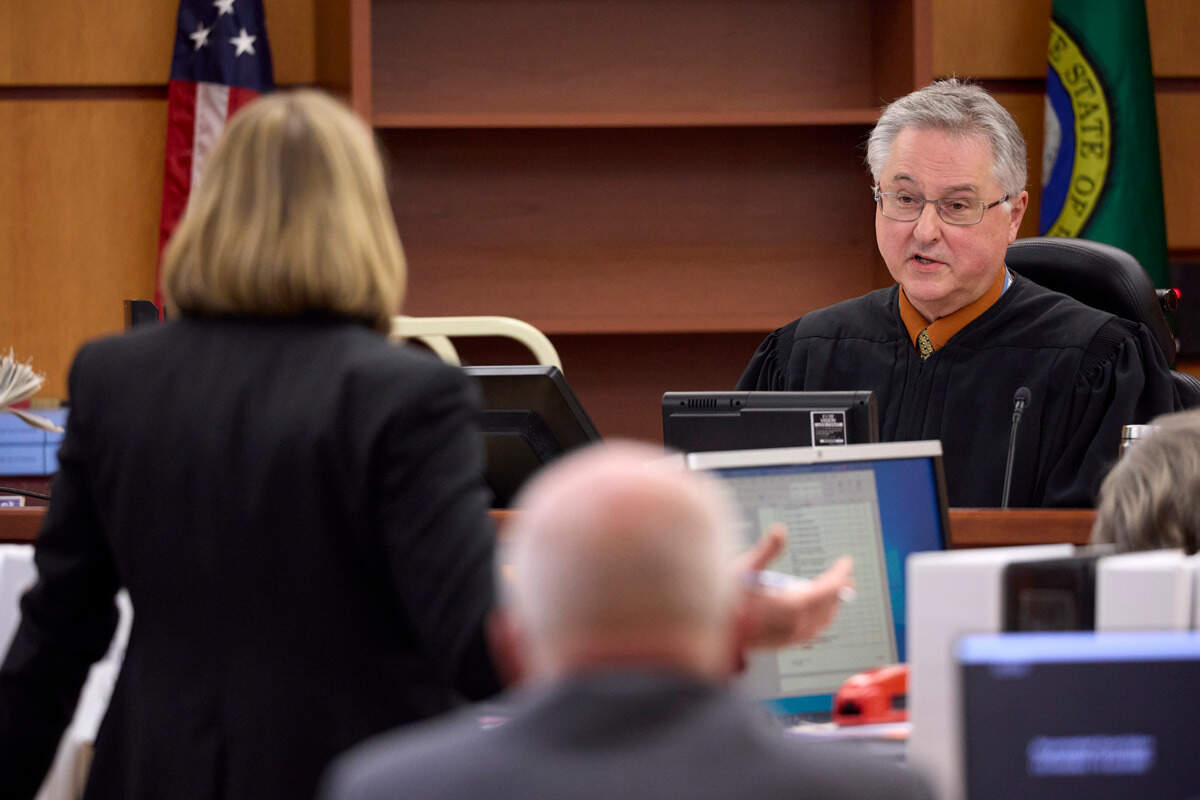
Lawyers for the officers said removing audio didn’t tell the full story of what happened. Judge Bryan Chushcoff agreed, saying it changed the experience of what actually happened, and it was potentially misleading.
Fredericks’ testimony Thursday followed the defense’s cross-examination of Wilkins.
Aside from Collins, Burbank and Rankine, Wilkins also photographed law enforcement officers not charged in Ellis’ death but still considered to be involved. Photos of Rankine’s partner, Masyih Ford, were shown to the jury, along with pictures of Sheriff’s Department Lt. Anthony Messineo and detective sergeant Gary Sanders. They did not appear to have any injuries.
Anne Bremner, an attorney for Rankine, asked Wilkins to describe her client’s demeanor when he photographed him.
“Professional. Respectful. Reserved,” Wilkins said.
The other officers he photographed were similarly professional and respectful, Wilkins said. Bremner began to ask him if he was aware that Ford’s involvement in the incident was equal to that of Rankine, but she was cut off by objections from the state, which Chushcoff sustained. Wilkins later said he didn’t know the extent to which any of the officers were involved.
Lawyers for the officers also showed jurors photos of a box of raspberry-filled powdered doughnuts near Collins and Burbank’s police cruiser and a jug of water by the curb. Ellis was walking home with both items after going to a 7-Eleven, and attorneys for the officers have said that doughnut powder on the vehicle supports their claims that after the officers called Ellis over to their vehicle to ask if he was OK, Ellis became aggressive and pounded on the windows with his fists.
The photo showed light streaks on the passenger-side window, and it isn’t clear what the streaks are from. Wilkins said he didn’t determine what was on the glass.
This story was originally published October 19, 2023 at 12:30 PM.