
Expert on breathing testifies at Tacoma police trial but only after fight from defense
Five weeks into the trial of three Tacoma police officers charged in the death of Manuel Ellis prosecutors spent Tuesday morning trying to convince the judge to let their breathing expert tell the jury what happens to a person who is held face down with pressure on their back.
Lawyers for the officers had objected to the testimony of Dr. Curtis Veal, the state’s pulmonology expert, arguing the state already had a cardiologist and forensic pathologist tell the jury about hypoxia and positional asphyxia. Veal’s testimony would just repeat that information and the trial is already weeks behind schedule, they argued.
After hours of testimony and arguments, Judge Bryan Chushcoff agreed to bring the jury in and let Veal take the stand, just before the noon break.
Ellis died March 3, 2020, after repeatedly telling officers he could not breathe while they applied pressure as he lay prone on the pavement. The Pierce County medical examiner ruled Ellis’ death a homicide caused by oxygen deprivation from physical restraint. Lawyers for the officers blame the death on a high level of methamphetamine in Ellis’ system combined with a heart irregularity.
Officers Matthew Collins, 40, Christopher Burbank, 38, and Timothy Rankine, 34, are all on trial for second-degree manslaughter. Collins and Burbank also are charged with second-degree murder. All three have pleaded not guilty, are free on bail and remain on paid leave by the Tacoma Police Department.
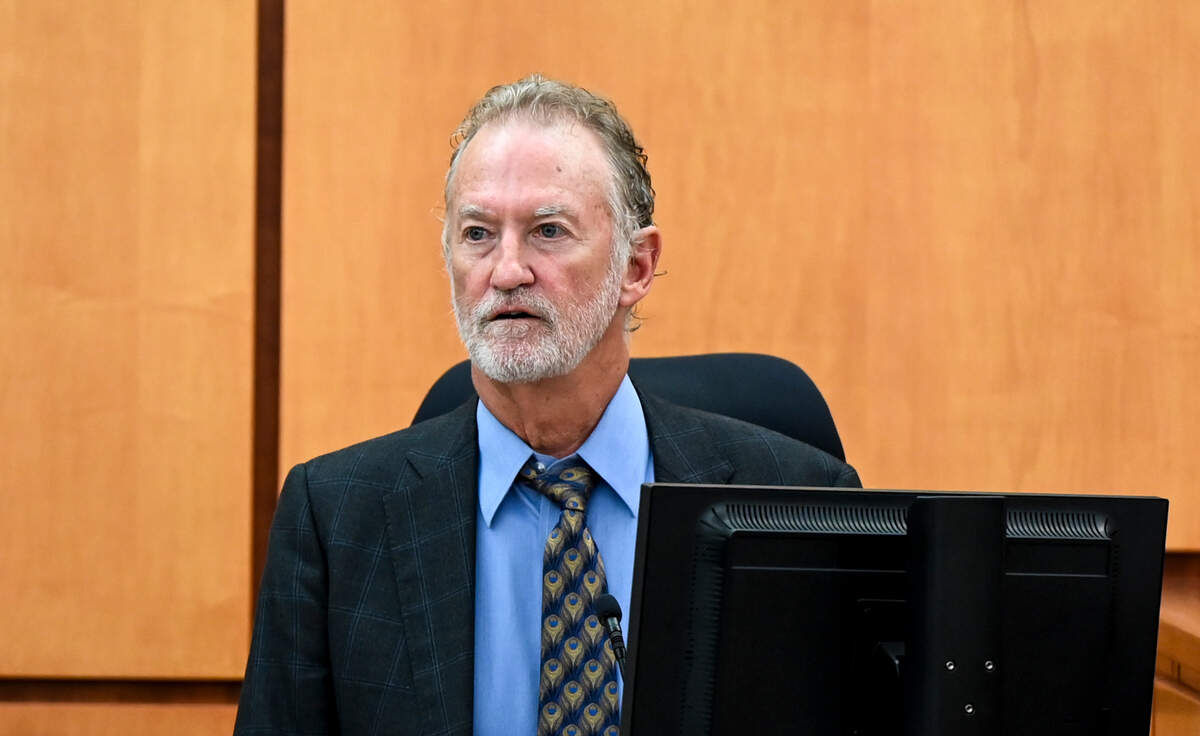
Before the jury was brought in, Veal described the distress a person can feel if they’re not able breathe, a condition called “air hunger.”
After the jury came in, Veal described how that impacted Ellis, who had been involved in physical activity with the officers, had methamphetamine in his system and had been shocked with a Taser, Veal said. Those factors together would increase his oxygen demands. Next came the pressure.
Burbank was sitting on Ellis’ back when Rankine arrived and took over. When medics arrived and took his pulse, it was 80 beats per minute, which suggested that he was suffering from bradycardia — an abnormally low heart rate, he said.
“When any of us have a sense of shortness of breath, it is extremely distressing to most people,” he said, adding that the person often exhibits signs of anxiety and might physically act out. It’s the sense that you’re being smothered, he continued.
When asked if a person can speak when they’re having trouble breathing, Veal said speaking, singing and yelling can happen on exhalation.
“You can speak as long as you have a reservoir of gas in your chest,” he said. “You can do that a number of times before you could not refill your lungs and do it some more.”
Burbank’s lawyer, Brett Purtzer, asked Veal if it was possible that Ellis was faking it when he first said the words, “I can’t breathe.”
“Given the outcome that we know and the fact that he had to be truly short of breath, I have no reason to believe he was making it up the first time,” Veal said. “You don’t have to be hypoxic to be short of breath.”
Collins’ lawyer, Jared Ausserer, asked Veal to identify the point where Ellis became hypoxic, and Veal said it was after Ellis was briefly put in a recovery position and then rolled back onto his stomach with pressure on his back. Ausserer pointed out that Collins and Burbank were no longer involved in the restraint at that point, and Veal agreed.
“Officer Collins was not near Mr. Ellis during that time,” Ausserer asked.
“Yes, I’m aware of that,” Veal responded.
Rankine’s lawyer, Mark Conrad, pointed out that many officers helped hold Ellis down on the ground as time went on and one put a spit hood over his head.
Veal was expected to continue testifying on Wednesday.
This story was originally published October 31, 2023 at 1:16 PM.