Tacoma police trial grinds to halt after judge disallows testimony from police instructors
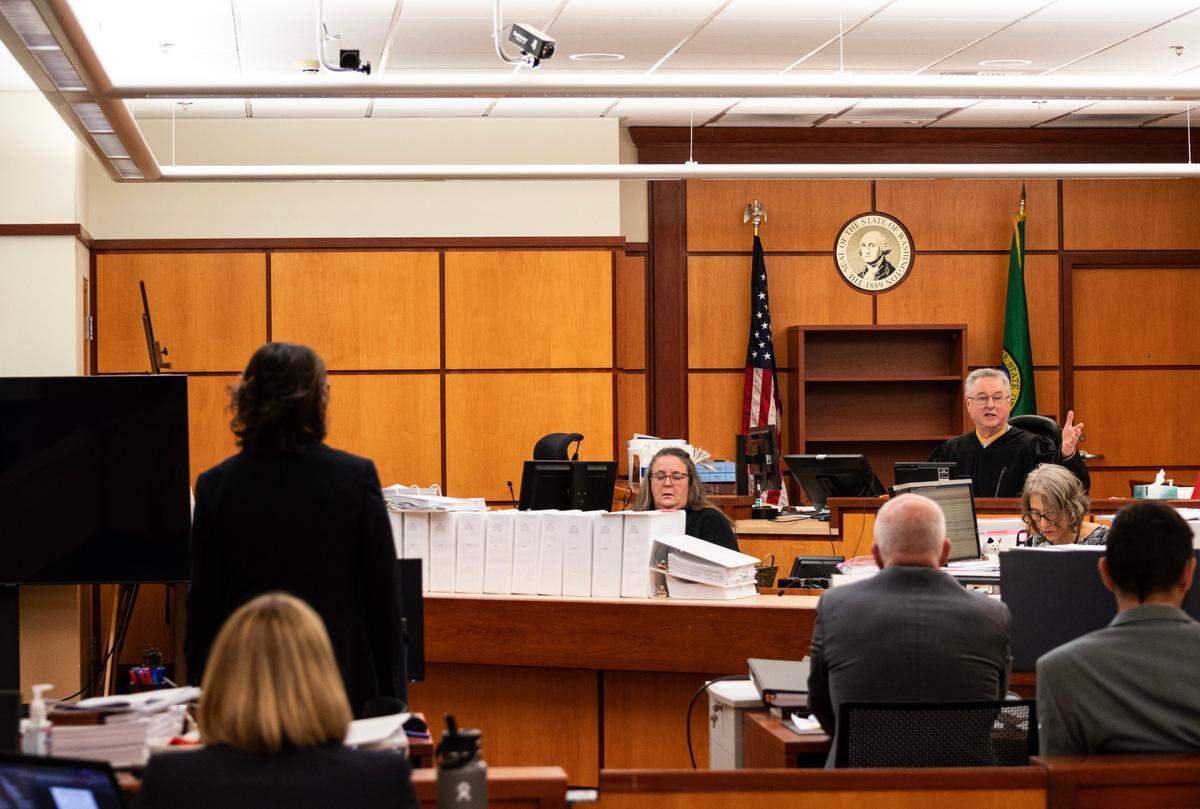
Jurors in the trial of three Tacoma police officers accused of killing an unarmed man in their custody won’t hear testimony Wednesday afternoon after defense attorneys fought off prosecutors’ efforts to call witnesses who trained the officers.
Prosecutors from the Washington State Attorney General’s Office planned to call two witnesses associated with the Criminal Justice Training Commission, which trains law enforcement officers in Washington state and maintains their certifications. Special prosecutor Patty Eakes said longtime trainer Russ Hicks would tell the jury what training officers receive on use of force and prone positioning, dealing with people in crisis and the legal basis for police contact.
Mark Conrad, an attorney for officer Timothy Rankine, filed a motion Tuesday arguing that Hicks’ testimony would only show what police officers are typically trained on, and not what training Rankine and the other defendants actually received.
Judge Bryan Chushcoff ruled that prosecutors couldn’t call witnesses from the Criminal Justice Training Commission until testimony pointed out that the officers didn’t follow their training when they subdued and restrained Manuel Ellis and that doing so risked the man’s life.
Eakes said calling witnesses from CJTC was “critically important,” at one point referring to the defense’s opening statements where attorneys said the defendants fully followed their police training.
After Chushcoff made his ruling, prosecutors said they didn’t have any other witnesses available Wednesday. Eakes said that on Thursday prosecutors will call Dr. Thomas Clark, the former Pierce County medical examiner who conducted Ellis’ autopsy.
The manner of Ellis’ death March 3, 2020, was ruled a homicide by Clark. His cause of death was determined to be hypoxia, a form of oxygen deprivation, from physical restraint.
Expert testimony from a forensic pathologist, a cardiologist and a breathing expert has supported prosecutors’ claim that the way police officers restrained Ellis — on his stomach in handcuffs tied to his legs with the weight of officers on top of him — caused him to asphyxiate and die. Other testimony has shown Ellis told police he couldn’t breathe multiple times while officers continued to apply force.
Officers Christopher Burbank, Matthew Collins and Timothy Rankine are charged with first-degree manslaughter for killing Ellis. Collins and Burbank also face charges of second-degree murder. The defendants have pleaded not guilty, are free on bail and remain on paid leave from the Tacoma Police Department.
Lawyers for the officers have argued that police had to subdue Ellis because he was aggressive and resisted arrest. Collins and Burbank told detectives they saw Ellis try the door of a car passing through an intersection, and when they called him over to their patrol car, he began punching their windows. Collins reported that when he got out, Ellis fought him with “superhuman strength.”
Outside the jury’s presence, Chushcoff asked prosecutors how they think the defendants did not follow police training, telling them he was unclear on whether it was simply that officers should have placed Ellis in a squad car once he was handcuffed.
Eakes said the criminal act was the totality of the facts of their case:That Ellis was hogtied and couldn’t breathe, and that that information was never related to anyone who could have helped him. She said none of the officers asked for medical aid to respond, and that paramedics were only called after dispatchers asked if it was needed.
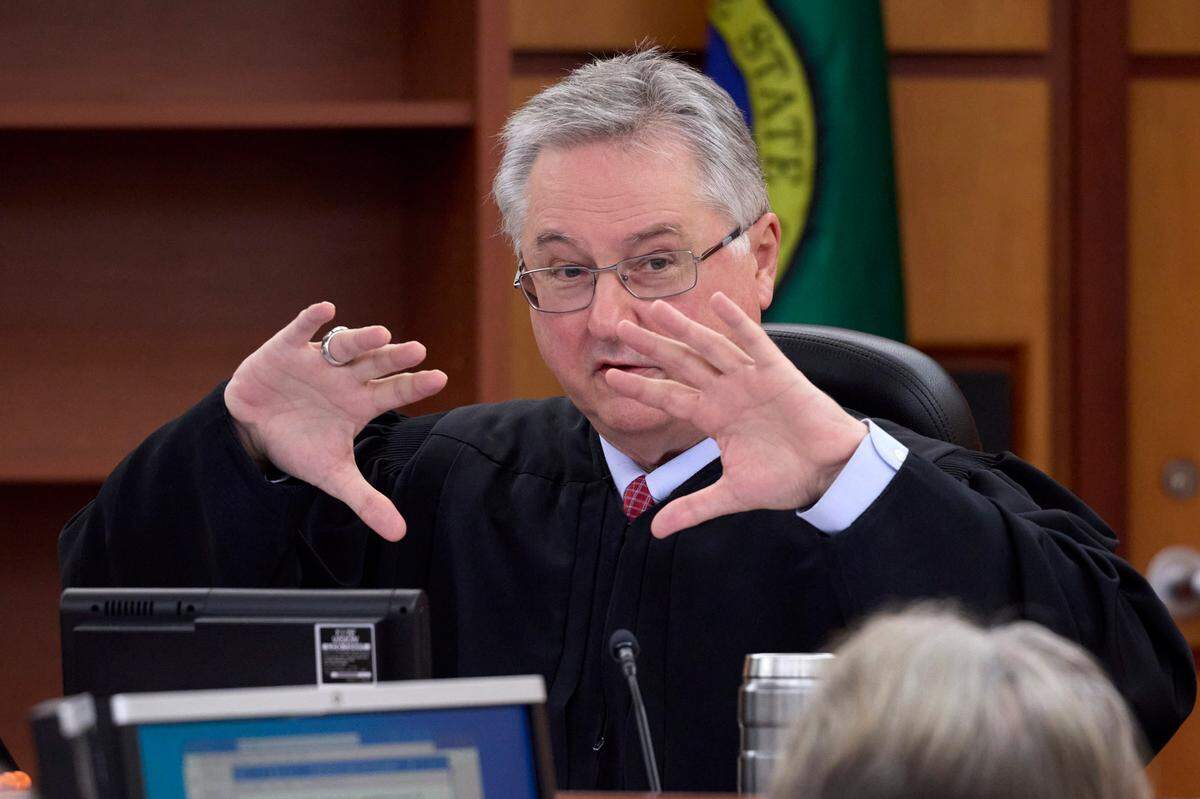
Chushcoff said to him, that meant the criminal act came down to officers’ failure to notify medical authorities. He asked how long it took for medical aid to be called after Ellis was subdued, and Jared Ausserer, an attorney for Collins, said it was 12 seconds.
Asked by the judge what it meant to her if the defendants overheard a superior officer call for medical aid, Eakes said having a superior officer on scene doesn’t relieve the defendant officers of their caretaking duties, and all three of them should have requested medical aid.
The sparring over what witnesses could be called was preceded by attorneys completing their questioning of Dr. Curtis Veal, the state’s expert pulmonologist. On cross examination, Ausserer pointed out that after the initial struggle with Ellis, every piece of evidence Veal had showed that Collins was holding the man’s legs, which wouldn’t have contributed to hypoxia.
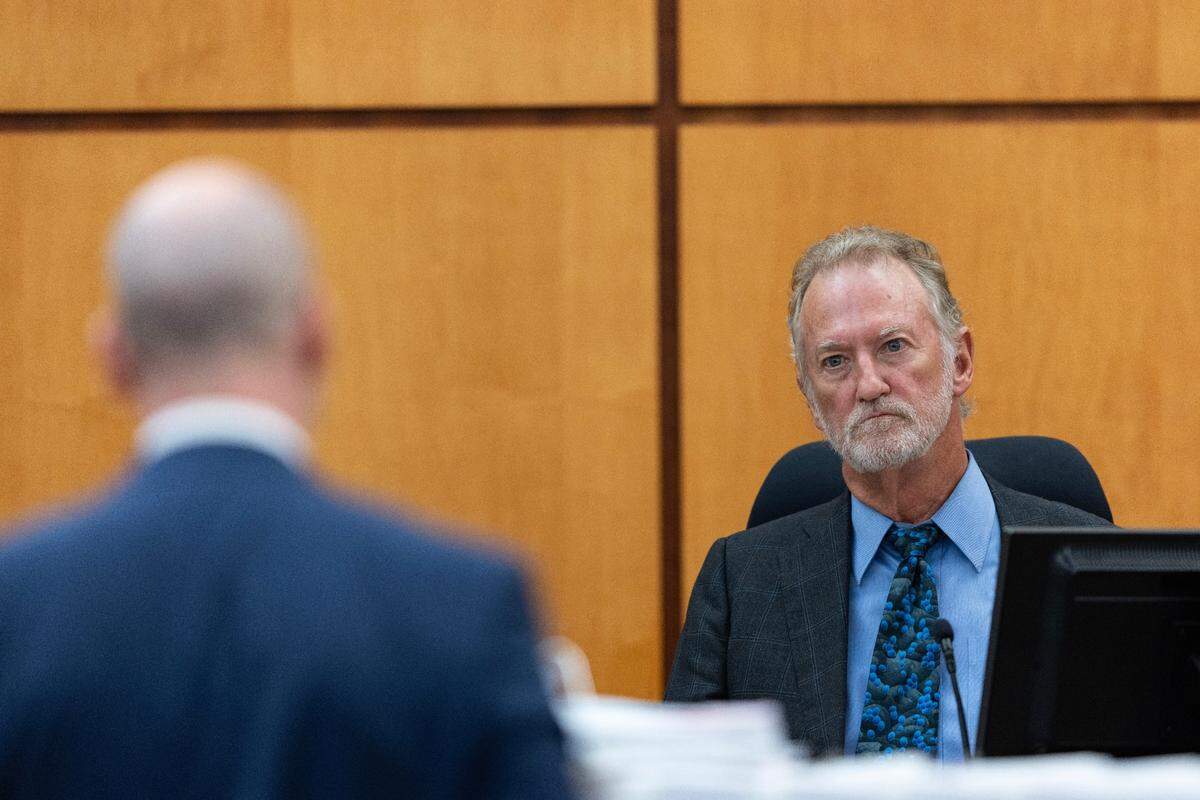
In a redirect examination, assistant attorneys general Kent Liu asked whether how much weight officers put on Ellis or the length of time they were on top of him would affect his opinion. Veal said it wouldn’t because Ellis’ asphyxiation was a cumulative process. He testified Tuesday that his physical activity with the officers, being shocked with a Taser, the methamphetamine in Ellis’ system and being restrained on his stomach with pressure on his back all would increase his oxygen demands.
This story was originally published November 1, 2023 at 12:38 PM.