
Defense witness testifies that police force used against Manuel Ellis was appropriate
A police training expert testified Monday morning that the use of force against Manuel Ellis was appropriate, as the trial of three Tacoma police officers charged with Ellis’ death entered its eighth week.
Before testimony resumed, Pierce County Superior Court Judge Bryan Chushcoff excused a juror after their transportation to the trial was hampered by an early morning crash on black ice on their way to court.
The trial already had been delayed when a second juror tested positive for COVID-19 over the weekend prior to Thanksgiving. The court skipped two days of scheduled testimony last week because of that. The first juror to test positive for COVID, on Nov. 16, was excused. The jury pool of 16 now stands at 14, with two alternates.
Defense lawyers for the officers on trial wanted so badly to retain the juror with the transportation issue that they offered Monday to pay for a ride-share service for the duration of the trial.
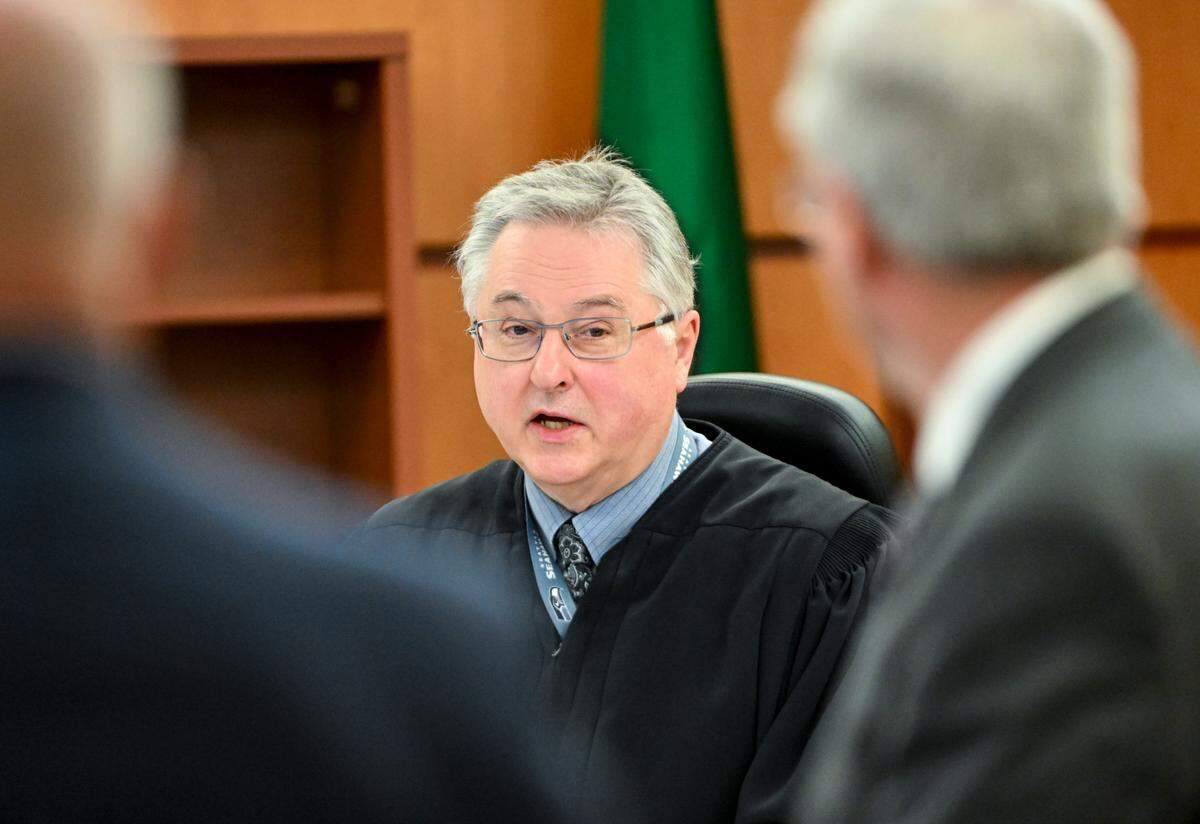
“We’re going lose too much time,” Chushcoff said, explaining his ruling to move ahead with testimony and excuse the juror. “I think it’s problematic for one party to pay for a juror to get here.”
Ellis, 33, died March 3, 2020, after repeatedly telling police he could not breathe while they struggled at a south Tacoma intersection. The Pierce County Medical Examiner ruled Ellis’ death a homicide caused by oxygen starvation from physical restraint. Defense lawyers for the three officers on trial contend Ellis died from the extensive amount of methamphetamine in his system and a defective heart.
Officers Matthew Collins, 40, Christopher “Shane” Burbank, 38, and Timothy Rankine, 35, are charged with first-degree manslaughter. Collins and Burbank, who are also charged with second-degree murder, reported seeing Ellis try to open the door of a car as it passed through an intersection.
They told detectives Ellis acted aggressively toward them, triggering the fight that led to his death. Eyewitnesses have testified that the officers were the aggressors and Ellis did nothing to provoke them.
Rankine was among the first to respond to the scene where Ellis and the officers struggled. Rankine told detectives he refused to get off of Ellis’ back even though he heard Ellis say he couldn’t breathe.
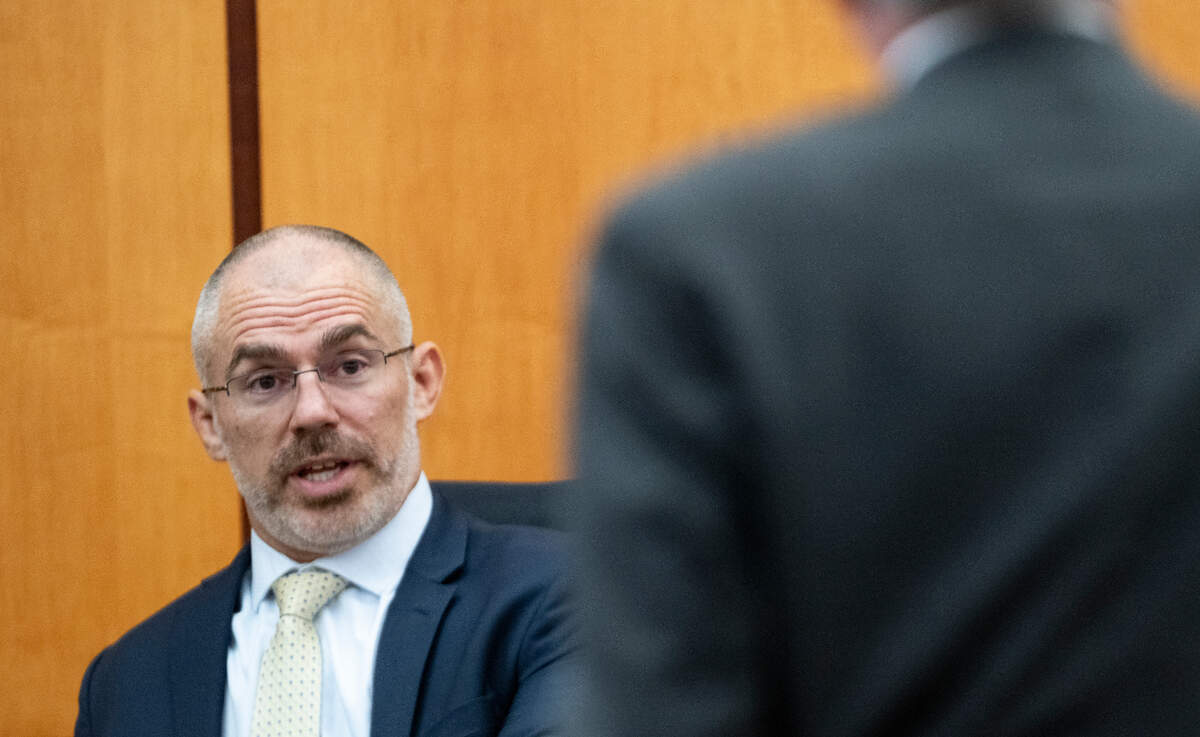
After jury matters were settled Monday morning, Chris Nielsen, a training sergeant for Renton police who was called by the defense as an expert in police procedure, resumed testimony that began on Nov. 16 before the unexpected delay.
Nielsen’s testimony acted as a counterweight to a prosecution expert who testified earlier that the charged officers, including Rankine, used excessive force on Ellis and recklessly continued applying pressure on his back while he lay prone and repeatedly said he couldn’t breathe.
“What I saw was several force options that they tried that failed,” Nielsen testified.
Nielsen said it is allowable and often necessary for police to meet the resistance or force they encounter with even greater force in order to gain control of unruly subjects.
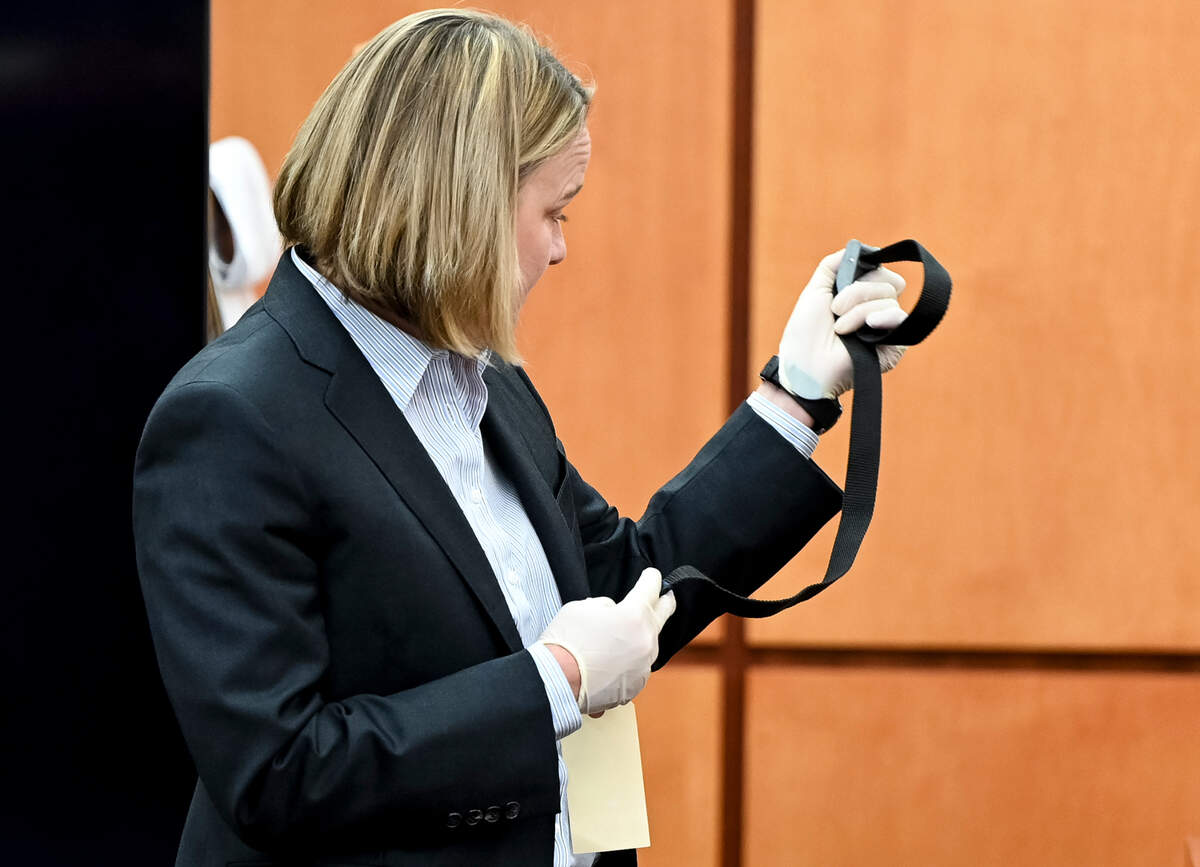
Neilson testified that various tactics used by the charged officers — Burbank knocking Ellis to the ground with a car door, Collins placing Ellis in a neck hold, Burbank striking Ellis three times with a Taser, both officers striking Ellis repeatedly in the head, and officers placing their weight on Ellis even after he was handcuffed — were all justified.
He said the officers’ actions were ineffective on Ellis. An audio clip of Ellis saying, “Try it again,” while being tased should be considered a frightening sign for officers because measures that typically subdue subjects weren’t working, and police commonly view claims such as Ellis’ that he couldn’t breathe as a ruse, he said.
“You evaluate the context of the event,” Nielsen, a former King County prosecutor, said. “Their words are less important than the context.”
Nielsen said he based his conclusions largely on the statements the defendant officers made to detectives, dismissing eyewitness statements that contradicted them. Under cross-examination from assistant state attorney general Lori Nicolavo, Nielson testified that of the more than 90 cases he’s testified in, he has found wrongdoing by police only once. He also said that he serves on a lethal force review board that has never ruled that an on-duty killing by police was unjustified.
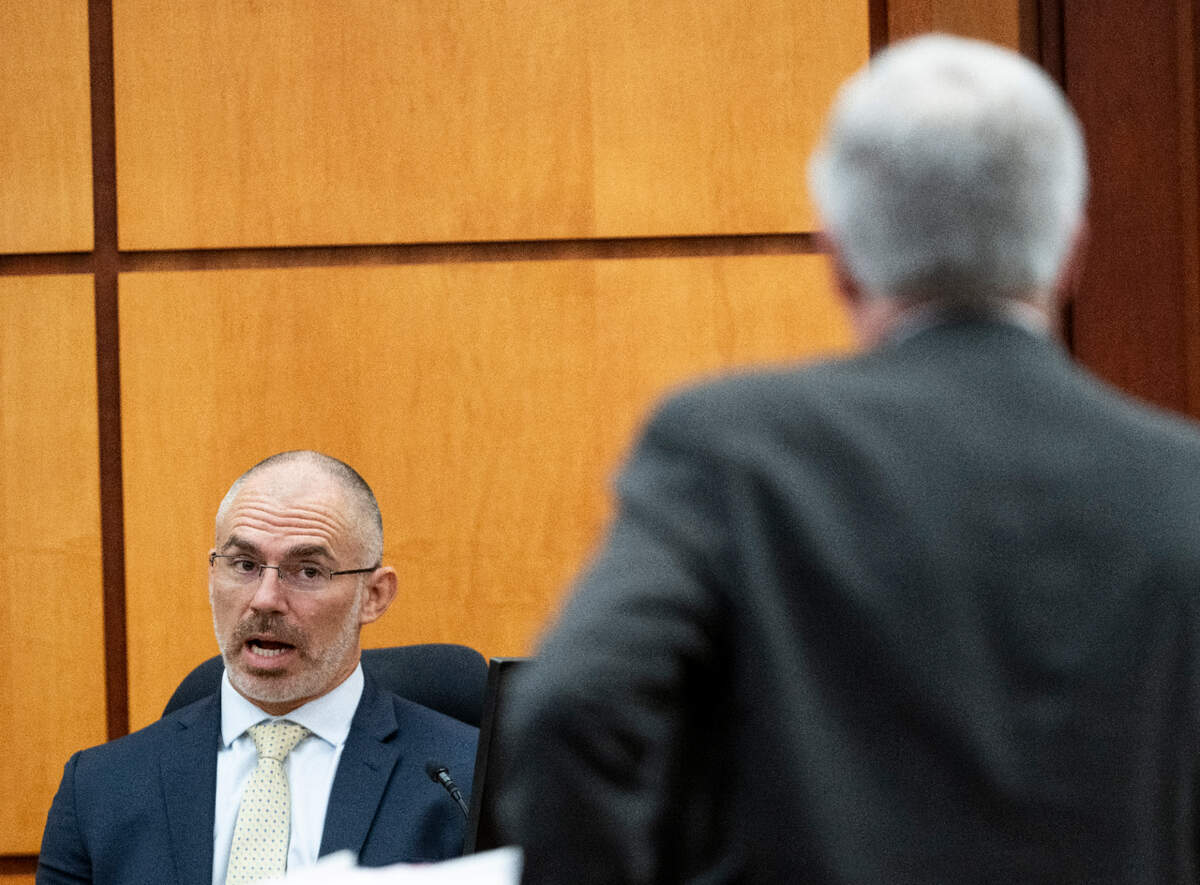
Nielsen repeated his point regarding the defendants’ use of force against Ellis during afternoon testimony.
“It would be wholly inappropriate if Mr. Ellis continued to flail around in handcuffs and they just simply watched,” Nielsen told the jury.
Nielsen, a former King County prosecutor, conceded that eyewitness and security video footage does not show Ellis trying to hit or kick officers, as Collins and Burbank described.
However, Nielsen said the videos capture about a minute of the four to five minutes that Collins and Burbank were engaged with Ellis. “The fight was well underway by the time the video began,” Nielsen testified.
Nielsen conducted his analysis accepting the officers’ version of events, including Collins’ claim that Ellis violently attacked him – something nobody else, including Burbank, reported.
“There’s a whole host of things that I think happened that aren’t contained on the video,” Nielsen said. “That’s among them.”
He also accepted the officers’ claim that Ellis was suffering from “excited delirium,” a controversial term that major medical and psychiatric associations reject as an explanation for deaths. In law enforcement parlance, excited delirium refers to powerful and irrational subjects – usually on drugs – who are often impervious to pain and require extensive force to control.
“Excited delirium people are scary people,” Nielsen said, and it’s common that more than one officer is needed to subdue them.
Nielsen said Burbank’s and Collins’ use of force escalated because of Ellis’ actions – specifically the officers’ claim that Ellis threatened to punch Burbank and smacked his hand against their police cruiser, then resisted arrest. He said the officers’ actions – using a Taser on Ellis, punching him, placing him in a neck hold and ultimately pressing on him while he lay prone – were reasonable.
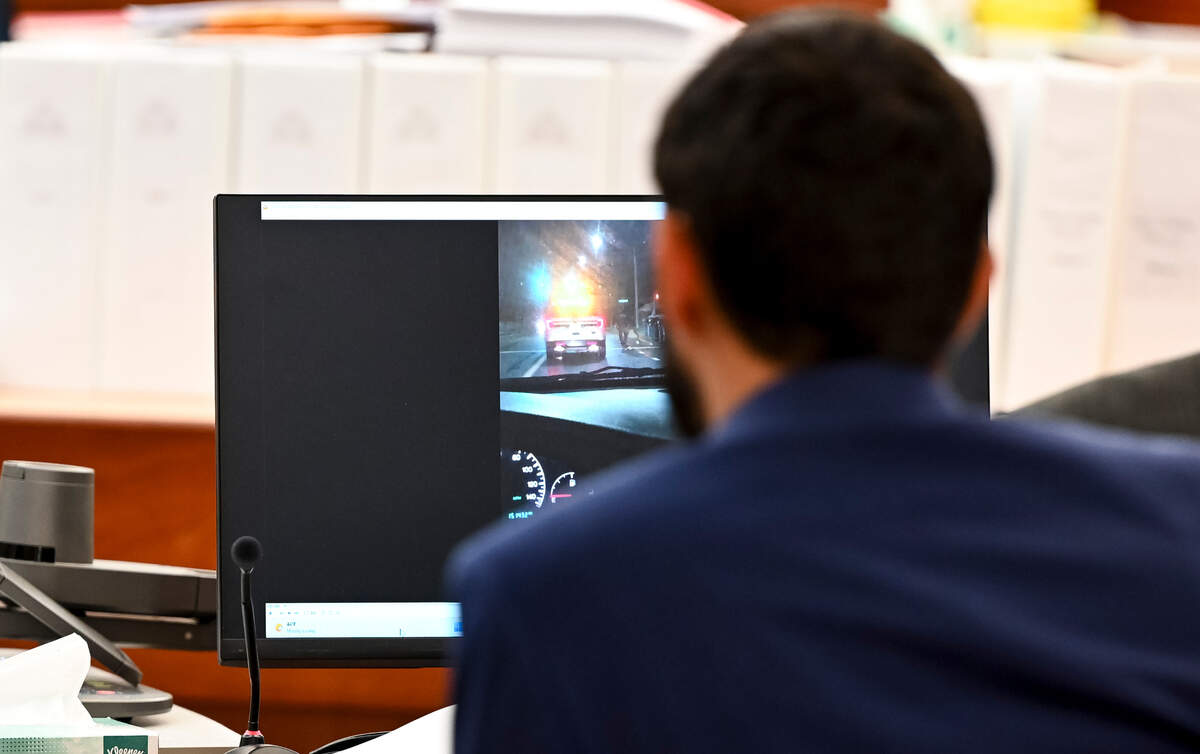
Shown the same video clip that a prosecution expert described as Ellis raising his hands in surrender while Collins applied a neck hold and Burbank jolted him with a Taser, Nielsen said, “This is what resistance looks like.” He described Ellis’ actions throughout the video evidence as “extremely noncompliant.”
Rankine and his partner were the first to arrive to assist Burbank and Collins. According to Rankine’s statement to detectives, Rankine sat on Ellis’ back while he was in prone restraint, and twice moved Ellis on to his side so he could breathe easier. Nielsen said Rankine used reasonable force on Ellis, even though he heard Ellis gasp his last words, “I can’t breathe,” and remained atop him until medics took over.

“The level of force officer Rankine used was a relatively low level of force,” Nielsen said. “Placing someone in a prone position and placing transient weight on their back has a very low likelihood of a bad outcome.”
Testimony is scheduled to resume Tuesday morning in Pierce County Superior Court.
This story was originally published November 27, 2023 at 1:09 PM.