How much prison time did Joshua Ellis get for murder of ex? Here’s what a judge decided
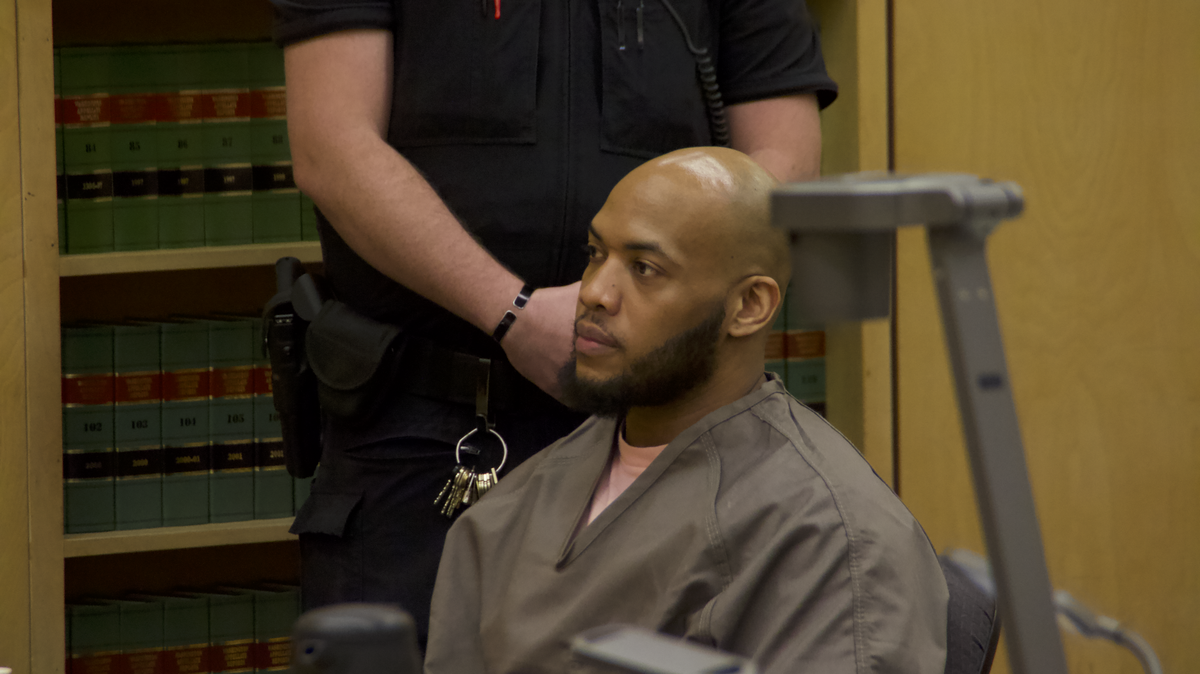
A Pierce County judge on Friday rejected prosecutors’ recommendation to re-sentence a man convicted of the domestic-violence murder of his ex-girlfriend to the low end of the standard range in a tense and emotional hearing.
Superior Court Judge André Peñalver sentenced 33-year-old Joshua Ellis to 15 years in prison for murdering Wendi Traynor in 2017 at her Milton apartment and leaving the body for about a week until family members found her. The sentence was five years longer than what prosecutors had recommended and about three years shorter than the high end of the standard range.
Before Peñalver handed down the sentence, Traynor’s mother, Tammi Anderson Black, addressed the court, describing how the murder of her daughter had left her with nothing but grief. Her father, Gerald Traynor, said he still wakes up each morning and thinks to himself that he will never again hear from his daughter.
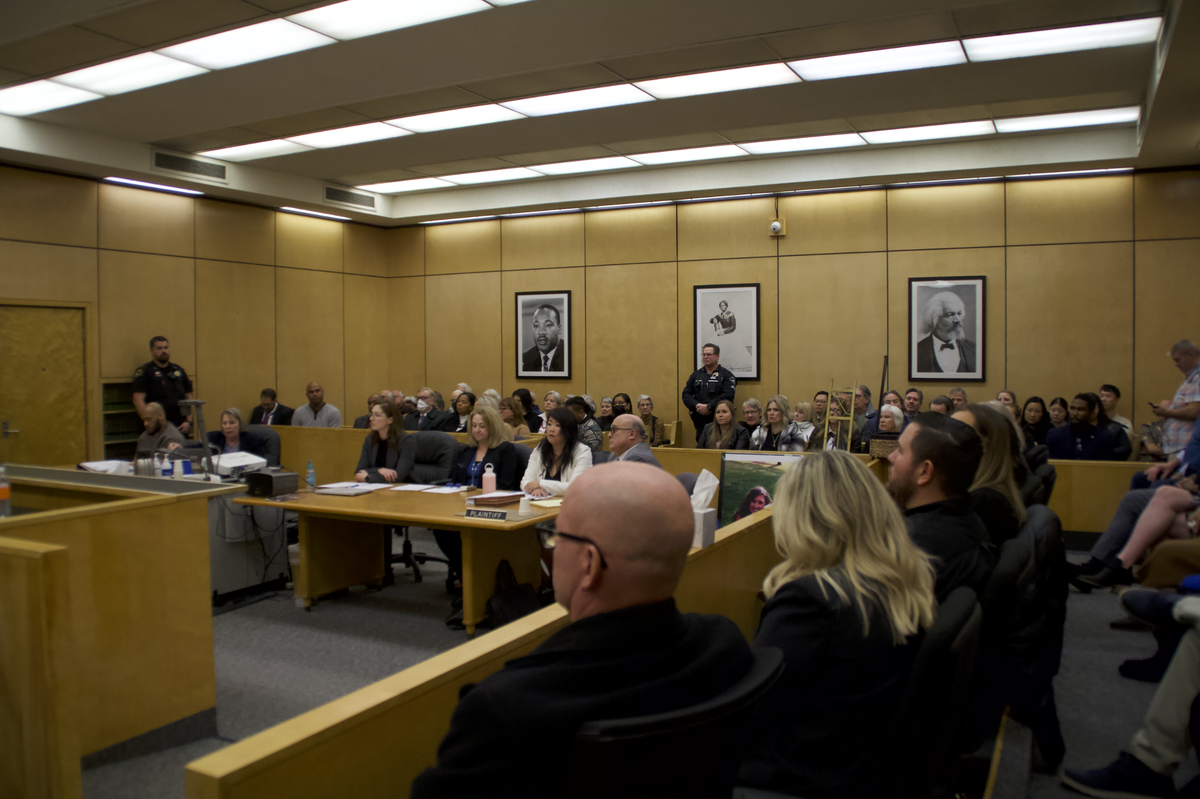
Traynor had her whole life ahead of her, Black said, and now she would never help her shop for a wedding gown nor see her in a happy relationship. The mother broke into tears as she spoke in a courtroom packed with more than 60 people. She said her daughter had not gotten the justice she deserved.
“There’s nothing I enjoy anymore. Family gatherings are so hard to go to because Wendi is not there. Wendi is the nucleus of our family,” she said.

Ellis was found guilty of the killing in a 2019 jury trial, and he was sentenced to a little more than 23 years in prison. The judge who sentenced him then said the punishment was still probably lower than he deserved. But in 2021, an appellate court agreed that the defendant didn’t receive a fair trial due to prosecutorial misconduct during jury selection. A three-judge panel found a deputy prosecutor invoked racial stereotypes and appealed to the prejudice of the jury. The conviction was overturned.
Prosecutors and Ellis’ attorney from the Department of Assigned Counsel, Mary High, decided against a retrial, instead developing a plea agreement wherein Ellis would plea guilty to the same charge of second-degree murder, minus a deadly weapon sentencing enhancement. In exchange for the guilty plea, prosecutors agreed to recommend Ellis, who had no prior criminal history, receive a low-end sentence of 10 years, three months in prison.
Traynor’s relatives vehemently opposed the plea deal. Deputy Prosecuting Attorney Dru Swaim wrote in court filings that the decision was made to avoid potential risks of a re-trial.
After Ellis pleaded guilty in August, more than 100 people signed petitions asking Peñalver to hand Ellis his original, high-end sentence, and 54 victim statements from relatives, family friends and strangers were submitted to the court.
Peñalver said the recommended sentence was “not sufficient” in reflecting the seriousness of the offense. To make his decision, he said he had to consider conflicting points. There were the letters and petitions submitted, which he said spoke to the agony wrought by Ellis’ murder of Traynor. There was the issue of systemic racism, he said, which Ellis’ attorney argued had led to the over-sentencing of Black offenders in the United States and in Pierce County.
The judge said he also must consider the restorative purpose of sentencing as a means of allowing Ellis to improve himself to reduce the risk of re-offending. And there was the consideration of how this punishment would affect Ellis’ two children, who Peñalver said would undoubtedly face their own trauma due to this sentence.
There was also the “complicated” dichotomy of Ellis, Peñalver said, echoing the sentiments of retired Judge James Orlando, who first sentenced Ellis and said there were two sides to the man. Peñalver said on one hand, Ellis was described as a dutiful son and a gentle family member. On the other, he had destroyed a life.
“He has traumatized a family, which is a shell of itself, in Chris Traynor’s words,” the judge said. “It is damage that will ripple for generations.”
He also had to consider how similar offenses had been sentenced in Pierce County, and Peñalver turned to the November sentencing of Justin Yoon and Gabriel Davies, who pleaded guilty to the same crime of second-degree murder. Like Ellis, they had no criminal history. Unlike Ellis, they were 17 years old. The boys were sentenced to 150 months. Peñalver said for Ellis, 180 months in prison was just.
Ellis will receive credit for the time he has already served behind bars — about six years — so he has about nine years left. The state’s earned release time law means he could shave as much as 18 months off the sentence for good behavior.
Traynor’s mother and father spoke with reporters outside the courtroom after the hearing, saying that they were pleased with the judgment Peñalver had imposed. They wore purple ribbons on their lapels as a symbol of solidarity with victims of domestic violence.
“Judge Peñalver made the right decision. But it’s never going to be enough,” Black said. “Not for an entire life of a young woman, but I am happy with the outcome.”
Traynor, 25, was shot in the head by Ellis about a month after she left their home in Kentucky and moved back to the Puget Sound area. In his jury trial, Ellis’ claimed he’d killed Traynor in self defense as she was reaching for a gun, but jurors didn’t agree. Black said her daughter had been executed.
The mother said domestic violence had to stop, and she said she thinks children should be educated to understand what a healthy relationship looks like, what an unhealthy one looks like and how to get out of it. Black said she sensed her daughter was in a toxic relationship and looking back, she wished she’d been more educated about domestic violence.
While the parents were satisfied with Ellis’ sentencing, Black said it was a “travesty” that the 60-month firearm sentencing enhancement had been dropped in the case.
Peñalver said during the hearing it would have been impossible to include the enhancement because it had to have been pleaded and proven, either through trial or through an admission, and he said the reference to shooting in Ellis’ guilty plea wasn’t enough.
Four people spoke in support of Ellis. His mother, Angela Carter-Lanon, said her son’s story is rooted in loss, pain, blame and heart-wrenching grief. She said she knew Ellis was not perfect, but that he is a courageous, compassionate and resilient man.
“It’s difficult for me to sit here and try to choose the appropriate traits to somehow prove my son’s humanity when the pain of Wendi’s death is still raw and palpable,” Carter-Lanon said. “But more than one thing can be true at the same time. Joshua is a good man. He’s a good father. He’s a good son, and he will forever carry this grief and judgment of a momentary response.”
Before he was sentenced, Ellis addressed the court, stating that he would live every day of his life knowing his actions led to the death of someone he loved. He said he was sorry for the loss of Traynor, and he will never not be remorseful.
When Ellis is released from prison, he said he plans to move back to Kentucky to be nearer to his family, and he hopes to achieve his goal of becoming a business owner.
“I never intended to hurt anyone, yet many are hurting,” Ellis said. “I will always be sorry for the pain we share, and the trauma that links us together forever.”
This story was originally published December 1, 2023 at 3:30 PM.