Methamphetamine and its effects on the body takes center stage at Tacoma police trial
A forensic toxicologist called by attorneys for three Tacoma police officers on trial for the death of Manuel Ellis testified Thursday morning about methamphetamine found in Ellis’ system and the drug’s effects.
Asa Louis works for the Washington State Patrol’s crime lab in Seattle, which he said processed about 16,000 samples from police agencies and coroner’s offices last year. He’s worked in the field for 24 years, and he told jurors his job is to review samples to determine if the person it originated from was taking a medication as prescribed or if they were taking too much or too little of the drug.
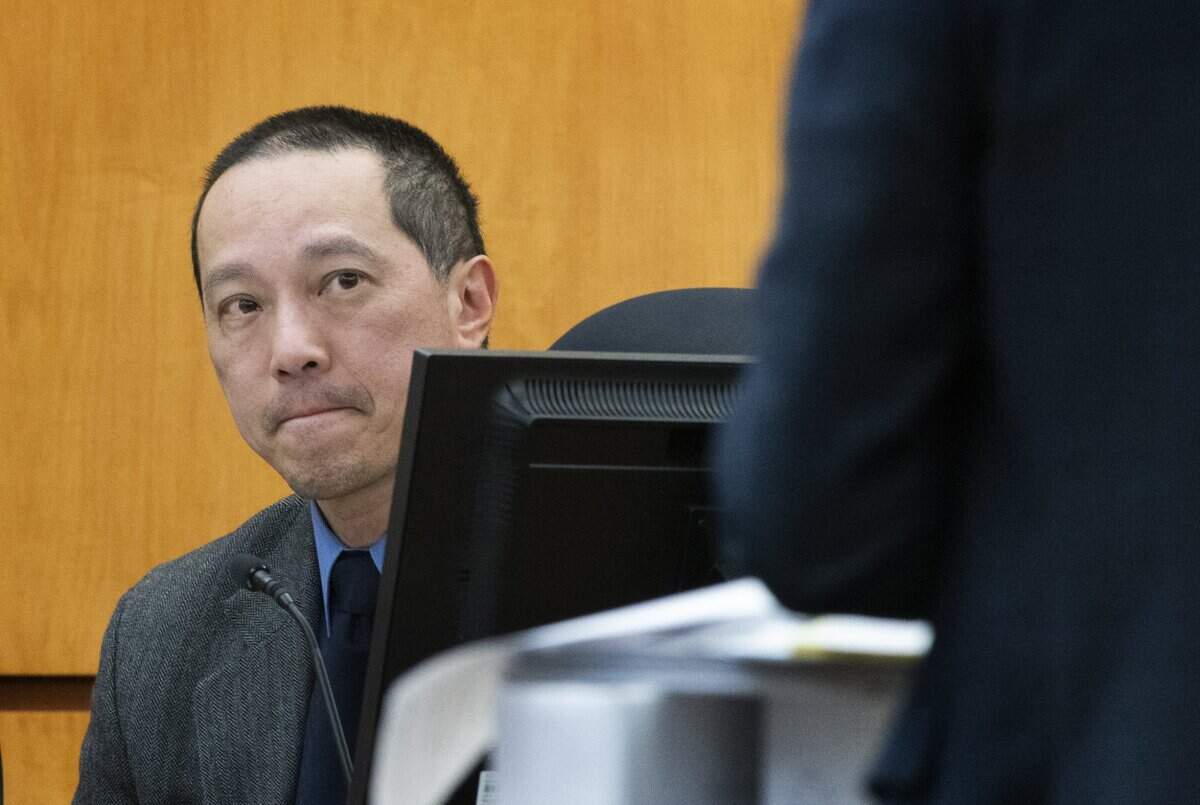
The morning’s testimony didn’t offer many new insights into how meth would have affected Ellis the night he died in police custody in 2020. Under direct examination from Mark Conrad, an attorney representing defendant officer Timothy Rankine, Louis said it was “possible” Ellis’ underlying heart condition would lower the amount of meth that could be lethal to him.
Methamphetamine, a stimulant that affects the central nervous system, was found in Ellis at levels of 2400 nanograms per milliliter after he died the night of March 3, 2020. The former Pierce County medical examiner, Dr. Thomas Clark, called it an “extremely high” concentration in his autopsy report. Clark testified earlier in the trial that while he found meth was a factor in Ellis’ death, it wasn’t the primary factor. He determined that to by hypoxia, a form of oxygen deprivation, caused by physical restraint.
The drug is a controlled substance, but Louis said there are some accepted uses of meth, such as to treat narcolepsy and ADHD or for military use to keep a pilot awake to fly a plane across the world. He said therapeutic ranges are considered 20-50 nanograms per milliliter.
At therapeutic levels, Louis testified, meth can cause individuals to have an increased heart rate, it will keep them awake and it can cause some fidgeting. At higher levels, Louis said a person can lose the ability to focus on a specific task or properly assess risk.
The toxicologist drew graphs to illustrate concepts for jurors such as drug tolerance and how methamphetamine metabolizes into amphetamine. Trial testimony has shown that Ellis struggled with meth addiction for much of his adult life, but before his death he moved into a clean-and-sober home in Tacoma after relapsing around Christmas 2019.
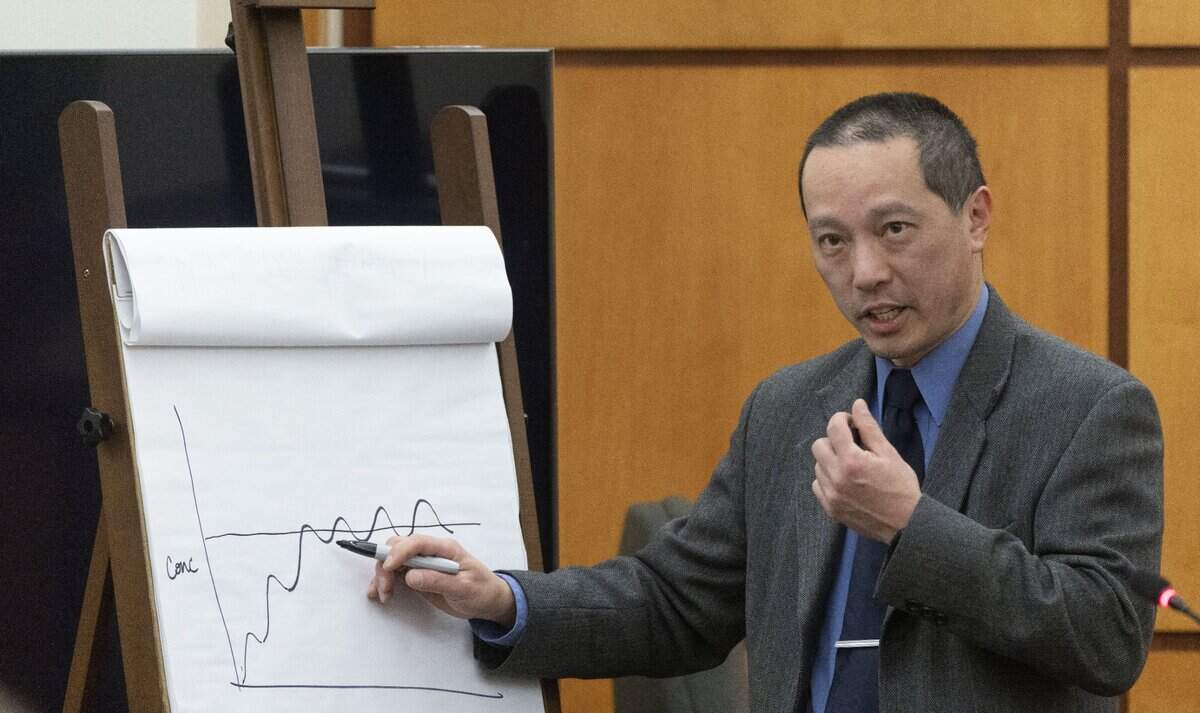
By discussing drug tolerance, lawyers for the officers are trying to show jurors that when Ellis took meth again before his death, his tolerance for the drug would have been lower, so its effects on him would have been greater. The lawyers have argued that a meth overdose that led to heart failure caused Ellis’ death, not the actions of officers Christopher Burbank, Matthew Collins and Rankine.
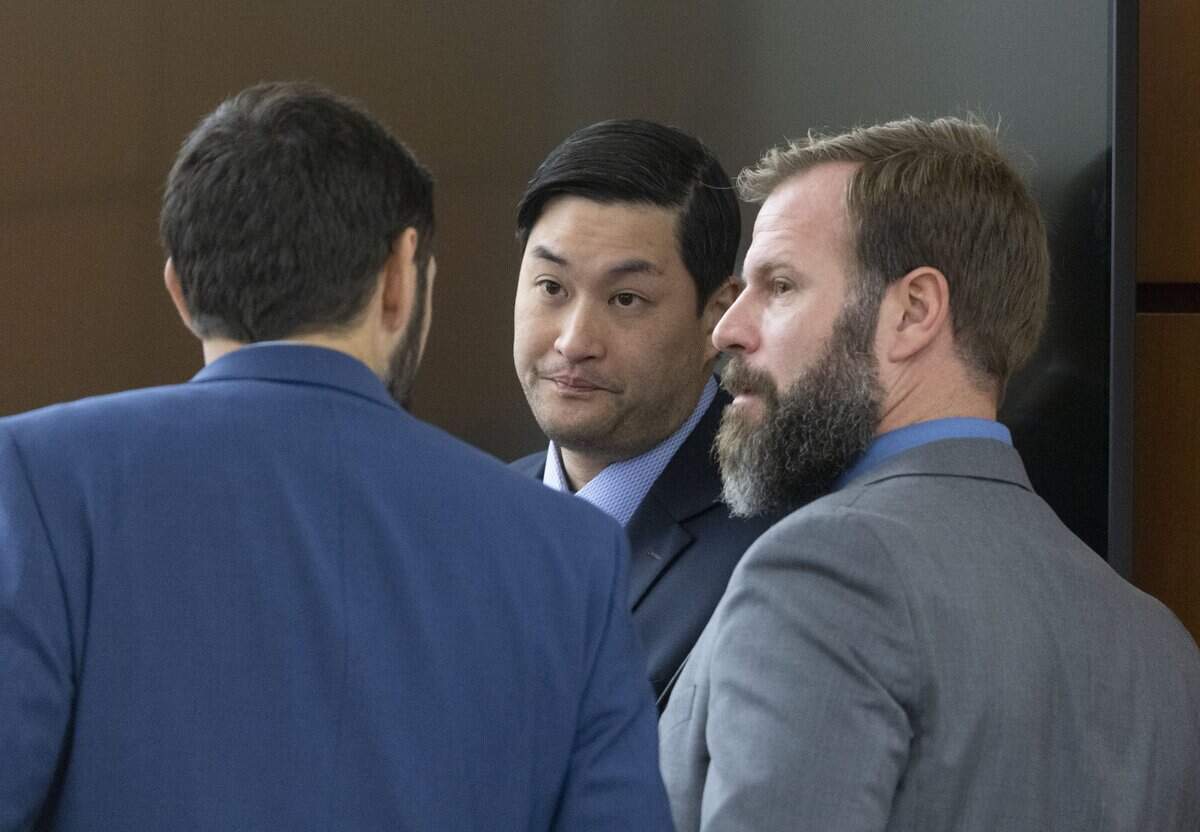
The three officers are charged with first-degree manslaughter for killing Ellis. Collins and Burbank also face charges of second-degree murder. The defendants have pleaded not guilty, are free on bail and remain on paid leave from the Tacoma Police Department.
Ellis’ drug use and past interactions with law enforcement has been a focus of the defense’s case. Earlier in the trial, seeking to show jurors that Ellis tended to be aggressive when encountering police while on meth, the lawyers called witnesses to his 2019 arrest for attempted robbery. Law enforcement witnesses testified that Ellis, who was high on meth and naked, didn’t follow police commands and charged at officers, who subdued him with a Taser.
Ellis’ deadly encounter with police began at a South End intersection, where, while unarmed, Ellis first came into contact with officers Burbank and Collins, who were in a patrol car. They were suspicious of Ellis because they reportedly saw him try the door of a vehicle passing through the intersection of 96th Street and Ainsworth Avenue.
How the fatal interaction began has been a central dispute in the trial, but however it started, four eyewitnesses testified for prosecutors that Ellis did not fight back as he was repeatedly struck in the head, briefly put in a headlock, shocked with a Taser three times and pressed to the ground facedown and handcuffed.
Rankine arrived minutes after the initial struggle with his partner, and he told investigators he put all of his weight on Ellis’ back. As more law enforcement arrived, Ellis’ handcuffs were connected to a hobble on his ankles, and a spit hood was put over his head by an officer not on trial. Trial testimony has shown Ellis told police he couldn’t breathe at least five times, but he was kept in restraints on his stomach — with two brief periods when he was put on his side — until medical personnel arrived.
Prosecutors have argued that all of the defendants heard Ellis struggling to breathe, and they should have intervened to provide medical aid. Lawyers for the officers have countered that by trying to show jurors that Ellis was aggressive and resisting arrest even after he was handcuffed, arguing that police were justified in continuing to apply force.
Thursday morning’s testimony ended with assistant attorneys general Kent Liu beginning to question the forensic toxicologist. The cross examination was expected to continue Thursday afternoon.
This story was originally published November 30, 2023 at 12:37 PM.