Did man run over by Tacoma cop at street-racing event incite a mob? Jury will decide
A jury heard closing arguments Wednesday morning in the trial of a man who shouted, “Block the cops,” seconds before two Tacoma police cruisers were surrounded by an angry crowd at a street-racing sideshow downtown.
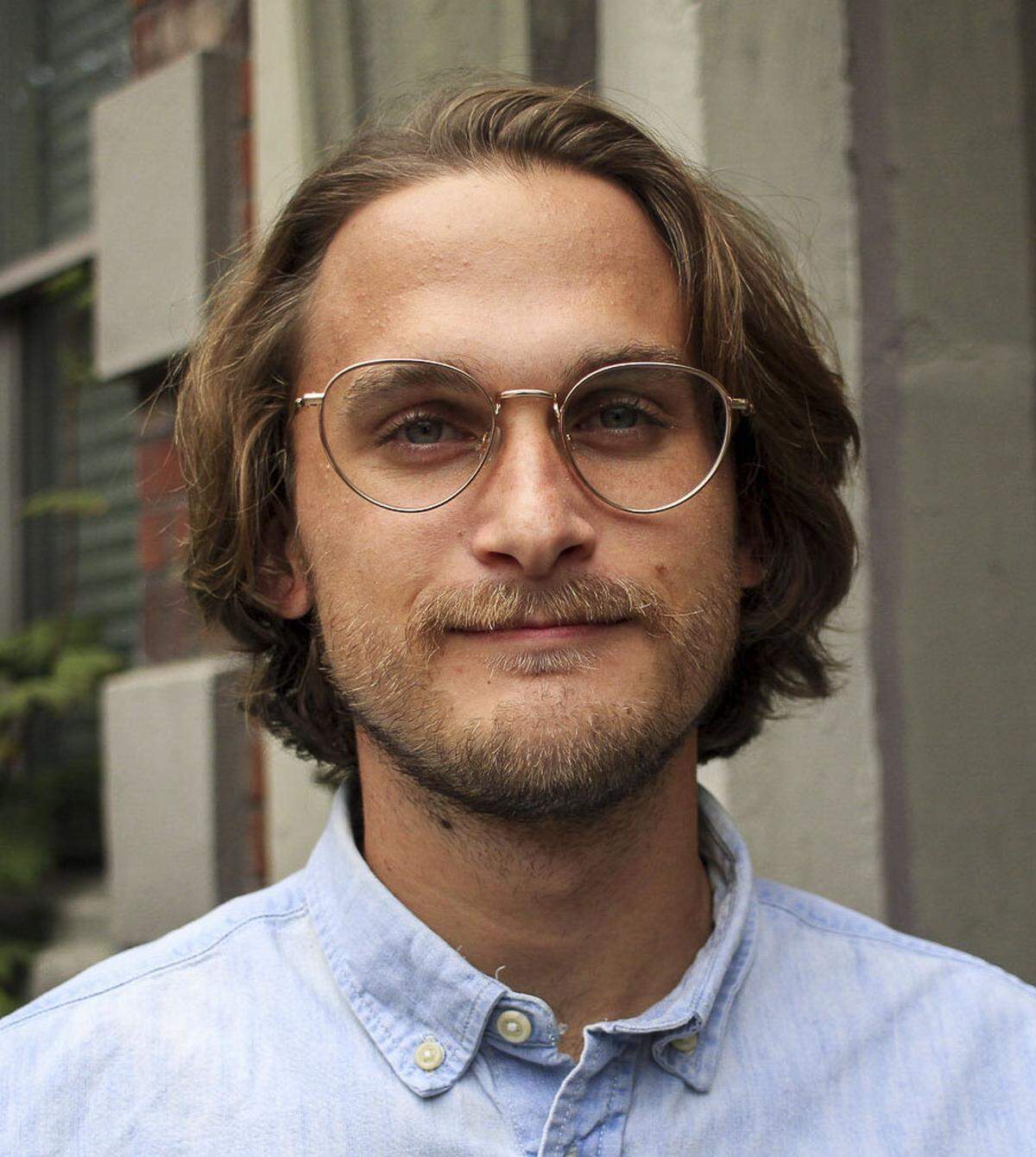
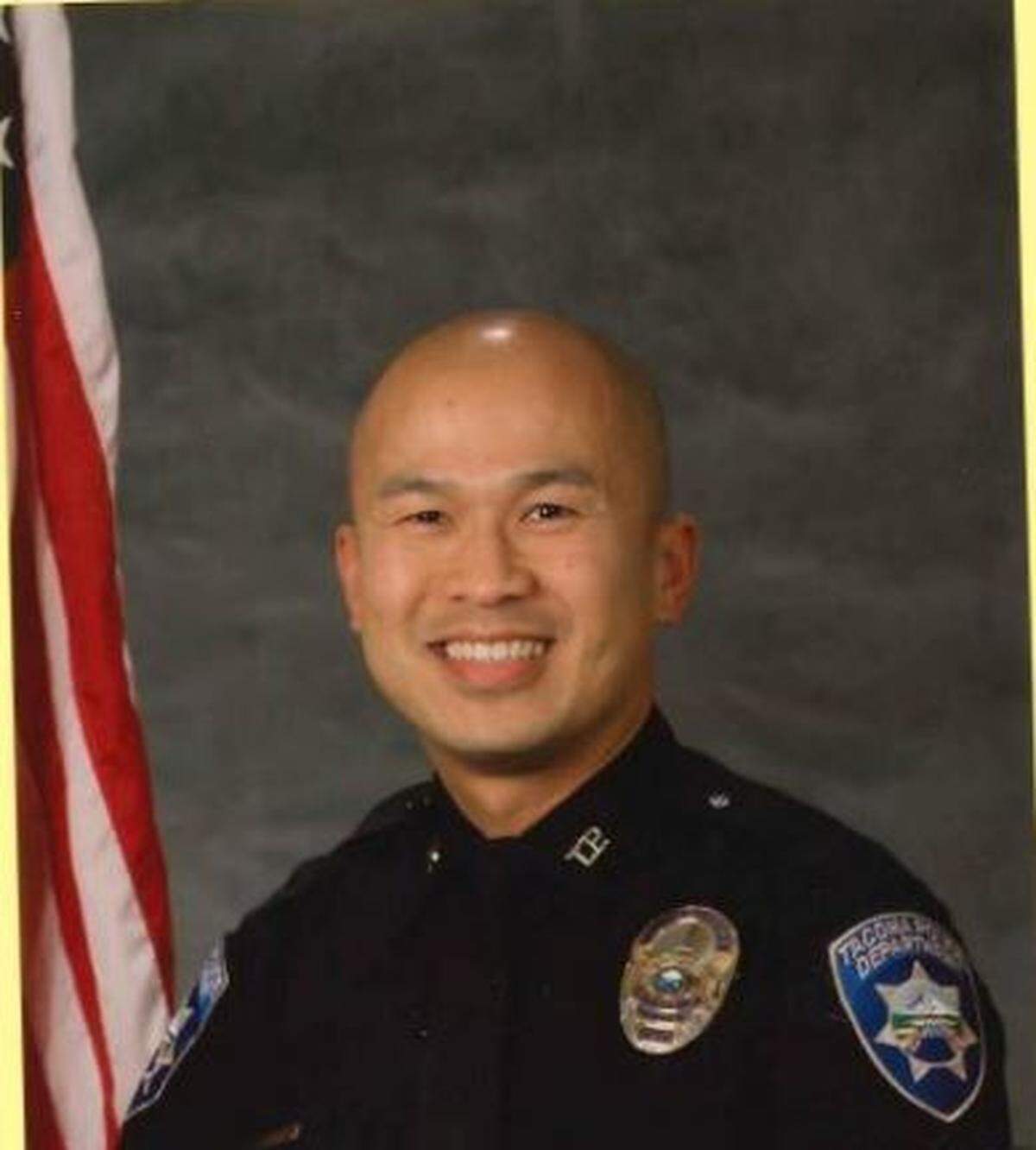
Anthony Huff-McKay, 25, was run over by one patrol car, and at least five other people were hit when one officer tried to escape the throngs of people by accelerating forward. Prosecutors say the collision was the result of the defendant’s own “poor choices” — inciting a mob to act out with violence against now-retired Tacoma Police Department officers Khanh Phan and Rader Cockle.
Huff-McKay, who has remained out of custody for the duration of the case, is charged with two counts of unlawful imprisonment for allegedly restraining the movements of the two officers the night of Jan. 23, 2021, at the intersection of Pacific Avenue and South 9th Street.
He’s also accused of two counts of second-degree malicious mischief for the damage caused by the crowd kicking and pounding on the patrol cars. Pierce County prosecutors said the vehicles were dented, and the back window of Cockle’s patrol car was broken with a traffic cone. The cars were taken out of service for some time for repairs. Huff-McKay is also charged with obstructing a law enforcement officer.
Unlawful imprisonment, a felony, carries a maximum sentence of five years in prison. Huff-McKay does not appear to have any prior felony convictions, which would affect the standard sentencing range he would face if convicted. If found guilty, jurors must also decide whether the defendant’s crime was committed against law enforcement officers carrying out their duties, an aggravating factor that could lengthen the sentence imposed. Second-degree malicious mischief carries the same statutory maximum of 60 months, and obstructing, a gross misdemeanor, is punishable by up to a year in jail.
Huff-McKay is accused of carrying out the crimes himself, but deputy prosecuting attorney Kara Sanchez told the jury of eight women and four men in her closing arguments that the case hinges on the issue of accomplice liability.
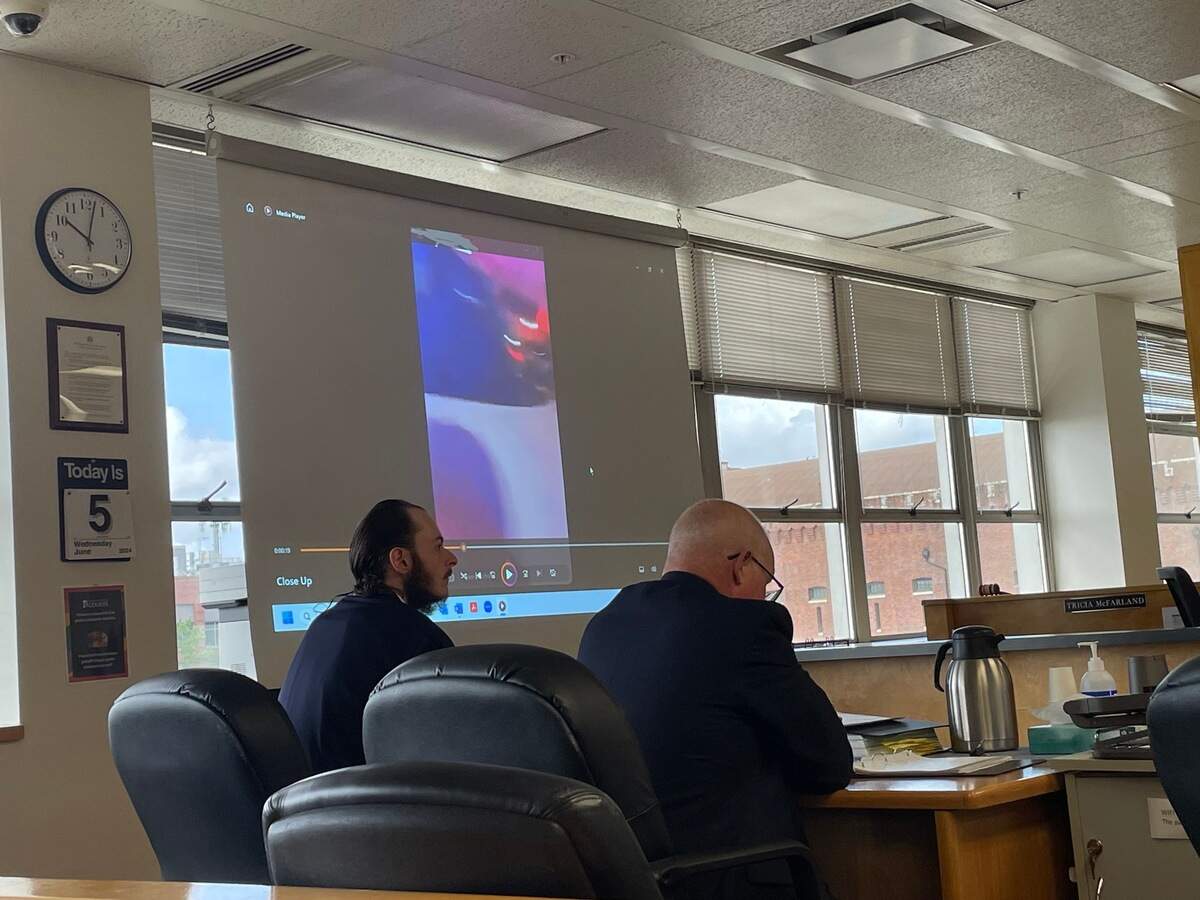
No one else has faced criminal charges in the chaotic incident, but the defendant is charged as an accomplice for the actions of the 100 to 200 people who first gathered to watch cars do burnouts and spin in circles in a public intersection and then targeted the police officers who came to break up the party.
“This case is about the defendant’s actions,” Sanchez said. “But it’s also very much about his words. Words can be very powerful, especially when used like this.”
Defense attorney Brett Purtzer disputed the contention that his client directed the action that night.
“These are 200 independent individuals that were there that evening for their own purposes, and they on their own went toward the vehicle,” Purtzer told the jury during his closing argument.
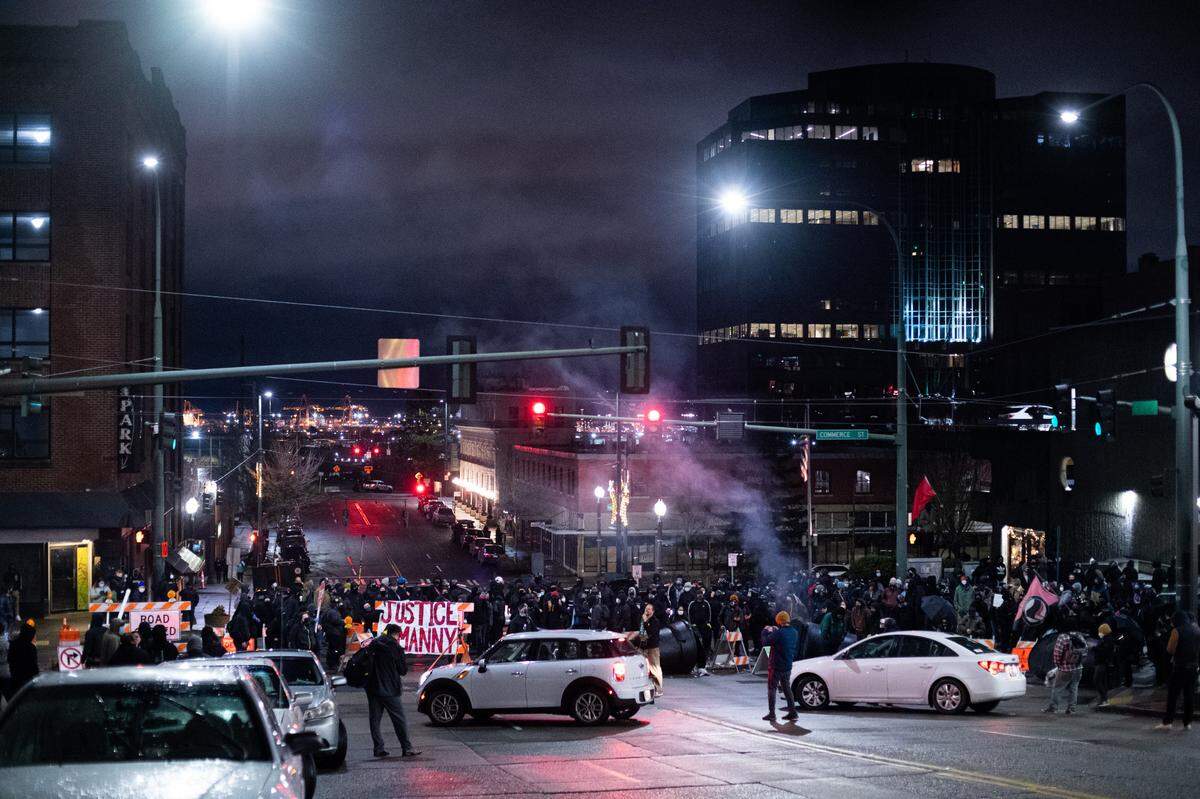
Video of Phan driving through the crowd made national headlines, and it spurred hundreds of people to descend on downtown Tacoma the following night to protest police uses of force. Tacoma City Council members pressed police to do something about street racing, which surged during the COVID-19 pandemic. Two months later, the council passed an ordinance prohibiting exhibitions of speed in the city, and the next year it passed an ordinance meant to crack down on spectators.
Huff-McKay was taken to a hospital the night of the incident with a partially collapsed lung and broken ribs, and he is suing the city and Phan for negligence.
Prosecutors declined to file charges against Phan following an inquiry by the Pierce County Force Investigation Team. Phan, who was with the Police Department for more than 30 years, retired in January 2022. Cockle, who served with TPD for four years and arrived at the scene seconds after Phan, retired Sept. 16, 2021.
State closings
Prosecutors began their closing arguments with Huff-McKay’s cell phone video of the street-racing sideshow, and they ended by emphasizing the words the defendant can be heard shouting: “Block the cops,” “Get the [expletive] over here,” “Let’s go,” and “What’s up [expletive]?”
The video shows a white muscle car whipping around Pacific Avenue and South 9th Street. Its engine roars while smoking rubber fills the air, and a Mexican flag attached to the trunk waves in the wind.
Out of frame, Phan’s patrol car arrives, and Huff-McKay begins to shout, “Block the cops,” eight times. The officer’s siren blares, and the crowd begins to swarm, reducing the camera’s view to jostling shoulders and legs as the vehicle is surrounded.
Sanchez told the jury the crowd was responding to Huff-McKay’s commands and encouragement. She said most witnesses testified that the crowd appeared to flow as one, and some said it looked almost planned.
“And you can see from the defendant’s own video that he’s right there in the middle of the crowd,” Sanchez said. “As he’s yelling at the crowd to join him in blocking the cops. He is right there.”
Sanchez asked the jury to look to bystander videos when considering whether Phan or Cockle were restrained in a way that substantially interfered with their liberty. She said the footage showed the crowd attacking the vehicles and surrounding them so the officers could not move in any direction without risk of hitting someone. She conceded that Phan and Cockle were restrained for a “relatively brief” period of time, but there’s no minimum amount of time that a person must be restrained to constitute substantial interference with their liberty.
Phan was outnumbered and in fear for his life, Sanchez said, and he feared that someone could get hold of his weapons and hurt either him or someone else. The attorney said Phan had no other choice but to drive forward, where he had the most visibility.
“Office Phan was trapped,” Sanchez said. “He was trapped in his car surrounded by an angry, violent mob. And to get out of that situation he had to take a terrifying risk. But that risk was made necessary only because of the defendant.”
Cockle arrived seconds later and also was surrounded. Sanchez said he heard people yell, “Pull him out,” and “Kill that cop.” The officer announced over his loudspeaker that he would shoot anyone who breached his vehicle, but Sanchez said the warning didn’t work, and the patrol car’s back window was broken.
The officer couldn’t move in any direction, Sanchez said, and he couldn’t just get out of his car because he believed he would be killed.
Sanchez admitted that Huff-McKay was not around Cockle’s vehicle at the time — he was lying on the ground near Phan’s vehicle — but she emphasized for the jury that the defendant said to, “Block the cops,” in the plural.
“Even though he was on the ground and did not actively, physically participate, he had still commanded it. And it was seconds later, people were still doing it. They merely turned their attention to Officer Cockle because he was next through the intersection.”
Huff-McKay later told detectives that he just happened to be in Tacoma that night and began recording because he’d never seen a police officer’s car pull up and be attacked, Sanchez said. The deputy prosecutor told the jury that wasn’t true.
She showed them a video of the defendant attending the same type of sideshow at 11th Street and Portland Avenue earlier that evening, excitedly yelling expletives and shouting, “Yes, sir,” while a white sedan spun in circles.
Then the attorney returned to Huff-McKay’s video at the Pacific Avenue intersection, again calling their attention to the man’s words.
“You can hear it in his voice,” Sanchez said. “He believes he’s entitled to do this. They are doing this with a purpose: to block the cops, to restrain their movement.”
Defense closings
Huff-McKay’s defense attorney, Brett Purtzer, used his final remarks to the jury to argue that neither police officer was restrained or imprisoned and to challenge prosecutors’ claim that his client had control of the crowd that surrounded the cops.
What’s missing from the state’s evidence, Purtzer said, is any witness who could say that they heard Huff-McKay’s statements and then took action to restrict the officers’ movements and damage their vehicles.
The defense attorney said the crowd went well beyond blocking the police cars by going on to damage the vehicles, but he said there was no connection to Huff-McKay or any testimony from a witness who said Huff-McKay was legally accountable for what they did.
Purtzer said three Kent Police Department officers who testified in the case were on the scene, and none could hear Huff-McKay’s statements over the sound of revving engines. He said one detective testified that she was 10-15 feet away but couldn’t hear anything specific.
Videos of the incident that lasted only seconds did not show that Phan’s liberty was substantially interfered with, the defense attorney said. As to Cockle, Purtzer said by the time the officer arrived, his client had been struck by Phan’s car, was “out of commission” and being attended to by bystanders.
“To support the state’s position that this is one big melee, that he’s responsible for every bit of behavior that occurs in the situation, you’d have to have the state say that the persons that dealt with officer Phan’s vehicle were the same individuals that then connected with officer Cockle,” Purtzer said. “And again there is simply no evidence to support that.”
State’s rebuttal
During the state’s rebuttal argument, deputy prosecuting attorney Jeremy Peterson returned to Huff-McKay’s words, writing each phrase on a large pad of paper for jurors.
Peterson said prosecutors did not have to bring anyone else to trial to show that Huff-McKay was an accomplice to the crowd’s actions, and he pointed out that video shows the defendant right in the middle of the scene, screaming for others to come block the cops.
“It just happened the crowd does exactly that,” Peterson said. “He’s screaming, ‘Get the [expletive] over here.’ And then he’s encouraging it when they do it. Because then he says ‘Let’s go.’”
Peterson said they were talking about a short time between Phan’s and Cockle’s cars being surrounded, but he urged jurors to use their common sense to determine that it was the same crowd that Huff-McKay had been directing.
The prosecutor told jurors they’d heard the officers could just drive away, so there was no substantial interference. He asked them to consider Cockle hearing people screaming to kill him, and to consider what it cost Phan to drive from the scene.
“He literally had to drive through a crowd of people,” Peterson said. “He literally had to drive over the defendant. Was that just, was that not a substantial interference? His ability to get away literally had him driving through people.”
After the rebuttal argument, Superior Court Judge Matthew Thomas temporarily dismissed three alternate jurors and thanked them for their service. Then the remaining 12 filed into the jury room to begin deliberations.
This story was originally published June 5, 2024 at 4:04 PM.