A long stretch of Tacoma highway has gone dark as thieves once again hunt pricey metal
Tacoma is going to have a dark winter if criminals keep turning off the lights. In the last several months, they’ve been smashing, snipping and yanking the guts out of the city’s street-light infrastructure. Driven by an all-time high in copper prices, the thievery exploded over the summer and hasn’t abated, according to those charged with repairing the damage.
This week, a section of state Route 16 looked like a rural highway as drivers plunged into darkness between Interstate 5 and South Mullen Street. The 2-mile-long section has lost 85 percent of its lights, according to the state Department of Transportation.
In the city, Tacoma went from one wire theft in the first half of 2024 to 16 in the second half with a month and a half to go, according to Leigh Starr, a city public works manager.
With metal theft, what nets a criminal a few cents costs government agencies many dollars to replace. It’s not just the copper but its insulated covering, the cost to repair damaged boxes and casings, and the labor involved to make the repairs.
Tacoma has spent $60,000 this year and, statewide, WSDOT has racked up $627,856 in repair costs since 2023. In the previous biennium, WSDOT spent more than $1 million to repair and replace theft and damage. Thefts occur nearly daily across the state, WSDOT said.
For WSDOT, wire thefts can shut down tolling operations and impose travel restrictions through tunnels.
State Route 16
SR 16 has been dark for weeks after thieves ripped out wires along the busy road. The lights were installed and are maintained by WSDOT. Agency spokesperson April Leigh said before repairs could be made, crews must inspect hundreds of feet of cable along the highway, often in hard-to-reach places. Each break and the parts needed to fix it must be identified.
“After that, repairs will be made as soon as parts are available, and schedules allow,” she said. “It is a lengthy process at this location.”
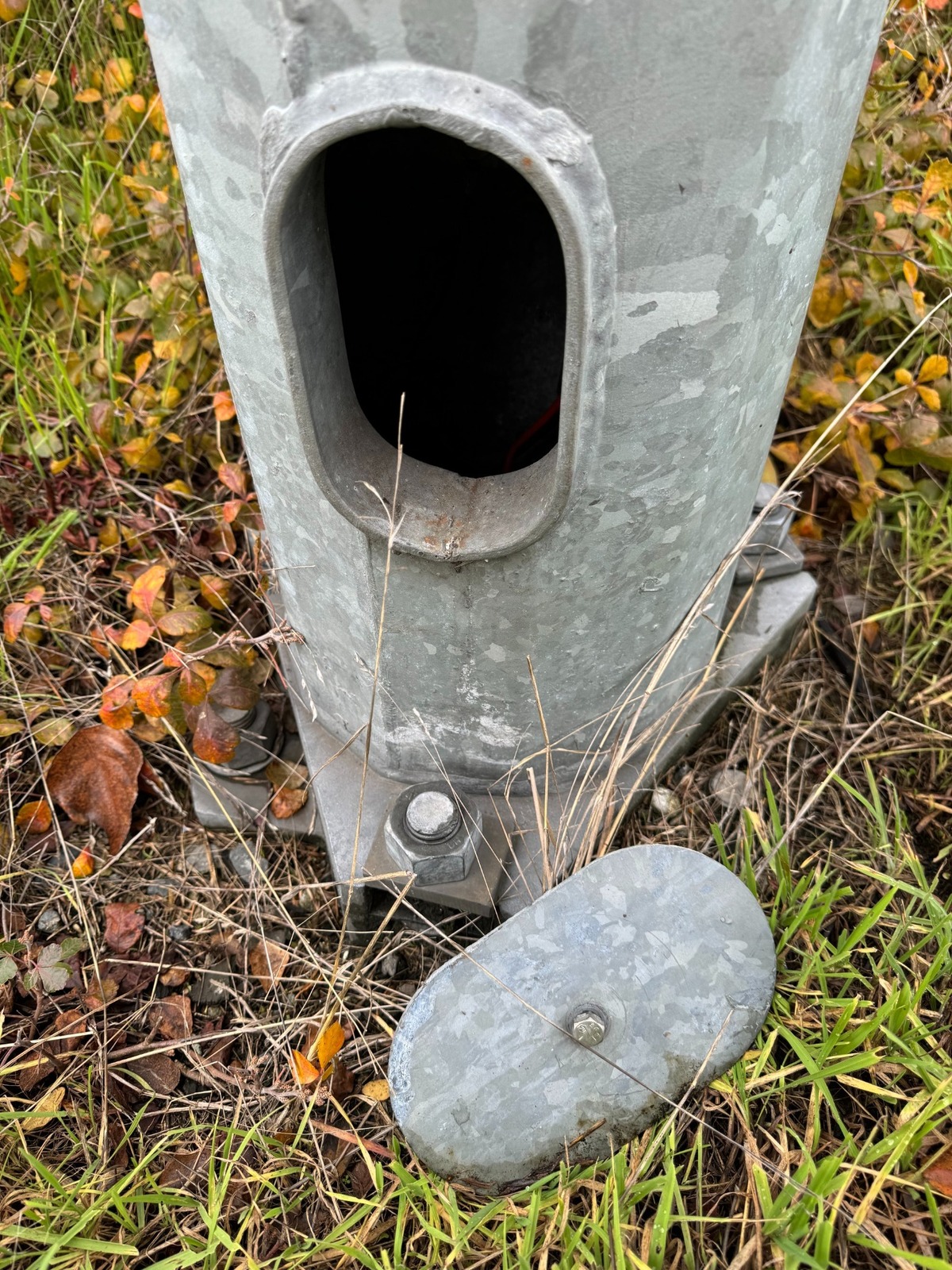
Thieves are apparently accessing many of the lights from public paths along SR 16. A recent walking tour of the lights by a News Tribune reporter found access ports removed from poles and the lids of nearby below-ground junction boxes forced open.
While some wire thieves meet an untimely end from electrocution, most cut wires during the day when the circuits are not energized and then come back at night to pull out wires.
City of Tacoma
When copper prices hit an all-time high of $5.20 per pound on May 20, Leigh Starr warned co-workers that they’d soon see another crime wave.
“And then, sure enough, a few months later it starts coming again,” he said.
On Tacoma’s streets, 13 of the 17 reported wire thefts this year have been repaired, Leigh Starr said.
A four-light segment on the city’s Lincoln Bridge will cost a “substantial” amount, he said, because bridge work requires specialized methods. Another thieved segment across the Fishing Wars Memorial Bridge is on hold until the bridge is reopened to traffic, he said.
Prevention
To ruin a thief’s payday, copper wires are now being replaced by aluminum wires, Leigh Starr said. WSDOT is using the same strategy. Unfortunately, there’s a learning curve in the criminal world.
“Often times the same circuit will be hit multiple times,” he said. The city has repaired one site twice this year.
“We had it repaired, and a different segment was hit,” he said. “Sometimes (they) think we have replaced it with copper again, and they think they can get back in it and steal it again.”
Aluminum wire is less efficient than copper, but it’s far less valuable to thieves. However, it’s more prone to malfunction if not installed correctly, he said.
Hardening the target
In 2013, the last time wire theft peaked, Tacoma had 56 incidents, Leigh Starr said. Since then, the people who manage the region’s public works have learned a few things.
Tacoma has been making it harder to get to access points. But, thieves step up to the challenge, he said, recalling one who used a battery-powered grinder to cut through a weld.
Likewise, WSDOT has been making life difficult for thieves. But, it can come with a price.
“We continue to use stronger theft protection on our boxes — like welding junction box covers — but must balance that with the need to keep them accessible to our crews at all hours of the day including in emergencies,” April Leigh said.
Who buys stolen copper?
Stolen copper eventually has to enter the legitimate metals market. That prompts the question: Who is buying all this stolen metal?
Copper is a basic element, untraceable in its pure form. While the insulation that covers copper wire can be traced to a source, its removed rather easily, Leigh Starr said.
“When you got bare copper wire coming in, how do you determine where that came from? And how do you separate those out from the legit people who are (demolishing) something and scrapping or residential or whatever?” he said.
In some cases, Leigh Starr said, stolen metal is taken out of the area or even the state to reduce the likelihood of identification.
Metal recycling
It can be difficult to track the provenance of metal brought to recyclers, according to Radius Recycling spokesperson Eric Potashner. The Portland-based company has an outlet on the Tacoma Tideflats.
“Any scrap yard, in theory, will buy it, and it’ll make its way through the system, and maybe after it changes hands a few times, it could make its way to some of the larger players in the industry,” he said.
Metal recycling is beneficial to society, so it shouldn’t be stopped, Potashner said. Instead, he said, the industry and law enforcement support vetting of transactions. That includes recording the identification of metal scrappers.
“Unfortunately, we’re definitely hearing about more copper theft now than we’ve had over the last couple years, I think due to the value of the material,” Potashner said.
Combating other metal thefts
It’s just not copper wire thieves are targeting. Metal grave markers and even public statues are targets. In 2023, a statue by the late artist Larry Anderson that welcomed visitors and residents to Bonney Lake on state Route 410 was dragged from its perch in the middle of the night.
While that was a blow to the civic pride of Bonney Lake, a rash of catalytic converter thefts that began in 2020 has been hitting the wallets of car owners. The devices, used to clean automobile emissions, contain expensive metals: rhodium, platinum and palladium. Thieves learned they could quickly shimmy under parked cars and quickly cut out the devices.
Alarmed by catalytic converter thefts in her area, state Rep. Cindy Ryu, (D-Shoreline) first sponsored legislation in 2022 that required recyclers and vehicle wreckers to keep records on transactions and seller identification and assist police with investigations. Later state legislation turned trafficking in catalytic converters into a Class C felony.
Safety
Streetlight placement, working or not, can be a source of contention. Some residents don’t want them shining in windows at night. Others want them to deter crime and add safety. There is a “dark skies” movement that advocates for reduced light pollution, some of it coming from streetlights.
On the region’s highways, streetlights are mainly a safety issue for vehicles that can be traveling at speeds that exceed their headlights. The posted speed limit on SR 16 ranges from 50 to 60 miles per hour.
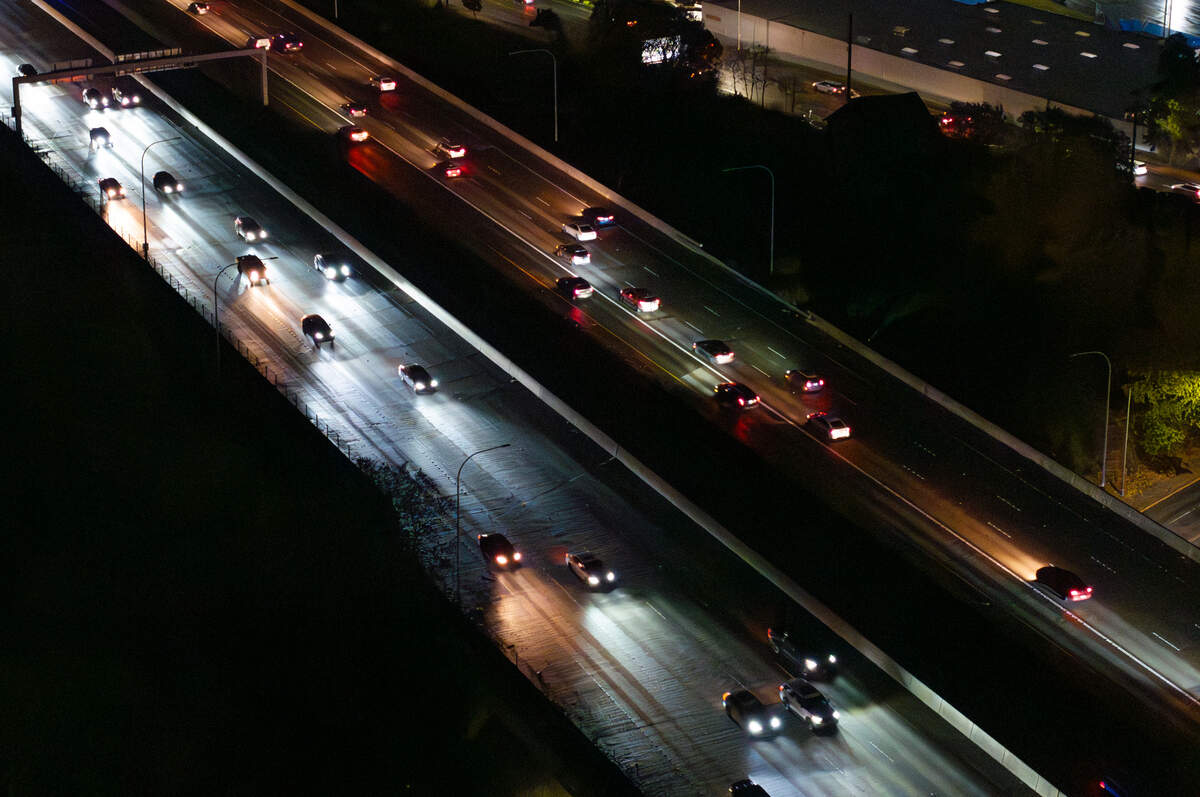
“Your headlights only have so much distance that they’re useful for,” said Washington State Patrol spokesperson trooper John Dattilo. “When you increase streetlights, you’re increasing visibility.”
Streetlights help drivers see pedestrians, crashes, debris or cars driving without their lights on, Dattilo said. He recalled looking for a reported crash during a night shift.
“I was able to see it in streetlights before I could see it in my headlights,” he said.
More than just wire
Wire thefts are affecting more than public agencies, according to Tacoma Police detective Max Benboe. Comcast and Lumen have both experienced thefts in the past year, he said.
In addition to equipment damage, other unrelated infrastructure that share the same conduit or junction boxes can be damaged in a theft, Benboe said. Copper thieves can cut through fiber optic cables by mistake.
The optic cables have no value but the damage can impact hundreds and even thousands of customers with service outages he said.
“Some of these customers affected include emergency response services, municipalities, cell services and large corporations such as Amazon, Boeing and Microsoft,” Benboe said. “To splice these fiber optic cables back together, replace stolen wire, and other damages caused during these incidents can range anywhere from $10,000 and upwards into the hundreds of thousands of dollars.“
What you can do
Wire thieves, who usually work in the public right of way and sometimes in broad daylight, often get away with their crimes by their ability to look authentic. They might wear reflective vests and hard hats as illustrated in a recent theft caught on camera.
Other just dress normally.
“None of the incidents that I have been involved in have reported anyone being dressed in construction attire,” Benboe said.
Crews rarely work at night, Starr said.
“It’s rare but we do respond to outages and such at night, but we’re not yanking wire out of the ground at night,” he said.
April Leigh said WSDOT thefts have involved thieves who are dressing the part. But, she said, they won’t set up the typical construction zone accoutrements: flaggers, cones or signs.
Leigh Starr said city employees work from vehicles with city logos. The same goes for Tacoma Public Utilities and WSDOT. All government employees will have identification on them.
If you suspect wire theft is in progress, government agencies ask you to immediately call 9-1-1.
This story was originally published November 20, 2024 at 5:00 AM.