Father sued after budtender son died in Tacoma robbery. Here’s why case was dismissed
A wrongful-death lawsuit against King County brought by the father of a man who was murdered in a robbery at a Tacoma cannabis dispensary was dismissed Friday after a judge sided with the county.
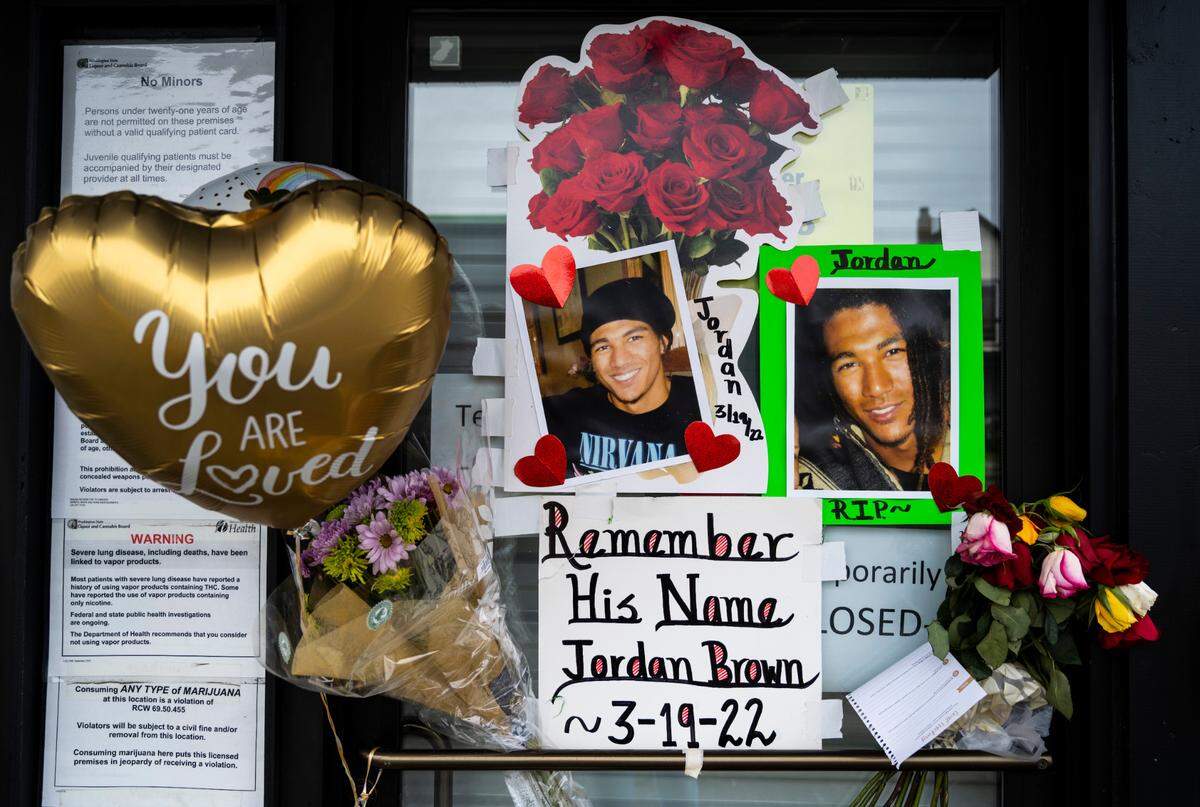
Jordan Brown, 29, was a budtender at the World of Weed in Eastside Tacoma on March 19, 2022 when two teenagers, Montrell Hatfield and Marshon Jones, robbed the store at gunpoint. Hatfield, 16 fought with Brown behind a cash register before Jones, 15, fatally shot the employee in the neck.
That deadly robbery was the last in a string of armed stick-ups Hatfield and Jones carried out in the Puget Sound area after the two escaped from house arrest March 14 by disabling their ankle monitors. The two had been placed on electronic home monitoring by a judge after they were arrested and charged with the armed robbery of a Federal Way pawn shop.
In Pierce County Superior Court, Derek Moore, an attorney for Brown’s estate and the man’s father, Dennis, argued that a jury could find that King County’s negligence caused Brown’s death.
Law enforcement was not notified of the teens’ escape by their juvenile probation officer after Hatfield’s mother told the officer her son was on the run, according to court filings in the case, apparently due to an informal policy probation officers had to not call the police when a juvenile escaped from home monitoring.
Two days after the escape, bench warrants were issued for the teenagers’ arrests, but their whereabouts were unknown, and they were not apprehended until after Brown was killed.
“They had a take-charge duty under the court orders and under the law and under the facts, and the question is, well, was it reasonable for them to give the escapees a two-day head start before even trying to look for them?” Moore said in court.
“After Hatfield escaped, they did nothing to try to locate him, to try to bring him back into custody, which they had every right to do,” Moore added.
Hatfield also allegedly helped Jones escape by providing him with a pair of scissors to cut off his monitor. The attorney said if law enforcement had been sent to Jones’ residence and Hatfield had shown up, Hatfield either would have been apprehended or wouldn’t have been able to help Jones break out.
“In either case, the jury could find that Dennis Brown’s son, Jordan Brown, would still be alive today,” Moore said. “So again these are fact questions for the jury.”
Ultimately, Judge Grant Blinn agreed with an attorney for King County, Richard Anderson, who filed a motion for summary judgment Nov. 15 to have the case dismissed. The attorney cited a 1992 civil case that went before the Washington State Supreme Court, Taggart v. State, which he said dealt with a claim described by the court as a negligent supervision claim that involves the take-charge obligation.
Anderson said it was the high court’s opinion that there is no common law obligation to protect individuals against the criminal conduct of third parties. For the take-charge duty to hold up, according to the attorney, there has to be a showing of a “definite, established, and continuing relationship between the defendant and the third party.”
“Even if I give you established and definite, in the context of [electronic home monitoring] and pre-trial detention, as soon as those two young men cut their bracelets and left, that relationship is over,” Anderson said.
Moore later took issue with that argument, calling it an incorrect statement of the law, citing another case, Binchus v. State, and telling Blinn that it found that a jail’s responsibility to control a violent inmate ended after they are lawfully released, but that didn’t happen in this case.
Although Hatfield and Jones were out of secure detention on home monitoring, Moore argued that they were still in King County’s custody.
“If somebody were to escape from a secure detention facility, the legal principle that the county would want to say is, ‘So, since they left the premises, we can’t touch them without getting a warrant, they’re no longer in our control,’” Moore said. “Because they’ve escaped there’s no continuing duty, that’s what the county is arguing.”
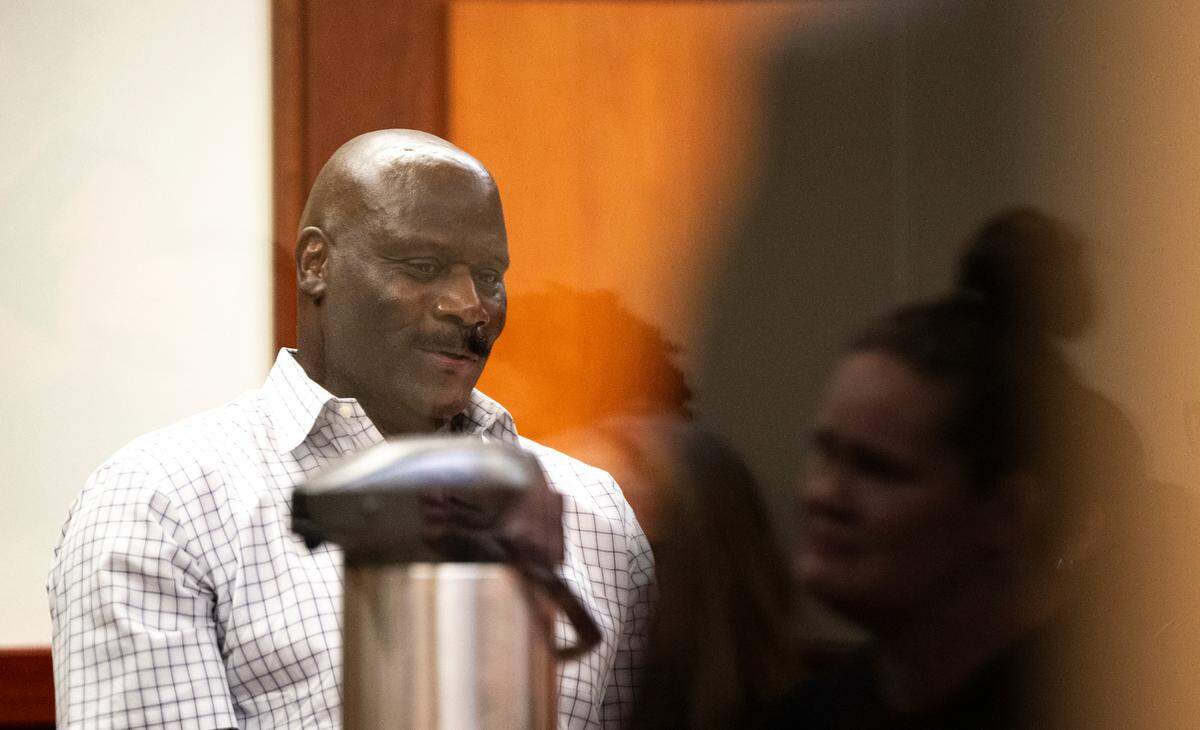
In a rebuttal, Anderson said he wasn’t suggesting that the county didn’t have a legal right to arrest the teens for their escape had they encountered them without a warrant. He said the point is that there is no obligation to do so.
He also said it was “ludicrous” that the county gave Hatfield and Jones a “two-day head start.” The attorney said a warrant was promptly obtained and that a corrections-placement specialist acted to expedite a warrant hearing.
Blinn later agreed that there was no evidence of an unreasonable delay in obtaining the warrants. He also said a jury could be “quite disturbed” to hear about the deposition of a juvenile-probation officer with the Juvenile Division of the King County Superior Court who said it wasn’t their policy to call the police when a juvenile escapes from home monitoring, even if they’re being monitored for an armed robbery. But the judge said that wasn’t a dispositive issue.
After Blinn made his ruling, Dennis Brown told The News Tribune he was heartbroken by the outcome. Moore said he believed the case was decided wrongly, and it should have gone to a jury.
Brown formerly lived in the Gig Harbor area, but he’s since moved to Moscow, Idaho. He said he wanted the civil case to go to a jury so that King County might have to change its policies to protect others like his son.
“The way they deal with things are inadequate,” Brown said. “And the only way it’s going to get better if you bring it to light. The only way you bring it to light, if you sue someone the people can see that they need to change a lot of their policies that they have in place to ensure that the community is safe in the future.”