Tacoma council has tough questions for gunshot-detection tech that promises to save lives
Tacoma City Council members on Tuesday grilled representatives with a gunshot-detection system coming to the city this year over the value of a technology that doesn’t promise to reduce gun violence and how it will affect trust in police.
ShotSpotter is one of three tools the city is implementing through an $800,000 federal grant from the Bureau of Justice Assistance. It uses sensors placed in a neighborhood to listen for gunshots and determine where the shots were fired to dispatch officers to a precise location.
“Why ShotSpotter? Well, in essence, 80 percent of gunfire incidents go unreported,” Police Department assistant chief Christopher Karl said during Tuesday’s study session. “As part of that, we have ShotSpotter because it saves lives. It gets officers to a specific, designated area based on the gunfire incident.”
When people call 911 to report gunfire, Karl said, it usually takes three to five minutes from the time the call is placed to the time units respond. Karl said with ShotSpotter officers will get an alert on a mobile app within seconds of shots being fired, allowing gunshot victims to more quickly get medical attention.
Tacoma will have the system as a test run through the grant for three years. Karl said it will be installed in 2 square miles on the South Hosmer Street corridor, approximately 72nd to 96th streets and Hosmer to Yakima Avenue.
It’s unclear when officers will begin receiving and responding to ShotSpotter alerts. Police Department spokesperson, officer Shelbie Boyd, told The News Tribune on Wednesday that the program would begin this year, but a start date had not yet been set.
The other technology the city received from the grant is a device designed to recover fingerprints from discharged bullet casings and a 3-D scanner to help capture crime scenes. Deputy chief Paul Junger previously told The News Tribune the 3-D scanner replaces one of three the department already has. Karl said Tuesday that since October the fingerprint tech has been used in more than 600 cases.
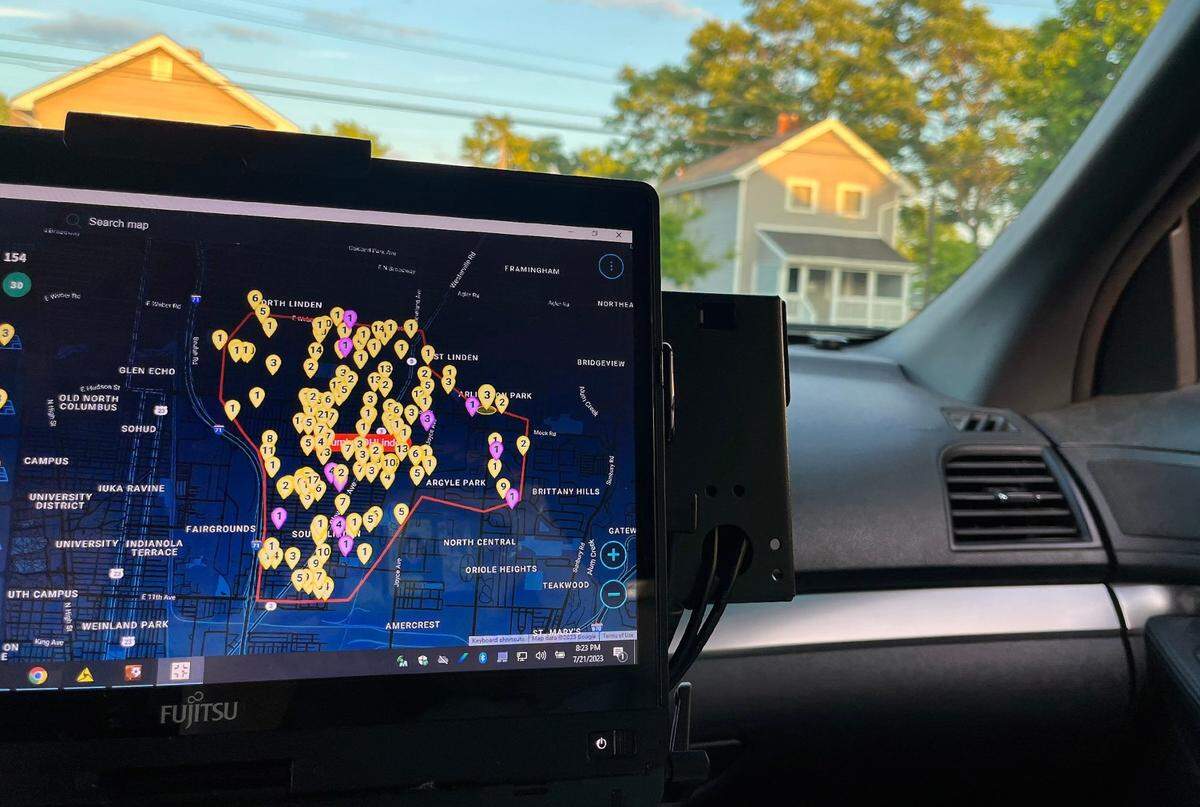
Several City Council members had tough questions for the Police Department and Ralph Clark, the CEO of SoundThinking, which owns ShotSpotter.
Jamika Scott, who represents the city’s Hilltop, Central and South neighborhoods, asked if Clark had any data showing whether the presence of ShotSpotter in an area deters violence, noting that this tool was only about improving the city’s response to violence and wasn’t about reducing it.
“What is the benefit, like, to the overall wellbeing of the community?” Scott said.
Clark did not have data related to Scott’s question. He said combining ShotSpotter with data, a strong “crime-gun intelligence practice” and being disciplined about following through on cases to identify firearms used in crimes could lead to reductions in gun violence. But he said the technology can’t cut down on gun violence by itself.
“You want to be able to have a robust strategy that has to do with other tools, practice, follow through, community engagement,” Clark said. “And when all those things work together, you can see reductions in gun violence.”
Joe Bushnell, whose district includes the area where ShotSpotter will be deployed, said the Hosmer corridor has a lot of challenges related to gun violence and safety.
The location was a focus of Tacoma’s violent-crime reduction plan, and Bushnell said depending on who you talk to, there’s not enough police officers or there are too many. But he said the “vast majority” of people he’d spoken to in the neighborhood say there aren’t enough officers there.
Bushnell said he is concerned by police officials’ comments indicating that it isn’t uncommon for police not to learn of a gunfire incident until a victim shows up to a hospital because no one called 911, which sometimes leads to police not knowing where in the city the incident occurred.
That makes it difficult for the city to target resources to communities being affected by gun violence, Bushnell said.
“I’m hoping this technology can help us with that,” Bushnell said. “I don’t think it’s the solution at the end of the day … The solution is to be further upstream and make sure that our community has the resources they need. So that way these crimes don’t occur in the first place.”
Deputy Mayor Kiara Daniels spoke about her experience living in a community with anonymous gunfire. She had to learn to call 911 herself rather than relying on a neighbor, and she said it can be difficult to wake up in the middle of the night and answer questions about where gunshots were coming from.
That was something she said made her feel the city needs to try something new to be more responsive to communities that have been over-policed or not gotten enough response to gun violence.
But she said she wanted the City Council to think about how to ensure the pilot program has data analysis and community input that gets at what residents are seeing on the ground.
“The next time we want to write for $800,000, I ... hope it is on prevention and resource side,” Daniels said.
“As we say in church, amen,” Mayor Victoria Woodards responded.
Police officials said during the study session that data related to gunfire incidents recorded by ShotSpotter would be posted to a public website every three months as part of a related Digital Trust Campaign. Karl said the campaign would include town halls with residents – two of which have already been held in the Hosmer Street corridor.
The technology will be audited by Jessie Huff, an assistant professor in the School of Criminal Justice at the University of Cincinnati. Karl said it would include analysis of the number of gunfire incidents and arrests. She will also monitor the number of false positives, which Karl said could allow police to adjust the system.
Huff, who attended the study session, said she had no association with ShotSpotter. She said a member of the research team that worked on Tacoma’s violent-crime plan from the University of Texas at San Antonio was her Ph.D. student, and he recommended her to Junger.
Olgy Diaz, who represents all of Tacoma as an at-large council member, brought a four-page list of questions she had solicited from residents. She said she doesn’t see how the product benefits the city, and she was concerned about how ShotSpotter could weaken trust between residents and police.
“I don’t hear a lot of tangible, ‘This is what’s going to do better for my neighbors,’ and so that’s where my concern is,” Diaz said. “And I don’t think I’m alone in feeling like this erodes the very important belief and trust work that TPD has already been working on.”
Clark has previously told The News Tribune he believes having police respond to gunfire with ShotSpotter can improve a community’s relationship with law enforcement and reduce racial profiling. On Tuesday he used the example of his mother, who he said lives in Oakland, California, calling police to report gunshots. He said when they ask her where it’s coming from, she always says it’s the corner where people hang out by a liquor store, but that’s not necessarily where shots were fired.
With ShotSpotter sending officers to a specific location, Clark explained, officers don’t have to just drive around until they find the scene of the gunfire.
“When officers go to the scene and they discover a gunshot wound victim with no corresponding 911 call, where they make a difference in that gunshot wound victim’s life,” Clark said. “Just imagine if you will, saving lives and how that changes the whole community policing relationship when they see police showing up as protectors rather than enforcers.”
This story was originally published March 5, 2025 at 11:07 AM.