Man serving life for murder of homeless Tacoma man might now be free one day
AI-generated summary reviewed by our newsroom.
- A judge resentenced Kurtis Monschke to 37.5 years, ending his life term for murder.
- The ruling followed state Supreme Court decisions on youth sentencing reform cases.
- Prosecutors dispute Monschke’s claimed reform from white supremacy, citing ongoing ties.
A man who has been serving life in prison for taking part in the brutal murder of a homeless man in Tacoma to advance his place in a white supremacist group has been resentenced to 37 years, six months.
Kurtis William Monschke was 19 years old when he and three other people armed themselves with baseball bats and beer on March 23, 2003, and went looking for a Black person to attack. Instead they settled on Robert Townsend, a white, homeless military veteran living under Interstate 705 near the Tacoma Dome.
Monschke, now 42, was resentenced June 27 based on recent rulings from the Washington State Supreme Court, one of which came from appeals in his case and that of a similarly-situated offender, Dwayne Earl Bartholomew.
Prosecutors had sought to convince the court to keep him in prison for life. With “good time” factored in, Monschke could be released from prison as soon as 2028. But he might remain in prison for longer. Monschke was recently charged in the assault of an inmate at Clallam Bay Corrections Center, and he has incurred a number of infractions in the Department of Corrections and the Federal Bureau of Prisons throughout his incarceration.
In 2021, the state Supreme Court found Monschke’s original punishment, mandatory life imprisonment, unconstitutional for all 18- to 20-year-olds. In May last year, the high court ruled that sentencing courts had the option to give young people like Monschke who were convicted of aggravated first-degree murder a sentence with a set length of time.
The rulings have led to a slew of resentencing hearings in Washington, particularly in Pierce County, for offenders sometimes referred to as the “Monschke class” of defendants. Courts are required to consider how each defendant’s culpability might have been lessened by aspects of youth such as immaturity and impulsiveness, the nature of the defendant’s surrounding environment and family circumstances, as well as peer pressure and the potential for rehabilitation.
Monschke’s opportunity to explain his case for a shorter sentence came this spring in an eight-day hearing with testimony from 16 witnesses.
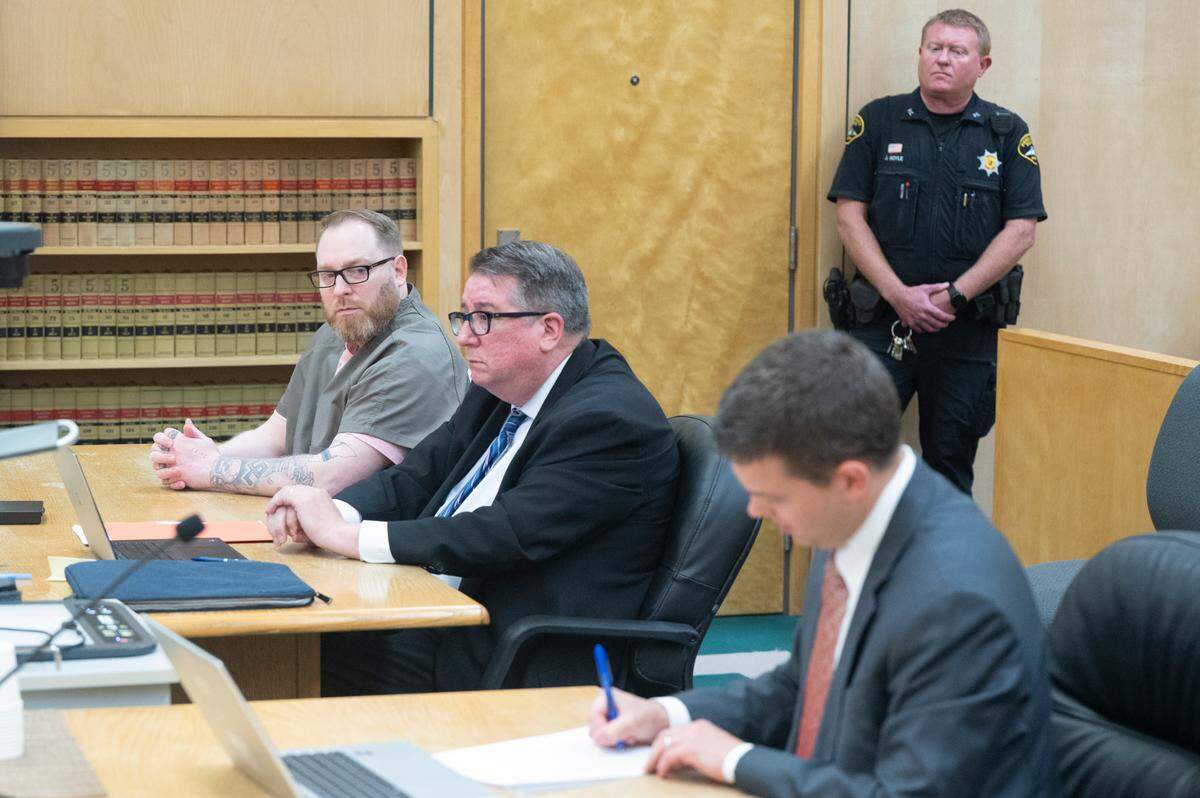
That included psychologists, DOC employees, friends of Monschke and Kimonti Carter, who was also sentenced to life in prison as a young man until he was resentenced and released in July 2022. According to court records, Mark Pitcavage, a historian of far-right wing groups, testified about white supremacy prison gangs and Monschke’s tattoos and artwork that depicted symbols of racism. Monschke also took the stand to testify.
Monschke did not appear to react when Pierce County Superior Court Judge Joseph Evans announced the defendant’s new sentence in court. He smiled at people gathered in the gallery to support him while he was handcuffed and led out of the courtroom.
According to court records, Monschke’s case for a shorter sentence focused on his apparent transformation in prison from a white supremacist to someone who preaches nonviolence and sees his fellow inmates as equals — a transformation that prosecutors dispute. His defense attorney asked for a 26-year sentence.
Monschke didn’t initiate the assault that led to 42-year-old Townsend’s death, and he long pronounced his innocence. More recently, in a 2024 interview with a psychologist, he said he was “100 percent responsible” for what happened to Townsend by cultivating a “culture of violence” among his friends.
According to Monschke and his defense attorney, the turnaround came from looking within himself and the “small miracle” of coming into contact with Carter at the Clallam Bay Corrections Center. Carter encouraged new inmates to sign up for the rehabilitative and educational programs built by prisoners.
Jeffrey Ellis, Monschke’s defense attorney, wrote in a sentencing memorandum that Monschke was ready to shed his past, including race-based beliefs he described as a “survival system” for prison life. Monschke tried to enroll in all of the programs.
Prosecutors call Monschke’s acceptance of responsibility hollow.
“He accepts responsibility not because he struck any blows or was part of a plan to kill Mr. Townsend, but because the quartet started off from his apartment where they had been listening to Skinhead music and drinking alcohol, and he nurtured an aura of violence,” deputy prosecuting attorneys Richard Weyrich and Pamela Loginsky wrote in their sentencing memo.
Weyrich and Loginsky said Monschke continued to refuse to accept the verdict of a 2004 jury trial that determined Townsend’s killing was premeditated and that it was done in part to further Monschke’s place among white supremacists.
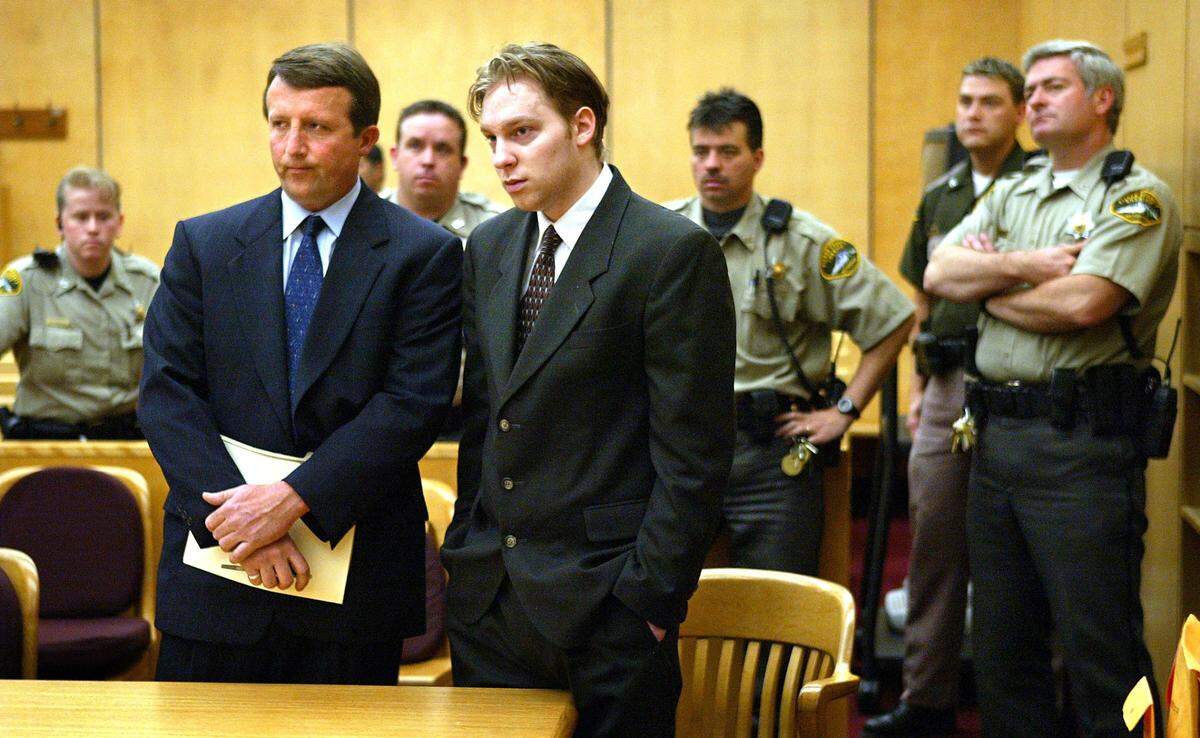
The defense argued in pre-sentencing court filings that Monschke was charged as an accomplice to Townsend’s death, that it was “uncontested” that Scotty Butters and David Pillatos instigated the attack and that Monschke wasn’t present while the man was assaulted. Ellis noted that testimony at trial was inconsistent as to whether Monschke struck the man with a baseball bat or nudged him with it to see if he was still alive.
Prosecutors said testimony revealed that Monschke hit Townsend with the bat 10 to 15 times. The fatal assault also included Butters breaking a baseball bat over Townsend’s head, Pillatos and Butters kicking his skull back and forth, Pillatos throwing a 38-pound rock on the man’s face and then carrying the man to a railroad track, where his face was “curb stomped” into the rail.
Weyrich and Loginsky argued that Townsend’s murder wasn’t spur of the moment, but part of a plan for the fourth person involved, Tristan Frye, to earn her “red shoelaces.” According to prosecutors, in some white supremacist circles, those are earned by attacking or murdering a minority.
Prosecutors also said Monschke continues to believe in white supremacist ideology, contrary to his claims. In a June 24 court filing, prosecutors included the probable cause document that details the July 2024 assault at Clallam Bay Corrections Center that Monschke is accused of orchestrating, allegedly as retaliation for the victim beating up a man identified as a member of the “Skinhead” Security Threat Group.
The documents state that shortly before the retaliatory assault, Monschke walked away from a table of inmates in the yard and did a “Hitler salute.”
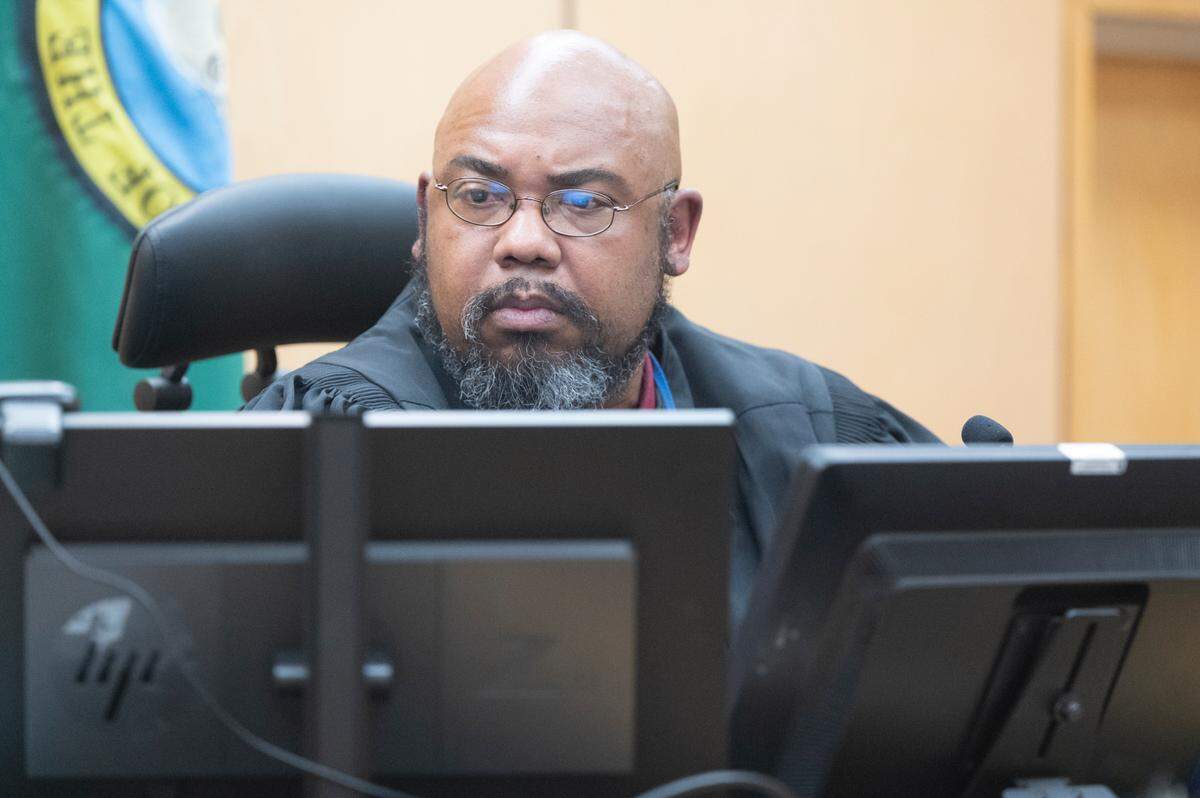
In court, Evans said circumstantial evidence from DOC indicated Monschke was still affiliated, at least in passing, with his previous white supremacist associates, but that he had also heard significant evidence of the efforts Monschke had made in the last six or seven years to improve himself.
Evans also found evidence that Monschke’s adverse childhood experiences likely affected his brain development and created a likelihood of anti-social and violent behavior. He said Monschke was a victim of in utero drug and alcohol abuse, child molestation, other abuse and a “multitude of socio-economic poverty related factors.”
The murder of Townsend was heinous, Evans said, but he noted that Monschke’s co-defendants were the primary aggressors and received sentences that were far less than the life imprisonment Monschke received. Frye completed her prison sentence as early as December 2020, according to court records, and Butters and Pillatos, who both got about 30 years in prison, could be released as soon as the end of 2031.
“In imposing a sentence other than life imprisonment, the court is charged with looking at whether the defendant has made meaningful reform, and this court finds that Mr. Monschke has made significant steps in that direction, but it also finds that additional steps are needed, and additional safeguards for the safety of the community are warranted,” Evans wrote in his resentencing ruling.