$51M in payouts: Are Pierce County schools doing enough to protect kids from sex abuse?
Nearly $52 million has been paid out to resolve sex-abuse allegations in Pierce County school districts over a decade, much of it in the past four years, a News Tribune analysis has found.
Ten districts either agreed to or were ordered to pay a total of at least $51.8 million, stemming largely from lawsuits filed against them between 2013 and 2023, according to court records and attorneys who represented plaintiffs in those matters. The amount derives from settlements and jury verdicts involving cases that described alleged events spanning from the mid-1970s to 2022.
Allegations have been lodged against adults, such as coaches and teachers, as well as peers. Student-athletes accused an ex-volunteer wrestling coach of fondling and masturbating them in the mid-2000s. A teacher denied sliding his hand underneath a teen’s skirt and squeezing her inner thigh in 2018. A 17-year-old girl with a disability was purportedly coaxed into a bathroom by a fellow student and assaulted in 2020.
As sex-abuse litigation adds up, the cases have proven costly to resolve for school districts weighing the financial risks of proceeding to trial, even though districts generally aren’t paying outright because they are covered by insurance. School administrators insist that their top priority is the well-being of students, yet plaintiffs’ attorneys say they have found too often that schools fall short. Meanwhile, students and their families feel the toll.
“For the longest time I just kind of felt like nothing would ever happen. It was just this horrible thing that happened to me and I was like, ‘OK, push on through this, try to forget that it happened,’” a former University Place School District student, whose case against an ex-coach settled for $9.5 million in May of last year, told The News Tribune at the time.
The tally of tracked payouts includes at least some claims resolved prior to a lawsuit being filed but doesn’t account for certain fees or districts’ legal defense costs, which can range from the tens of thousands to the hundreds of thousands of dollars per claim, spending data shows.
Most of the associated court cases, 35 of 46 reviewed by The News Tribune, involved events purported to have occurred in 2010 or later. Nine were related to allegations stemming from 2020 and afterward.
Many of the payouts have been recent: Settlements or jury verdicts reached since 2020 accounted for $37 million, according to The News Tribune’s analysis.
Five districts that responded to The News Tribune’s request for comment assured they take allegations seriously, focus immediately on student safety, investigate claims and have policies and procedures in place to prevent and address wrongdoing, including regular training regarding sexual abuse and harassment.
“We’re always looking for ways to improve our system,” University Place School District superintendent Jeff Chamberlin said in an interview.
Five attorneys who represented several plaintiffs in resolved cases contended that districts could do more. They said their experiences have shown warning signs aren’t reported, training is lacking, students aren’t adequately supervised and situations aren’t reviewed for potential lessons to learn.
“School districts almost have a superpower in a way that they have an amazing responsibility and ability to protect children,” attorney Meaghan Driscoll said. “The common theme is a failure ... to realize that very great responsibility and ability.”
While litigation is intended, in part, to produce necessary changes that might prevent others from being hurt in the future, there’s no real mechanism for attorneys or other outsiders to track districts’ progress in the wake of settlements or jury verdicts, according to most of the attorneys.
“I would hope that those are big wake-up calls and that action would be taken,” attorney Vincent Nappo said, adding that school-safety policies have grown as exposure to litigation has increased.
No school district that responded for this story offered, when asked, specific examples of changes it has made recently or in response to allegations or court resolutions. Districts generally said they regularly review practices, including in frequent staff meetings, and make updates when necessary.
“There’s something to learn as soon as the allegation is made, not after the settlement is issued,” Orting School District superintendent Ed Hatzenbeler said in an interview, noting that the district performs an after-action report whenever an issue arises.
Claims increasing
Sex-abuse claims have broadly risen in school districts across the United States since roughly 2015, according to the Washington Schools Risk Management Pool, a joint self-insurance cooperative that provides liability and property coverage to all but one of 15 main public school districts in Pierce County and nearly 80 districts statewide. Bethel School District is covered by another risk pool.
The number of claims leveled off during the height of the COVID-19 pandemic and picked up again around 2022, the WSRMP said. A story last year by Education Week, citing a report by an insurance and risk management company, noted that there was a growing trend of victims seeking accountability and that changes in states’ laws had allowed more victims to sue.
In its current annual report, the WSRMP reminded that there are no limitations on the amount of compensation someone can seek in civil matters or any controls on jury awards in Washington state. There’s also a doctrine of strict liability in the state, which means that it isn’t necessary to prove intent or negligence to hold someone responsible, according to legal groups.
Lawsuits often cite “loco parentis,” a term referring to a district’s legal duty to care for students in place of their parents while a student is under the district’s care.
Washington state lawmakers have made efforts to tackle sexual abuse in schools. In 2018, the Legislature passed Erin’s Law to encourage education in schools on sexual abuse prevention and tasked the Office of Superintendent of Public Instruction with spearheading the program.
To get ahead of rising sex abuse cases, the WSRMP said it began performing risk management regarding sexual abuse and molestation, and training school staff, students and parents.
“We’ve done a full, multi-prong approach to taking a look at it,” WSRMP executive director Deborah Callahan told The News Tribune. “I’m very proud of the fact that we took a leadership role in this.”
Driscoll, who called increases in claims “alarming,” said the system appears to incentivize districts to settle on a case-by-case basis because they have coverage, rather than address root problems. Educators too often don’t recognize red flags or know to be looking for them, necessitating additional training, she said.
An attorney representing a Sumner High School student allegedly assaulted in 2020 by a peer in a bathroom wrote in a court filing last year that minimal attention was being paid to a rapidly increasing number of sexual assaults on high school campuses.
“This case is not atypical of schools failing to protect disabled students,” attorney Gregory McBroom wrote. “Unfortunately, the district has nearly unlimited resources through Risk Pool to fight these cases.”
Costly litigation
School districts typically don’t directly pay any settlement or jury-verdict amounts in these cases, but there are still financial implications.
The WSRMP, a nonprofit that purchases reinsurance but is not itself an insurer, offers one coverage agreement shared by all districts in its pool, which it said includes up to $20 million in sex-abuse cases. The group provides risk-management services in addition to coverage. It also maintains operational expenses beyond claims, including reinsurance costs and staff.
Districts, who share in all losses, make annual payments to the pool. While the nonprofit’s actuaries review loss trends over a longer period than just year to year, member contributions generally increase as payouts do.
The WSRMP’s claims expense — the cost of settlements and legal fees — increased from $51.6 million to $53.1 million since 2022, according to its latest annual report. Member contributions have risen from $81.6 million to $112.8 million over that period.
Orting School District paid nearly $796,000 from its general fund to the WSRMP this school year — a 20% year-over-year increase that wiped out additional money it had recently received from the state for materials and operations, Hatzenbeler said.
Such bumps in premiums aren’t driven solely by payouts for sex-abuse claims. The impact to costs includes a variety of claims, including slip-and-fall accidents, vehicle issues and more. Still, the uptick in sex-abuse cases has been highlighted as a problem.
“The Pool members have faced an unprecedented increase in sex abuse claims in addition to increases in costs for liability claims in general,” Portland-based accounting firm, Perkins & Co., wrote in a January audit of WSRMP’s financials for two prior fiscal years.
Across Washington, district insurance costs rose 48% between the 2019 and 2022 school years, according to a report this year from the League of Education Voters Foundation.
Orting School District’s current general fund budget is about $49 million. When premiums go up, there’s less discretionary money for education, such as textbooks and staffing.
“Something has to give because you have to pay your insurance,” Hatzenbeler said.
Member contributions to the WSRMP are determined by a few factors, including size and loss history, the risk pool said. Clover Park School District, whose current general fund budget is roughly $275 million, paid $3.8 million to the WSRMP this school year, a district spokesperson said. It represented an increase of more than $540,000 over last year, but the spokesperson attributed the rise to inflation.
Chamberlin, who underscored that trauma inflicted on students and families far outweighs any financial issues his district might face, noted that the price of coverage has trended upward for quite some time.
The district, whose current general fund budget is about $103 million, said its insurance costs have about doubled since 2020, from roughly $700,000 to nearly $1.4 million.
“It is a substantial cost for school districts, and we’ve seen enormous increases in our insurance fees over the last 20 years,” Chamberlin said.
Lawsuits add up
The News Tribune documented 46 court cases against districts between 2013 and 2023, reviewing Pierce County and federal court records and news reports to identify case occurrences and settlement amounts. The vast majority of those cases were lawsuits. In several instances when settlement terms were not available via court records, the gaps were filled in by attorneys and documents obtained in a public records request through the WSRMP.
Three cases were settlement filings with no apparent associated complaint, suggesting that claims were resolved prior to a lawsuit being filed. Certain pre-litigation claims settled by University Place School District were also accounted for in this story but not tied to any court case.
In 39 cases, a settlement was reached before going to trial, underscoring what attorneys and districts say is the costliness of litigation and the unpredictability of leaving matters in the hands of a jury. One settled case is pending finalization for nearly $1.5 million.
Districts lost two of three cases decided by a jury, court records show. The case it won is under appeal.
Three cases filed just last year remain ongoing and one dismissed case’s outcome was unclear. An attorney who represented the plaintiff in that matter didn’t return a message seeking clarification.
In 41% of all cases documented by The News Tribune, the alleged perpetrator was an adult — not a fellow student. Ten lawsuits involved a teacher, five a coach, two a security guard and two non-employee adults, including a teacher’s partner, the analysis showed.
In sixteen, or nearly 35%, of all cases, a special-needs student was the purported victim.
This year, five sex-abuse lawsuits were lodged against districts: two against Puyallup and one each against Sumner-Bonney, Clover Park and Peninsula, court records show. An unknown settlement has already been reached in one case and is pending finalization.
“The goal is for these events to not happen at all, but they continue to happen,” attorney Thad Martin said.
Common shortfalls
In 2012, a Bethel High School student with special needs was allegedly suspended after being sexually abused by another student. The purported offender had a history of predatory behavior, according to a federal lawsuit regarding the matter, which led to a $500,000 jury verdict in 2021, court records show.
Attorney Loren Cochran, who was among a small team of lawyers that represented the victim, said in an interview that there hadn’t been a consistent chain of communication to share the alleged abuser’s background, despite it being known to administrators and staff.
Describing what they have noticed to be common shortfalls in schools, attorneys involved in these cases pointed to red flags that aren’t reported, adequately articulated or followed up on.
“There is just a lack of communication that is mind-boggling amongst teachers, administrators and staff when they find a potential problem and don’t share it with people who need it the most,” Cochran said.
Driscoll said she has taken the depositions of many teachers and school administrators. While administrators will agree that a teacher has a mandatory duty to report abuse or neglect, she said she’s witnessed a disconnect in teachers who don’t understand the breadth of their reporting responsibilities.
Warning signs are often only discovered in retrospect during an investigation, according to Driscoll, who said that school districts also fail in analyzing what went wrong and debriefing to determine what could be done to prevent something from occurring in the future.
“Nobody’s looking at the big picture and saying, ‘How do we stop the wheel turning?,’” she said.
Attorneys, at least some who have worked on cases outside Pierce County too, also said that training should be strengthened and more frequent, supervision must improve — particularly during unstructured times such as school bus rides and bathroom breaks — and that technology has made it easier for employees to cross boundaries with students.
Even so, there was no question that schools are safer now than ever before, according to Nappo, who represented student-athletes allegedly abused by an ex-volunteer wrestling coach in the University Place School District.
There’s more public awareness of abuse and an increased focus on policies and practices to protect kids, with reporting and respecting boundaries much more emphasized in school training, he said. Educators are taught to say something if they see something.
“But the problem is, you don’t see the follow through,” Nappo said.
Policies and safeguards
Districts assured that student safety was their top priority and that they’re responsive to claims. They train employees at least annually, including on the importance of reporting any potentially problematic behaviors, and have adopted policies intended to prevent sexual abuse and misconduct, they said.
The five districts that participated in this story shared or described policies that cover topics such as sexual harassment prevention and mandatory reporting. Districts also said they have designated Title IX coordinators, who are typically employees performing multiple roles, to comply with the 1972 federal civil rights law prohibiting sex discrimination in schools.
“As we continue to navigate the complexities of safeguarding our students, Puyallup School District remains dedicated to fostering a secure and supportive learning environment where every student can thrive,” a district spokesperson said in a statement.
Since 2017, the school district has settled seven cases totaling $14.9 million, The News Tribune’s analysis showed. The cases contained allegations from as early as the 1990s to as late as 2021.
Only University Place School District’s legal wrangling has been costlier during the 10-year period reviewed by The News Tribune. It’s settled four cases and pre-litigation claims for a total $15.6 million since 2021, according to the analysis. The bulk of those dollars stemmed from major payouts in 2022 and 2023.
In consecutive years, UPSD agreed to settlements of $4.2 million and $9.5 million. Those were paid to resolve allegations by nine former student-athletes who accused ex-volunteer wrestling coach David O’Connor of sexually abusing them in the mid-2000s.
All but one of the district’s cases — alleged student-on-student assaults from the 2019-2020 school year — were related to O’Connor.
There have been many safeguards implemented within USPD since the mid-2000s, according to Chamberlin, the district’s superintendent.
The district has long had a screening process in place for new hires, including background checks through the FBI and Washington State Patrol, self-disclosures for anyone who previously worked at a school district and basic reference checks. Such screening, he said, was once not required in districts but the standard of care had evolved over time.
There’s also an “extraordinary amount” of training now, he said. Boundary evasion has been a UPSD focal point for more than a decade, following policy that establishes warning signs and training to identify and report those signs.
O’Connor, whose cases made headlines, was charged with four counts of child molestation in 2014 after two former student-athletes came forward. Charges were dropped, however, because the statute of limitations had expired, The News Tribune previously reported.
In slightly more than half of the civil court cases since 2013 involving adults, an accused perpetrator faced criminal prosecution, according to the analysis. In two criminal cases, charges were related to wrongdoing against a different victim from the civil matter, court records show.
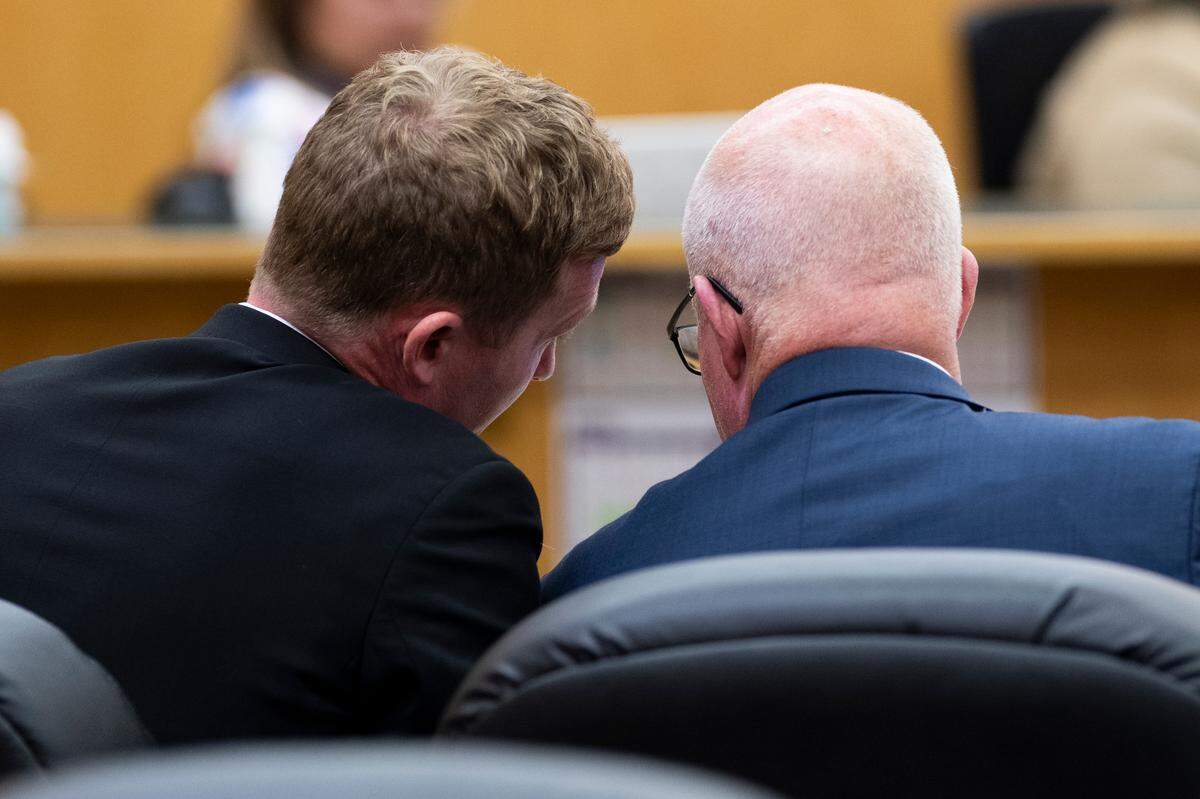
Earlier this month, the criminal trial began for ex-Sumner High School boys basketball coach, Jacob “Jake” Jackson, who has pleaded not guilty to charges including third-degree rape and child molestation.
Two ongoing lawsuits filed before this year alleged that the Sumner-Bonney Lake School District failed to protect student-athletes from Jackson’s purported sexual abuse between the late 2010s and 2022. In court filings, the district has denied wrongdoing.
The Sumner-Bonney Lake School District declined an interview, citing its current involvement in “various matters of litigation,” but conveyed in writing similar safeguards in place as other districts. A spokesperson said it must also rely on the community to observe and report any concerning conduct.
“We have learned that sexual predators will seek out opportunities to have access to children/youth and that they hide their predatory nature expertly,” the spokesperson said. “Often they are well-regarded members of the community at large and even employees unfortunately.”
The district has settled two cases for a total of $7.8 million since last year, related to allegations from 2020 and 2022. The lion’s share of that payout derived from a $7.6 million resolution in 2023. The family of a 17-year-old girl with a disability claimed the district didn’t protect her from being sexually assaulted in a Sumner High bathroom by a fellow student or follow its own sexual-harassment policy, The News Tribune previously reported.
The district also denied those allegations. A principal and special-education teacher had said in depositions related to the lawsuit that the school had since installed sex-education curriculum for special-education students that did not exist at the time of the incident, the Seattle Times reported.
Seven school districts that settled multiple cases since 2013 were contacted for this story. The Bethel School District declined to comment and Tacoma Public Schools, the county’s largest district which resolved 16 cases for at least $6.1 million since 2014, did not respond to written questions after an unsuccessful effort to interview someone in the district.
Making a difference?
Alleged victims can feel empowered by pursuing legal accountability for their claims, and settlement money can be life-changing, but the abuse they say they suffered often affects their lives forever, attorneys said.
A student in the Puyallup School District, who accused his teacher of abuse, recalled spending weekend nights at the teacher’s home in the 1990s, according to his deposition in a lawsuit that ultimately settled for $1.5 million.
“When I think of these actions, I’m just sick to my stomach,” the student said.
The girl, whose lawsuit against Sumner-Bonney Lake School District settled for $7.6 million, explained what happened to her in court records: “When he hurt me, my body shut down. I was so scared, my body just shake, shake, shake.”
In a deposition, her aunt said the girl had become socially withdrawn, struggled to sleep and experienced thoughts of suicide in the aftermath of the assault in a bathroom, the Seattle Times reported.
“I’ve noticed that when I ask if she wants to go somewhere or have friends over, she just wants to be alone in her room,” the aunt said.
Through their attorneys, the News Tribune sought interviews with plaintiffs but those efforts were unsuccessful, at least in part, because alleged victims were hesitant to speak publicly.
While attorneys believed that legal payouts — often negotiated to fulfill life-care plans for their clients — could effectuate change, some acknowledged the inevitability of bad actors and the requirement that districts and state lawmakers do their part.
“I don’t think just the dollars and cents necessarily moves us forward or makes the system better,” attorney Lara Hruska said, adding that she has asked for systemic changes as part of monetary settlements and separately performed advocacy work for clients.
In accordance with a settlement from 2023, the Puyallup School District met with the alleged victim in person to discuss improving the district’s Title IX process, Hruska said, and she believed it resulted in better tracking of Title IX complaints. Hruska said she has also set up programming, such as therapy, for clients including one in the Orting School District. Both districts were willing to work with her and the alleged victims, she noted.
Hruska said that she tries to partner with districts on improvements and noted that most educators care about children and want things to be better.
It’s standard language in settlements for districts to admit no liability, but none of the attorneys interviewed for this piece found that necessarily problematic on its own. Cochran said he didn’t think it trumped the recognition of damages and compensation that was paid and left it up to people to infer what a settlement meant.
Even if the district disagreed with what might have occurred, any complaint presents a learning opportunity, according to Chamberlin. The target is to determine what can be done to decrease the likelihood of it reoccurring in the future, he added.
“Whether it makes the news or not, if a kid has been harmed or believe they have been mistreated, then we want to look carefully at that and do whatever we can to support them,” he said.
Clover Park School District said it works with its legal counsel to investigate and address allegations in a lawsuit and might decide to settle before trial to protect the district’s financial well-being.
The district has settled three cases since 2019 totaling $1.7 million, and had a jury verdict against it in 2015 for $769,000, according to The News Tribune’s analysis. The suits alleged events from as early as 2011 to as late as 2022.
“Even when a claim has been settled, the district’s general practice is to review and implement improvements to employment practices, if any, that may enhance the ability to provide a safe learning environment,” a spokesperson said.
This story was originally published December 31, 2024 at 5:00 AM.
CORRECTION: A previous version of this story incorrectly spelled the first name of attorney Lara Hruska.