If a rural WA school dissolves, students could go to Tri-Cities area

AI-generated summary reviewed by our newsroom.
- Community must raise about $1 million by April 1 to keep schools open.
- Upcoming land sale, a short-term levy, and a legislative provision may save Prescott.
- Dissolution risks lost local control, student disruption and higher taxes.
A rural Eastern Washington school district could close forever as early as this summer.
Prescott School District will need about $1 million by April 1 to keep the classroom lights on amid serious issues with its mismanaged budget and mounting debt.
Washington Superintendent Chris Reykdal issued a rare Jan. 12 petition for dissolution after determining the district was “financially insolvent” after two years of increased oversight from Washington OSPI.
In its petition to dissolve, Reykdal’s office proposed bisecting Prescott into two sections along a former Burlington Northern Railway line that once ran the length of the district.
Columbia-Burbank School District would annex the western parts of the district that run along the Columbia River, which includes the populated Vista Hermosa community, while Waitsburg would take in the eastern parts that encompass the city of Prescott.
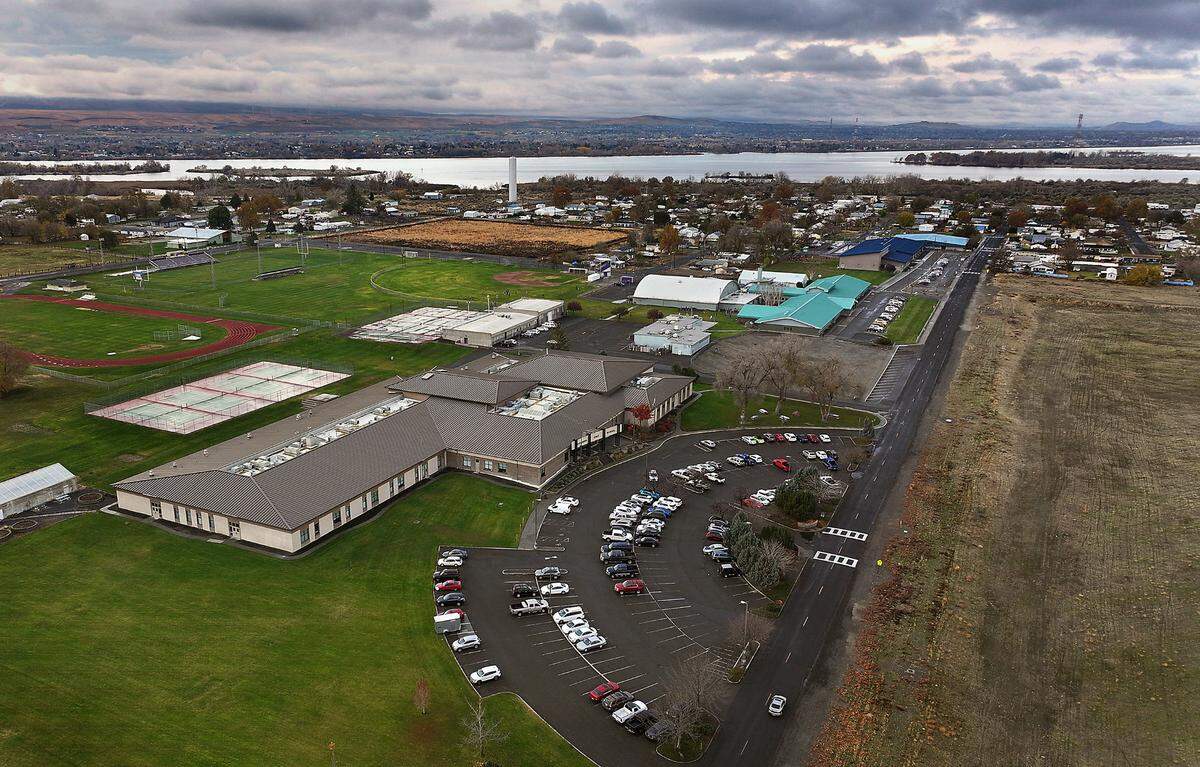
But local leaders say Prescott’s closure is not a done deal. The news has sent the community scrambling to save their century old school district.
They’re keeping their eyes on three big developments over the next two months that altogether could save their school district:
- Closure on a sale of the district’s old teacher’s cottage that could bring in close to $350,000.
- Passage of a short-term supplemental levy on Feb. 10 that would raise an additional quarter-million dollars in 2027 and 2028. This is on top of an operations levy voters approved back in 2025.
- Receipt of a $640,000 provision in the Legislature’s 2026 supplemental operations budget. These funds were previously earmarked and went unspent by the Marysville School District.
Community groups have also pitched in by hosting auctions, fundraisers and a $100 prime rib dinner gala to help keep their district afloat. Those groups include the alumni association, the parent-teacher organization and action group MomsRising.
What Prescott says about WA education
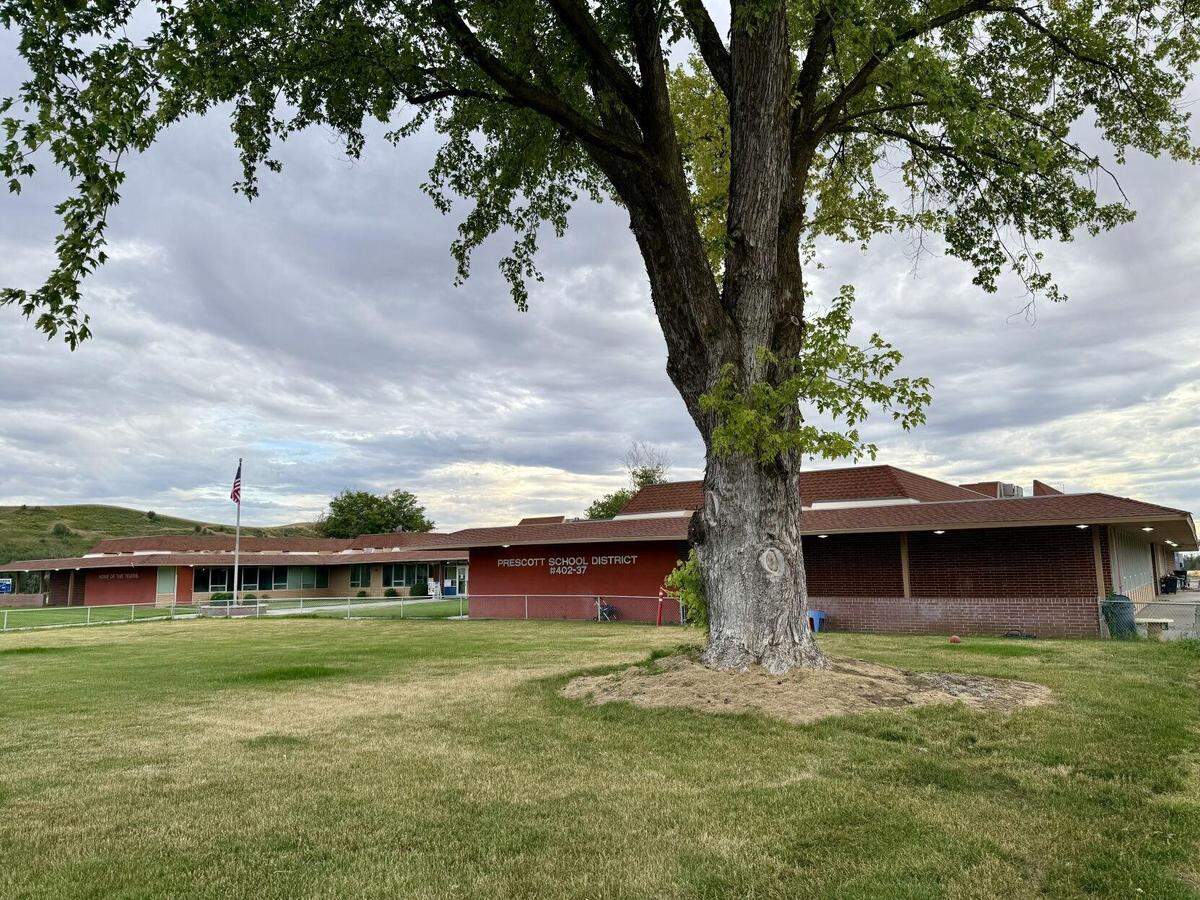
The small rural school district serves 230 students in rural Walla Walla County, about 40 miles east of the Tri-Cities. It employs about 50 teachers and staff.
Prescott is an old rail community, first settled in 1859, whose economy had been supported for generations by the surrounding agriculture and wheat economies. The school district is the city’s largest employer today, said Superintendent Jeff Foertsch.
About two-thirds of its students come from low-income backgrounds and 43% of its students are English language learners. Most of its students live along the Snake River in the FirstFruits Vista Hermosa housing community, the children of orchard and fruit processing workers.
Like other districts of its size, Prescott has struggled in recent years with escalated costs for services and wages, as well as stagnant increases in funding from the state. The community has historically supported its schools with an active operations levy to help fill in the gap in state spending.
Foertsch said it’s a “slippery slope” for small, rural, struggling school districts that could be “swallowed up” by larger districts.
The act of dissolving districts takes away local control that taxpayers, families and parents have over their students’ education. Foertsch says families often move out to rural communities for smaller class sizes and to have a tighter-knit community.
“I think it’s important to everybody if you care about kids,” he said of the petition to dissolve the district.
School closures can have substantial short-term impacts to students and their academic achievement, according to Education Week. Research shows, over the first few years of a closure, that impacted kids have weaker test scores, attendance and high school graduation rates.
If Prescott closes, Foertsch said, kids in the district would attend different schools and their friendships and social structures will be disrupted. Most kids will be fine, he said, but students already struggling may fall more behind. Families will have to find out new transportation, too.
“They’ll essentially have to start over,” he said.
The closure and sale of Prescott’s assets will also be a big cost for the community. Foertsch doesn’t see how the community survives without its schools.
Why Prescott is struggling
Foertsch says many in the community are curious about where all the district’s money went, but he says there isn’t a strong answer yet as to why Prescott got in this mess.
He worked as Prescott High School principal before taking the rein as superintendent in June, succeeding Justin Bradford.
Foertsch says he did not know the district was in such poor financial standing when he became its head educator. About five years ago, the district’s general budget had a surplus of about $2 million, but he was surprised to learn the district had about $1 million in credit card and bank loan debt when he took over.
He got to work immediately by cutting a dozen employees — paraeducators, custodians and kitchen staff — through layoffs and resignations. Foertsch says they used those savings to have enough cash to start the 2025-26 school year.
Programs and operating costs were also slashed, impacting after-school programs, consolidated bus routes, field trips, the music program, and contracts, documents show. The district has also tried resolving its issues through an inter-fund loan from its healthy transportation reserves and by restructuring its debt.
While painful, these strategies have helped to buoy Prescott through the school year and keep classrooms running.
Foertsch admits he’s still looking for answers, but he’s shifted his focus on “moving forward” from this turmoil in order to get the district back on track. A former superintendent had “really big dreams” to open up new revenue sources and find grants, but the district fell behind on its debts and those aspirations never became reality.
State Sen. Perry Dozier, R-Waitsburg, graduated in 1977 from Prescott High School. He was also quarterback of the 1975 state-championship football team, too, and remembers families packing the stands at away games.
A lot has changed in his hometown over the years, but the community’s Tigers pride has weathered recessions, fleeing industries and businesses, pandemics and farmwork modernization.
“It’s the life of the community,” Dozier told the Tri-City Herald. “If the school’s gone, the town loses its identity.”
He admits there were “some mistakes made.” Dozier believes COVID played a huge factor in disrupting schools. There’s also been administrative turnover and the district has cycled through three superintendents in the last six years.
“Without a cohesive working unit, I think that played heavily into some issues,” Dozier said.
ESD 123 Superintendent Steve McCullough said the Prescott district has been very successful in preparing its students for post-secondary education, and in turn its residents have been steadfast in their support of their schools.
The Southeastern Washington educational service district is providing Prescott guidance through dissolution.
“(Prescott is) very valuable,” he said. “They are doing really good work out there right now.”
Will Prescott’s taxes go up?
If Prescott dissolves, it will have been the first school district in Washington state in nearly 20 years to have suffered that fate.
With the poor state of public education funding, Foertsch worries more school districts on the margins could close in the future.
Back in 2007, Vader School District in rural Southwestern Washington dispersed and was absorbed by the neighboring Castle Rock School District, about 10 miles to its south. That district dissolved under slightly different circumstances from Prescott’s: While its ledgers were facing a negative $119,000 balance, Vader’s instructional building had become neglected after a series of failed tax measures.
Taxpayers ultimately paid the price for Vader’s dissolution. When the district was drawn into Castle Rock, former Vader taxpayers were subjected to their new district’s rates — rates that were higher than those proposed by Vader to save the district.
“The community lost control of, and influence on, its students’ futures,” wrote Brian Lewis, a Washington school administrator, in a 2016 column reflecting on Vader.
Foertsch says Prescott’s education and operations levy rate, even with its two-year increase, would be lower than those in neighboring Columbia-Burbank and Waitsburg school districts. It’s unclear if taxes overall would be lower, though.
This story was originally published February 6, 2026 at 5:00 AM with the headline "If a rural WA school dissolves, students could go to Tri-Cities area."