Kids = money in WA. That’s led to disparate outcomes in Pierce County schools
Editor’s note: This story is the third in a series about how funding for Pierce County school districts has changed over the last decade and what’s not working in Washington’s funding model for public education. Read previous stories about state funding and teacher salaries in Pierce County.
Orting High School is bursting at the seams — and it’s most apparent at lunch.
Roughly 100 students take up the cafeteria, principal Matt Carlson previously told The News Tribune, with lunch lines wrapping around the room. Most students will wait for their food for 20 minutes of the 30-minute lunch break. Dozens won’t be able to find seats, so they will eat in the hallways, on stairs or on ramps.
That is only one symptom of the uneven growth reshaping the region.
Orting is one of many districts in East Pierce County — such as Bethel, Sumner-Bonney Lake, Puyallup, Fife and White River — that is seeing explosive growth. Other districts in the region, such as Tacoma, Franklin Pierce and Clover Park, are seeing their student numbers dwindle.
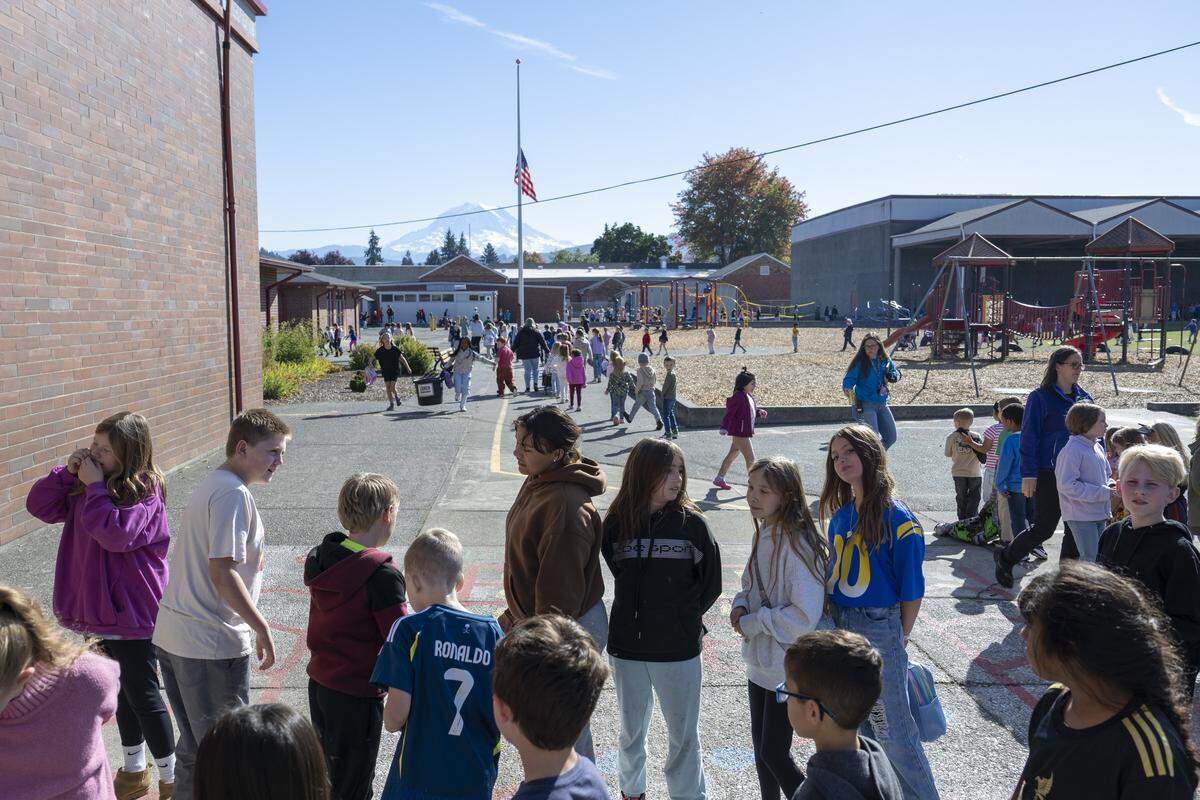
That deep enrollment divide is forcing school districts across Pierce County to wrestle with different financial futures, as state funding for school districts is linked directly to enrollment during a time when many districts are struggling to stay afloat.
Washington state distributes money to school districts through what’s known as the prototypical funding model, a complicated formula that’s based largely on the state’s legal definition of the resources and staffing necessary to run “typical” elementary, middle and high schools. For example, a prototypical high school has about 600 full-time equivalent students and requires one teacher for every class of 28.74 full-time students, according to state law. Districts are required to report their enrollment numbers to the state and get much of their funding this way, relying largely on local levies to bridge the gap.
In East Pierce County, growth stems from large developments in places like Tehaleh and Sunrise, as well as a steady push of families looking for lower prices away from urban centers like Tacoma or cities in King County.
Meanwhile, several of Pierce County’s largest districts have been slowly shrinking. Administrators in Tacoma and Franklin Pierce say lower birth rates, rising housing costs and child care deserts are leading to smaller cohorts. The pandemic also jolted headcounts countywide — some students returned, but many districts say enrollment has not returned to pre-COVID levels. Many high school students are also choosing alternatives such as Running Start, online programs or homeschooling, which shifts state dollars away from districts.
The consequence is a widening divide: Pierce County is growing, but the number of children is not — and in a system where the state spent an average of $11,500 per student in 2019, those swings quickly become budget problems.
Districts are left trying to predict who will show up at the start of each school year — a number that determines staffing and spending months before the numbers are official. If they get it wrong, district dollars can go to teachers and programs that don’t have enough students to justify the cost.
In shrinking districts, this can mean layoffs and cuts. In the fast-growing districts in East Pierce County, it can mean overcrowded buildings and repeated bond attempts to construct new buildings that can fit sustained growth.
Why are some districts growing?
According to data The News Tribune collected from the Washington Office of Superintendent of Public Instruction, six school districts in Pierce County saw significant growth between the 2014-2015 school year and the 2024-2025 school year, with almost all of them being in East Pierce County:
- Orting School District gained the most students proportionally, with a 23.63% increase.
- White River School District saw a 22.57% increase.
- Sumner-Bonney Lake School District saw a 22.18% increase.
- Bethel School District saw a 12.81% increase.
- Fife School District saw a 12.55% increase.
- Puyallup School District saw a 4.71% increase.
The Orting School District saw the largest percent increase with an extra 524 students across 10 years. OSD’s boundaries stretch well beyond city limits — the district encompasses 45 square miles across Orting and areas near Puyallup, Graham and Bonney Lake, including parts of the master-planned Sunrise Community in South Hill.
Cliff Fries, executive director of business and operations for OSD, told The News Tribune new developments are one reason for the growth of students in his district, including:
- Tehaleh near Bonney Lake, which has 3,366 homes and an additional 153 planned by 2029. Fries said the development is split between OSD and the Sumner-Bonney Lake School District.
- The Uplands in South Hill, which Fries said has a plan for 1,200 to 1,400 homes.
- The Sunrise Community, also in South Hill, which Fries said will bring about 1,400 homes.
Scott Harrison is the superintendent of the White River School District, which covers Buckley, Wilkeson and surrounding areas. Like Orting, Harrison said new construction along state Route 410 is bringing extra students, with new multi-family units driving growth.
“East Pierce County, we’re literally a river away from King County, and some of those forces have pushed people out of more expensive housing areas and into our area,” Harrison said in an interview with The News Tribune on May 1.
Why are some districts shrinking?
Three school districts saw significant decreases during that same time frame:
- The Franklin-Pierce School District lost the greatest percentage of students, with a 9.78% decrease.
- Tacoma Public Schools lost 5.06% of its students.
- Clover Park School District lost 4.76% of its students.
Rosalind Medina, chief financial officer for Tacoma Public Schools, said declining birth rates and the cost of housing have played a role.
“The birth rates are definitely down, they’re declining, and I think, too, from a Tacoma perspective, a lot of people move out into a cheaper area out in the county, where they’ve got a lot more room to sprawl,” Medina said. “[They] can afford it for a family. It’s not easy to do that here in Tacoma, where housing prices have gotten pretty high.”
In June, the median sale price for existing single-family homes in Pierce County was roughly $604,998, up from $589,950 a year ago, data from the Northwest Multiple Listing Service shows. That’s up from $545,000 in June 2023.
Lance Goodpaster is the superintendent of the Franklin Pierce School District, which covers unincorporated Pierce County, spanning Parkland, Midland, Summit and parts of Waller and south Tacoma. He said for the past three years, the district has had smaller kindergarten classes.
Like Medina, he cited the pandemic and low birth rates, but said the district is also grappling with a shortage of childcare that’s feeding into the decline.
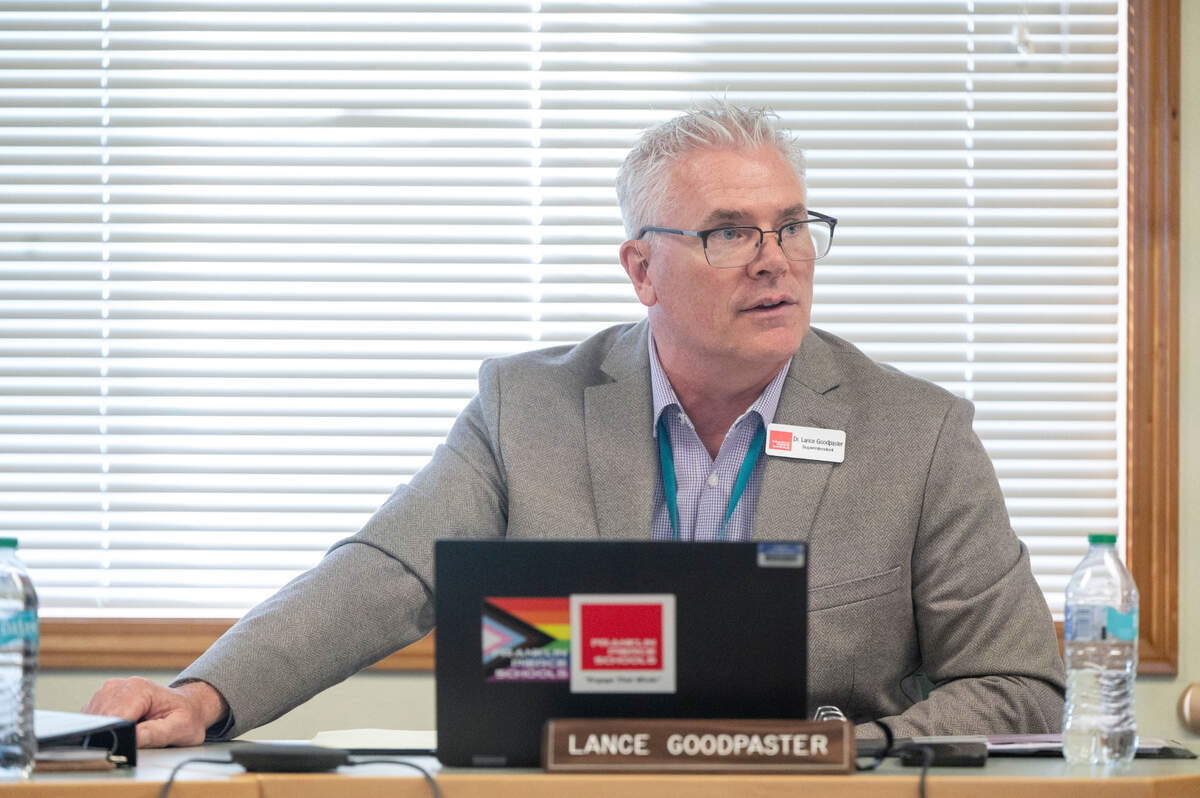
“The lack of daycare and preschool options in our area sometimes lead families to making choices outside of the district and then sticking with that program once the children become school age,” Goodpaster said. “We lose our share of students to other districts for that reason: childcare, work-related.”
He also said the district has a high number of students participating in the Running Start program, which allows 11th and 12th graders to attend a community college for dual high school/college credit. State law says that for every Running Start student, the community college receives 93% of the state funding while school districts keep 7%.
“In returning to school, those who became comfortable with online learning [after the pandemic] and maybe were not quite ready to return to in-person found other opportunities,” Goodpaster said. “There’s also more choice, so students at the high school level are enrolling in online courses.”
The third district facing steep declines is Clover Park School District, which lost about 533 students over a 10-year period, or 5%. The district covers the City of Lakewood and Joint Base Lewis-McChord (JBLM).
“More than a third of CPSD students are military connected, and families move due to Permanent Change of Station (PCS) or deployments. This is unique to CPSD and other school districts with military installations,” spokesperson Leanna Albrecht wrote in an email on April 8.
Broader Pierce County trends
Justin Lanting is the director of school finance for Puget Sound Educational Service District 121 (PSESD), which supports school district operations and financial planning across the region. In an interview April 16, Lanting said districts saw a drop in enrollment with the COVID-19 pandemic. Students slowly returned, but subsequent cohorts of incoming students aren’t returning to pre-COVID levels, Lanting explained.
The problem has been compounded by a regional trend in declining birth rates.
.png "image (6).png")
While Pierce County’s population has grown, the number of births in the county has decreased, he said. That suggests that more people are moving to the county, but less of them are choosing to have children.
Crude birth rates are a measure of the number of live births in an area in one year, divided by the total population and multiplied by 1,000. It’s considered “crude” because the population estimate includes men, women and children, not just women of childbearing age. The crude birth rate in Pierce County was 13.96 births per 1,000 people in 2014, according to the state Department of Health birthrates dashboard. In 2024, the rate had fallen to 11.03.
It’s a trend experts are documenting nationwide. The fertility rate in the U.S. has dropped dramatically since the Great Recession, peaking in 2007 and declining by 24% since then, The New York Times reported. Combined with factors like chronic absenteeism and a rise in homeschooling and private school enrollment after the COVID-19 pandemic, these developments could foreshadow hard times for schools, which often depend on enrollment for funding, according to Edsurge, a digital news outlet covering education.
The News Tribune asked the Tacoma, Franklin Pierce and Clover Park school districts where their outgoing students end up and also asked growing districts in East Pierce County where their incoming students are coming from. Most districts said they did not have specific data that tracks student migration patterns.
Goodpaster said former Franklin Pierce students generally tend to stay in Pierce County instead of heading to other areas.
“When families move, there certainly is a tendency to head in that eastern direction, but certainly not all,” Goodpaster said.
For growing districts, the origin points of incoming students varies.
Elle Warmuth, spokesperson for the Sumner-Bonney Lake School District, told The News Tribune in an email it has received a combined 574 students from Tacoma, Franklin Pierce and Clover Park over the past 10 years. That is 30% of the 1,904 students the district welcomed over a decade.
In Puyallup, Brian Devereux, director of facilities planning, said it is difficult to pinpoint where PSD’s incoming students are coming from —but he considers Tacoma, Franklin-Pierce and Clover Park to be “a minor factor” in the growth. Out of the 987 new students to come to Puyallup over the past decade, Devereux estimates roughly 200 came from the Bethel School District and about 100 came from Franklin Pierce.
“About 50% of all students that attend Puyallup Schools that reside out of the school district boundary come from Bethel, and about a quarter of our non-resident students come from Franklin Pierce,” Devereux said.
‘There’s a huge disconnect’
Washington falls somewhere in the middle when it comes to per-pupil expenditures, ranking 34th across U.S. states in 2024 at $18,564 per student, according to U.S. Census data. Idaho spent the least, at $11,060 per student, while New York spent the most at $31,918 per student.
But the state’s model for funding K-12 education differs from much of the country.
With its prototypical funding model, Washington is one of nine states that use a “resource-based” model in 2024, according to a 50-state comparison from Education Commission of the States, an education policy think tank.
In a resource-based model, the state allocates money for K-12 education based on staffing and input costs, Chris Duncombe, Principal, Education Commission of the States, explained in an email. These calculations are usually tied to staffing to student ratios or other factors like the cost of technology, transportation or other resources.
In contrast, 35 other states plus the District of Columbia use a “student-based” model, which generally means that districts get a base amount of funding per student plus “weights” or multipliers for certain kinds of students, Duncombe explained. The six remaining states use a hybrid model or some other system.
A student-based model could help solve some of the state’s problems, some have noted. In 2025, the state Legislature directed OSPI to convene a workgroup to study K-12 funding in Washington and explore reform.
“ … participants agreed that the model does not reflect the realities or actual costs of today’s schools and students,” an executive summary from the group’s discussions said. “Key roles (ex. bus drivers, paraeducators, substitutes, specialists, administrators) are not fully funded, forcing districts to stretch limited resources. The model underestimates the cost of serving students with disabilities, English learners, twice exceptional students, and highly mobile students.”
Districts told The News Tribune about what that gap looks like on the ground.
Ed Hatzenbeler, superintendent of the Orting School District, told The News Tribune on May 18 that the district receives about $10,000 per student. Yet, the way the state divides that $10,000 across several job positions, it takes about 23,000 middle school students to fund a full-time psychologist.
“That $10,000 per student, how they measure that out, might fund X students, X number of teachers [but it doesn’t matter] if more kids gets you more money if the money doesn’t equal what you need to educate that kid,” Hatzenbeler told The News Tribune in an interview on May 18.
In order to balance that ledger, administrators need to treat enrollment data like a crystal ball. Hatzenbeler said districts use projections to decide how to allocate their dollars each school year. The district mostly plans for a “flat rollup,” where it expects to receive the same amount of allocation that year as it did the previous year.
Medina, chief financial officer for Tacoma Public Schools, told The News Tribune that, even with projections, enrollment can sometimes happen in a way that puts a drain on districts.
“If the contract says you can have 25 kids in every classroom at elementary, and I have 37 kids, I’m still going to need two full-time teachers. Even though I have the capacity for 50 kids, I only have 37 there,” Medina told The News Tribune in an interview on Dec. 3, 2025. “Unless I bring in 13 kids from another school, I’m paying the full value of 50 students for two teachers and I’m not getting the benefit of the enrollment to be high enough to cover the cost of that.”
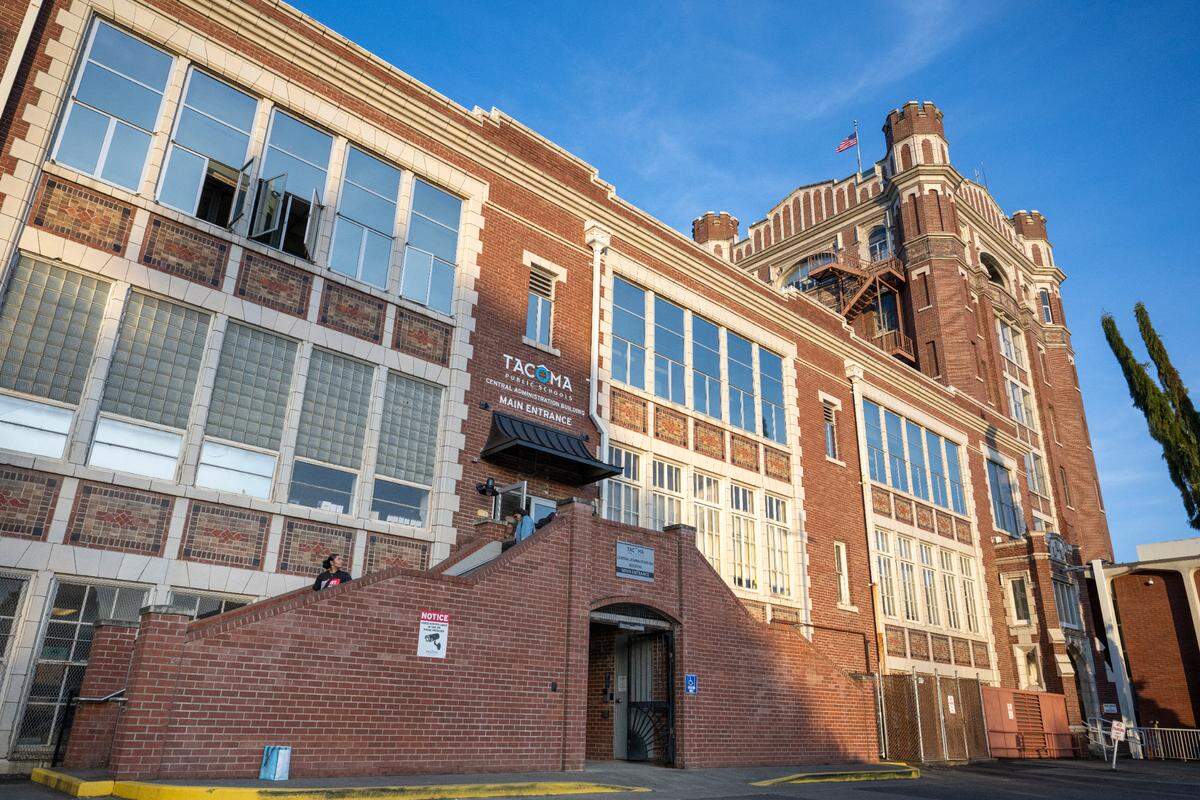
Though districts ideally make their estimates conservative, predicting the next year’s enrollment is difficult.
PSESD’s Fiscal Dashboard includes data on how many students districts budgeted for, versus how many actually showed up. Some districts, like Tacoma, budgeted for more students than they received this past school year, the dashboard shows. Others budgeted for less.
Franklin Pierce School District has overestimated its enrollment numbers since 2018-2019, the first year of data available in the dashboard. It budgeted for roughly 401 students more than those who showed up in 2023-2024, roughly 242 more the next year and around 85 more this past school year.
“It’s an educated guess. We’re doing the best with the data we have. We don’t know how many people are going to leave and go somewhere else, because we don’t have good statistical data,” Lanting, the Puget Sound Educational Service District’s director of school finance, said. “But that’s a tough position to be in, because they staff to that level, right? They had the staff. They’ve got all those teachers already, and then all of a sudden, we’re cutting them.”
Tacoma has faced multiple multi-million dollar budget shortfalls in the last few years, which have caused the district to deplete its reserves. Meanwhile, the Franklin Pierce School District is cutting its staff for the third year in a row — with Goodpaster telling The News Tribune in June the school board voted to cut 44 certified positions, 3.5 district administrators and three assistant principals and reduce hours for others.
On the other side of the coin, districts in East Pierce County are struggling to find space for their new students amidst explosive growth. Many are trying to replace buildings that are falling apart and at capacity, but bonds require voter approval.
In order to pass a bond, districts must receive:
- A 60% supermajority of “yes” votes.
- An overall voter turnout threshold that equals 40% of the votes cast in the previous election.
In February 2025, Puyallup tried to pass an $800 million bond, which would have expanded three high schools, built a new elementary school near Emerald Ridge High School and Glacier View Junior High and replaced and expanded Mt. View, Spinning and Waller Road elementary schools. The bond got 63% approval from voters, but failed to get the overall voter turnout threshold required to pass. Two months later, Puyallup tried to pass the bond again during a special election, but it once again failed to meet overall turnout requirements.
In Orting, results have been a mixed bag. In November, voters approved the district’s $137 million bond, but only after five attempts between 2023 and 2025. The Sumner-Bonney Lake School District successfully passed a $732 million bond in November 2024.
One thing is for certain, according to Lanting: The system isn’t set up to help districts recover from enrollment-based impacts.
“ …we try to run schools as a business, and that’s what the state has done through the funding formula,” Lanting said. “Districts and superintendents run it as a(n) entity for the best educational opportunity in their community. There’s a huge disconnect from that business model of profit versus loss, and running the premier educational environment.”
Staff writer Isha Trivedi contributed to this report.