‘Troubling trend’ of crashes dogs Army aviation. Here’s what military is doing about it
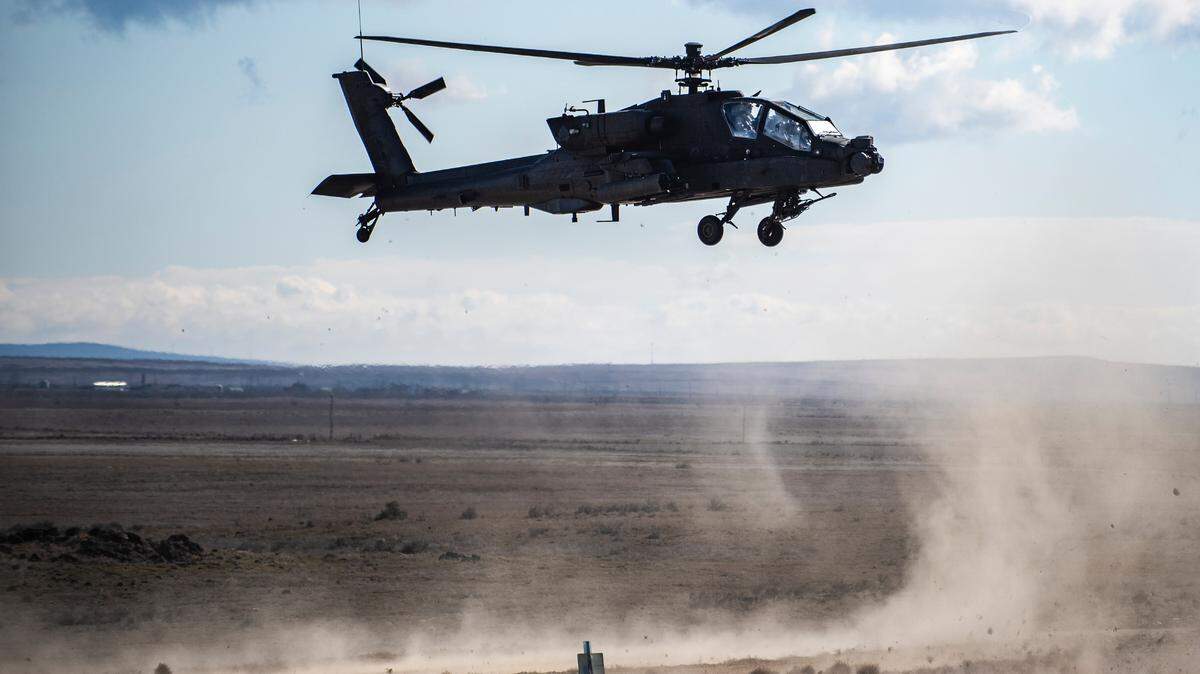
In the wake of a “troubling trend” in aviation accidents — including the March 25 crash of an Apache AH-64E helicopter on Joint Base Lewis-McChord property in Thurston County that injured two pilots — the Army implemented an aviation safety stand-up Wednesday to increase training for both pilots and maintenance personnel.
Maj. Gen. Walter Rugen, the director of the Army Aviation at the Pentagon, announced the stand-up in a conference call with reporters at 8 a.m. as the order was being delivered to forces.
A stand-up differs from a stand-down in that there is no pause in operations, Rugen said.
“During the stand-up, aviation units will execute targeted training, that we’ve really been deliberate about crafting, while continuing to fly missions,” he said.
There have been 12 aviation mishaps involving Army and Army National Guard aircraft since Oct. 1 that have killed 10 people, according to Brig. Gen. Jon Byrom, commanding general of the U.S. Army Combat Readiness Center. Except for one C-12 airplane, all the accidents have involved helicopters.
The crashes are all categorized as Class A, which means that someone died or the loss of the aircraft exceeded $2.5 million. The Army had nine Class A mishaps in the same period last year.
“We understand we’re in an inherently dangerous business,” Rugen said. “But getting after those trends and changing them to the better is always where we want to be.”
Rugen called the trend troubling. The 10 deaths included a Border Patrol agent.
“Any loss of life is 100 percent unacceptable,” he said. “And then obviously, even when we have accidents, that we lose the aircraft or severely damage the aircraft, we consider that unacceptable, too.”
JBLM crash
The cause of the JBLM helicopter crash is still under investigation, Rugen said, adding that he had “investigators on the ground.”
Both pilots in the JBLM crash have been released from hospital care, according to 7th Infantry Division spokesperson Lt. Col. Bryen Freigo.
The Apache was assigned to 4-6 ACS, 16th Combat Aviation Brigade, and crashed during a routine training exercise, JBLM officials previously told The News Tribune.
While Rugen said he could not provide details of the JBLM investigation, he said spatial disorientation is a trend in the recent accidents. Pilots need to know where their aircraft is in relationship to the ground, he said. Power management is another focus as it relates to flight altitudes, higher temperatures and wind conditions.
The JBLM crash is one of five ongoing investigations, Rugen said.
Stand-down, stand-up
In 2023, an Army stand-down paused operations to focus on safety. The National Guard is just coming out of a February stand-down.
“We didn’t want to just keep standing down,” Rugen said. “We wanted to have some action associated with it, to reverse the trend.”
During the stand-up, military units will train in a wide variety of areas, including risk management and aviation maintenance in addition to power management and spatial disorientation.
“We’re leaving no stone unturned,” Rugen said.
Active duty units will have 30 days to complete the training and reserve units will have 60 days, Rugen said.
This story was originally published April 10, 2024 at 11:31 AM.