
After a vandal strikes, a search for answers leads to a show of solidarity
I’m not a fan of the word closure.
Often, I find it’s forced on people, and sometimes situations.
In a world that prefers happy endings and tight bows, “closure” usually feels like an illusion that allows the rest of us to move on, unencumbered by the painful realities or lasting, unseen effects of trauma and hurt.
So, no, I will not say the Vietnamese Buddhist Meditation Center on Tacoma’s East Side has found closure after it was vandalized last month.
What I will say is that something far more meaningful is happening.
It started with a member of the Buddhist temple’s community trying to make sense of a senseless situation. And it led to the delivery to the temple of a letter of solidarity, signed by more than 400 individuals and leaders of faith-based organizations from around the area.
The Rev. Dave Wright, a United Methodist clergy member affiliated with Immanuel Presbyterian Church and the director or spiritual life and civic engagement at the University of Puget Sound, was on hand earlier this month when the letter was delivered. He recalls parts of the experience as “stunning” and “very powerful.”
That is what this column is about. Because it’s important.
First, however, it’s necessary to understand what happened.
On the night of June 20, prosecutors say 35-year-old Jereme Clarke of Elma tipped over and shattered a $3,000 statue at the Buddhist temple. Authorities say he also tried to attach a chain between his vehicle and a column at the building, and was heard shouting, “Devil worshiper” during the tirade.
Armed with video of that attack, prosecutors charged Clarke with second-degree malicious mischief.
Renee Meschi describes herself as part of the Buddhist temple’s community. During the day, she works for the Pierce County Conservation District. In the wake of last months’ high-profile crime, she’s become an unofficial spokeswoman for the center and a “liaison” with the surrounding community.
Most importantly, Meschi says, she felt compelled to take on the difficult task of trying to make sense out of what happened.
She wanted to know how someone could commit such an act.
It’s been an emotional experience for her, and the temple she loves.
“When people act, even if it’s something heinous, on some level they believe in what they’re doing,” Meschi recently told me. “I was trying to understand how he could believe what he was doing was for good.”
Meschi’s journey toward healing and spiritual restoration began when she attended Clarke’s arraignment. Then she started researching the church Clarke attends, listening to a sermon from the Sunday before the temple attack.
“I was trying to understand (Clarke’s) worldview,” Meschi said.
In the sermon, she says, the pastor made comments about the Buddhist faith that she felt could have been inspiration for the crime.
Finally, she went to Clarke’s church and spoke with pastor. Mostly, she wanted to know if he condoned what happened at the meditation Center.
According to Meschi, he said he didn’t, but it’s the last time she heard from him.
Still, the experience sparked something. Meschi says she wanted to show members of the temple — most of whom speak Vietnamese — that what happened to them didn’t reflect prevailing Christian thought.
“It’s important to show the temple members that this is not condoned by Christians at large,” Meschi says. “That’s what the idea of writing the solidarity letter comes from.”
Wright was one of the first people Meschi contacted. In short order, Associated Ministries also got involved.
“(Meschi) knew that the person who committed this attack had been talking about Christian roots, and Christian connections,” Wright says. “She wanted to get feedback about how to approach some sort of reconciliatory process.”
“It really felt important,” Wright continues.
Before long, 42 individuals and leaders of faith-based organizations signed on to the effort. After the letter appeared online, the number quickly ballooned to more than 400.
The letter was presented to the meditation center during the Buddhist temple’s morning service on Sunday, July 8
.
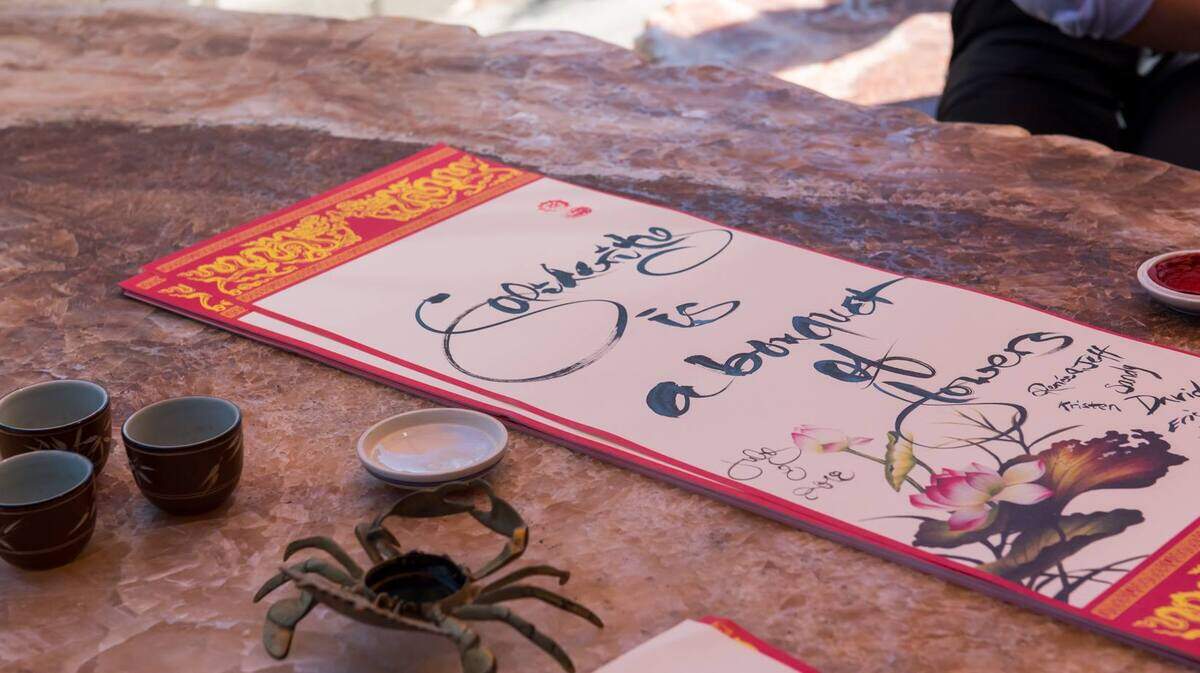
Translated for temple members, it opens with “a strong and public condemnation of the hateful beliefs and actions” that inspired the attack, and offers “our grief and our support to you, and our condemnation of the hateful acts of this individual.”
“The fact that the person arrested in this case chose to invoke his faith as a Christian as a part of his racist and anti-Buddhist attack on our neighbors demands that we speak out,” the letter states.
“The use of faith to attack others is abhorrent and offensive to us as local faith leaders,” it continues. “We call upon the people of Tacoma and Pierce County to join us in committing anew to create a community in which all people, of all faiths and cultures, are welcome as neighbors and friends.”
The letter was signed by leaders representing an array of faith traditions, including Christian, Muslim, Buddhist and Unitarian Universalist.
Looking back, Wright describes the experience that morning as moving and necessary.
He also sees it a first step.
“When I saw the video… it was just a very visceral punch to the gut,” Wright recalls.
“The simple act of such hate and malice to another, to me just feels like something that’s an infection in our country right now, and here it was alive in Tacoma and Pierce County.”
“I think for me the hope was to say, ‘There are a lot of us who care.’ … It struck me as a chance to not just say that, but to try to live it out.”
Just don’t call it closure.
“Closure, to me, sounds like it’s done,” Wright says.
“It feels much more like a beginning.”
This story was originally published July 18, 2018 at 5:09 PM.