
Homeless crisis is hitting rural kids, and no one is doing anything, district head says
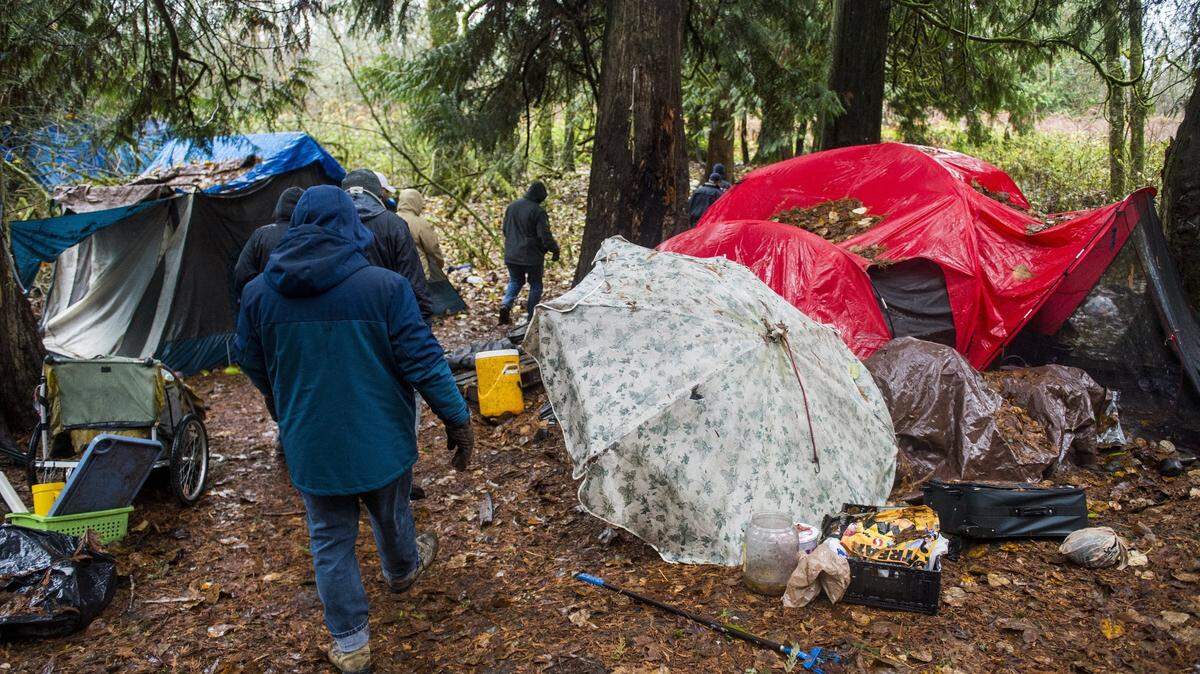
Tom Siegel sees a trend, and he can’t help but be troubled by it.
Pierce County residents — and elected leaders — should feel the same way.
Superintendent of the Bethel School District for the last 17 years, Siegel says two figures stuck out to him this year as he was poring over enrollment numbers.
Since the 2011-2012 school year, the number of Bethel School District students who qualify as homeless under federal McKinney Vento standards has essentially doubled, Siegel says.
Federal law defines McKinney Vento students as kids who don’t have an adequate place to call home every night. Some live doubled up with friends or family. Others live in cars, shelters or hotels.

Seven years ago the Bethel School District — which now serves more than 20,000 students — had 366 McKinney Vento students, Siegel says. When the 2018-2019 school year starts early next month, Bethel will have 658 such students.
That’s what the enrollment documents say.
However, Siegel says the number of students who qualify for McKinney Vento will actually be closer to 750, because some parents choose not to have their kids included in the total.
Many of those homeless kids will be new to the district.
Just over 600 new students are expected to join Bethel for the 2018-19 school year. Roughly 8 percent of them are homeless, up from just under 4 percent of new students last year, Siegel says.
It’s an increase Siegel attributes to families priced out of Seattle and Tacoma moving to the outer reaches of Pierce County, as well as renters near his district increasingly being displaced.
“There’s something going on,” Siegel said by phone from his office in Spanaway this week, his voice alternating between alarm and frustration. “It’s a growing trend. There are more and more kids that are homeless, and there is nobody out there that I can tell that’s really trying to tackle this issue.
“This requires a systemic approach, I think.”
School districts being forced to confront homelessness is nothing new, of course. One need only look to Tacoma, where in 2016 there were roughly 1,800 McKinney Vento students to know that’s true.
Still, homelessness is often viewed as an urban problem. The fact that a rural district like Bethel is affected shows the reach of the crisis.
That’s one of the reasons Siegel — who has recently taken an active role in a number of simmering debates, including school safety issues — is lobbying county officials, state elected officials and the feds to do something about it.
“I think the lack of action speaks for itself, at every level,” the U.S. Navy vet says. “It’s time for somebody to take a look at this issue and figure out how we can mitigate the impacts. Nobody seems to be paying any attention to it.”
It goes without saying that homelessness can make learning far more difficult for children, and it makes the job of educators far more challenging.
“When you have a kid that comes in and doesn’t know where she or he is going to sleep … there’s going to be a high degree of uncertainty in their lives,” Siegel says. “That cannot help but bleed over into their ability to concentrate and work on what they need to learn in classroom.
“Clearly, the anxiety of not knowing what the future is going to hold … is going to hang really over them.”
Bethel has done what it can, Siegel says.
The district now has two full time employees tasked with working on issues related to students experiencing homelessness, and deploys four buses each day to make sure McKinney Vento kids get to school. It has also partnered with local food and clothing banks, and has made showers and laundry services available at a number of schools.
At the same time, Siegel has watched as resources have either gone away or failed to materialize.
In late 2016, the Youth Advancement and Housing program — which was a partnership between Associated Ministries and the Bethel School District and provided stable housing for a handful of students — was forced to close. Decreased funding for transitional housing was to blame.
Meanwhile, a long-proposed teen drop-in center has yet to come to fruition.
Taken as a whole, the lack of action and urgency leaves Siegel exasperated.
“We aren’t the only school district dealing with something like this,” the superintendent acknowledges. “But if there’s a safety net, there’s a huge distances between where the strings are, and I think we have a big hole in it right now.”
While the problem has grown in recent years, it’s not altogether new, and Siegel looks back to his second year on the job as an example of what’s at stake.
He recalls a student who ran away from a home with two methamphetamine-addicted parents and eventually found himself living in a refrigerator box not far from Bethel High School — where he was a senior.
Eventually, the student confided in a school nurse, who was able to step in and help.
“This is a kid that wanted to be successful. … He chose to live in a cardboard box,” Siegel remembers. “That kid graduated with a 3.4 grade point average.”
There are other kids out there like that one, Siegel says. More than ever before, in fact, and they need help.
“These kids, they didn’t ask for the situation they found themselves in,” he says. “I want them to have as level a playing field as possible.”
This story was originally published August 20, 2018 at 5:30 PM.