Tacoma nurse who brought COVID-19 home to husband thanks peers who helped keep him alive
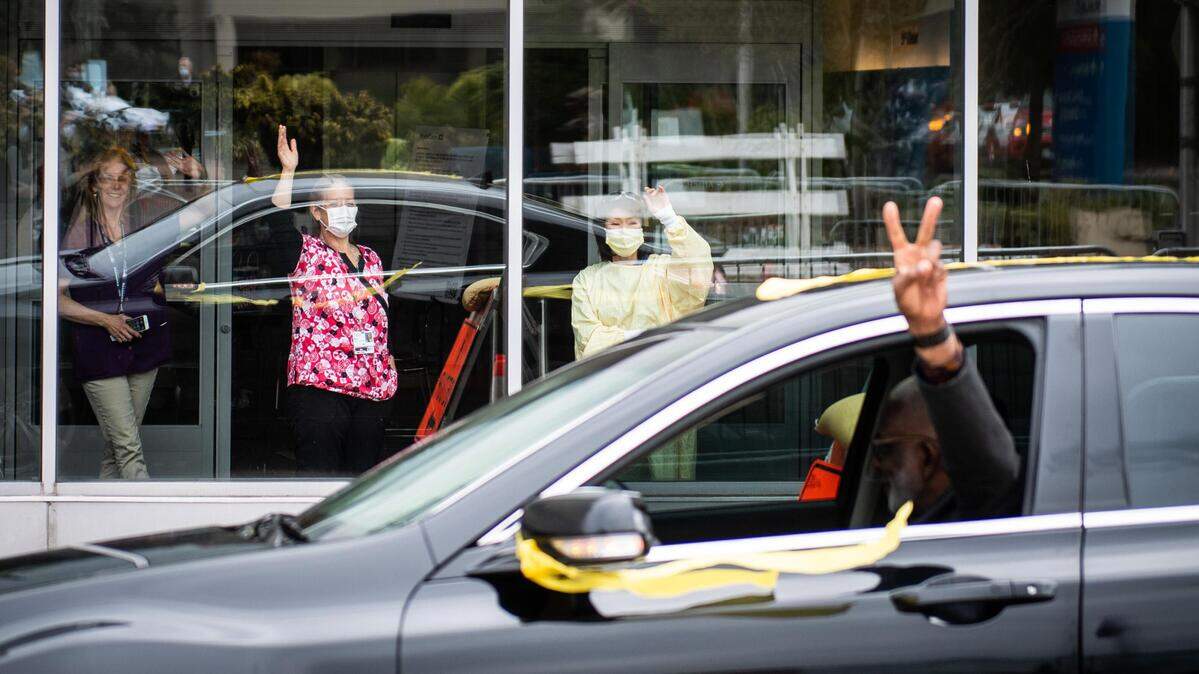
Even from afar, Tammy Edwards said she knows the nurses at Tacoma General who have been taking care of her husband as he battles COVID-19 have also been trying their best to take care of her.
Edwards, a nurse herself, can tell by the way her husband Brian’s caregivers would place the phone next to his ear, so she could video chat with him even while he was hooked up to the ventilator keeping him alive.
She can tell by the way they have meticulously provided her with daily updates and various test results, which she has recorded in a spreadsheet at home since Brian was admitted to the hospital.
Edwards said she can tell by the way someone was always there for her, even as coronavirus precautions and limits on visitation have prevented her from being at the hospital.
A little over two weeks ago, Edwards — who told The News Tribune she brought the coronavirus home from work — wasn’t sure she’d ever see her husband again, fearing that the kiss on the cheek she gave him before the ambulance drove away would be their last.
Thankfully, last week Brian was unhooked from the ventilator and is in satisfactory condition, she said Tuesday. Now, when Edwards talks to her husband via Facetime, he’s able to respond.
Still, for roughly two weeks, it was Tacoma General nurses who kept Brian alive and provided Edwards’ only connection to him, she said.
None of it surprised her. Though the COVID-19 pandemic has raised the stakes and the risks for nurses, the sacrifices caregivers make come with the territory, Edwards knows.
“It’s a calling,” Edwards said of nursing. “They’re taking amazing care of him. It’s a love of people, and it’s a love of treating and being there for people.”
As we enter month three of the coronavirus pandemic and celebrate Nurse Appreciation Week, there’s little question all of this will take a toll on nurses and other front line medical providers. As their stories continue to emerge, the important role nurses have played in the nation’s response — and the real potential for lasting trauma — only becomes clearer.
From New York, where she works in the ICU at Harlem Hospital, 26-year-old Stadium High School grad Sadie Treleven described the amount of death she’s seen as “overwhelming at times.”
“It’s just such a surreal thing. We’re kind of going on autopilot and having to put the emotional stuff aside,” Treleven told me last month. “People are getting really, really sick very quickly, and not everyone is making it. … You almost don’t have time to grieve.”
“I don’t even know when we’re going to be able to fully process exactly what we’re going through — and what the lasting effects of this will be,” Treleven added.
While New York has been at the epicenter of the pandemic, a nurse doesn’t have to be stationed at ground zero to have been forever changed by the pandemic.
Closer to home, 37-year-old Claire Johnson has been a nurse at Tacoma General for the last seven years.
Typically, Johnson works in Tacoma General’s neurotrauma ICU, but when the pandemic hit, she volunteered for the hospital’s newly established COVID-19 floor.
Although the death toll in Pierce County has been far less than New York’s, Johnson also described the experience as “overwhelming.”
The care COVID-19 patients need is “labor intensive,” she explained, and it requires incredible teamwork and critical thinking. Over the last month, she’s cared for “20 year olds all the way up to 70 and 80 year olds,” she said.
“It’s not a normal virus, so things you would normally do aren’t really the things that are going to work for a patient who has COVID,” Johnson said. “You really lean on your team, which is what we’ve all had to do. It’s really been humbling. You’re working really closely with the other people on the unit, and you’re all in the trenches together … helping save people.”
Johnson readily acknowledged the experience has already had a lasting impact on her.
Her family has been supportive, she said, but with a husband and two girls at home, she’s had to have “matter of fact” conversations about the risks and realities.
Meanwhile, Johnson described the isolation and separation that families dealing with COVID-19 are forced to endure as one of the hardest parts.
“It’s really hard to watch families not be able to visit their loved ones when you’re in there with their person who potentially isn’t going to come off the ventilator or survive,” Johnson said. “It takes a toll emotionally.”
With Edwards’ husband soon to move on to the next phase of his recovery — inpatient therapy — the sacrifices nurses have made to save his life isn’t lost on Edwards, who said she has trouble putting her immense gratitude into words. Those who care for others carry their patients home, she said, and risk their lives daily.
Nursing, she said, “is the type of job you can’t leave at work” — a fact she now knows all too well.
Johnson agreed — not that she’d have it any other way.
“There’s no way I would have ever thought in a million years that this is what my nursing career would entail,” Johnson said of working through the COVID-19 pandemic, before quickly adding that she would do it all over again.
“I just like caring for people, and making sure they’re OK,” Johnson said.