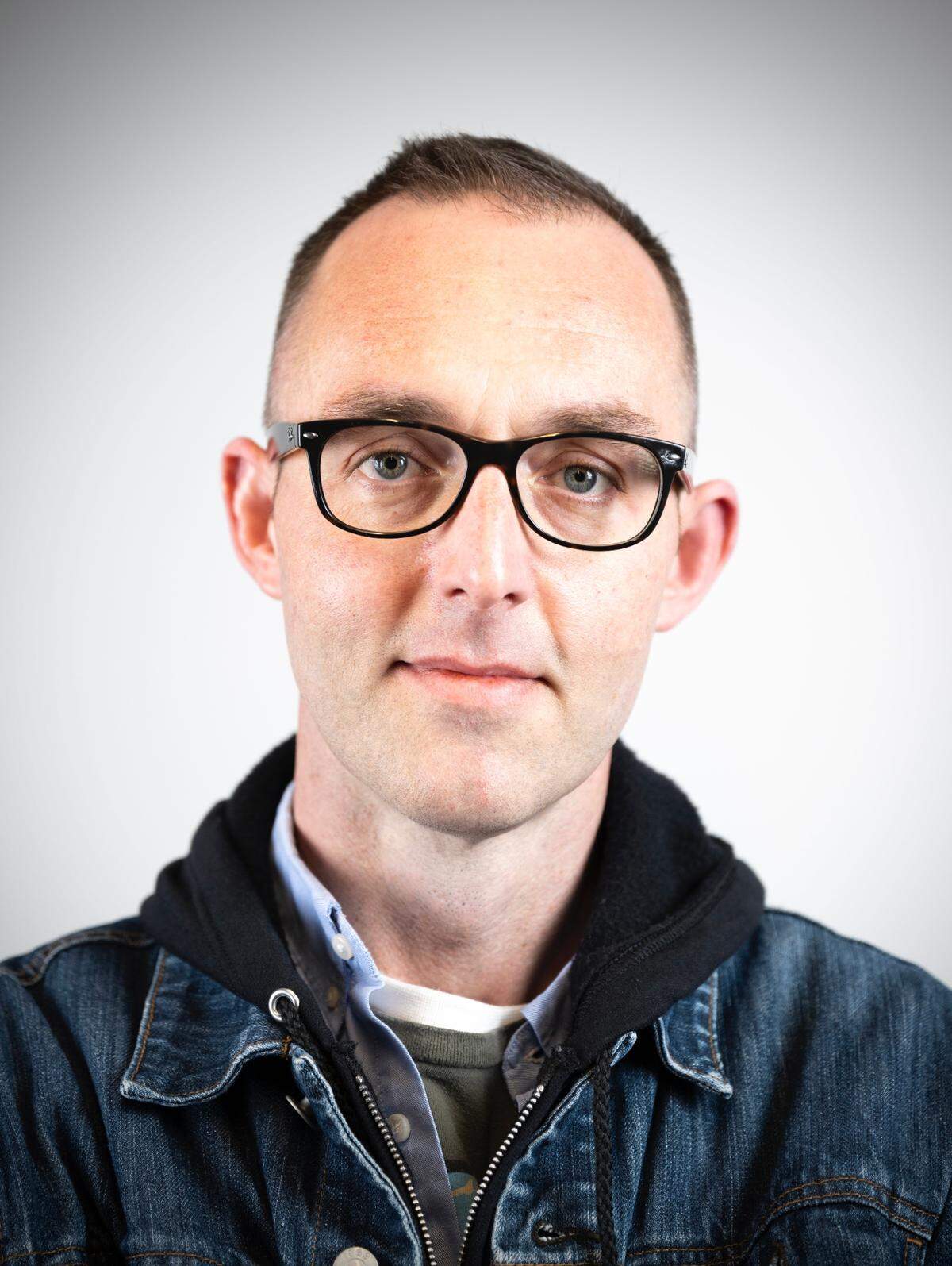
Multicare COVID director says more to consider than deaths, braces for ‘bed surge’
Michael Myint offered words of caution.
There’s a “false narrative” and an “oversimplification” that’s putting people at a heightened risk during the ongoing COVID-19 pandemic, Multicare’s Physician Executive of Population Health, Quality and Risk Adjustment told The News Tribune late last week.
“I think that there is this misconception that … elderly equals death and everyone else is OK, and that’s just not what we’re observing,” Myint explained.
As the epidemiologist leading Multicare’s response to COVID-19, Myint’s views are worth taking heed of — and fast.
Simply put, dying is not the only risk of COVID-19, he warned.
The coronavirus impacts young and old, Myint assured, noting that COVID-19 patients from 20 to 60 are now known to suffer from complications like stroke, heart attack, thrombosis, the loss of limbs and prolonged lung and brain dysfunction.
“It’s not a benign disease,” Myint advised, even those it doesn’t kill.
Of course, the counter argument to this is one we’ve all likely encountered, whether presented by TV pseudoscientists, Facebook public health experts and even the otherwise well-meaning.
Essentially, it suggests that, for the vast majority of people, the coronavirus presents very little risk. Sure, we should make sure that the very old don’t get it, and we take steps to protect those with other risk factors. But — for the most part — we should get on with our lives, whether that means going to school or the mall.
The problem with this viewpoint, Myint suggested, is it actively downplays the seriousness of COVID-19 to everyone, including young adults, while eschewing how much we’ve learned in a matter of months.
It also ignores how much we simply don’t know yet, he said.
The sooner we come to terms with these miscalculations, the better.
Our health, and our ability to respond to the coronavirus pandemic depends on it, Myint said.
Though the early stages of the coronavirus pandemic predominantly saw elderly patients coming down with the illness, Myint said now it’s largely “young people getting infected, and young adults.”
Myint said young adults and those under the age of 60 now make up “two-thirds to three-quarters of cases.”
Meanwhile, on Tuesday Jessica Gehle, who works at the Tacoma-Pierce County Health Department, told The News Tribune that residents between the ages of 20 and 29 now account for just over 22 percent of the county’s cases. The same age group represents just under 14 percent of the county’s population.
Trends like these are just another potential sign that we’re not taking the virus as seriously as we should, Myint suggested.
“There’s a perception that ‘you either died or you got better,’” and we don’t talk enough about the various other complications of COVID-10, “which we’re starting to recognize there are quite a bit,” Myint said.
“The false narrative, I think, is that we’re out of the woods,” Myint said.
‘Far more complicated’ than the flu
The risks of COVID-19 to younger demographics and even the asymptomatic are not completely revelatory, it’s worth noting.
Public health experts from Dr. Anthony Fauci to those like Myint have been trying to get the message across, with varying levels of success.
Earlier this month, researchers at University College London published a study based on 43 cases of patients with COVID-19 who experienced neurological complications from the illness. The scientists described impacts on the brain like temporary dysfunction, strokes and nerve damage.
As Reuters reported, the “research adds to recent studies which also found the disease can damage the brain.”
Others, like John Swartzberg, a clinical professor emeritus of infectious diseases and vaccinology in the UC Berkeley-UCSF Joint Medical Program, have warned that COVID-19 has shown the potential to cause long-term damage to the lungs, heart and nervous system.
“In the beginning, our model for understanding this infection was to treat it like another respiratory virus like influenza,” Swartzberg told Berkeley News. “I think one of the most unfortunate and interesting things about this virus is that its interaction with us is actually far more complicated than that.”
Comparisons to the flu, Myint argued, have likely been a dangerous disservice to the effort to respond to COVID-19 and reduce its spread.
While the illnesses share commonalities, from a public health standpoint, Myint fears uneducated equivalences work to undermine the risk of the coronavirus to the public.
Both illnesses are “horrible,” Myint said, noting that the flu kills tens of thousands of people every year.
Still, Myint said there are things we know about the influenza — like the fact flu seasons end, and that we can develop yearly vaccines — that simply don’t compare to COVID-19.
Among the remaining unknowns, Myint highlighted questions about lasting immunity. Many initially assumed that getting sick and recovering from COVID-19 would lead to patients being protected from future infections, Myint said, but the potential for individual immunity and herd immunity are now looking complicated, and perhaps even unlikely.
“Right now, (the potential for herd immunity) has not been proven at all, and in fact many studies have shown that the antibody that many people who get sick … wain after about three to four months,” Myint said.
“I’m very worried that even those who got it a few months ago may not be immune,” and might “continue to spread (the virus) and continue to expose vulnerable populations,” Myint said.
Also unknown at this point is the full potential impact of COVID-19 on children, Myint said.
Though COVID-19 “deaths are very, very rare” in children, they have been reported, as have cases of a multi-system inflammatory syndrome associated with the illness, Myint noted
“Kids can get pretty sick with this, and it has prolonged effects on multiple organs,” Myint said. “Most of the kids eventually get better, but they get pretty sick for a pretty long period of time, and we still don’t know how to effectively treat it.”
Beyond COVID-19 death rate
To understand the full risk of COVID-19 you have to look beyond the current death rate, Myint said.
While COVID-19 cases have spiked in Pierce County and deaths have remained somewhat stable, interpreting this as good news fails to paint the full picture, he argued.
Not only are there a host of COVID-19 non-lethal complications with the potential to impact young and old, Myint said the snapshot provided by focusing on the current death rate ignores what might be right around the corner.
Likewise, on Tuesday Tacoma-Pierce County Health Department noted that “it takes time for new cases to become hospitalizations, and for hospitalizations to become deaths.
“A lag time exists between increases in cases and increases in deaths,” the health department explained on its blog. “The lag will delay our understanding of how the disease is shifting.”
Much like the University of Washington’s Institute for Health Metrics and Evaluation, Myint said Multicare also conducts modeling to try to anticipate what the coming days and weeks of the coronavirus pandemic have in store.
Right now, Myint — like others — is worried about the fall, he said, when a worsening COVID-19 outbreak could run headlong into the start of influenza season.
“We’re currently predicting a slow, steady rise of cases through the summer, with an inflection point in the fall,” Myint noted, adding that while COVID-19 hospitalizations are “nowhere near where they were in spring … they’re starting to go back up.”
For a glimpse of what that can mean, Myint pointed to Arizona, Texas and Florida — where hospitals have been inundated by COVID-19 cases. Not only does this jeopardize hospitals’ ability to care for those suffering from the coronavirus — which can be seen in the states’ spike in COVID-19 deaths — it also impacts their ability to treat patients with other potentially serious conditions, he said.
Arizona, Texas and Florida were all faster to abandon social distancing measures, Myint said, and they’re now seeing the effects of those decisions show up in the emergency room and in intensive care unit beds.
“I think that we’re just in a phasing part of it, and some parts of the country are ahead of places like Washington, that had a lot more social distancing early on,” Myint said.
For Washington, it serves as yet another warning, and a reminder of what’s at stake, he said.
Already, Multicare hospitals in Western Washington have received patients from places like Yakima County, where hospital capacity has been an issue, Myint said.
Come fall, Myint said public health officials and hospital leaders statewide are preparing for a “potential bed surge.”
Though Myint says hospitals have gotten better at treating COVID-19 patients, some of that progress could be threatened if beds start filling up too fast across the state.
“The main challenge that comes with COVID is when it surges and the hospitals start to reach capacity. It starts to get difficult to take care of folks who are normally cared for in the hospital,” Myint said.
“We want to make sure we’re managing to stay ahead, and have the capacity to care for the community,” he added.
This story was originally published July 15, 2020 at 6:20 AM.