Save the beavers or trap them? For Steilacoom residents, the question is a big dam deal
In Steilacoom, new neighbors rarely go unnoticed. More than 150 years after it became Washington’s first incorporated town, the community of roughly 7,000 remains tight-knit. News tends to travel.
So when the signs of beaver appeared at Farrell’s Marsh Wildlife Area in late 2019 or early 2020, people caught wind of it, according to Nancy Henderson, a member of the Steilacoom Town Council since 2012.
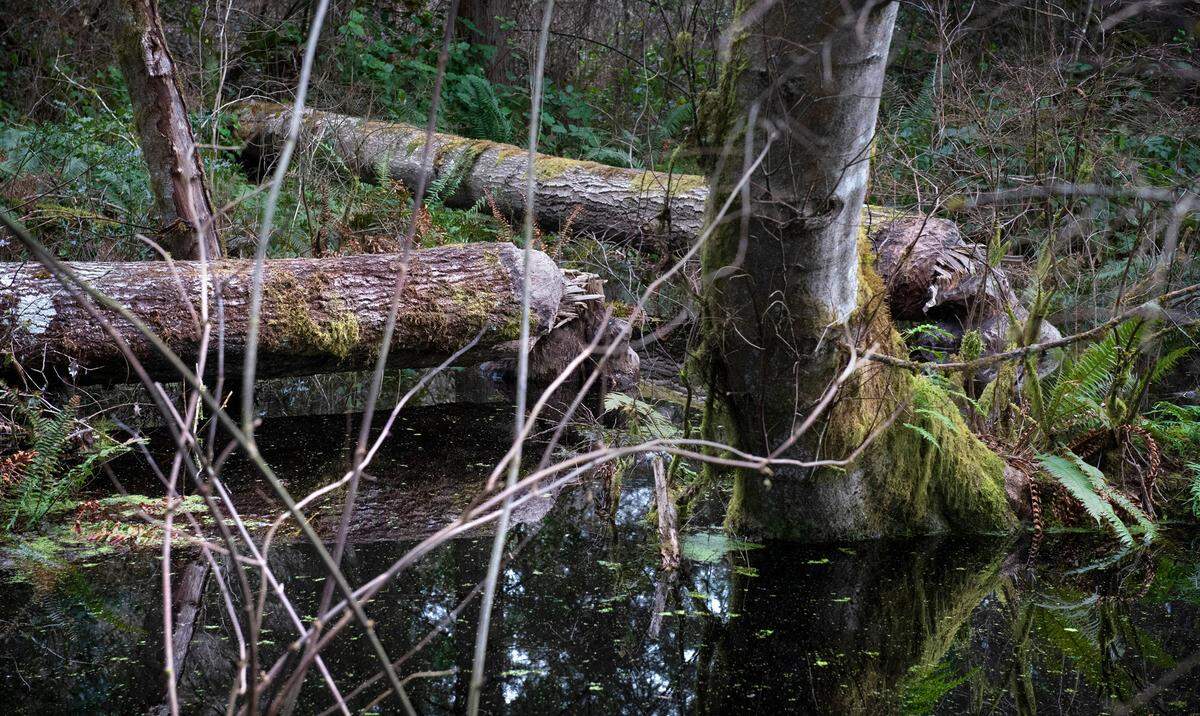
First came the telltale evidence at the local nature preserve, like gnawed trees and a growing dam constricting the marsh’s outflow, causing water to rise, Henderson said. Soon, wildlife at Farrell’s Marsh blossomed, bringing new birds, animals and amphibians.
Before long curious park goers were regularly arriving at the large wetland near dusk hoping to catch a glimpse of the industrious creatures gliding through the water, which Henderson said requires near silent vigilance.
A frequent park volunteer, Henderson said the beavers have spurred an increase in visitors and interest at Farrell’s Marsh, particularly with many cooped up at home during the pandemic. With the conviction of a 70-year-old retiree who spent more than 30 years in the military, she said the beavers have been “a gift” that has helped to “rejuvenate a priceless park in our midst.”
Not everyone in Steilacoom has been so welcoming.
While Henderson considers the beavers a blessing, some — like matter-of-fact town administrator Paul Loveless — are concerned about the potential negative impacts of the beavers, particularly the dam the animals have built, which blocks the marsh’s westward drainage.
It’s why he defended the decision of former Steilacoom Mayor Ron Lucas — who resigned his position on March 2 due to health concerns — to hire a permitted trapper last year to lethally remove the animals.
Loveless — who has spent two decades as Steilacoom’s top administrator — noted that hiring a trapper was the mayor’s call to make. Rising water at the marsh has submerged some of the park’s trails and resulted in the death of several trees, he said, while the beavers’ dam has increased the threat of downstream flooding in residential areas and private property.
If the dam were to give way unexpectedly, “water would flow out into downstream residential areas … so you put those individuals at risk,” Loveless said. “There could be, in fact, some liability to the town.”
Months later, Steilacoom’s decision to attempt to trap and kill the beavers — which the Town Council had no say in — still evokes strong emotions, Henderson told The News Tribune this week.
So far the beavers have successfully avoided their demise, and there are no live traps placed in the marsh, according to Loveless and the trapper the town hired.
But Steilacoom’s future plans remain unclear, and many of her fellow residents want to make sure the animals are granted a permanent reprieve, Henderson said.
There’s a way to live with the beavers, Henderson believes.
Tolerating beavers
Henderson’s sentiments echo the general guidance provided by the state Department of Fish and Wildlife in such situations.
State law allows for wildlife that’s threatening human safety or property damage to be trapped and killed by a property owner or a licensed wildlife control operator, according to information provided by Department of Fish and Wildlife spokesperson Sam Montgomery.
The agency also recommends that efforts to tolerate beavers and mitigate their impacts be made, and in some cases relocating the animals might be appropriate.
Conflict specialists and habitat biologists are employed, Montgomery said, to help landowners and local jurisdictions wade through these issues.
According to Loveless, Steilacoom considered all other options before hiring a lethal trapper last year, and they’ll be weighed again before future decisions are made.
With Lucas’ recent resignation, Loveless isn’t sure whether there will be more attempts to trap and kill the beavers at Farrell’s Marsh. The decision will be made by the town’s next mayor, he said.
At the same time, the negative impacts the beavers have created can’t be ignored, Loveless believes.
“Given the potential change in management, we’re pretty much on hold at the moment,” Loveless said. “I understand where (the) concerns come from. I also understand that there are concerns of the downstream property owners as well.”
An outspoken critic
In a corner of Pierce County surrounded by water and trees, Steilacoom’s raging beaver debate is a situation that smacks of small-town life. The animals’ dam-building proclivity — and what to do about it — has become a hot topic, at least in some corners, according to Gregory Alderete, a long time resident who has become the beavers’ most vocal supporter.
Attempting to save the beavers at Farrell’s Marsh is a fight the outspoken 64-year-old has taken to with vigor, earning him the support of some residents and a fair share of critics, including Loveless.
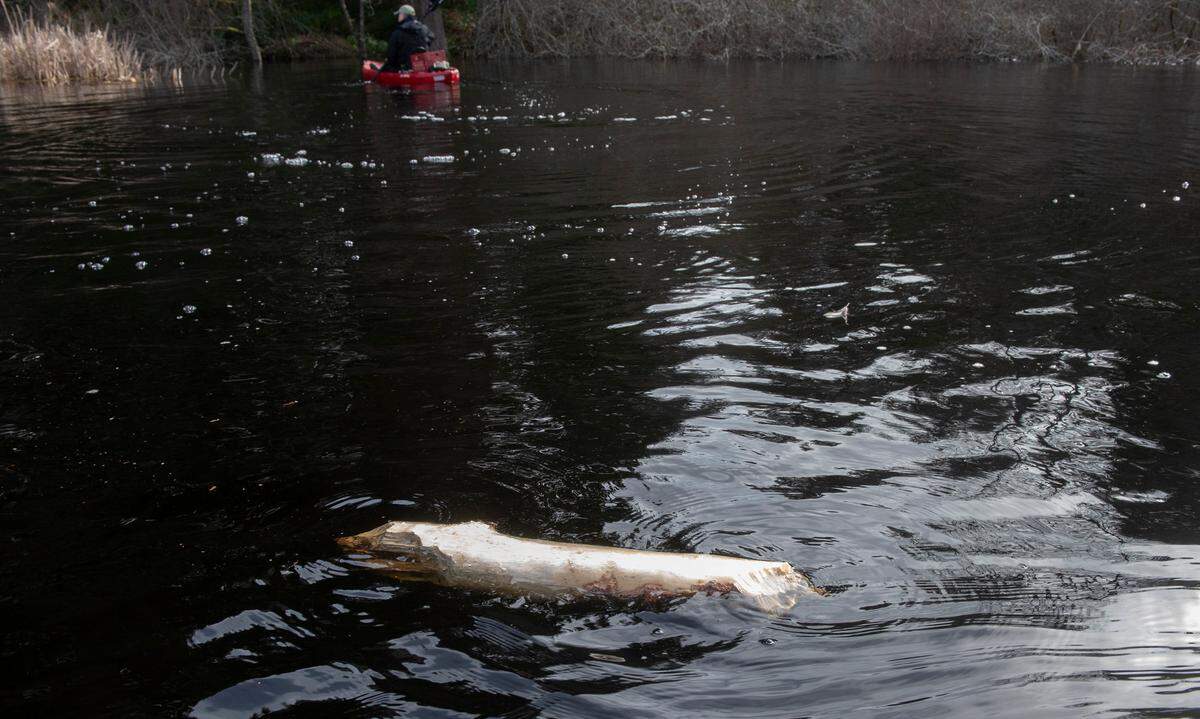
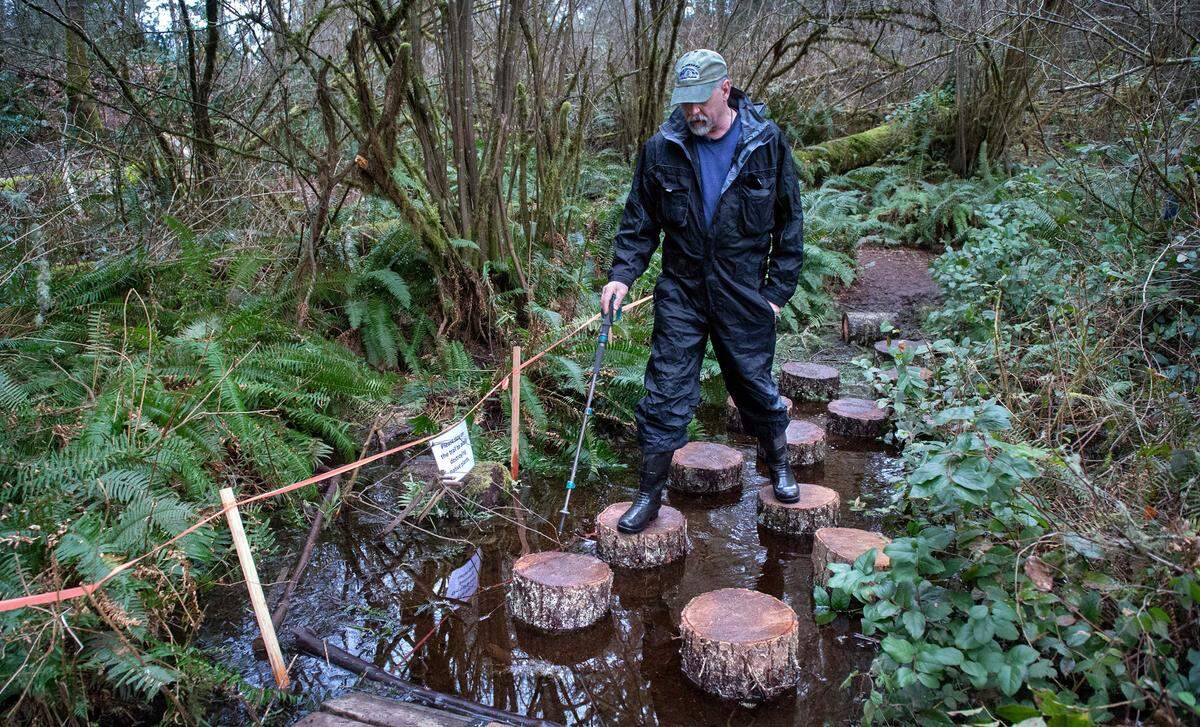
On Tuesday, Alderete met a News Tribune photographer at the marsh dressed in boots and waterproof clothing. He also had a pair of kayaks cued up to help the paper document what he considers to be the positive impacts of the beavers.
Last year, the retired Army lieutenant colonel launched the Citizens for the Protection and Preservation of the Farrell’s Marsh Facebook page, which now has roughly 200 followers. Alderete has used his platform to question the town’s decision to lethally trap the beavers, particularly without seeking input from the community first.
At the very least, warning signs should have been placed at the park when traps were in the water to protect dogs or anyone who travels into the marsh, he argued.
If he hadn’t discovered traps in the water last year, Alderete believes, people in Steilacoom might have never known about the city’s plans to kill the beavers, unless something terrible happened.
Alderete is also convinced the dam at Farrell’s Marsh isn’t going anywhere.
“As this beaver dam is standing here, you would have to use small sticks of dynamite or machinery to blow it up,” Alderate said.
Loveless said that Alderete’s efforts are misguided and accuses him of distorting reality while blatantly ignoring the threat of residential flooding.
If park visitors keep their dogs on a leash — as they’re supposed to — and stay out of the marsh — which he views as common sense — the traps posed no risk to humans or pets, Loveless said.
‘Ecosystem engineers’
While every situation is unique, according to Elyssa Kerr, executive director of the advocacy nonprofit Beavers Northwest, the dispute in Steilacoom sounds like the type of predicament her organization regularly encounters.
In general, Kerr said conflicts between the animals and surrounding development have become “increasingly common” in this area, particularly as more homes and communities are being built near local wetlands and small waterways.
In some cases, the lethal removal of beavers is called for, but it should always be a last resort, Kerr said.
There are many ways for a community to coexist with the animals, she argued, including the installation of pond levelers — or piping that runs through a dam — that reduce the risk of flooding and allow beavers to remain.
Kerr described beavers as “ecosystem engineers” and said the dams they build are often incredibly valuable to a wide range of plants and animals.
“You can imagine a stream that’s just flowing straight, and if you put a dam in it that backs water up and kind of creates a new habitat, it creates new vegetation that ... provides all these different niches for different wildlife to occupy,” Kerr said. “Wetlands and ponds also provide a lot of other benefits, including water quality improvements … and resilience to drought.”
As private landowners and towns contemplate the risks beavers pose — many of which she believes are overstated or simply perceived — Kerr said it’s important to remember that beavers were here first, and they’re far more than nuisances.
Plus, killing a beaver is usually a short-term fix, Kerr said. If beavers have identified a prime habitat, there’s a good chance they’ll return.
“We’re looking at how can we, as people, compromise with the beavers? We’ve built our homes in the floodplains of these streams and rivers that historically probably had tons of beavers,” Kerr said.
“Beavers belong here. People also belong here. So how can we both live in this system?”
A ‘humane’ option
Andy Estep considers himself an environmentalist.
He’s also the licensed trapper hired by the town of Steilacoom last year to lethally remove the beavers from Farrell’s Marsh
A general contractor by trade, Estep said he began professionally trapping about a decade ago after encountering situations where unwanted wildlife visitors had caused significant damage to private property. Through his business, Andy and Sons, he also traps raccoon, opossum and river otter.
Estep said he’s particularly interested in beaver control because he’s been involved with the effort to restore the Sequalitchew Creek Watershed in his home of DuPont, and he’s seen firsthand the damage and habitat-changing impact the animals can cause.
In situations like the one Steilacoom is facing, Estep said, lethal traps can represent the most humane option, creating a ”pause” in the beavers’ dam building that helps efforts to return water levels to their previous state while allowing a town or city time to install preventative measures in the future.
Relocating beavers is often difficult and ultimately unsuccessful, Estep said. Meanwhile, efforts to mitigate the impacts — like the installation of pond levelers — require monitoring and can become more costly, he argued.
So far, Estep said he’s been paid less than $1,000 for his unsuccessful attempts to trap and kill the beavers at Farrell’s Marsh, though he was preparing another invoice for the city on Wednesday. He wasn’t sure if the town would request his services again in the future but indicated that he’s ready to finish the job if asked. He believes the marsh is home to a mating pair and their young, likely with “more on the way in the spring.”
Like Loveless, Estep said the concerns being raised by the likes of Alderete are hyperbolic misrepresentations of the truth. State law strictly dictates what permitted trappers can and can’t do, he said, and they’re rules he follows closely.
Estep said he only placed lethal traps at Farrell’s Marsh on one occasion, over five days last March, suggesting that they posed no threat to humans or pets as long as they stayed on the park’s paths.
Meanwhile, he described the largest beaver at Farrell’s Marsh — and what it’s capable of — as nothing to mess around with.
“I’ve gotten multiple hits on that thing, and I couldn’t catch it because that beaver is massive,” Estep said. “I’d say it’s probably 65 pounds or more.”
North American beavers typically weigh between 35 and 65 pounds, according the Smithsonian’s National Zoo and Conservation Biology Institute, with the bulkiest on record weighing in at 110 pounds.
Searching for compromise
Asked about the future, Henderson acknowledged that the current water level at the marsh is a concern and the potential of downstream flooding is real. But she hopes that the town’s administration will recognize all the beavers’ benefits and find a compromise that allows the creatures to remain.
Farrell’s Marsh is now more alive than it’s been in many years, Henderson said, and the beavers are to thank.
She describes the park as one of Steilacoom’s “crown jewels,” and says the animals have made it better.
“We have to be careful about impacts to property and private property. I’m no radical,” Henderson said.
“But I think there has to be a middle ground that’s going to move us forward.”