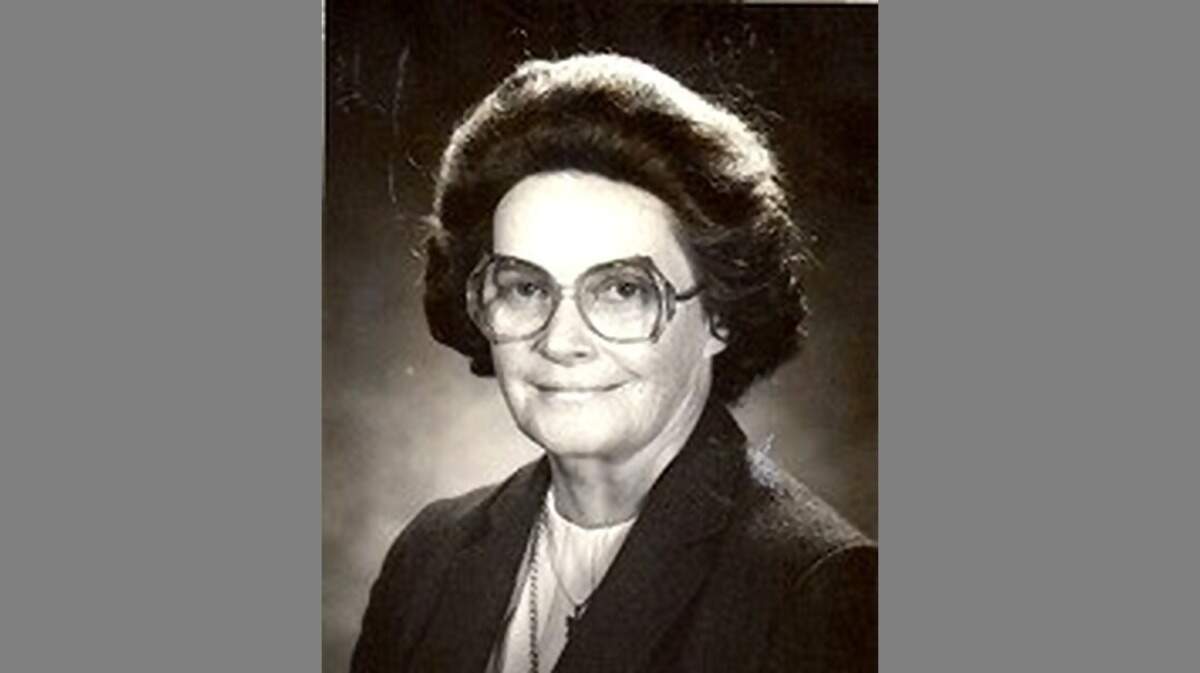
Whether she named the T-Dome or not, Barbara Bichsel was a no-nonsense Tacoma original
Bichsel family dinners were quite the affair, according to 71-year-old Bill Bichsel, the second oldest of nine children.
Not only was the table packed with siblings, with 14 years separating eldest to youngest, but two of the strongest personalities in Tacoma at the time — or in the time since — had prominent seats.
Bichsel is named after his uncle, the late Jesuit priest and political activist better known as Father Bix, who spent his life fighting for Tacoma’s voiceless and the causes he believed in, most notably peace, for which he was arrested more than 40 times.
Then there was Bichsel’s mother, Barbara, who married into the family but was just as strong headed and driven to serve — including spending a decade representing Tacoma’s Eastside on the Tacoma City Council, her son said.
“They were both very, very passionate — unbelievably so, both of them — in terms of what they wanted to do, and how they never stopped working for their communities,” Bill Bichsel recalled this week of the regularly boisterous meals. “Bix had a vision of what he wanted to do and accomplish, and I think my mother looked at some of those things and understood what was practical and what wasn’t. … They fought like hell sometimes.”
While plenty has been written about the legacy Father Bix left on Tacoma since his passing in 2015, the impact Barbara Bichsel — who died on May 13 at 95 — is less well known and cataloged, which is a shame. From 1976 to 1986, the devout Catholic, staunch Tacoma Democrat and League of Women Voters stalwart was a straight shooter on the council, at a time when her gender and her transparent, no-nonsense approach were all rarities in local government. Though they sometimes sparred over tactics during a meal, Bichsel and her well-known brother-in-law shared many causes, including nuclear disarmament and helping the homeless. After she was term-limited, Bichsel was well respected enough to be appointed to serve on the Tacoma Public Utilities Board of Commissioners, where she served for eight years.
According to Randy Lewis, who covered Bichsel as a young radio journalist and later kept tabs on her and her City Council colleagues after he transitioned to a job with the the Tacoma-Pierce County Chamber of Commerce, her time as an elected official is worth remembering for several reasons. Most notable was the sole “no” vote she cast against the disastrous investment in the Washington Public Power Supply System, he said, which would become a costly mistake for many cities, including Tacoma, after bonds to fund the construction of two nuclear power plants defaulted.
More relevant to the city we know today, Lewis recalled Bichsel as the local leader responsible for naming the Tacoma Dome the Tacoma Dome, which — believe it or not — was a decision that needed to be made back in the early 1980s, as the wooden landmark, which was unofficially dubbed “the mini dome,” was being constructed in the City of Destiny.
Although a search of newspaper archives at the Northwest Room could not confirm Lewis’ recollection of events, he described the straightforward approach to naming the Dome as typical Bichsel, who had a knack for cutting to the chase on the dais and leaving no doubt about where she stood.
“There was some discussion at a council meeting about, ‘Well, we should call it the Tacoma Events and Sports Facility,’ or you know ... all these men on the council talking about, ‘It should be called this, for this reason,’” Lewis said. “She listened quietly to all that, and then said, ‘Why don’t we just call it the Tacoma Dome?’ And there’s this quiet pause, and then everyone goes, ‘Oh, well, yeah. That makes sense.’”
As is so often the case, Bichsel’s place in Tacoma’s history was written largely by chance and circumstance. Although politics and social justice causes had long been a passion — including her steadfast opposition to the Vietnam War and working on the early campaigns of then up-and-comers like Harold Moss — she didn’t seek office herself until age 50, in 1975, when a new city charter amendment created district representation in Tacoma.
Bill Baarsma, who served as Tacoma mayor from 2001 to 2009 and now occupies a role as quasi city political historian, said Bichsel had to be convinced to run. There was little doubt she was more than capable, Baarsma recalled — describing Bichsel as a friend of Ruth Fisher, Carol Larson and Doris Evans, who was incredibly sharp and well prepared — but she was initially terrified by the idea of speaking in public, he said.
Once Bichsel found her voice, however, she never lost it, Baarsma continued. The move to district seats, which was designed to make sure all areas of the city were represented in local decision making, quickly paid dividends, and provided Bichsel with an opening she seized, he said.
“She wasn’t all flash and pizzazz. She was not a charismatic person who was quick with a quip. That wasn’t her,” Baarsma said. “But of all the people I’ve known in politics, she was probably the most authentic, and the most true to her beliefs. People respected her for that.”
Jerry Pugnetti, who worked as a reporter at The News Tribune from 1970 to 1988 and covered the City Council during Bichsel’s early days as the representative from the Eastside, remembered her as someone whose love for the city and the people she served was always at the forefront. After meetings, it was typical for elected officials and those tasked with covering them to head to a nearby bar, where Bichsel could usually be counted on for an unvarnished quote on the evening’s proceedings.
“She put her heart on her sleeve, and she was very sincere. She just had this highest integrity,” Pugnetti said. “She was extremely dedicated to serving the public, and she loved her city.”
All of those are stories that her son, Bill, who now lives in Gig Harbor, has heard many times over. While his mother’s legacy will mostly be remembered by the votes she cast and the decisions she helped to make, to him what’s most important is the person she was and always strove to be. Her character was evident in the diligent, deliberate approach she took to civic engagement, and in her maternal qualities, he said, which were a hallmark of his childhood and extended far beyond, including the two decades of her retirement spent as a volunteer at the Capitol in Olympia, where she served as a clipboard toting tour guide for visiting school children.
One thing he quickly learned as a child, Bichsel said, is that you better come to dinner prepared, because his mother always was.
“You had to present your facts,” Bichsel said of debating his mother.
“If you didn’t, you were going to have a bad conversation.”
This story was originally published May 19, 2021 at 12:46 PM.