COVID disrupted their year. Now thousands of Pierce County kids will be in summer school
Alice Cooper surely never envisioned anything like the 2020-21 school year.
When the eye makeup-clad rocker wrote his band’s signature anthem in the early 1970s — and for every year that followed until recently — the chorus hit just a little bit differently than it does now, in the waning days of a long pandemic.
“School’s out for summer!” were once lyrics to pump your fist to this time of year in eager anticipation of the freedom ahead.
After a trying and difficult stretch that often made it seem like the next line of the song — “School’s out forever!” — might actually prove to be true, reaching the end of the academic calendar feels strange and disorienting, not necessarily celebratory, at least for many parents.
School’s out? Really? How can that be?
For local teachers and students, of course, the feeling is likely different. If a “normal” school year is a grueling marathon, for many the largely remote educational ordeal of the last nine months has been more like a decathlon competed in quicksand. The coming break has been well earned.
Still, for some local children and educators, summer will look different this year, and it’s a change plenty of families are welcoming, according to officials in the Bethel School District, one of the area’s largest.
In the southeast Pierce County district, 1,200 families will eagerly trade days at the lake for time in the classroom, working to make up for at least some of the valuable instruction that’s been missed over the last year and a half.
In other words, this year, Alice Cooper can wait.
As part of the federal and state response to COVID-19, school districts across Washington — including those in Pierce County, like Bethel — are preparing to launch ambitious summer school programs, all aimed at helping kids and families catch up while preparing them for a return to normalcy this fall.
For districts, it’s an allowable expenditure of funding earmarked for education included in the most recent federal pandemic relief package.
For children and their families, it represents a chance to dive back into the in-person learning that’s been so sorely missed.
“There’s a need for this sort of program,” said Kelley Boynton, executive director of elementary schools for the Bethel School District, which will welcome back elementary, middle school and high school students for in-person summer school instruction in late June.
“That’s why we’re taking it so seriously,” Boynton said.
‘A little taste’ of in-person school
In Bethel, a sprawling district that encompasses more than 200 square miles and serves roughly 20,000 students, it hasn’t been difficult to find students and families who want to get back into the classroom this summer, according to Boynton and Shawn Simpson, the district’s director of secondary teaching and learning.
In addition to the normal credit retrieval Bethel offers to high school students through the Pierce County Skills Center, the district is preparing for the launch of what it’s calling the Bethel Boost program for elementary students and the Summer Spark Learning program for grades 6 through 10.
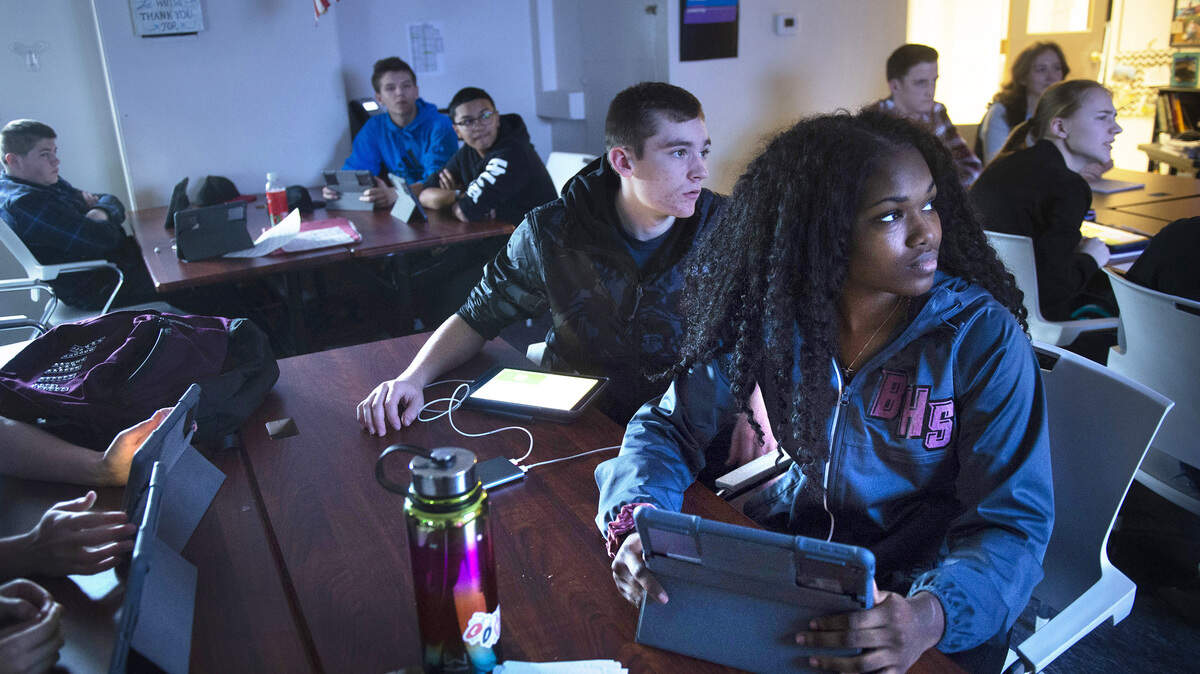
Currently, most Bethel students are attending school in a hybrid model, with two days a week of in-person instruction, according to district spokesperson Douglas Boyles.
The district’s summer school programs — which will run from late June to late July — will significantly increase the amount of time students spend in a physical classroom, offering four days of in-person instruction and programming a week, Boyles said.
According to Boyles, the Bethel Boost and Summer Spark Learning programs were both created in response to the impact the COVID-19, and have been in the works since January.
Both programs are free for students including transportation and meals, and are being paid for by the Elementary and Secondary School Emergency Relief Fund created in the CARES Act.
To maintain social distancing requirements and prevent the potential spread of COVID-19, six school buildings will be utilized across all grades, Boyles said.
According to Crystal Congdon, whose son, Jaxson, will enter seventh grade at Bethel Middle School next year, the prospect of returning to the classroom, almost full time, was too good to pass up.
After the last year and a half, Congdon said she believes all students should have the opportunity to attend school this summer, and she expects her son’s academic and social-emotional growth will be substantial over the course of the program.
“It’s relieving as a parent to see him go to school and get that environment and the education that I feel like every kid should get,” Congdon said. “I see more growth out of these three or four weeks for Jaxon than I think he has received all year (of remote and hybrid learning). I’m excited.”
Boynton said those enrolled in the Bethel Boost program will focus on math, English and language arts, and social and emotional learning, while the district is partnering with the Right at School before-and-after-school enrichment program to provide between lesson breaks and activities.
According to Boynton, roughly 600 elementary-age students are enrolled in the program, most of them identified and invited by teachers and administrators using metrics like achievement and attendance.
The idea, Boynton said, was to respond to the COVID-19 educational disruption by enrolling students who would benefit most from the extended class time, whether they were at risk of falling behind or they simply needed extra attention.
“Essentially what we want to do is we want to give the learning that occurred throughout the school year a boost for a number of students,’‘ Boynton said. “We asked our teachers to make personal contacts with every student that was targeted and describe the program and invite them, and the response was just wonderful from the parents. … Such a high percentage were eager and excited to take part.”
Boynton said the largely positive response from families was somewhat surprising, indicating that he was initially anticipating that “less than half” of families would “commit to that level of time.”
While Boynton couldn’t provide an exact number, he described the overall response rate as “impressive.”
“You know, it wasn’t 90 percent, but … we’re getting a response rate that is much higher” than what the district has experienced in the past when offering extended day opportunities and similar additional support services, Boynton said.
According to Simpson, Bethel’s director of secondary teaching and learning, the method for identifying older students for the district’s Summer Spark Learning program was similar.
The district used achievement data that assesses students’ “gaps and our growth areas” in reading and mathematics to help choose which families would be invited to participate, she said, including identifying those who aren’t currently meeting grade level standards.
“We’re looking for students … who would benefit most from some intensified, focused face-to-face learning in small groups,” Simpson said.
Serving grades six through 10, Simpson said the Summer Spark Learning program has been designed to offer “enrichment experiences in STEM, English, language arts and mathematics learning over the course of four weeks.”
Like Bethel’s elementary age summer school program, roughly 600 students are currently enrolled.
As incentive to participate, the district is offering elective credits, Simpson indicated.
Simpson described the Summer Spark program as a chance to give older students “a little taste” of what it’s like to return to in-person school.
“It’s about re-engaging students in something that is going to be interesting … and get them really excited, as well as enriching their experiences in middle school and preparing them for the next grade level,” Simpson said.
For Congdon and her 12-year-old son, the opportunity was enticing enough to scuttle a previously planned trip to an Idaho amusement park.
Surprisingly, Congdon said Jaxson didn’t put up a fight. He was eager.
“I know he has missed that interaction. He loves school,” Congdon said, recounting what she thought might be a difficult conversation with her son, where she “sat him down” and told him the trip he’d been looking forward to would have to wait.
“He said, ‘I know. I’m going to summer school,’” Congdon recalled with a laugh.
“I think it’s going to help him tremendously.”
What other Pierce County districts are planning
Bethel won’t be alone this summer.
The area’s two other large districts — Tacoma and Puyallup — are preparing to expand their summer school offerings in response to the educational disruption of COVID-19, or in the case of Tacoma, rebuild them.
According to Puyallup schools spokesperson Sarah Gillispie, the district will launch its Summer Learning Academy on July 6.
Offered to K-12 students who teachers and administrators “identified as needing academic support or credit retrieval,” Gillispie said, the half day program will run through Aug. 5, three days a week, at a total of nine schools. For elementary students, the curriculum will center on reading and math, while junior high students will focus on building core academic skills. Puyallup high school students will work on credit retrieval classes, Gillispie said.
The academy is a component of Puyallup’s Academic and Wellness Recovery Plan, Gillispie indicated, which the state Office of Superintendent of Public Instruction requested from all districts in response to recently passed state and federal coronavirus relief legislation. It will serve approximately 2,500 students in grades K-12, she said.
Likewise, in Tacoma, spokesperson Dan Voelpel said that the district will be resuming its traditionally robust summer school program, which in 2019 served more than 6,000 students of all grade levels.
Last year, during the height of COVID-19 precautions and restrictions, that number dropped to just 1,231.
This summer, Voelpel said, the goal is to reestablish the program, with additional slots added for middle school and high school students who would benefit from the extra class time.
While the total number of kids who will participate in Tacoma’s summer school program is not yet known, Voelpel said the district is currently working to enroll as many students and families as possible who were identified and contacted by their schools.
“We don’t typically get summer school enrollment this early. Parents often wait until the school year ends. So we may see an uptick in enrollment in a week or so,” Voelpel said.