Does historic preservation curb affordable housing, equity in Tacoma? Debate is on near UPS
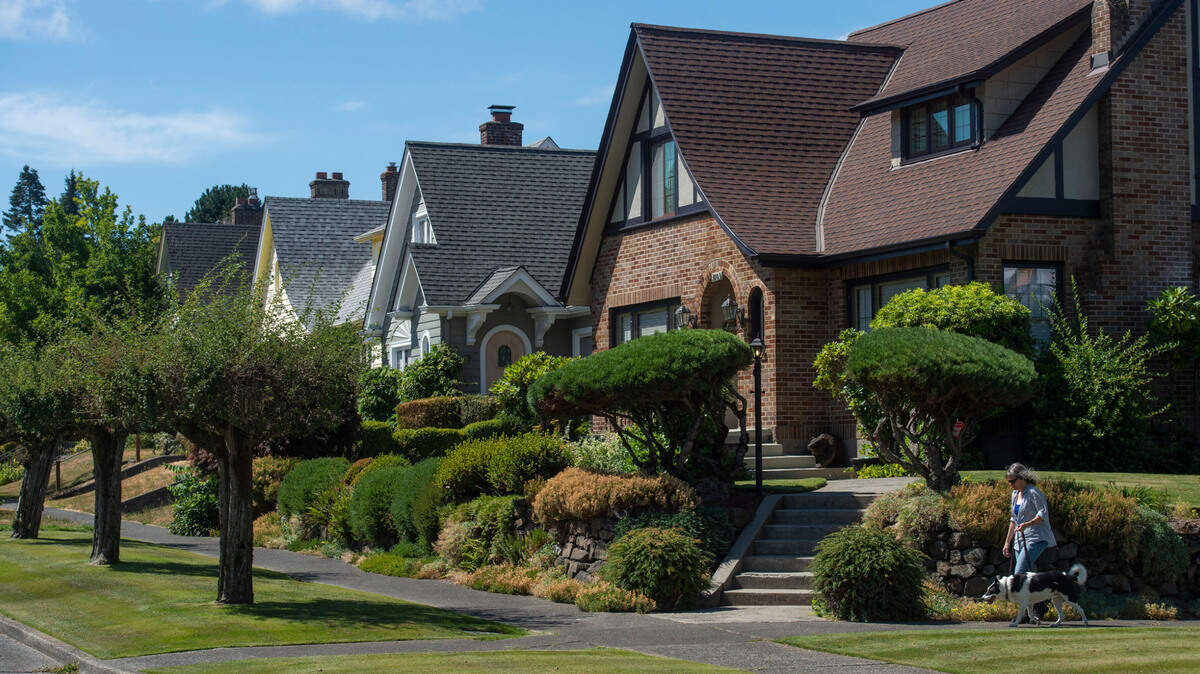
I first spoke with Jeff Ryan in 2017. At the time, the local architect had lived in what he described as a “nice little bungalow” in North Tacoma — not far from the University of Puget Sound — for two decades.
As Ryan told me way back when, he had already been working for years to document what he viewed as the unique historical character of his neighborhood. He had a background in historic preservation, he explained, and had long had his sights set on one day getting what he called the College Park District — which he roughly described as an “L” shaped slice of homes between North 7th and North 21th, wrapping around the east side of the UPS campus — on the National Register of Historic Places.
It felt like a passion project of sorts and a fairly harmless one, at least at the time. While I had to strain to see the historical importance Ryan so enthusiastically detailed, I admired the effort he’d clearly put into his research, including taking the time to photograph and complete historic descriptions of nearly 600 homes in the area.
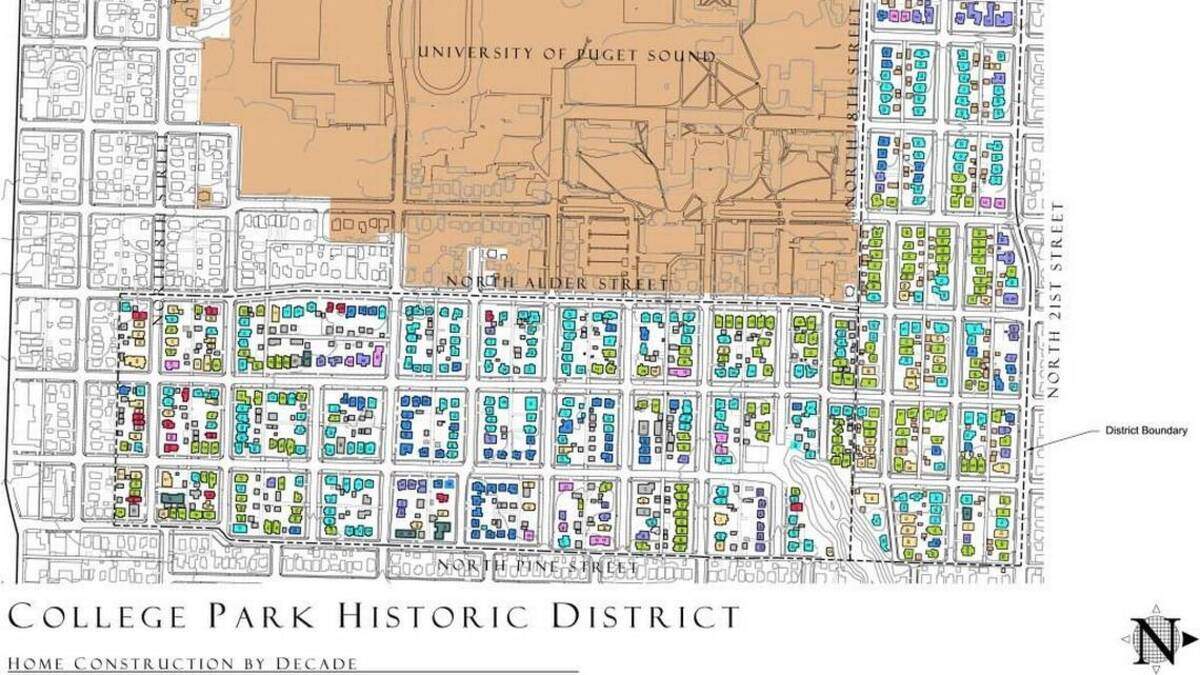
A few months passed, and then Ryan sent me a triumphant follow-up email: he’d been successful. The College Park District was officially recognized by the National Register of Historic places in 2017. The same year, it was also recognized by the state Heritage Register. None of these designations come with any real preservation protections — they’re “mostly honorary,” as Tacoma Landmarks Preservation Officer Reuben McKnight has explained — but it’s kind of nifty, at least if you’re into that sort of thing.
Why am I rehashing all of this?
Because four years later, Ryan is leading an effort to go even further — and this time, the stakes feel considerably different.
As residents in the neighborhood recently learned from a July 28 letter from the city, Ryan and the College Park Historic District Association have submitted an application to have the neighborhood added to the city’s Register of Historic Places, including the support of more than 200 residents. If that happens — and unlike the national or state designations — College Park would be granted the same stringent local zoning protections that areas like the Wedge neighborhood and the North Slope currently enjoy, including set design guidelines and an official review process for proposed remodeling projects and developments, all intended to protect and preserve the neighborhood’s character.
Here’s the problem: Those protections — which add extra layers of bureaucracy, hassle and often expense — would also make much of what the city is currently trying to accomplish with its Home in Tacoma’s project a lot more challenging.
At its core, Home in Tacoma’s review of the city’s zoning and housing growth strategy is all about making sure neighborhoods are accessible to all kinds of housing. With the housing crisis in full effect, that’s a lot more important than creating yet another historic district — particularly in the city’s North End (which already has more than its fair share).
It’s why some residents, like 41-year-old Sarah Mourino, who purchased a home in Tacoma’s College Park Neighborhood with her family in 2018, are raising their voices in opposition to the move.
Mourino says the protections and requirements that would come with historic designation fly in the face of the proposals currently included in Home in Tacoma, which would include designating some of the neighborhood as low-scale residential and some as mid-scale. While she doesn’t think the effort’s supporters are intentionally trying to keep new people out of the neighborhood, she is confident that’s the impact it would have.
“I don’t believe the designation is designed to exclude anyone. I think they are scared of change and want things to stay the same,” Mourino said. “I don’t really want the character of the neighborhood to change, but I also recognize that society has to move forward, and well-thought out planned programs (like Home in Tacoma) do that.”
A few houses down, 34-year-old Harrison Wiener expressed similar sentiments. Originally from Atlanta, he’s lived in the College Park neighborhood since last year with his wife and young daughter. He told The News Tribune he’s against historic designation because he believes it’s an attempt to “skirt” zoning rules and the proposed changes in Home in Tacoma.
“Best case, it felt like an HOA by another name. Worst case, it felt like redlining by another name,” Wiener, who is Black, said.
“That’s the reason I felt uneasy about it.”
So what are we to make of all this?
McKnight and Tacoma senior planner Elliott Barnett told The News Tribune that neighborhood historic designation and the recommended changes included in Home in Tacoma are intended to be compatible. Historic district protections govern things like what kind of windows and siding can be used in a remodel, or whether or not new construction fits within the neighborhood’s existing character, they said, not how dense new development can be.
“Diverse housing types can work in Historic Districts because historic character does not depend on the number of units,” Barnett assured.
Technically, that is true. Along with reviewing the neighborhood’s historical merit and attempting to gauge community support, it’s part of what the city’s Landmark Preservation Commission will have to weigh as it reviews College Park’s application — which is expected by the end of the year, according to McKnight.
If the commission endorses the move, the city’s Planning Commission would review the matter as a zoning request. Ultimately, if both these hurdles are cleared, the City Council would make a final decision.
McKnight expects a difficult conversation in the months ahead, and one that’s about much more than preserving history.
“The question for the Landmarks Commission is: Is there public support? Is there public benefit here? And, ultimately, is it an appropriate recommendation for them to make? And I think they’re going to hear a lot of viewpoints on this that are going to be pretty complicated,” McKnight said. “The conversation about planning policy and equity and housing … is definitely going to have to be part of one of the Landmark Commission’s considerations.”
I reached out again to Ryan this week, at least in part because I was curious to get his take on how much has changed since the last time we spoke. In his mind, at least, not much has. He supports efforts to increase housing density in Tacoma, he said. He also hopes people will support making College Park an official historic district and believes they do, based on the extensive outreach he’s done going door to door.
Then I asked about his motivation.
“The reason was simple, it’s a celebration of the neighborhood’s history as a working and middle class district of small homes and the positive effects for the community that a listing on the local register will have,” Ryan said.
For Mourino — and I suspect many others — that’s the catch. If College Park was a middle and working class neighborhood, housing scarcity and skyrocketing home values are quickly changing that.
If we want people to be able to afford to live there in the future, the last thing the neighborhood needs are more onerous rules and more roadblocks to change, she says.
“This isn’t just about keeping our neighborhoods the way that we like them,” Mourino said.
“This has repercussions for our children and our grandchildren if we want them to be able to live in the communities that they grew up in.”