Pierce County could triple ferry fares by 2029. Would Anderson Island ‘wither and die’?
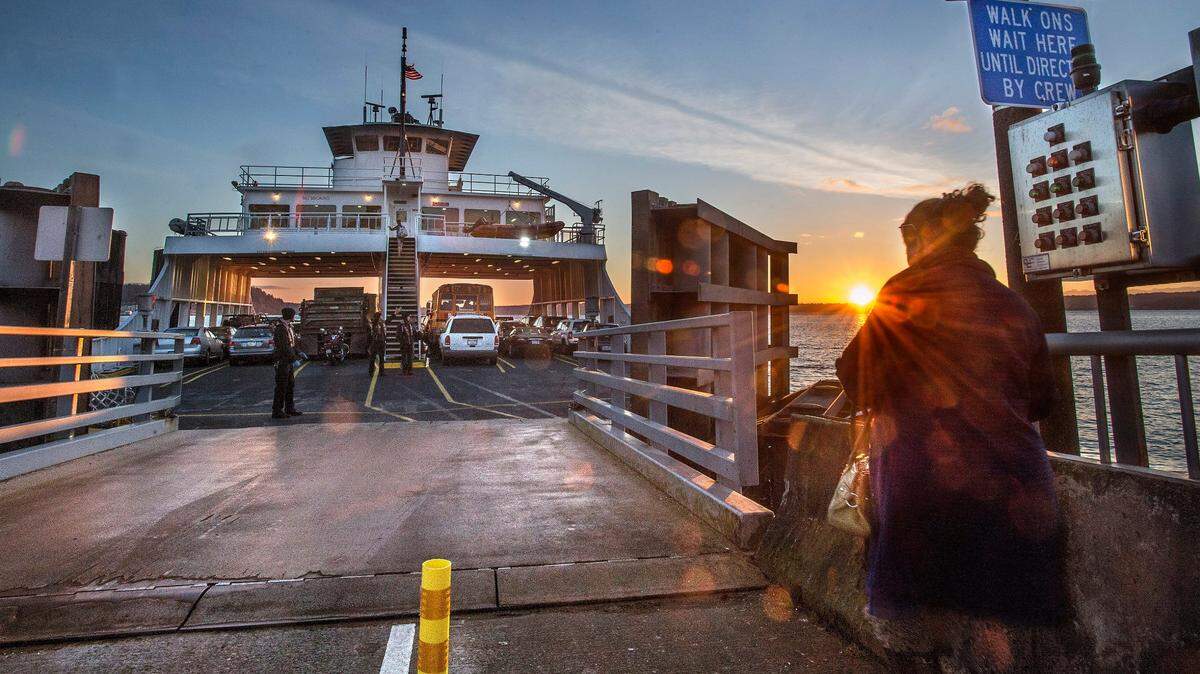
A 20-minute ferry ride and roughly five miles separate Anderson Island from the Pierce County mainland. But despite the relatively short distance, the two shores remain worlds apart.
Just over 1,000 residents live on the 7.75 square-mile island, and for good reason. Life is full of challenges, according to Peter Seto, who moved here from DuPont in 1999 with his wife and raised two daughters in a home the family built from the ground up.
That’s why a proposal included in Pierce County Executive Bruce Dammeier’s 2022-2023 budget has left Seto and other Anderson Island residents angry and confused. The plan calls for a 15.5% ferry rate increase next January and another 15.5% increase in January 2023. While the current two-year budget deliberations will stop there for the time being, in total, Dammeier and the county’s Planning and Public Works department are championing a plan that would see these 15.5% increases continue, annually, through 2029.
For Seto and every other island resident who depends on the connection the ferry provides — which, spoiler, is all of them — the difference could quickly add up. Daily commuters who rely on discounted “value passes” would see their out-of-pocket expenses increase by roughly $100 a month by 2023, and — if Dammeier’s budget proposal comes to fruition — more than $600 a month by the end of the decade.
Seto, 66, says such a change would be catastrophic for many Anderson Island residents, including those on fixed incomes, and it’s easy to see his point. While the long-term financial viability of Pierce County’s ferry system clearly needs to be addressed, an increase that would nearly triple the cost of a single ticket by the end of the decade would upend budgets in a community with a household median income of roughly $80,000 a year.
“Anderson Island is a small island and it has no services. Everything we do is on the mainland. There’s a small store where you can buy beer and ice cream, and they have a gas pump, but that’s it,” Seto said. “If it goes through as proposed, the island would wither and die — literally.”
Long active in island civic life, Seto isn’t quite sure what to make of the eight-year plan to increase ferry fares. But it feels sudden, he says, and possibly motivated by politics. After years of not raising ticket prices, he wonders if the Republican County Executive is trying to make an example out of what some might construe as wasteful spending or entitlement. He strongly pushed back on the notion that the island is full of well heeled retirees who can afford it.
“When we arrived, it was a community of old timers and summer people and a few retirees. The old timers gradually died off. It was a very, very blue collar island. Now, we’re an aging island, with a tremendous influx of retired, low ranking officers from JBLM,” Seto said. “Republicans and the farmers in Eatonville are going to get mad that they’re subsidizing fat cats on the island, which is just not true. None of it.”
If Dammeier was hoping to make a statement, get people’s attention and highlight a problem, he’s certainly succeeded. In an interview with The News Tribune, he noted that Pierce County ferries operating out of Steilacoom — which also service the even smaller and more private Ketron Island — haven’t seen their rates raised since 2016. During that same time, ridership has gone up by roughly 11% annually and the cost of maintaining ferry services increased substantially. None of that takes into account mounting capital improvement needs and frequent repair costs, he said, or the looming possibility of having to replace a boat.
Hiking rates would help make Pierce County’s ferry system financially sustainable and allow for more routes and more consistent service, Dammeier argued. It would also reduce the $1.8 million that comes out of the county’s roads fund every year to help pay for a service that only a small minority of Pierce County’s residents actually use.
Currently, the collection of ferry fares covers about 40% of the overall cost of operation, according to Pierce County; Dammeier’s plan would raise that number to 97% by 2029.
“It is a very significant increase. But it also reflects that (residents) deserve to know that they’re going to have safe, reliable transportation to and from that island,” Dammeier said, indicating that he remains open to other ideas.
“I didn’t want to pretend like these problems don’t exist. They are real. And we’ve got to find a path forward,” Dammeier said.
Pierce County Council member Jani Hitchen — a Democrat whose district includes Anderson and Ketron islands — agrees that current ferry rates should be adjusted to compensate for the increased cost of operations. She would also like to see more ferry routes, particularly during the summer, when the island’s population can double or triple. But just like many of her constituents, Hitchen said she was caught off guard by the size and scope of Dammeier’s proposal. It’s too much, too fast, she believes, particularly for a population that already lives with the bare minimum of county services, like road maintenance, libraries and policing.
Hitchen said she’s preparing an amendment that would enact a more modest ferry fare hike over the next two years, while effectively “pausing” the larger effort to rewrite Pierce County’s ferry funding equation. She expects to find support on the County Council.
“This would be a huge increase over the next eight years, and there was no conversation at all. The process utterly failed,” Hitchen said.
All of this leaves Anderson Island residents like Elizabeth Engle, 59, waiting for the next shoe to drop. Speaking by phone this week from the ferry dock not far from her home — which is one of the few places on the island where she gets decent cell reception — Engle said the prospect of eight years of rate hikes feels like an attack on her small community.
“It’s crucial. There’s no other way to put it,” Engle said of islanders’ reliance on affordable trips to the mainland.
“You can’t do it here without the ferry. It’s our lifeline.”