Real Change founder Tim Harris was odd man out in Seattle. He’s starting anew in Tacoma
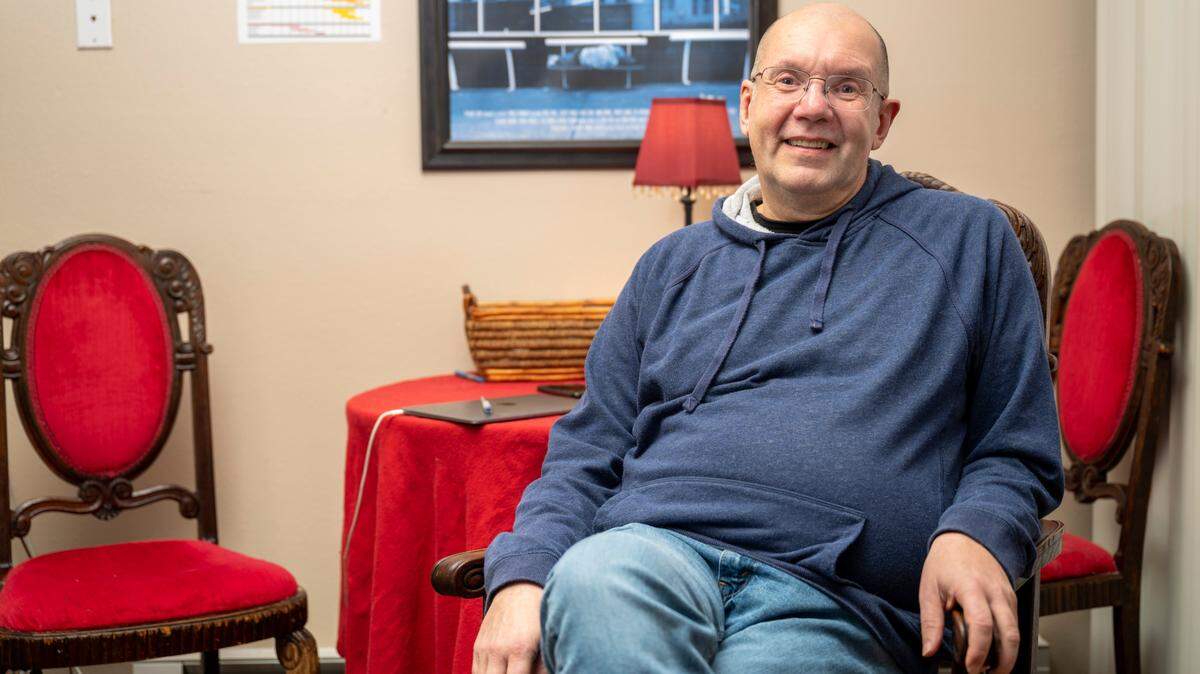
Tim Harris has been here before.
Three decades ago in Boston, not long after graduating college — where he founded what the Columbia Journalism Review recently described as an “anarchist monthly” — Harris launched Spare Change, a “street paper” that centered the lived perspectives of people experiencing homelessness. Modeled at least in part after New York’s Street News, which debuted in 1989, Harris’ new paper was largely written by the unhoused and relied on the same basic distribution model: employing homeless and low-income individuals to sell issues at a substantial profit. As CJR described in its lengthy feature story, Harris was “a young Marxist convert” back then, and — eventually — he wore out his welcome. The proletariat kicked him out, he jokingly told reporter E. Tammy Kim.
Local readers are likely far more familiar with Harris’ next act. In 1994, after moving to Seattle, Harris debuted Real Change, using the same basic model — but this time employing a more traditional staffing and leadership structure. Over the course of nearly 30 years, Real Change grew into a regional force, known for its humanity, hard-hitting journalism and, as a nonprofit, its influential homelessness advocacy efforts. Not long after Harris stepped down from the paper late last year, the Seattle City Council — a body that Harris and his paper routinely sparred with — declared Jan. 11 “Tim Harris Day.” It was a show of appreciation and respect for a man who had accomplished a great deal by mastering the dual art of empathy and being a thorn in the establishment’s side.
All of this brings us to Tacoma, where Harris has now been living for nearly two months. At 61, he recently unveiled the website for a publication he’s calling Dignity City. Just like his previous efforts, he hopes his new venture will humanize those living on the street and help solve the crisis of homelessness.
There’s just one big difference: This time, Harris envisions a regional, statewide street paper, with the ability to cross lines of jurisdiction and perspective.
The plan is to start in Tacoma and Pierce County — where Harris said he hopes to have monthly magazine-style issues on the street by next year — and grow from there. He hopes Dignity City will be statewide in three to five years, with plans to add paid staff, including journalists, he said.
“I’m starting here in Tacoma,” Harris said. “But I’m building it in such a way that it could spread to other cities.”
Harris knows none of that will be easy, from firsthand experience, and not just when it comes to organization and the cost of operation, which are challenges he has ample experience navigating. While Dignity City recently launched a fundraising effort that hopes to bring in $75,000 by the end of February, the bigger obstacle is likely to be finding a voice and a footing in a debate that’s often defined by its extremes.
Not unlike his time in Boston, Harris’ recent departure from Real Change was marked by a clash of ideas that left an impression on the aging activist. In Seattle, Harris said he came to find himself on an island. More specifically, as a supporter of the failed Compassion Seattle initiative, and the basic premise that it’s “not good policy to just let people camp wherever they want,” as he told The News Tribune this week, he came to see his views as out of step with a new generation of homeless advocacy leaders. Harris resigned at Real Change, he said, to make room for younger voices at the paper.
In Tacoma, he’s hoping Dignity City will be less political, helping to bring divergent views and perspectives to the table.
The last thing we need, Harris suggested, is to push people farther apart.
“I think that it is really important to be able to listen to all perspectives on homelessness, as opposed to … just kind of engaging in tribal politics around it,” Harris said. “I think most people are concerned with homelessness, I think most people want to see solutions to it, and I think that it’s really important to just work with a variety of perspectives and opinions. ... I’m not building this as a leftist publication. I want this to be a street paper that focuses primarily on homelessness, telling the stories of homeless people and getting a variety of perspectives on the issue.”
“There’s tension everywhere. That’s not unique to Seattle,” Harris continued. “I think that people are less entrenched (in Tacoma) than they are in Seattle, and I think people are more open to different perspectives here. People probably played better together here than in Seattle, but — then again — I’m relatively new and I have a lot to learn.”
On Monday, Harris was honest about the path forward. Despite his track record and credentials, he knows some will need to be won over, he said, and trust will need to be built.
Monique Brown, the founding director of FOB Hope — a nonprofit that’s working to end homelessness among U.S. military veterans — expressed one such sentiment. As a regular participant in Tacoma-Pierce County Coalition to End Homelessness meetings, Brown said that the street paper vendor model Harris plans to replicate with Dignity City — which requires those selling the paper to purchase copies of the paper before selling it — raises concerns. It’s a point of contention Brown also has with Real Change, she said.
As CJR reported, Real Change asks vendors to purchase the paper for 60 cents an issue. They’re then allowed to sell copies for $2 each, plus tips. With Dignity City, Harris said he plans to start by requiring prospective vendors to pay 30 cents a copy for the magazine, which will also sell for $2.
“I think they should give the papers to the homeless and low-income populations they serve and allow them to keep all proceeds,” Brown said. “They should be able to fundraise and write for grants and donations to pay for salaries and overhead.”
According to Maureen Howard, a senior policy analyst with the Tacoma-Pierce County Coalition to End Homelessness, Harris’ arrival — and more importantly his new street paper project — provide reason for optimism. Howard said she encouraged Harris to move to Tacoma, and believes his heart is in the right place.
Howard has agreed to contribute a regular column to Dignity City, she said, and looks forward to seeing the impact the paper will have.
“It’s an opportunity for people that maybe otherwise would have a hard time being heard,” Howard said of Dignity City’s potential. “If you’ve got something like a street newspaper then you’ve got a record, as well as immediacy, with voices collected in one place.”
As Harris embarks on his next chapter, creating just such a record is his goal. Winning over critics like Brown is just one of obstacles ahead, he knows. There will be plenty of others.
But if there’s one thing he remains confident in — after all these years — it’s the power of giving a voice to those on the outside looking in, he said.
“Street papers shift perspectives,” Harris said.
“The sorts of limiting, derogatory stereotypes fall away when people get to know actual homeless folks on the street.”
This story was originally published November 18, 2021 at 5:00 AM.