You can run the homeless off public property, Tacoma, but it won’t solve our crisis
If our recent polarized history has taught us anything, it’s that, when facing a potential disagreement head on, it’s best to start from common ground.
I’ll go first: Tacoma City Council members — including Robert Thoms, Conor McCarthy and Mayor Victoria Woodards — are exactly right when they argue it’s inhumane and unhealthy for so many people to be living outside, in tents on public right of ways, along our city streets.
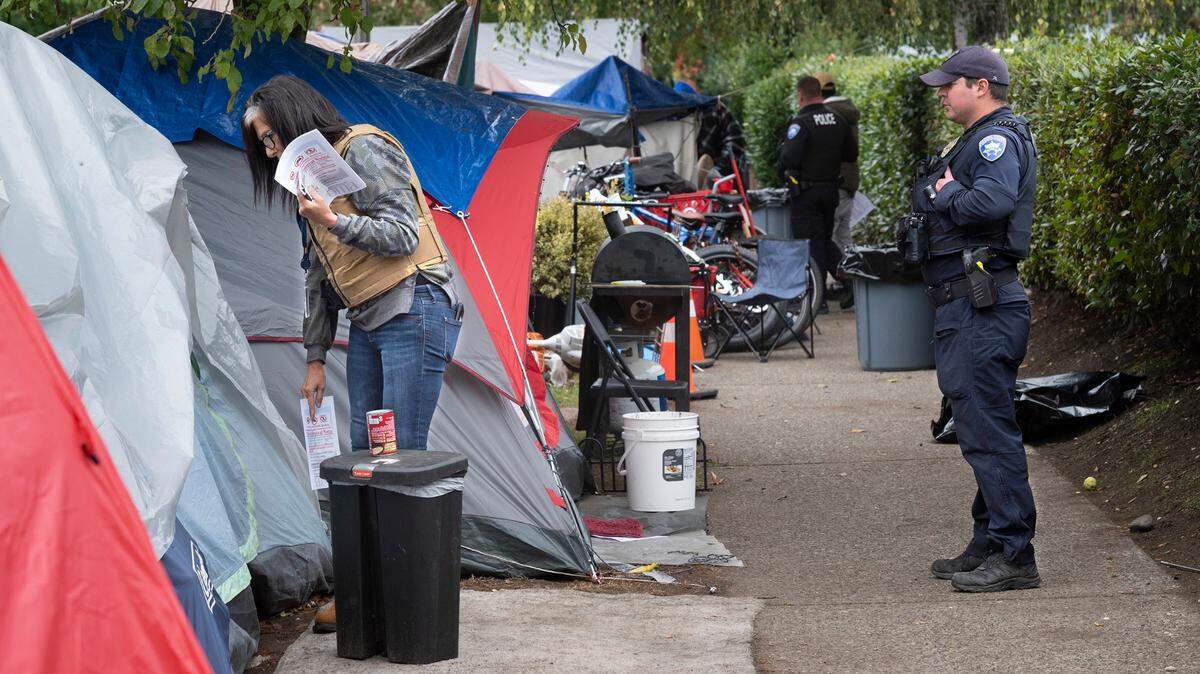
It is an emergency and a public health crisis. It is cruel for those left to survive that way, and it’s not fair for the local businesses and residents left to contend with the problems it creates. As a society, it’s a clear sign of failure when makeshift communities of the forgotten fill the spaces underneath our bridges and overpasses and when sidewalks and planting strips become home for people with nowhere else to go.
I’ll even take it a step further: There’s a world where a ban on public camping — similar, in broad strokes, to the one the council appears to be readying for a return — could make sense. Allowing people to seek shelter anywhere — even when done with the best intentions — isn’t good for anyone. Among other things, it breeds public resentment and anger in too many corners, only making it harder for a city to muster the kind of resolve it will take to do something far more meaningful for those with the most at stake.
But here’s the thing: Tacoma isn’t anywhere near that world, because the same council that is now considering banning public camping hasn’t done nearly enough to provide alternatives for those who would suddenly find their current mode of survival illegal.
In the four years since the Tacoma declared homelessness a public health emergency, the problems the city has yet to tackle are the tough ones, including: Where will those who aren’t interested in staying in a shelter go?
They’re individuals who many of our local officials have taken to calling the “service resistant” — which is a polite way of saying the human beings they’ve determined to be too difficult to help — but the fact is, a new ordinance won’t make anything — or anyone — disappear.
As is too often the case, best laid homeless plans begin to fall apart when policymakers start slicing and dicing who’s worthy of our sympathy and services and who is not, which appears to be the trap Tacoma has settled into. Since 2017, the city has added more than 350 temporary emergency shelter beds, with plans for 188 more by the end of the year, city spokesperson Megan Snow told The News Tribune last month. That’s no small feat — essentially doubling the number of shelter beds the Tacoma has available. But it also reveals how some decision makers have mistakenly approached this crisis.
Federal court precedent says it’s unconstitutional to ban public camping if people have nowhere else to go. That’s the law of the land and a big part of how we got here. At the same time, since long before Martin v. Boise, anyone who’s worked directly with Tacoma’s homeless population has known there are a significant number of people living outdoors who refuse to stay in a shelter. Many of them have valid reasons, even if they’re hard for those who have never been on the street to understand. Others are wrapped up in addiction or behavioral health crises. The distinction isn’t as important as some would like to suggest. They’re real people, and to reach them you have to offer something they’re interested in receiving, whether you agree with their life choices or not.
So are more shelter beds our solution? Or are they merely justification for a ban on people we’ve given up on?
If a significant portion of the city’s homeless population won’t step foot in a shelter — and they’re saying it loud and clear — what choice do we have but to listen?
Maureen Howard is a long-time homeless advocate who serves as a senior policy analyst with the Tacoma Pierce County Coalition to End Homelessness. Howard said this week she doesn’t agree with the city’s proposed ban on public camping. But she’s also a realist who’s been around the block a few times. If the city is going to enact a new public camping ban, she says, it should be “as humane as possible.” In her opinion, that means making it a civil infraction with a small monetary fine, and taking the police out of it.
It’s a good start, and hopefully the City Council is listening.
But while they’re at it, they should also pause and consider the obvious:
Until we’re willing to meet people where they are and offer them a safer, better alternative to their current circumstances — whether it’s a shelter bed or a tiny home or, for the time being, just a place with toilets and running water and trash service where we say it’s OK to camp and there will be help whenever you’re ready for it — we’re going to be stuck in the same place.
You might be able to make pitching a tent on public property illegal, but you can’t make it illegal to exist.
It’s only our judgment, anger and frustration holding us back.
This story was originally published December 5, 2021 at 5:00 AM.