For the homeless, safe parking has been a godsend. That’s why Dammeier’s veto is so cruel
Samantha Crabtree couldn’t hold back tears as she discussed her family’s experience over the last few months.
Seated at a table inside Spanaway United Methodist Church, the 41-year-old — who grew up as a self-described “Air Force brat” and moved to the Lakewood area as a teenager — talked about the difference something as small as a safe place to park at night in the church’s lot has made for her and her family.
“All you focus on all day is, ‘Where are we going to sleep tonight?’,” Crabtree said of the roughly two years she spent living out of a late-model Toyota Camry with her two sons, her husband, Steven, and the couple’s little black dog, Natsu.
“Having a place that gives you back some dignity… it matters. It really does,” Crabtree said.
In Pierce County, Crabtree has been one of the lucky ones. The 2020 Pierce County Point in Time Count identified 172 people living in vehicles — a figure that represents just under 10% of the total number of homeless individuals counted at the time. Historically an undercount of the actual number of people experiencing homelessness, the annual tally provides just a sampling of the misery and despair in our communities, homeless service providers say.
And yet, Pierce County currently has fewer than 30 spots where people living in their cars can park safely overnight, free from fear of harassment or worse. Spread across three locations — and a fourth on Tacoma’s Hilltop — all of them are churches or faith groups, and they serve but a fraction of the overwhelming need.
That’s what makes Pierce County Executive Bruce Dammeier’s latest veto so cruel and appalling.
On Friday, Dammeier put a stop to efforts to quickly expand the number of safe parking spots for the homeless across Pierce County.
Passed by the Democrat-controlled council along party lines on April 19, the vetoed ordinance would have created temporary regulations allowing places like community centers, schools and even local businesses across the county — rural and urban — to open up their parking lots to people living in their vehicles.
In a letter to the council, Dammeier argued that conforming to a rigid process is more important than quickly helping those in need.
“I am concerned about the impact on public trust if the county were to take this action using interim regulations that short-circuit the normal public engagement process. Interim regulations are emergency tools that should be used very sparingly,” Dammeier wrote in a letter dated April 29. “ I understand the desire to move quickly, but cutting corners erodes the public trust necessary to make long-term, sustainable progress on homelessness.”
By pure coincidence, Crabtree and her husband were scheduled to be housed the same day the executive issued his veto.
The family’s success, and the role that safe parking played in it, make Dammeier’s lack of urgency all the more damning.
“I don’t know where we would be without this place,” Crabtree said.
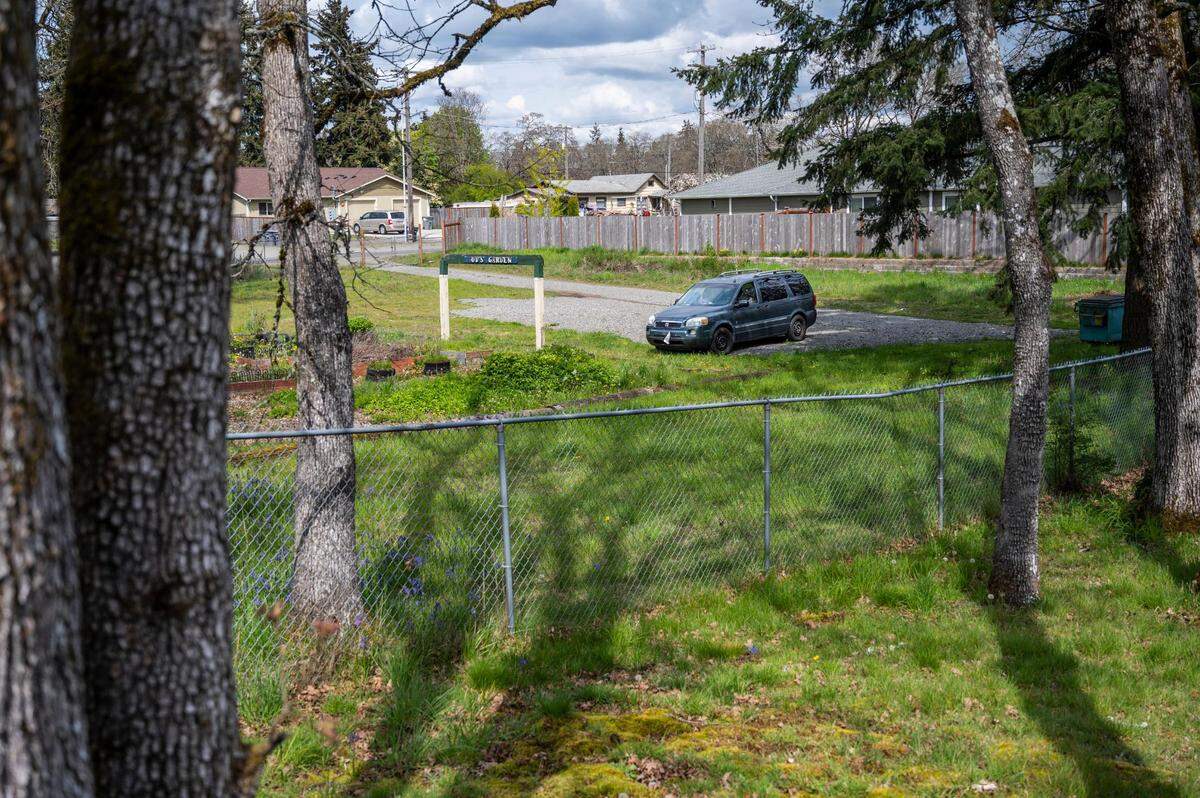
Safe parking in Spanaway
Pastor Samara Jenkins arrived at Spanaway United Methodist Church last July. Within three months, the church just off Pacific Avenue was exploring the possibility of opening up its parking lot to families in need.
The church was already regularly hosting the New Hope mobile resource response team, which travels to locations throughout the county providing shower, laundry and other services to the homeless. Utilizing some of the church’s space for safe parking just made sense, Jenkins said.
Spanaway United Methodist officially opened up its parking lot in November, offering five spots reserved for families, military veterans or the elderly.
The reason, Jenkins suggested, was simple.
“Compassion and dignity,” she said.
“We recognized pretty immediately our call, and who we wanted to serve. It was simply, ‘Yes, we absolutely have to help,’ ” Jenkins explained of the church’s efforts, which she said have the broad support of the 157-person congregation.
“There was just no question.,” Jenkins said.
Like Crabtree, 32-year-old Willow O’Hara turned to Spanaway United Methodist when she had nowhere else to go. A mother of two boys, 14 and 7, O’Hara said she fled domestic violence on Dec. 13 — a date she remembers well — and was referred to the church by the Bethel School District, where her kids are enrolled.
On Wednesday, O’Hara recalled spending long nights in her Hyundai Elantra with her family, which includes three cats and three dogs. Spanaway United Methodist gave her a place to get her bearings, and provided a much needed sense of community, she said.
“It’s amazing what they’ve done. They really kept me and my boys out of the bottom of the jar,” said O’Hara, who earned money delivering food through the online DoorDash app while she was homeless. “It’s all these steps you have to take coming up from the bottom, and they are there every step of the way with you. I can’t say enough about how wonderful this place is.”
Recently, O’Hara found permanent housing. Her abusive former partner has since been incarcerated, she said.
In total, according to Jenkins, Spanaway United Methodist has served 29 people.
Ninety-eight percent of those who have left the church parking lot have been successfully housed, she said.
‘Not a good situation’
What little safe parking does exist in unincorporated Pierce County dates back to 2020, and an effort by local homeless advocates and Tacoma’s Metropolitan Development Council to establish sites specially geared toward people living in their vehicles.
At the time, Colin DeForrest — who was previously a homeless services director in Tacoma and Olympia — explained the group’s motivation to The News Tribune.
“It’s not just a good situation,” DeForrest said of people and families forced to live in their cars. “They’re parking at the end of the darkest dead end alleys and staying in the shadiest spots. … What’s protecting people from whatever is outdoors is a window and a car lock.”
The need for expanded access to safe parking in Pierce County is well known. That’s why it was included as an action item in the county’s recently adopted Comprehensive Plan to End Homelessness, which was ratified just last month with near unanimous support.
And although Democratic Pierce County Council members like Chair Derek Young have noted that the county doesn’t actually have a law that follows the state requirement to allow a limited safe parking at churches, according to Pierce County Human Services spokesperson Kari Moore the county has allocated $450,000 in American Rescue Plan Act funding for safe parking, part of a two-year contract that runs through 2023. At least two of the existing safe parking sites the funding goes toward are in unincorporated Pierce County.
Today, Homeward Bound, a local nonprofit, provides screenings and intake services for the four safe parking sites, including running background checks.
The agency also operates the safe parking referral line, which is how the homeless and local service providers gain access to safe parking sites, according to Paula Anderson, a member of the Homeward Bound board of directors.
Anderson told The News Tribune that there’s a waiting list for safe parking sites, and many more like Crabtree and O’Hara who could use the help.
Asked about efforts to expand safe parking in Pierce County, Anderson said she’s currently working with a handful of churches that have expressed interest. She’s hopeful, but it can be difficult, she explained.
Allowing places like community centers, schools and willing local businesses to lend a hand would “make a huge difference,” Anderson said.
Unfortunately, as we learned on Friday, that won’t be happening anytime soon.
We can thank Dammeier for that.
This story was originally published April 30, 2022 at 5:00 AM.