
Bigleaf maple decline tied to climate change and human development, UW study says
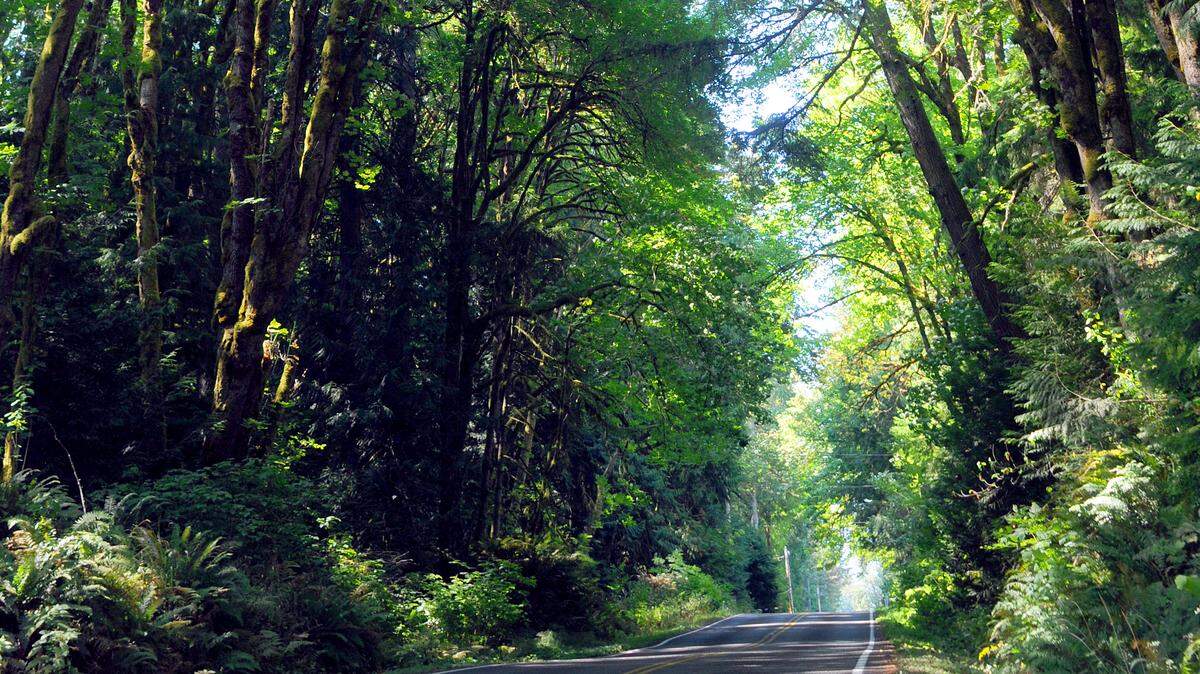
The decline of bigleaf maple trees in Washington has been linked to hotter, drier summers, pointing to climate change and human development as threats to the species, according to a new study by the University of Washington.
The bigleaf maple, also known as the Oregon maple, is native to the Pacific Northwest’s wet westside forests and has historically thrived in the region, known for its abundant precipitation, a news release from the university said.
But scientists and casual observers alike began observing a decline in the trees starting in 2011, noting “more stressed and dying” bigleaf maple trees in urban and suburban areas as well as forested ones, the release said. Some signs of those declining trees include “abnormally small” leaves — healthy trees can produce leaves up to 1.5 feet wide — and a decrease in the overall mass of the tree.
Forest pathologists were able to rule out several specific diseases, but “the overall cause of the tree’s decline has stumped experts for years,” the release said.
The new study, conducted in collaboration with the Washington Department of Natural Resources and released in the journal Forest Ecology and Management, found that the increasingly hot and dry conditions in Washington during the summer weakened the trees’ immune systems, making them more vulnerable to other stressors and diseases.
“In drought conditions, trees use more energy trying to survive and defend themselves from diseases and other threats,” the news release said.
The study also found that bigleaf maple trees are “more likely to decline near roads and other development,” especially in hotter urban areas.
To conduct the study, researchers performed testing on trees found at a selection of sites around western Washington, in addition to 36 roadside sites where the trees were present and another 59 sites on public land. The samples included soils, leaves, stems and tree cores, which were analyzed in a lab, the news release said.
From those samples, researchers concluded that “nearly a quarter of the bigleaf maple trees showed signs of decline.”
The study’s findings point to the reality that climate change and human activity are significant stressors to the trees, rather than a specific pest or pathogen that might otherwise harm them.
“These results show that summer heat and drought impact the health of iconic tree species of Washington, like bigleaf maple, even in Western Washington, a region known for abundant precipitation,” Amy Ramsey, co-author of the study and an environmental planner and forest pathologist with the Department of Natural Resources, said. “Health impacts to our forests and tree species are likely to continue as we have increased periods of drought each year.”
The findings have given foresters clues on how to manage bigleaf maple trees differently to slow their decline, including planting the trees in different locations, more watering of trees in urban areas and using seed stock better adapted to the possible future conditions a particular site might experience. In forests, efforts to preserve the bigleaf maple “might mean a focus on keeping intact landscapes free from more urbanization,” the release said.
“Managing, protecting and utilizing our urban and wild ecosystems in the face of climate change and human population growth is and will continue to be one of the major challenges facing us,” lead author Jacob Betzen, a biological technician with the U.S. Forest Service who conducted the research as a graduate student, said. “This research investigating bigleaf maple is one small piece of that larger puzzle.”