
Tourists keep sinking into ground near Lake Mead after drought exposes more shoreline
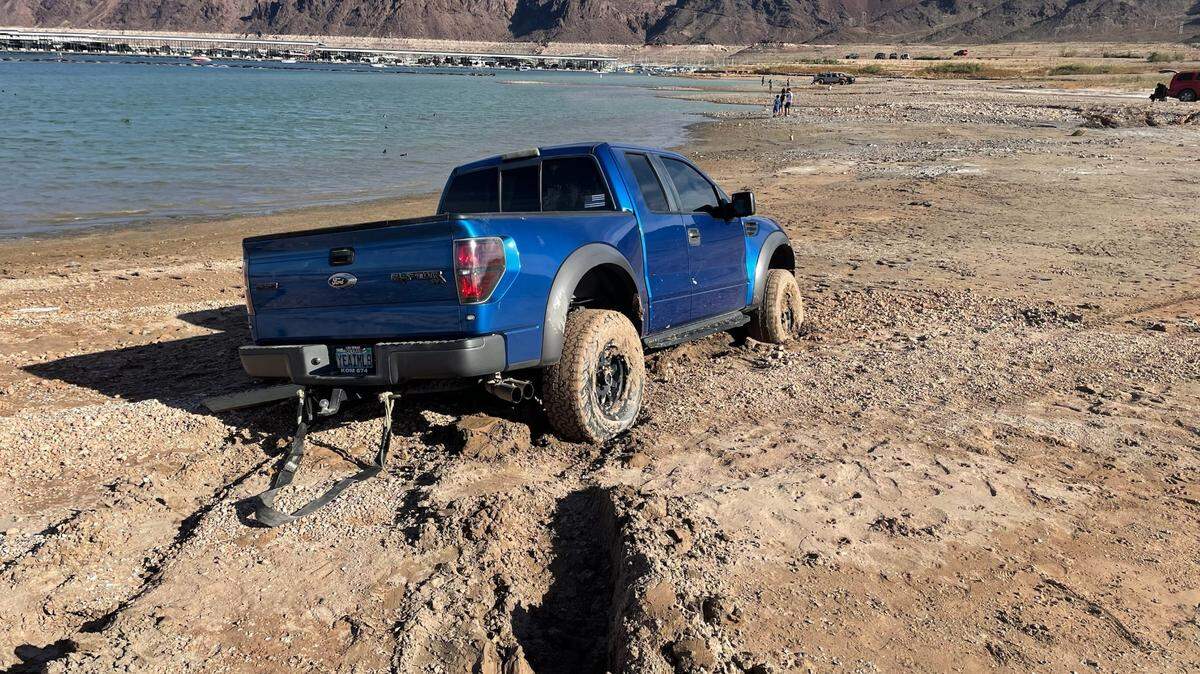
Drought exposed human remains at Lake Mead, but now it’s causing a new problem.
Tourists keep getting stuck in the fresh shoreline at the Nevada reservoir, national park rangers said.
Photos posted by Lake Mead National Recreation Area park rangers show people getting stuck in waist-deep mud. Trucks and SUVs also got stopped in their paths as they started to sink into the shoreline.
“Newly exposed shoreline is dense and difficult to navigate,” Lake Mead rangers said May 23 on Twitter. “As a result, vehicles, vessels and people can get stuck.”
Parkgoers sinking into the shore is the latest problem drought has brought to the popular tourist destination.
Boaters found a crumbling barrel with a body inside at Lake Mead on May 1, according to a previous McClatchy News report.
Police suspect the body had been dumped in the lake in the 1970s or 1980s and was only uncovered by drought. The body had a gunshot wound, and authorities believe the death could have been a homicide, according to the National Park Service.
Days later, a second set of human remains were discovered at Lake Mead. The remains were found May 7 at Callville Bay buried in the sand.
Police told news outlets the remains could be the first of many to be uncovered by drought.
“I think anybody can understand there are probably more bodies that have been dumped in Lake Mead,” Las Vegas police Lt. Ray Spencer told KLAS. “It’s just a matter of, are we able to recover those?”
Low water levels at Lake Mead
Lake Mead is the country’s largest reservoir, according to the National Park Service. It was created by the construction of the Hoover Dam in the 1930s and includes more than 750 miles of shoreline.
The reservoir supplies water to more than 40 million people in seven states and Mexico, according to NASA. It provides water to people in some of the largest cities in the U.S., including San Diego, Las Vegas, Phoenix and Los Angeles.
In recent years, however, it’s been shrinking due to a 22-year megadrought.
The lake gets about 10% of its water from local precipitation and groundwater, and the rest comes from snow melt in the Rocky Mountains. During the drought, the lake isn’t getting refilled as it historically had.
In July 2021, Lake Mead had a water elevation of about 1,068 feet above sea level. It was the lowest recorded level since April 1937, which was when the lake was still being filled, NASA reported.
The water level has quickly gone down in the past several years. In the same month in 2000, the lake’s water levels were at nearly 1,200 feet.
Currently, the Lake Mead reservoir is only at 35% of its capacity, according to NASA. The Bureau of Reclamation said water allocations will be cut over the next year, and in some cases it will be reduced by enough water for hundreds of thousands of households.
“At maximum capacity, Lake Mead reaches an elevation 1,220 feet (372 meters) near the dam and would hold 9.3 trillion gallons (36 trillion liters) of water,” experts at NASA said. “The lake last approached full capacity in the summers of 1983 and 1999. It has been dropping ever since.”
This story was originally published May 25, 2022 at 7:27 AM with the headline "Tourists keep sinking into ground near Lake Mead after drought exposes more shoreline."