
This wasp has a ‘killer smile’ — and a Missouri wildlife biologist got a close-up look
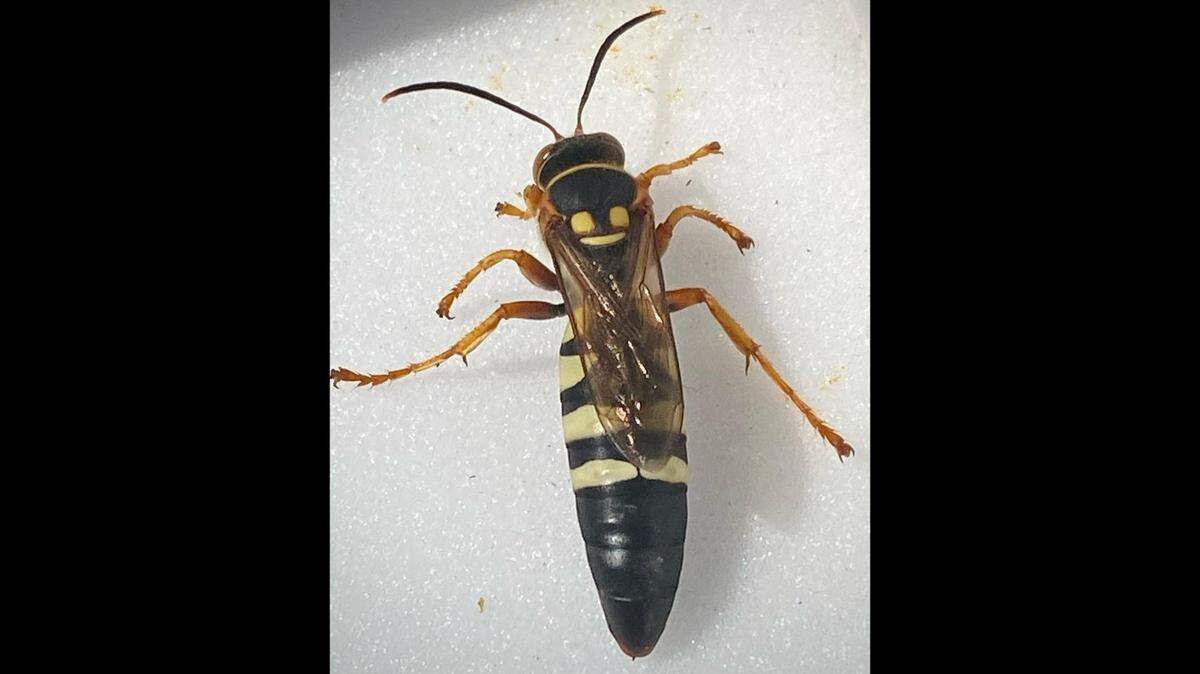
A wasp with a “killer smile” was captured in Missouri — and a wildlife biologist managed to get a closer look.
She also took a photo of her “lucky catch” before releasing the cicada-killer wasp.
The Missouri Department of Conservation says urban wildlife biologist Erin Shank found the unique wasp while doing a bumblebee survey.
After netting the wasp, she temporarily placed it on ice to take a quick look and a photograph.
As seen in Shank’s picture shared to Facebook on July 27, the cicada-killer wasp has a yellow smiley face on its thorax.
“Most have minimal yellow markings on the thorax, but this was a lucky catch that made her day,” experts said.
What are cicada-killer wasps?
“The eastern cicada-killer wasp may be the scariest-looking wasp in (Missouri),” according to the state conservation department. “But it is not aggressive to people and is virtually harmless, unless handled roughly.”
The wasp, described as “exceptionally large” with black and yellow markings, can be found statewide.
“Males typically defend territories by simply flying around the nests of one of more females. The males’ energetic hovering can be intimidating. Male cicada killers may clash with other insects, crashing into them bodily, but with people they usually just fly around and inspect us,” officials said. “Females also cruise around, looking for good places to dig tunnels and searching around trees and shrubs for cicadas.”
Males have a “false stinger” — more like a pointy projection that they can use as defense — and females have a powerful sting they typically only use against the cicadas they are hunting.
The females hunt cicadas to feed their larvae, officials say, though adult cicada-killers feed on nectar and other plant juices.
This story was originally published July 27, 2022 at 1:53 PM with the headline "This wasp has a ‘killer smile’ — and a Missouri wildlife biologist got a close-up look."