
‘A Living dinosaur’ found along Alabama’s Mobile Bay. It was 5 feet long and armored
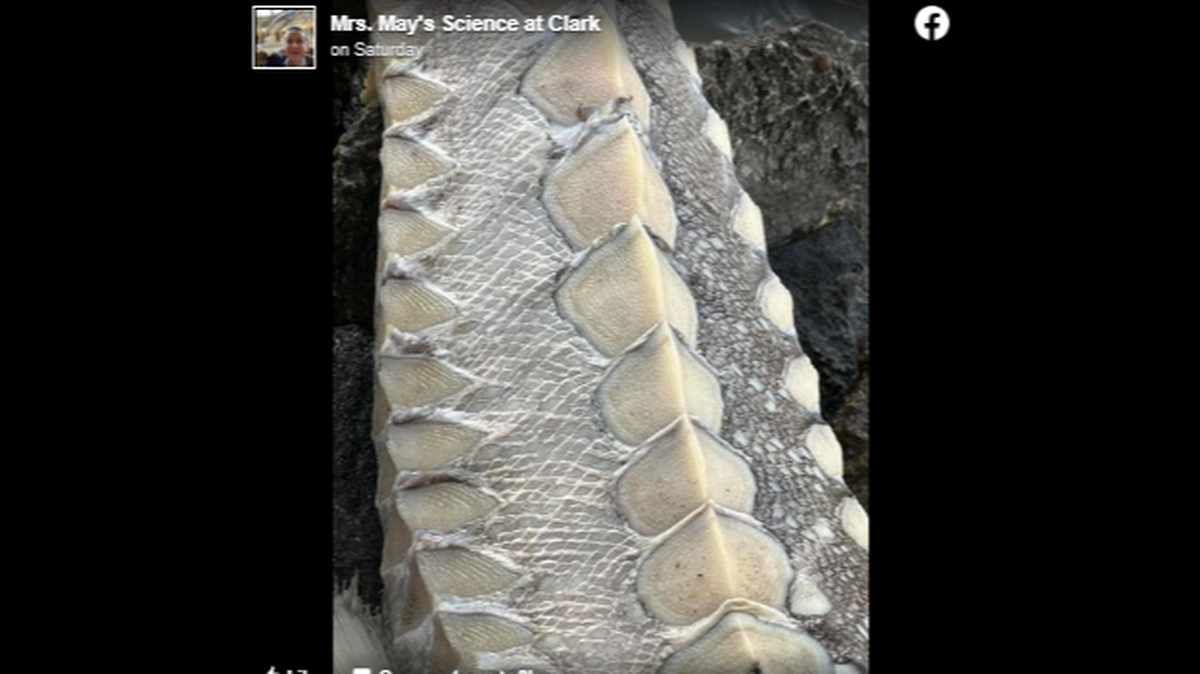
An eighth grade science teacher walking the shores of Alabama’s Mobile Bay found a menacing looking fish carcass that counts as “a living dinosaur,” according to the U.S. Fish and Wildlife Service.
It has been identified as a gulf sturgeon, an ancient species that can grow to 9 feet and nearly 400 pounds, NOAA Fisheries reports.
Tami May, who teaches for the Mobile County Public Schools, made the “amazing find” Saturday, Jan. 7 and she measured the fish at 5 feet, 1 inch.
“It is a protected threatened species and rare to see. As required I notified NOAA,” May wrote on Facebook.
“The lack of prolific breeding, dams up the rivers in Mobile Bay, dredging and possibly over harvesting put them on the protected list in the 1990s, but by then they were so rare it is doubtful they would rebound.”
Photos show she found the fish floating upside down, void of color and with its head nearly detached.
No predators or scavengers appear to have taken a bite of the carcass, which might be credited to the rows of thorny scales that cover gulf sturgeon. Their appearance has remained largely unchanged for 200 million years, hence their reputation as a “prehistoric fish.”
The sturgeon was to undergo a necropsy at the University of Southern Mississippi “so scientists can learn more about this unusual fish,” the Mobile County Public Schools reported on Facebook.
Gulf sturgeon once thrived along the Gulf Coast between the Mississippi River and Tampa Bay, Florida, NOAA Fisheries reports.
Like salmon, the species hatches in freshwater rivers, then juveniles make their way to sea. They then “return to the rivers to over summer or spawn (lay eggs) when they reach adulthood,” NOAA says.
This story was originally published January 10, 2023 at 11:24 AM with the headline "‘A Living dinosaur’ found along Alabama’s Mobile Bay. It was 5 feet long and armored."