Huge ‘brilliant’ creature found on California beach likely died of old age. See photos
.jpeg "While walking one of her dogs on a California beach, a retired science teacher happened upon the body of a giant creature.")
In her decades of strolling along a California beach, Karina Junge recalls finding “all kinds of things.”
And while ambling along Clam Beach on the morning of Monday, June 5, with her lab mix, Luna, Junge told McClatchy News she found the most interesting thing yet — the body of a massive octopus.
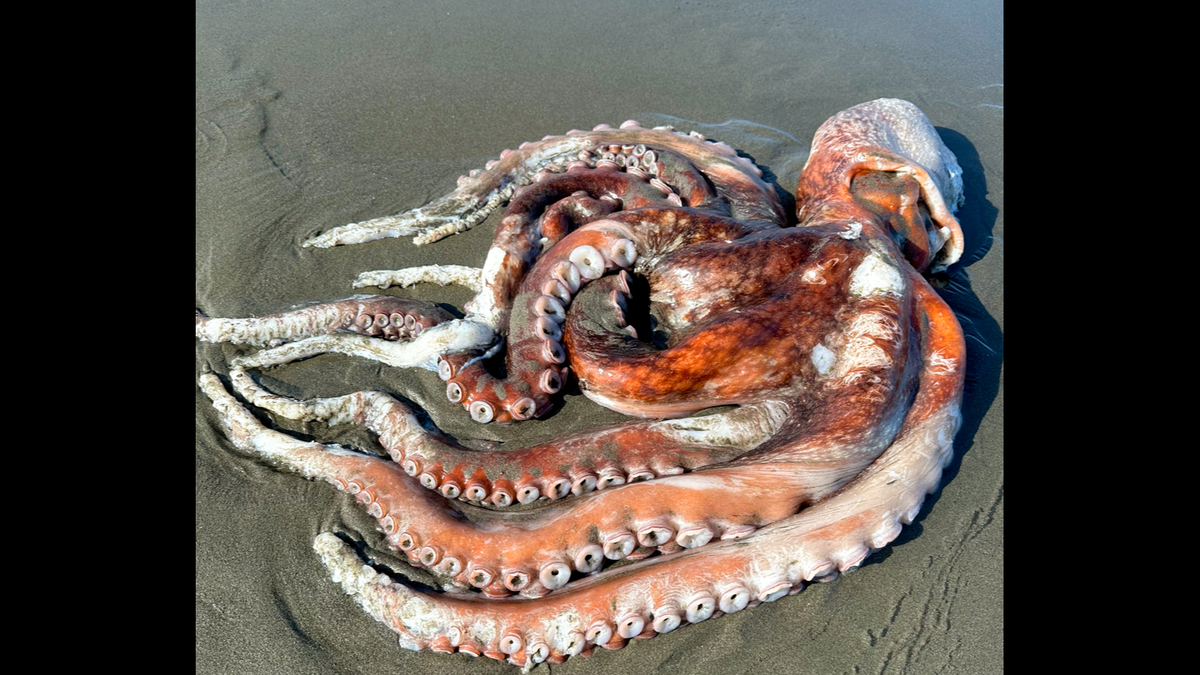
“Oh, it was brilliant. The colors were brilliant,” Junge said. “The detail of all the suckers on the tentacles were just fascinating.”
Junge, a retired Eureka middle school science teacher who dabbles in nature photography, said she started snapping photos of the brilliant creature.
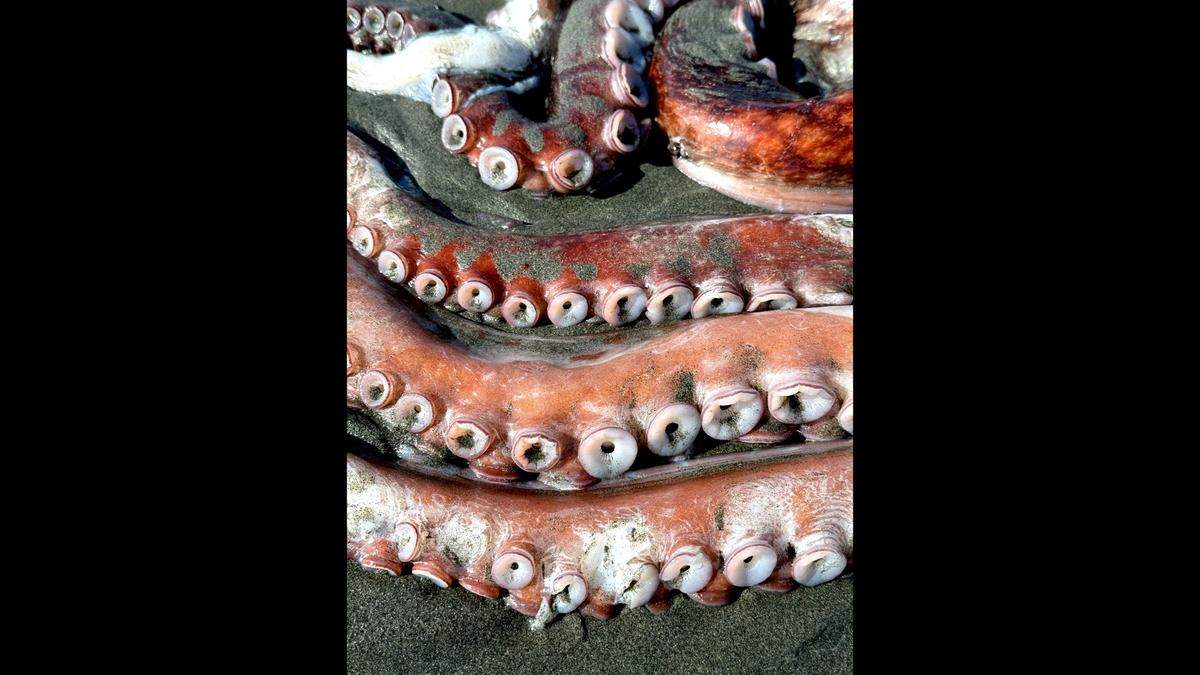
“It was huge and fascinating,” Junge said.
Based on Junge’s photos, Grant Eberle, a marine lab equipment technician and aquarist at Cal Poly Humboldt, told McClatchy News the octopus is a Giant Pacific Octopus.
“They’re the biggest (octopus species) we typically get around here,” Eberle said.
.jpeg "octopus_fitted (2).jpeg")
The species typically lives between three to five years, Eberle said. Based on its size, Eberle said he would estimate this particular octopus was “at least 3 years old.”
Eberle said the octopus didn’t appear to have any major injuries but that “it had rotted enough that the arm tips were kind of eroded away.”
“I suspect that its arm tips have been scavenged by smaller animals,” Janet Voight, an associate curator of invertebrate zoology with Negaunee Integrative Research Center, told McClatchy News in an email.
.jpeg "octopus_fitted (3).jpeg")
With its tips in such condition, it’s difficult to determine the octopus’ gender, Voight said.
To determine the octopus’ gender, experts typically look at the tentacles, as “the third right arm is modified” in males, according to Voight.
“At the tip, the suckers stop and a smooth, kind of lanceolate tip is present,” Voight said. “This we think inserts the sperm tube into the females’ oviduct.”
In females, Voight said, all their tentacles are the same.
.jpeg "octopus_fitted (1).jpeg")
This particular octopus likely died of “old age” after reproducing as octopus are semelparous, meaning they reproduce once and then die, according to Voight.
After laying their eggs, the mother octopus will guard and protect them for “several weeks to a month or more,” according to Eberle.
“They don’t eat. They just sit there and protect the eggs,” Eberle said.
As the eggs begin to hatch, the mother will blow the babies out of their den into the water column, where they swim off, Eberle said.
“That’s usually her last act, and then she dies shortly after that,” Eberle said.
Male octopus also “die about the same time,” according to Voight.
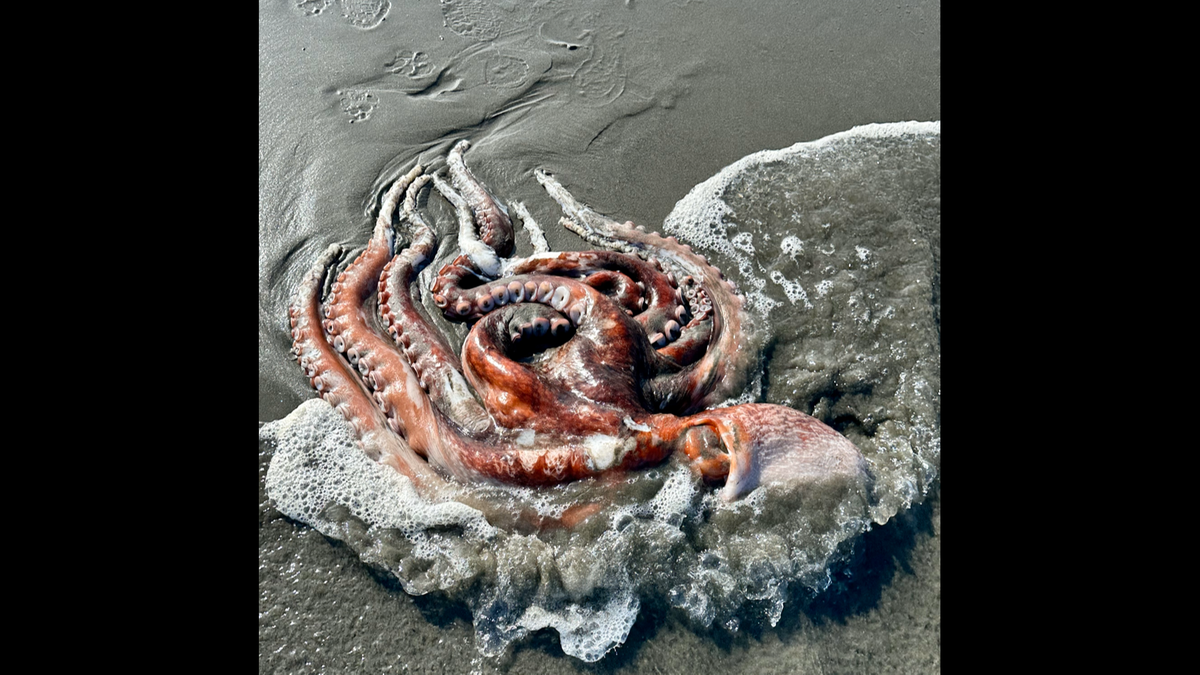
Voight said this Giant Pacific Octopus washing ashore is “likely uncommon,” as dead octopuses often wind up being food for other marine life, including fishes, crabs, seals, birds and whales.
“Perhaps it died near the beach where few large scavengers were present and simply washed ashore,” Voight said.
For Junge, the encounter is one she won’t soon forget.
“This was new for me,” Junge said. “I’ve never seen anything quite like this wash ashore before.”
Clam Beach is in Humboldt County about 100 miles south of the California-Oregon border.
This story was originally published June 9, 2023 at 10:22 AM with the headline "Huge ‘brilliant’ creature found on California beach likely died of old age. See photos."