Will interest rates rise this month? Here’s what’s expected — and what it means for you
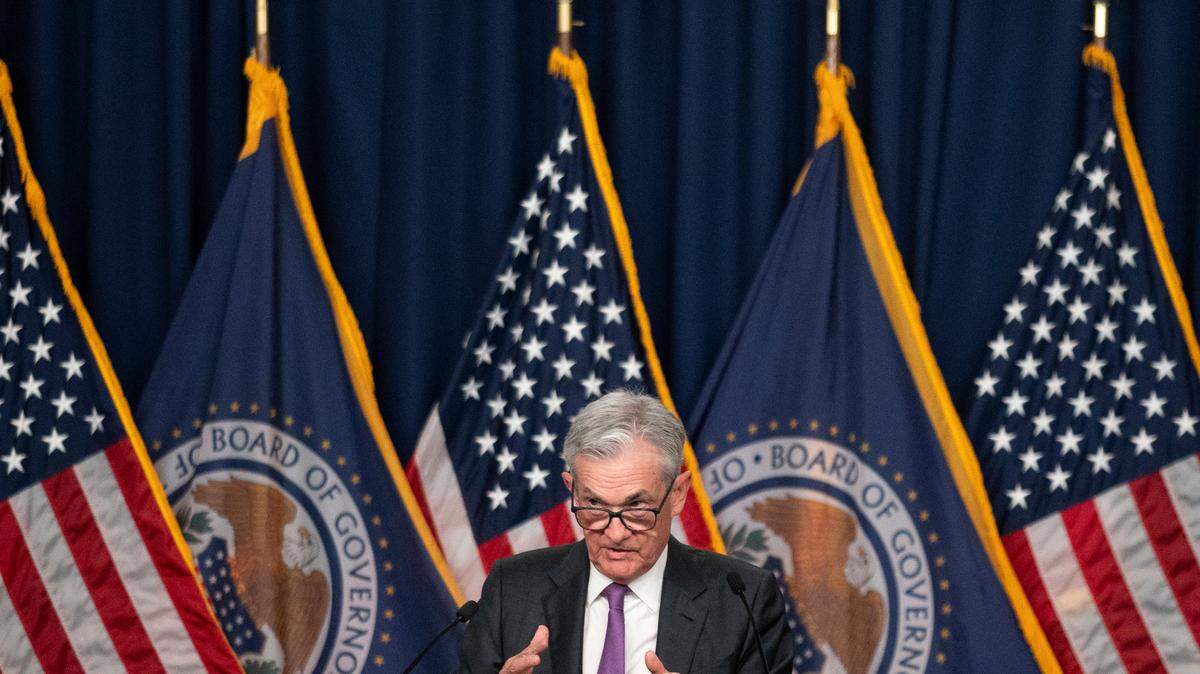
Federal Reserve officials will meet for the sixth time this year on Sept. 19 and 20, their first meeting since July.
At their last meeting, the board resumed their campaign to slow inflation, raising interest rates a quarter percentage point. September’s meeting comes after a summer of good news for the economy, including easing inflation and a cooler job market.
Given these positive signs, most experts predict the Fed will take a break from hiking interest rates this month, but more hikes are expected in the future.
Here’s what to know ahead of the September Federal Open Market Committee meeting.
Why has the Fed been raising rates?
Part of the FOMC’s job is to stabilize the economy in response to changes in employment, inflation and long-term interest rates.
The Fed’s only real tool to slow inflation is changing the federal funds rate — which is “the interest rate at which depository institutions trade federal funds (balances held at Federal Reserve Banks) with each other overnight,” according to the Federal Reserve Bank of St. Louis via the Fed’s Board of Governors.
When interest rates are low, people are more likely to spend more because it is cheaper to borrow money and more credit is available. This might mean more households are encouraged to get a mortgage on a new home or take out a loan for a new car. Businesses might be more inclined to borrow money to expand operations or hire more employees.
But when interest rates are high, people are less likely to spend money because it costs more to borrow.
The Fed wants to achieve an interest rate that promotes a stable economy — which is defined by “maximum sustainable employment, low and stable inflation and moderate long-term interest rates.”
While there is no set number for employment or interest rates, the Fed’s inflation target is 2%.
To moderate rising prices, the Fed began raising interest rates in March 2022 after a two-year hiatus. Between March 2022 and July 2023, the FOMC has raised its target from between 0.25%-0.50% to its current target between 5.25%-5.5%.
Are the rate increases working?
Although the economy is still not where the Fed wants it to be yet, things are heading in the right direction.
Inflation bottomed out at 0.2% in May 2020 and peaked at almost 9% in June 2022, according to data from the Fed. As of August 2023, inflation was down to about 3.7% — just above the Fed’s goal.
The job market is looking better, too.
In August, employers added 187,000 jobs, slightly higher than previous months, but much lower than even a year ago when the job market was still in a post-pandemic frenzy. At the same time, unemployment edged up to 3.8% last month, reflective of the Fed’s ongoing rate hikes.
The Fed’s battle against inflation might be going well, but it’s far from over, according to David Wilcox, senior economist at the Peterson Institute for International Economics and Bloomberg Economics.
“The effort to tame inflation is going, I think it’s fair to say, remarkably smoothly, remarkably well,” Wilcox told McClatchy News. “We’re roughly speaking in the fifth or sixth inning of a game that’s going to go nine innings. We’re kind of midway there, we’re not even at the seventh-inning stretch.”
Will the Fed raise rates again?
Experts expect the Fed will take a break from raising rates in September.
This is in part due to the positive data from the economy, but it is also a means to buy more time, especially with some “unusual bumps” that may occur between now and the FOMC’s next meeting in November, Wilcox said.
Between a potential government shutdown if Congress doesn’t agree on a spending package, the United Auto Workers strike and the end of the student loan payment moratorium, the Fed will be watching carefully. There will also be more inflation and job markets data in the next few months that will influence further rate hikes.
Fed Chair Jerome Powell has promised that the board will continue monitoring both economic data as well as unforeseen challenges.
“At upcoming meetings, we will assess our progress based on the totality of the data and the evolving outlook and risks. Based on this assessment, we will proceed carefully as we decide whether to tighten further or, instead, to hold the policy rate constant and await further data,” Powell said during a speech in August. “We will keep at it until the job is done.”
In short, while there likely won’t be a rate hike at September’s meeting, consumers shouldn’t be surprised if the Fed increases rates once more before the year’s end.
The worst is likely over
Despite possible future hikes, experts think the worst of the “squeeze” felt by households is just about over.
“I don’t think the sense of getting squeezed is going to get much worse. From here I think mortgage rates are probably near their peak; I think, credit card, borrowing rates and auto loan rates are probably near at their peak,” Wilcox said. “This is probably roughly as painful as it will get during the current cycle in terms of financial pressure on households. “
This story was originally published September 18, 2023 at 10:03 AM with the headline "Will interest rates rise this month? Here’s what’s expected — and what it means for you."