
What killed 12-foot great hammerhead shark? Venomous clue was in jaw, Florida lab says
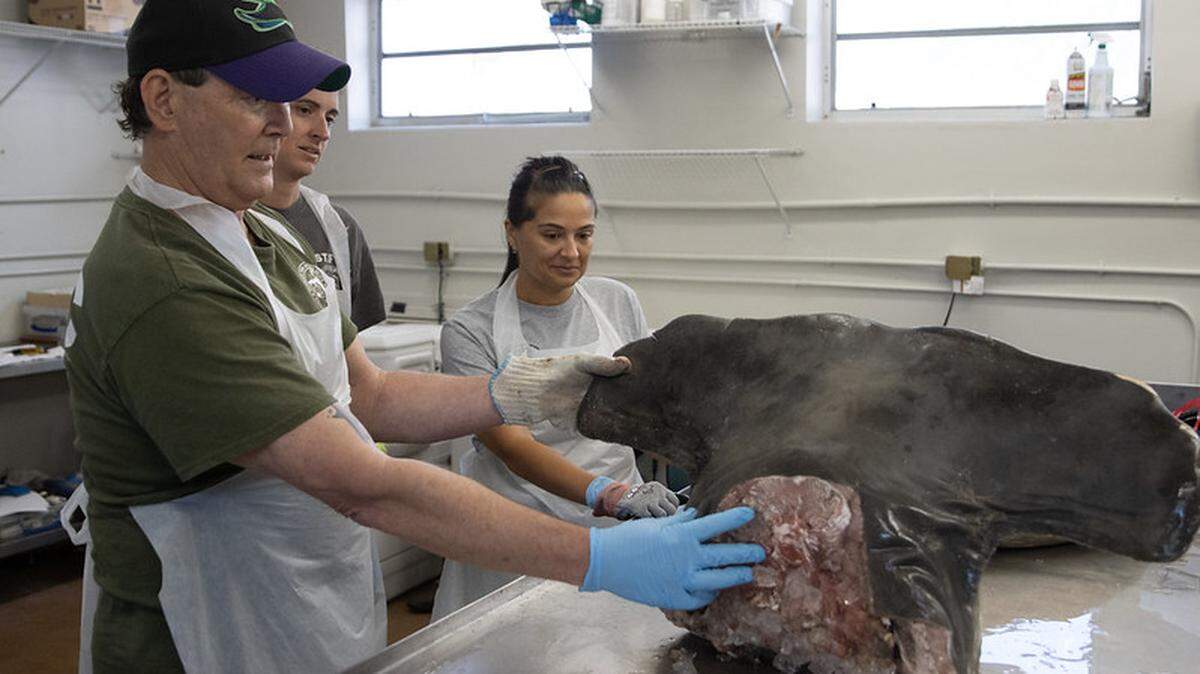
It’s often a mystery why large predators wash up dead on beaches, but a clue may have been found in the case of a 12-foot great hammerhead shark in Florida, according to the FWC Fish and Wildlife Research Institute.
“Our team was surprised to find a stingray barb lodged in the jaw of the hammerhead!” the institute reported in an Oct. 26 Facebook post.
“Although we don’t know the exact events that led to this injury, we do know that hammerheads are known to enjoy stingrays as part of their diet. So, we will let you draw your own conclusions.”
Southern stingrays have a wingspan of 4 to 5 feet and can weigh 200 pounds, the state reports. They are notorious for having a “venomous barb” at the base of their tail, the FWC says.
“Injury from a stingray can damage a person’s muscles or tendons in addition to the cut or puncture wound,” according to eMedicinehealth.com. “Part of the sheath and spine can be left in the wound. The venom is composed of many different substances that cause tissue to break down and die as well as cause severe pain.”
Great hammerhead sharks can reach lengths of 19 feet off Florida and live as long as 44 years, the state says.
The barb was found as part of Florida’s Fish Kill Hotline program (800-636-0511), which tracks reports of dead fish for investigation. Genetic tissue is often collected from dead fish for analysis and kept on file for research.
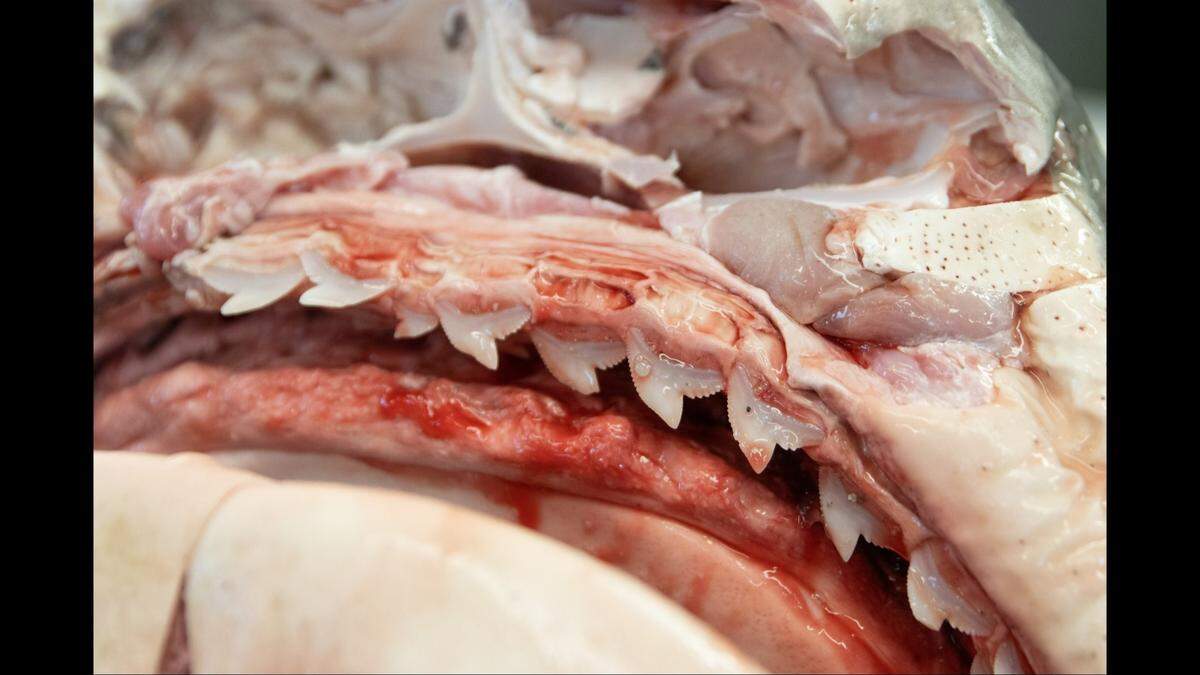
Investigators didn’t reveal when and where the hammerhead was found, but it was one of two large sharks recently picked up in Florida. The other was a 10.5-foot tiger shark. Both species are illegal to harvest in Florida, officials said.
Jaws from the two sharks were removed to be used as reference material and educational tools, and that’s what led to the barb discovery.
“Jaw removal is a laborious and tedious hands-on process and involves using special knives and dissection instruments to remove all muscle and connective tissue,” the institute reported.
“This process can be dangerous as we dissect around the rows of exposed, razor-sharp teeth.”
This story was originally published October 27, 2023 at 6:19 AM with the headline "What killed 12-foot great hammerhead shark? Venomous clue was in jaw, Florida lab says."