
‘Bizarre’-looking amphibians that breathe through their skin released in TN river
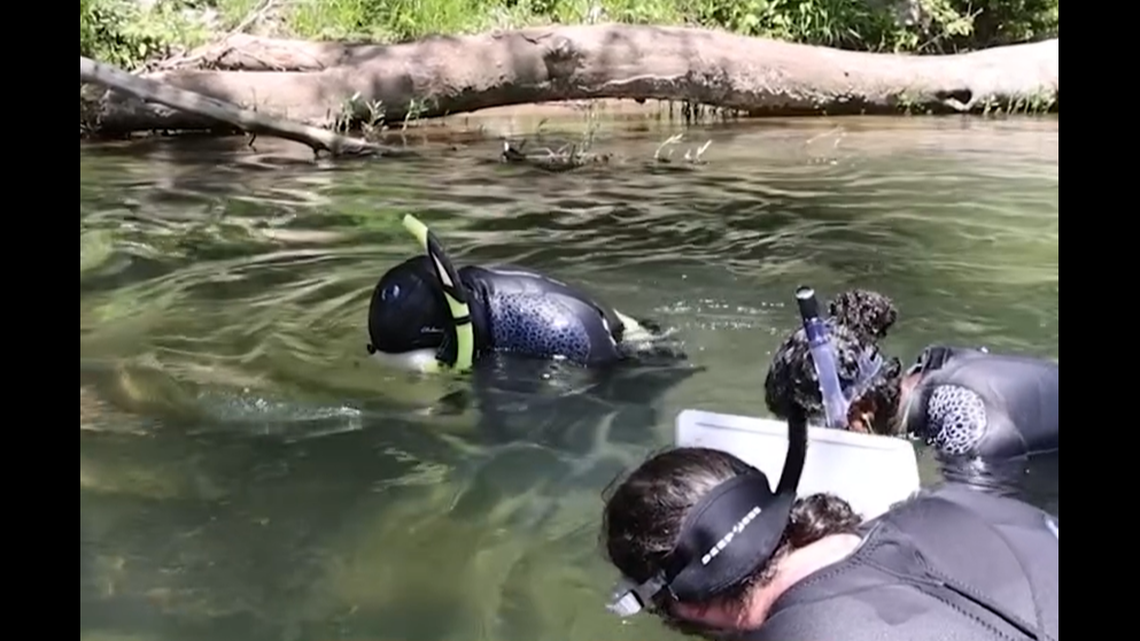
Conservationists scooped 17 wriggling hellbenders out of their tanks in Tennessee and took them on a journey to release the largest salamanders in North America back into the wild.
The hellbenders, known for their “bizarre look” and large size, were hatched and raised at the Nashville Zoo from eggs that were collected from the wild, the zoo announced May 14.
The amphibians that were part of the zoo’s fifth hellbender release have spent the last seven years in captivity, being given a “headstart” before their eventual release into the wild to help repopulate the species.
The team packed the hellbenders up and drove to a river in Middle Tennessee, where biologists donned wet suits and snorkels and hopped into the cold streams. They deposited the hellbenders under the large rocks they prefer for them to hopefully reproduce.
Pia Sandonato, the amphibian conservation keeper at the zoo, said the “elusive” hellbenders are an important “indicator species.”
“They actually say a lot about the health of the environment that they inhabit,” Sandonato said. “So for example, because they breathe through their skin, they’re very sensitive to pollution, to land development and to human activity in general.”
Researchers say the eastern hellbender was labeled endangered in Tennessee after the species’ population precipitously declined over the last 30 years, prompting efforts to research and breed them in captivity at the Nashville Zoo.
The creatures can grow up to nearly 2 and a half feet in length, making them the largest salamanders in North America, according to the Smithsonian’s National Zoo.
They have “small eyes in a large flattened head, slimy skin secretions and loose folds of skin along the sides of the body,” the Tennessee Wildlife Resources Agency said.
The amphibians spend nearly all their time in the water and are considered carnivores, eating crayfish, worms, fish, insects and sometimes even other hellbenders, experts say.
The species currently faces threats such as habitat destruction, habitat fragmentation from dams and sediment in the water from human activity, according to the National Park Service.
More than 120 hellbenders have been reintroduced into the wild in Tennessee since the conservation efforts began, the Nashville Zoo said.
“You can help protect hellbenders’ homes and food sources by not moving rocks in or out of rivers or waterways,” zoo staff said.
This story was originally published May 16, 2025 at 1:08 PM with the headline "‘Bizarre’-looking amphibians that breathe through their skin released in TN river."